Ceylon Cinnamon 7200mg Equivalent with MCT Oil
Ad Copy
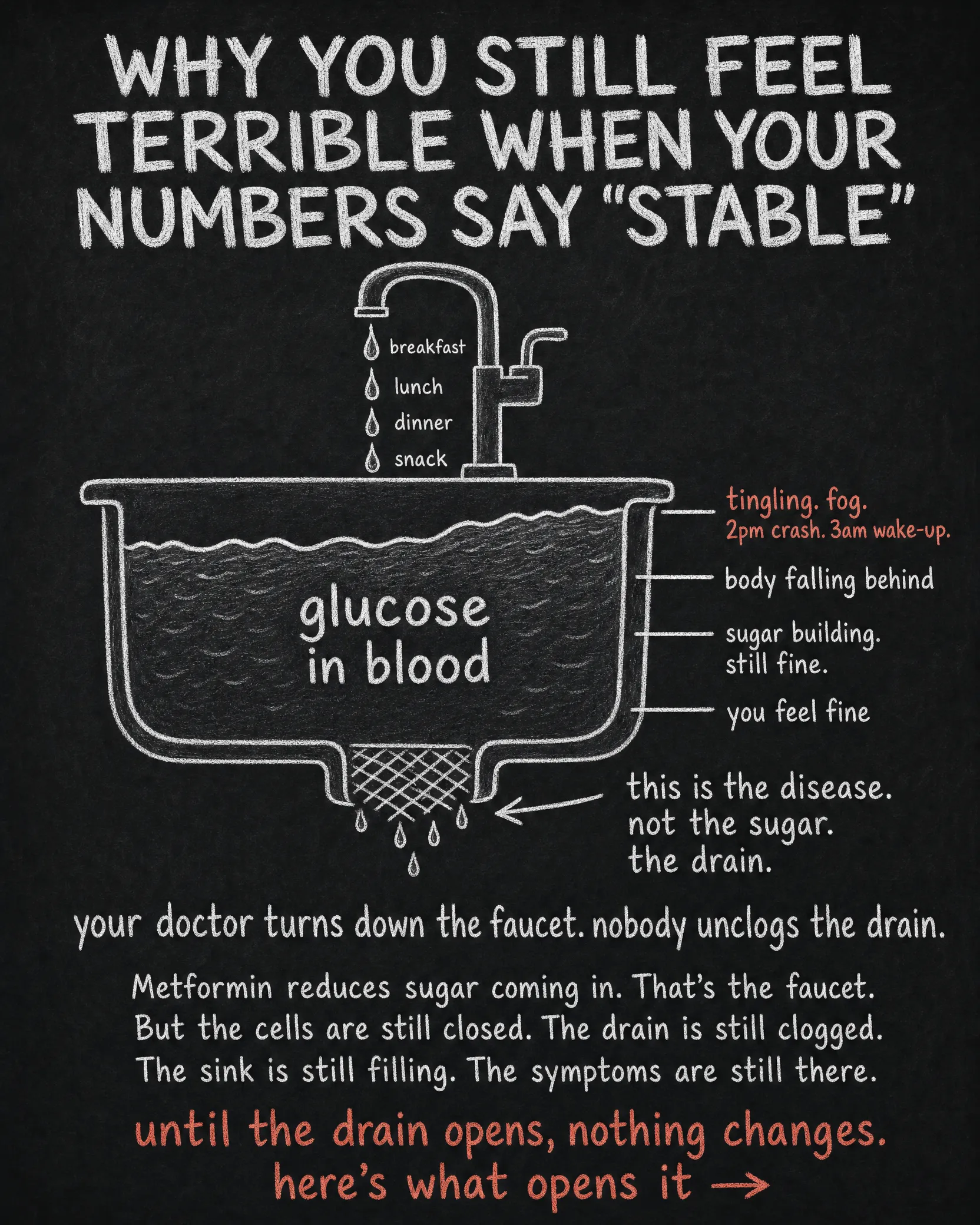
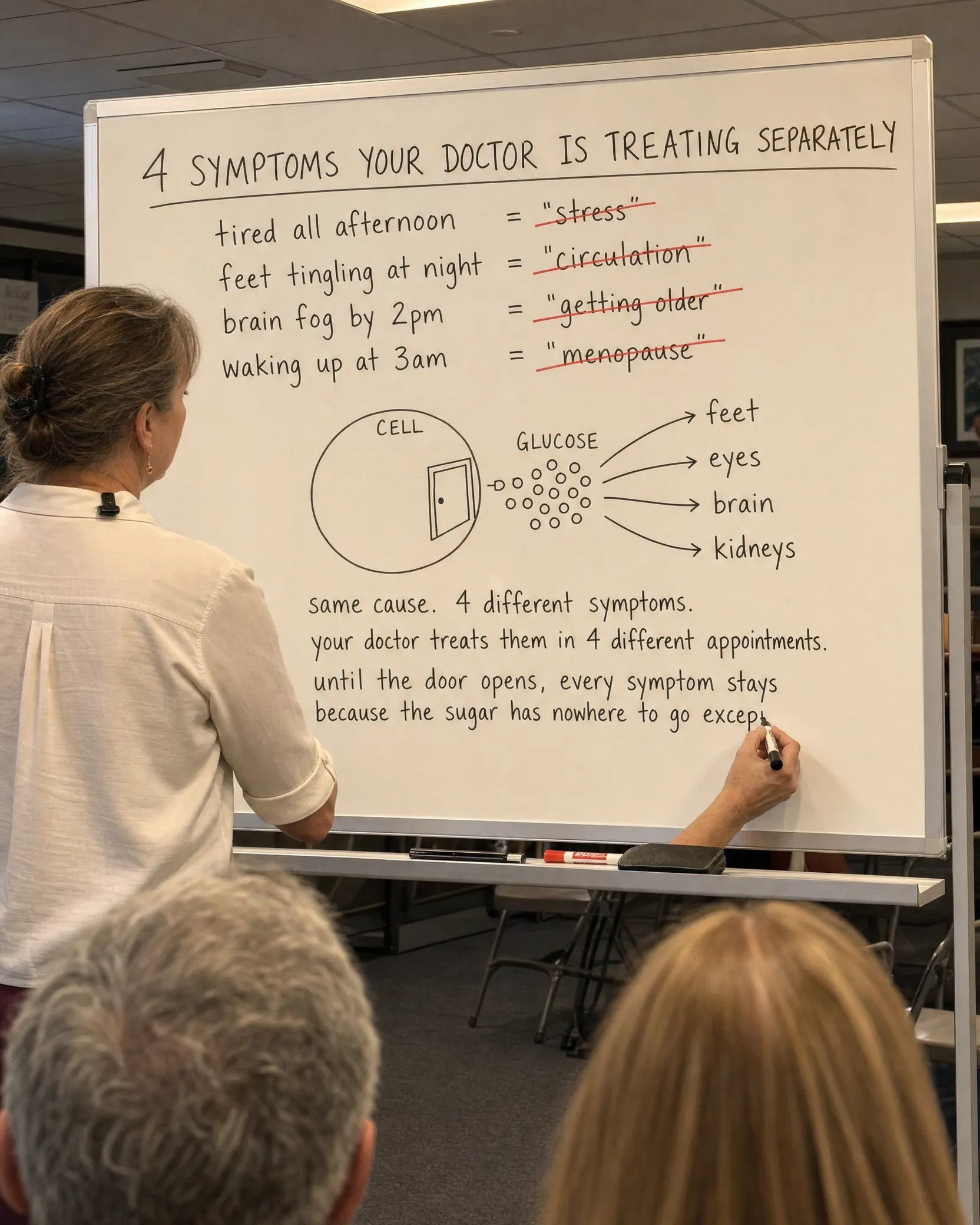
What happens when your body can't keep up with sugar anymore. Most people don't realize it's happening. That's the problem. It doesn't announce itself. There's no single moment where it starts. It builds. Quietly. Over years. And by the time you feel it, it's been going on longer than you think. Here's what actually happens. Stage by stage. The way your doctor should explain it but doesn't because there isn't time in a fifteen-minute appointment. Stage 1. You feel fine. You eat your meals. Nothing seems off. You go to work. You sleep at night. You wake up and do it again. Your body handles the sugar from every meal the way it always has. You don't think about it because there's nothing to think about. This stage lasts years. Sometimes decades. You feel completely normal the entire time. But something is already changing. Your cells are starting to respond to insulin a fraction slower than they used to. Not enough to notice. Not enough to show up on bloodwork. Just a fraction. A delay. The sugar from each meal stays in your blood a little longer before being cleared. You don't feel it. Nobody tests for it. Everything is fine. Stage 2. The sugar starts building. After every meal, glucose enters your bloodstream. Your body is supposed to clear it. Insulin signals the cells. The cells are supposed to open up, take the glucose in, and burn it for energy. But the cells are responding slower now. The clearing that used to happen in an hour takes two hours. Then three. The sugar sits in your blood longer after each meal. Not a dramatic spike. Just a longer window where the glucose is circulating with nowhere to go. This is where the problem actually starts. Not later. Right here. While you feel fine. Your annual bloodwork might show a slight uptick. Your doctor might mention it. Pre-diabetic range. Watch the carbs. Or your doctor might not mention it because the number is still in the gray zone between normal and concerning and the gray zone doesn't trigger action. It triggers watching. So you watch. Which means nothing changes. Which means the sugar keeps building. Stage 3. Your body falls behind. The clearing keeps slowing. The cells keep responding less. Every meal adds more glucose to a bloodstream that hasn't finished dealing with the last meal. Breakfast sugar is still there when lunch sugar arrives. Lunch sugar is still there when dinner sugar arrives. It's not about one big spike. It's about the constant layering. Meal after meal. Day after day. Your system is overwhelmed not by one event but by the accumulation. The sink isn't overflowing because someone left the faucet on full blast. It's overflowing because the drain is slow and the faucet drips and nobody notices until the water is on the floor. Your A1C might still look acceptable. Because the A1C is an average over three months. It smooths everything out. The spikes after meals and the dips between meals average into a number that your doctor calls managed or stable or let's keep watching. The average hides the accumulation. The average is the hallway. The damage is in the walls. Stage 4. You start feeling it. The excess sugar doesn't just sit in your blood doing nothing. It circulates. It moves through every vessel in your body. And when it's circulating for hours longer than it should be, it starts going places. The small vessels feeding the nerves in your feet. That's the tingling. The buzzing at night. The feeling of standing on a phone that's vibrating. You think it's circulation. Or bad shoes. Or sitting too long. It's not. It's sugar affecting nerves that are fed by vessels too small for any test your doctor runs to measure. The small vessels behind your eyes. That's the floater that appeared a year ago. Or the slight blurring that comes and goes. You think you need new glasses. Maybe. Or maybe the vessels feeding your retina are being affected by sugar that's been circulating too long. Your energy. The 2pm crash. The wall. The fog. That's glucose sitting in your blood instead of entering your cells. Your cells are starving for fuel while your blood is flooded with it. The fuel can't get into the engine. The engine stalls. You feel it as exhaustion. You call it stress. You call it being busy. You call it getting older. It's none of those things. It's sugar that can't get where it needs to go. The 3am wake-up. Every night. Eyes open. No reason. That's the autonomic nervous system being disrupted by the same excess sugar affecting the same small nerves. The nerves that regulate your sleep cycle are being damaged so gradually that you don't connect the insomnia to the glucose. You call it menopause. Or anxiety. Or caffeine. Four symptoms. Four plausible alternative explanations. One actual cause. By stage 4 you've been explaining each symptom separately for months or years. Nobody has connected them. Not you. Not your doctor. Because each one has a reasonable alternative explanation and nobody puts all four on the same table and asks what they have in common. They have sugar in common. Sugar that builds because the clearing slowed. Sugar that circulates because the cells stopped responding. Sugar that goes places it shouldn't go because it has hours to wander. Most approaches to blood sugar management target the sugar in the bloodstream. Reduce the sugar coming in. Cut carbs. Restrict portions. Eliminate the foods you love. The dietary approach manages the supply side. Medications do the same thing from a different angle. Metformin reduces what the liver produces. Other drugs force the pancreas to make more insulin. Others slow the stomach so less sugar enters after a meal. Every one of them is pointed at the sugar in the hallway. None of them speed the clearing. None of them address why the cells stopped responding. None of them fix the drain. They just turn down the faucet. That's why the A1C can look managed while the symptoms persist. The average looks stable. The 2pm crash still happens. The feet still tingle. The 3am wake-up still comes. Because the medications brought the average down but the clearing is still slow and the sugar still has hours to circulate and deposit. Diets get restrictive. Routines get complicated. Supplements try to do too much at once. And most of them use the wrong form of the one ingredient that the research actually supports. Resia focuses on one specific thing. The clearing. What happens right after you eat. The moment when glucose enters your blood and your cells are supposed to respond to insulin and open up and take the glucose in. The compound in true Ceylon cinnamon, cinnamaldehyde, supports the reactivation of the insulin receptors on your cells. The receptors that went dormant. The receptors that stopped hearing insulin. The receptors that are the reason the sugar stays in your blood longer than it should. When those receptors wake up, the cells start hearing insulin again. They open. Glucose moves in. Gets burned for energy. The clearing speeds up. The sugar doesn't have hours to circulate and deposit. It gets moved out of the blood on the old timeline. The timeline your body used before the clearing slowed down. That's why the symptoms change before the bloodwork changes. The symptoms are real-time. The bloodwork is a three-month average. When the clearing speeds up, the first things that improve are the things that the excess sugar was causing right now. The energy. The feet. The sleep. The fog. Those change in weeks. The A1C changes in months. Because the A1C is the last room the fight ends in. The cinnamon in most kitchen cabinets and most supplements is cassia. A completely different species. Cassia contains roughly five percent coumarin, a compound that strains the liver at sustained daily doses. European regulators cap daily intake for this reason. It was never designed to be taken every day at therapeutic amounts for years. If you've tried cinnamon for your blood sugar and it did nothing, you were almost certainly taking cassia. The wrong plant. True Ceylon from Sri Lanka carries a trace of coumarin. Same word on the label. Different species entirely. The only one suitable for daily long-term use. And dose is where almost everyone fails. Most supplements sit at 500mg. The published research that showed significant results used substantially more. At 500mg you could take it for a year, see nothing, and decide cinnamon doesn't work. Wrong conclusion for a reason nobody told you. Resia. True Ceylon cinnamon from Sri Lanka. DNA-verified. 7,200mg equivalent. Concentrated 12:1 extract. Suspended in MCT oil so the active compounds actually reach your bloodstream instead of passing through your gut. Third-party tested for purity, which matters more than it should given the FDA has flagged lead contamination in eighteen cinnamon brands since 2024. One softgel a day. Results vary. But most people start noticing changes within the first few weeks. Not on their bloodwork. On their body. The afternoon crash shortens or disappears. The energy steadies. The fog lifts. The tingling in the feet quiets. The 3am wake-up stops. The cravings for sugar reduce or vanish entirely. These changes happen before the A1C moves because these changes are real-time and the A1C is a three-month average. The symptoms tell you what's happening right now. The bloodwork catches up later. 90-day money-back guarantee. Your numbers move or you don't pay. Watch the symptoms. Not the chart. The chart is the last room the fight ends in. The symptoms are where the fight is happening right now. Watch the feet. Watch the 2pm hour. Watch the 3am ceiling. Watch whether the fog lifts. Those are the rooms the sugar has been building in. Those are the rooms that change first. Link is below. One softgel. One moment. Right after you eat. The moment most people ignore. The moment that everything else depends on. If your body has been falling behind for years, this is how it catches up.
More from A1C Support Community

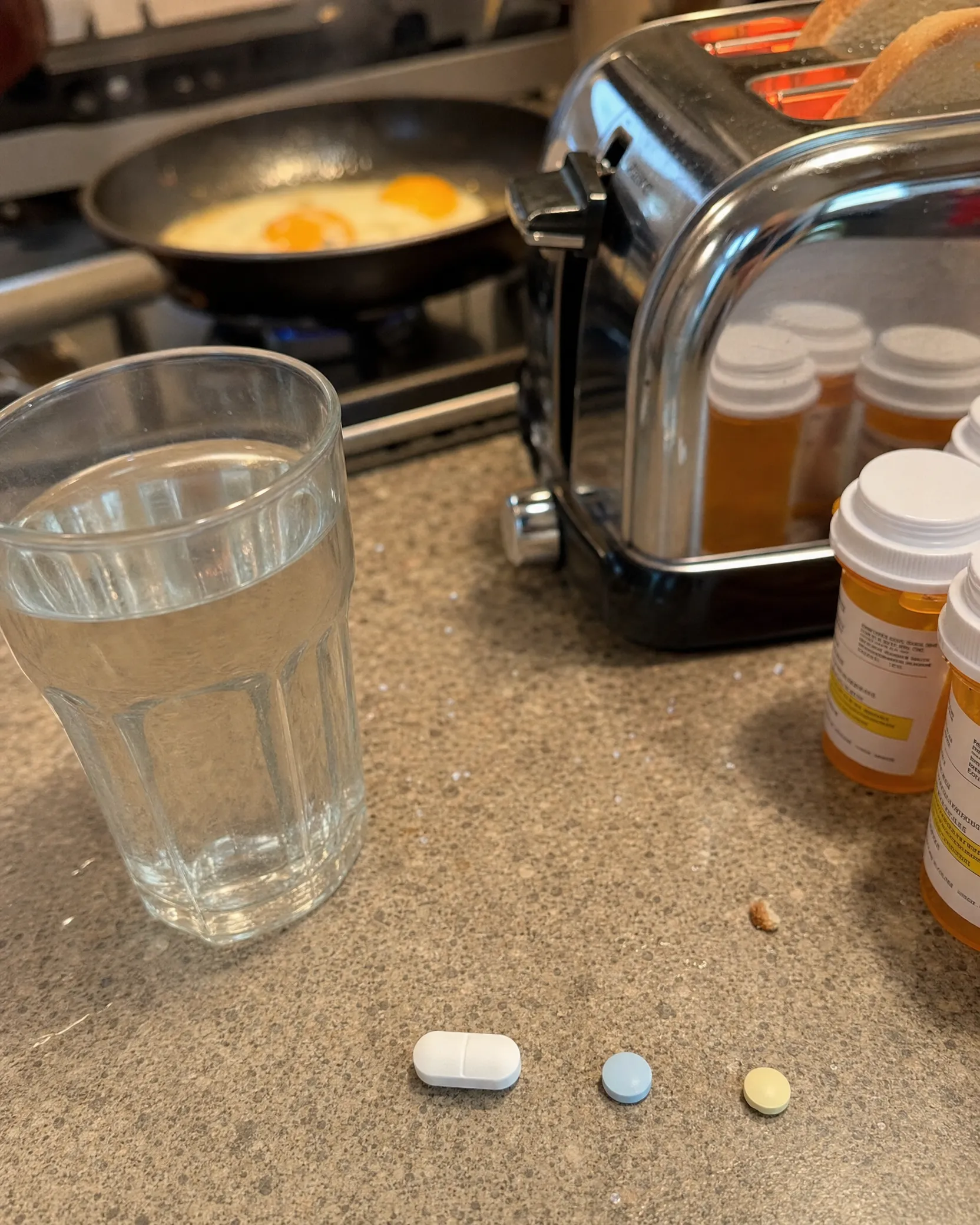
A guy in Texas ate the exact same fast food breakfast every morning for 90 days. Sausage and egg sandwich, hash brown, large Coke. He filmed every blood panel. By day 45, his fasting glucose should have been over 140. It was 92. The only variable was what he took with his coffee before the meal. He posted the full protocol to a fitness forum and it got taken down inside a week. His name was Cole. 41. Insurance adjuster out of Fort Worth. Two kids, a wife who'd stopped pretending the weight wasn't a problem, and a doctor who told him in February that if his next A1C came in over 6.5, he was getting walked into the pre-diabetes conversation his father had ignored at the same age. Cole's father had lost two toes by 60 and a leg by 68. Cole had watched it happen. Cole was not going to let it happen. So he ran an experiment that was supposed to prove a point. He picked the worst possible breakfast he could buy in America, ordered it 90 mornings in a row, and tracked everything. Glucose strip every morning before the food. Glucose strip 90 minutes after. Weight on the same scale at the same time. A1C draws every 30 days at a CVS in Arlington that didn't ask questions. The trick was the variable he added. One softgel taken with his coffee while the sandwich was still in the bag. That was it. No fasting window. No Ozempic. No keto. No fifth gym session. Same job. Same hours. Same family stress. Same garbage breakfast. One softgel. Day 15, his fasting was 104. Standard for a man heading where he was heading. Day 30, it was 98. Day 45, it was 92. Lower than it had been at 32, when his life insurance physical had clocked him at 96 and his agent had called it excellent. He didn't believe the meter. He bought a second one. The second meter agreed with the first. Day 60, he posted his spreadsheet on a fitness forum that has about 80,000 active members. Mostly lifters. Mostly skeptics. The kind of crowd that calls supplement claims out by lunch. The thread got 400 comments in 18 hours. Most of them were people asking what the softgel was. Cole told them. True Ceylon cinnamon. Not the cassia that fills every spice rack in America. Sourced from a single brand he'd ordered after reading a 2003 paper in Diabetes Care that had run the same compound on 40 diabetic men and watched their fasting glucose drop by up to 29 percent. The thread got pulled inside a week. The forum's stated reason was a vague policy violation about unverified medical claims. The actual reason, based on a moderator who messaged Cole afterward, was that three different supplement sponsor accounts had flagged the post because the brand he'd named wasn't one of theirs and the spreadsheet was too clean to argue with. That's the part that should make you angry. Not that the thread got pulled. That happens. But that the system, the same system that runs ads for underdosed cassia capsules and proprietary blends with ingredient lists you need a magnifying glass to read, took down a post from a man who shared his own glucose data because his results threatened the brands paying for placement. Cole's doctor couldn't officially recommend what brought his numbers down because there's no billing code for it. The forum couldn't let him talk about it because the sponsors selling inferior products didn't want the comparison sitting there in a spreadsheet anyone could read. The supplement industry and the healthcare system have one thing in common. Neither one has a financial incentive for you to fix this with a softgel that costs less than your co-pay. Cole still has the spreadsheet. The brand still ships. The softgel still works. Here is what most people reading this don't realize. Cole's experiment was rigged in the worst possible direction. He fed himself like a man trying to lose. He gained nothing. He held a fasting glucose number most lean 30-year-olds would shake hands for. And the only difference between his 90 days and the next 90 days of your life, the ones where you've been telling yourself you'll fix the breakfast and the snacking and the late-night handful of whatever, is one softgel. You don't have to eat fast food to get the math. You're already eating something. Your panel already says what it says. The question Cole answered on a sausage sandwich and a Coke is whether one softgel can hold the line while real life keeps doing what real life does. His meter said yes. Twice. Two things he learned that most people get wrong. The cinnamon in most kitchen cabinets and most supplements is cassia. Different species entirely. Cassia contains roughly five percent coumarin, which is why European regulators cap daily intake. It was never meant to be taken at clinical doses every day for years. It'll put strain on your liver. True Ceylon from Sri Lanka carries a trace of coumarin. Same word on the label. Different plant. The only one you can take daily long term. And dose is where almost everyone fails. Most supplements sit at 500mg. Well below what the published research used. You could take those for a year, see nothing, and decide cinnamon doesn't work. You'd be wrong for a reason nobody told you. Resia is the brand from Cole's spreadsheet. True Ceylon. DNA-verified from Sri Lanka, traced back to the same growing region the 2003 Diabetes Care trial sourced from. 7,200mg equivalent. Suspended in MCT oil so it actually reaches your bloodstream instead of passing straight through. Third-party tested for purity, which matters more than it should given the FDA has flagged lead contamination in eighteen cinnamon brands since 2024. One softgel a day. That's the whole protocol. One warning. There are knockoffs flooding Amazon right now with similar packaging but cassia and seed oils inside instead of real Ceylon and MCT. Cassia does nothing for blood sugar and puts strain on your liver at daily doses. Only order through the official site. They produce in small batches and it's backordered more often than not. If it's in stock when you click, don't wait. Cole ran the experiment so you wouldn't have to. The spreadsheet is offline. The softgel isn't. Ninety-day money-back guarantee. Your numbers move or you don't pay. Link is below.
A1C Support Community

Ceylon Cinnamon 7200mg Equivalent with MCT Oil
A1C Support Community

Ceylon Cinnamon 7200mg Equivalent with MCT Oil
A1C Support Community
A guy in Texas ate the exact same fast food breakfast every morning for 90 days. Sausage and egg sandwich, hash brown, large Coke. He filmed every blood panel. By day 45, his fasting glucose should have been over 140. It was 92. The only variable was what he took with his coffee before the meal. He posted the full protocol to a fitness forum and it got taken down inside a week. His name was Cole. 41. Insurance adjuster out of Fort Worth. Two kids, a wife who'd stopped pretending the weight wasn't a problem, and a doctor who told him in February that if his next A1C came in over 6.5, he was getting walked into the pre-diabetes conversation his father had ignored at the same age. Cole's father had lost two toes by 60 and a leg by 68. Cole had watched it happen. Cole was not going to let it happen. So he ran an experiment that was supposed to prove a point. He picked the worst possible breakfast he could buy in America, ordered it 90 mornings in a row, and tracked everything. Glucose strip every morning before the food. Glucose strip 90 minutes after. Weight on the same scale at the same time. A1C draws every 30 days at a CVS in Arlington that didn't ask questions. The trick was the variable he added. One softgel taken with his coffee while the sandwich was still in the bag. That was it. No fasting window. No Ozempic. No keto. No fifth gym session. Same job. Same hours. Same family stress. Same garbage breakfast. One softgel. Day 15, his fasting was 104. Standard for a man heading where he was heading. Day 30, it was 98. Day 45, it was 92. Lower than it had been at 32, when his life insurance physical had clocked him at 96 and his agent had called it excellent. He didn't believe the meter. He bought a second one. The second meter agreed with the first. Day 60, he posted his spreadsheet on a fitness forum that has about 80,000 active members. Mostly lifters. Mostly skeptics. The kind of crowd that calls supplement claims out by lunch. The thread got 400 comments in 18 hours. Most of them were people asking what the softgel was. Cole told them. True Ceylon cinnamon. Not the cassia that fills every spice rack in America. Sourced from a single brand he'd ordered after reading a 2003 paper in Diabetes Care that had run the same compound on 40 diabetic men and watched their fasting glucose drop by up to 29 percent. The thread got pulled inside a week. The forum's stated reason was a vague policy violation about unverified medical claims. The actual reason, based on a moderator who messaged Cole afterward, was that three different supplement sponsor accounts had flagged the post because the brand he'd named wasn't one of theirs and the spreadsheet was too clean to argue with. That's the part that should make you angry. Not that the thread got pulled. That happens. But that the system, the same system that runs ads for underdosed cassia capsules and proprietary blends with ingredient lists you need a magnifying glass to read, took down a post from a man who shared his own glucose data because his results threatened the brands paying for placement. Cole's doctor couldn't officially recommend what brought his numbers down because there's no billing code for it. The forum couldn't let him talk about it because the sponsors selling inferior products didn't want the comparison sitting there in a spreadsheet anyone could read. The supplement industry and the healthcare system have one thing in common. Neither one has a financial incentive for you to fix this with a softgel that costs less than your co-pay. Cole still has the spreadsheet. The brand still ships. The softgel still works. Here is what most people reading this don't realize. Cole's experiment was rigged in the worst possible direction. He fed himself like a man trying to lose. He gained nothing. He held a fasting glucose number most lean 30-year-olds would shake hands for. And the only difference between his 90 days and the next 90 days of your life, the ones where you've been telling yourself you'll fix the breakfast and the snacking and the late-night handful of whatever, is one softgel. You don't have to eat fast food to get the math. You're already eating something. Your panel already says what it says. The question Cole answered on a sausage sandwich and a Coke is whether one softgel can hold the line while real life keeps doing what real life does. His meter said yes. Twice. Two things he learned that most people get wrong. The cinnamon in most kitchen cabinets and most supplements is cassia. Different species entirely. Cassia contains roughly five percent coumarin, which is why European regulators cap daily intake. It was never meant to be taken at clinical doses every day for years. It'll put strain on your liver. True Ceylon from Sri Lanka carries a trace of coumarin. Same word on the label. Different plant. The only one you can take daily long term. And dose is where almost everyone fails. Most supplements sit at 500mg. Well below what the published research used. You could take those for a year, see nothing, and decide cinnamon doesn't work. You'd be wrong for a reason nobody told you. Resia is the brand from Cole's spreadsheet. True Ceylon. DNA-verified from Sri Lanka, traced back to the same growing region the 2003 Diabetes Care trial sourced from. 7,200mg equivalent. Suspended in MCT oil so it actually reaches your bloodstream instead of passing straight through. Third-party tested for purity, which matters more than it should given the FDA has flagged lead contamination in eighteen cinnamon brands since 2024. One softgel a day. That's the whole protocol. One warning. There are knockoffs flooding Amazon right now with similar packaging but cassia and seed oils inside instead of real Ceylon and MCT. Cassia does nothing for blood sugar and puts strain on your liver at daily doses. Only order through the official site. They produce in small batches and it's backordered more often than not. If it's in stock when you click, don't wait. Cole ran the experiment so you wouldn't have to. The spreadsheet is offline. The softgel isn't. Ninety-day money-back guarantee. Your numbers move or you don't pay. Link is below.
A1C Support Community

Ceylon Cinnamon 7200mg Equivalent with MCT Oil
A1C Support Community
Ceylon Cinnamon 7200mg Equivalent with MCT Oil
A1C Support Community
Ceylon Cinnamon 7200mg Equivalent with MCT Oil
A1C Support Community

Ceylon Cinnamon 7200mg Equivalent with MCT Oil
A1C Support Community
Ceylon Cinnamon 7200mg Equivalent with MCT Oil
A1C Support Community

Ceylon Cinnamon 7200mg Equivalent with MCT Oil
A1C Support Community

Ceylon Cinnamon 7200mg Equivalent with MCT Oil
A1C Support Community

Ceylon Cinnamon 7200mg Equivalent with MCT Oil
A1C Support Community

 Add to Chrome