
The cruise ship doctor asked me just one question. My doctor had gone six years without asking it.
Ad Copy
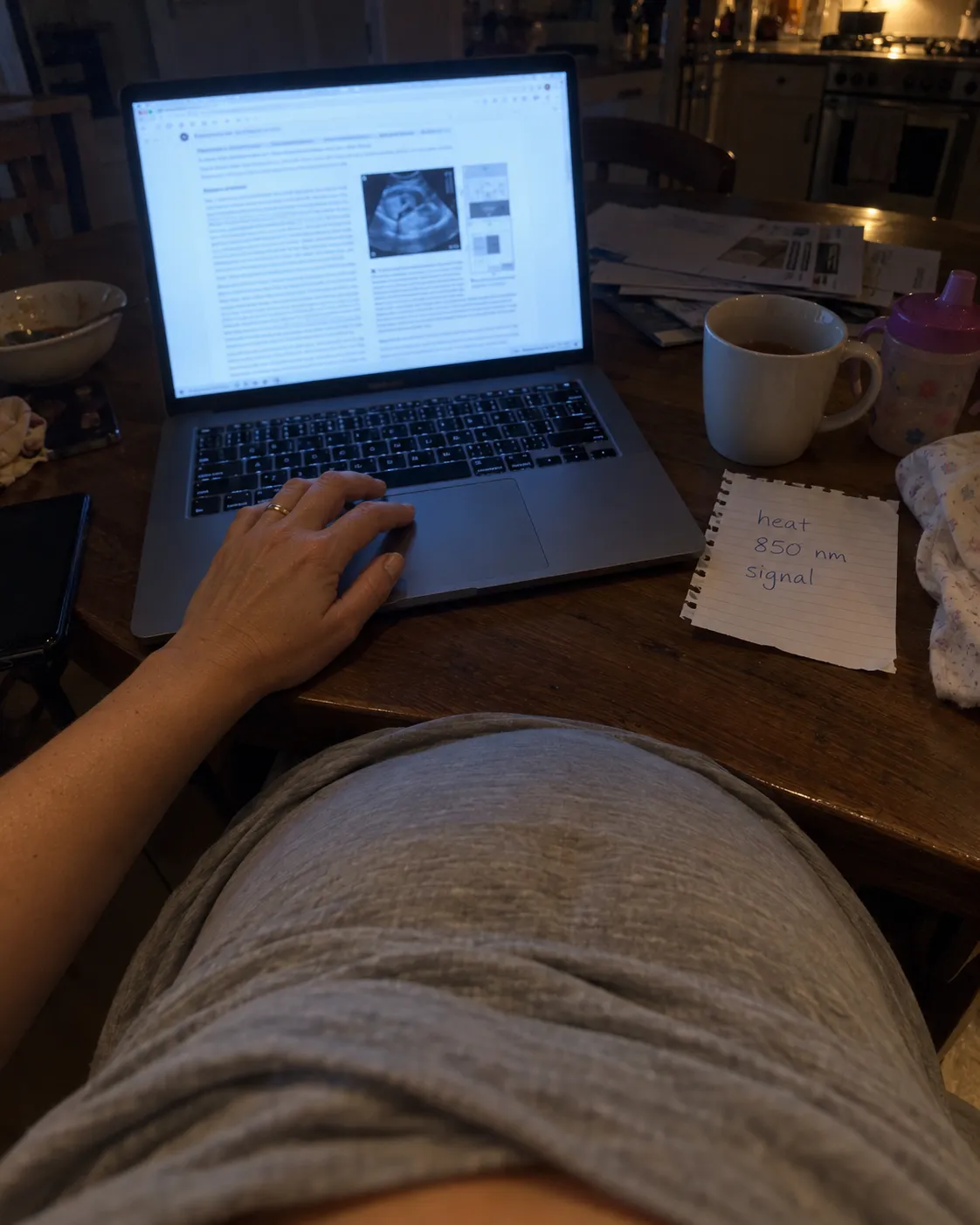
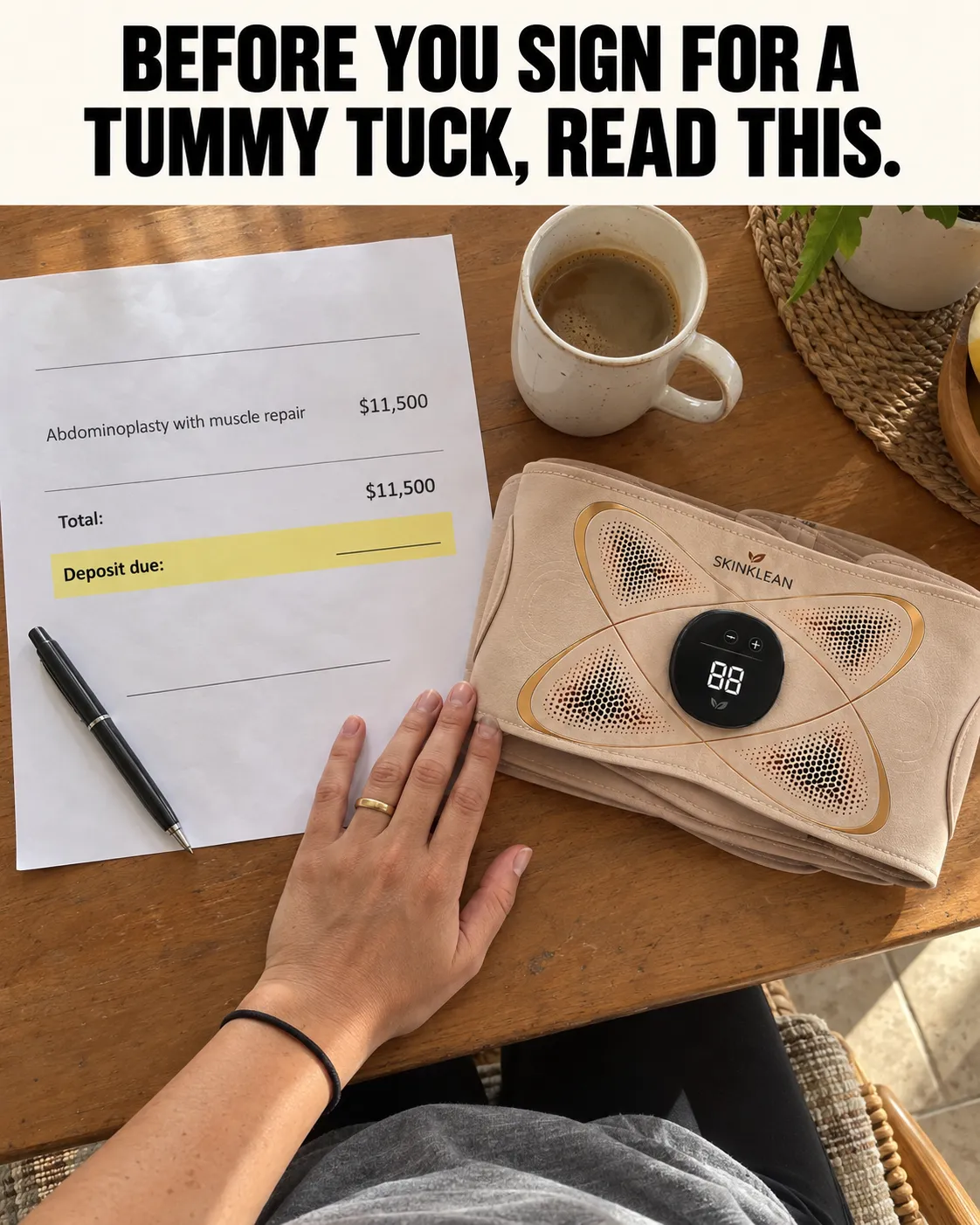
I almost ended up in an operating room in the middle of a Caribbean cruise. The ship's doctor was French, and she asked me ONE question that left my lifelong doctor fifteen years behind. I'm forty two. My husband and I had been saving for that trip for almost three years: a ten day Caribbean cruise, with Puerto Rico, St. Thomas and St. Lucia, and our two daughters on a ship for the first time. We'd been talking about that trip since our oldest was born. It was one of those trips you plan when the kids are babies, for when they're a little older. The reason you keep putting up with a job you stopped liking years ago. On the fourth day, we were walking up the cobblestone streets of Charlotte Amalie toward Blackbeard's Castle to watch the sunset. You've probably seen the pictures: the white and coral colonial buildings climbing the hill, the red roofs in the sun and the turquoise Caribbean below, with cobblestones polished by two hundred years of footsteps. It's one of those places you hang on your wall when you get home. My husband was up ahead with our oldest, taking pictures on his phone and laughing at something a street vendor had told them. I was about ten meters behind, carrying our youngest, because she'd gotten tired of walking. Halfway up the hill, I started to feel it. First, my back: that jolt in my lower back I'd been feeling for six years every time I picked up my girls, and that I blamed on my age and on not working out enough. That's exactly what I kept telling my husband. I stopped on the cobblestones and put a hand on a stone wall, but it didn't go away. I felt a sharp pull right in the center of my stomach, above my belly button, like something was opening up inside. I looked down and saw a bulge had popped out at my belly button, under my dress. I broke out in a sweat all over and felt the blood drain from my face. I sat down on the wall with my little girl on my lap. I tried to call my husband, but my voice wouldn't come out. Tourists kept walking past me, stepping around my feet and taking pictures of the view behind me. And there I was, sitting there with my hand on my stomach, thinking about my mother. My mother ended up in an operating room at forty nine, with a hernia at her belly button that popped out when she lifted a moving box. For fifteen years, they'd told her that her stomach was "just like that after two pregnancies." I was twenty two when I saw her come out of surgery, hunched over, with a drain hanging from her. And there I was, at forty two, on a wall in the Caribbean three thousand kilometers from home, with the same bulge in the same spot. My husband turned around. I'll never forget his face. One second he was laughing, and the next his phone fell onto the cobblestones and he came running. "Jess, what's wrong?" I couldn't speak. He took our little girl out of my arms and yelled at someone to help us. A man from a café next door came running out with a chair. They sat me down, someone brought me water and the café owner called for a ride. The streets in the old town are so narrow that ambulances can't get in, so they had a little cart that could make it down the cobblestones. They put me in it and took us down to the port. My husband held my hand the whole way. He didn't say anything. He just squeezed my hand and looked at me with the same face I'd seen on my father outside my mother's operating room. On the tender back to the ship, he kept his hand on my stomach the whole ride. I told him I was fine. I wasn't. The ship's doctor was waiting for us, because someone had radioed ahead. Her name was Dr. Moreau. She had a French accent, very short white hair and looked about sixty. She had me lie down on the exam table in the Deck 3 medical center. She felt my stomach, asked me to lift my head and pressed two fingers right above my belly button. They sank in up to the second knuckle. "Nothing tore today," she told me. "But you came close." I was lying there, with my husband next to me holding my hand. I just stared at the ceiling. "You have a separation of almost four centimeters between your two rectus muscles. And the bulge that popped out at your belly button is the wall pushing through the weakest spot. You had your girls vaginally, right?" "Yes. My youngest is six." "And how many sessions of abdominal rehab were you prescribed after giving birth?" The question caught me off guard. I told her none. That my doctor had told me at my six week checkup that everything looked fine, and that when I brought up my stomach, he told me to exercise and that we'd keep an eye on it. At my last checkup he'd started talking about a tummy tuck "down the road." Dr. Moreau looked at me for a moment and set her stethoscope down on the desk. "How many years has your doctor been telling you 'we'll keep an eye on it' while your back hurts more and more?" I tried to answer, and I couldn't. Because the answer was six years. My back had been getting worse at every checkup for six years, and my doctor always said we'd monitor it. "I'm going to tell you something that's had me quiet and frustrated for two years," she said. "I trained in France. I worked almost twenty years in Lyon before I took this contract on the ship. And what I see every time I treat an American mother is always the same." She pulled up a chair. "I get mothers from all over the country, from different states, with different insurance and different doctors. "And they all tell me the same story: that their doctor told them everything was fine, to exercise and that they'd keep an eye on it. "That they're doing everything just like they were told." "And they're all sitting in front of me with their backs wrecked, their stomachs pushing out by the afternoon, a ridge down the middle when they sit up and, sometimes, a bulge at the belly button. With a wall that's been open for years." "Here, they've decided that monitoring a mother after birth is the same as treating her. And it isn't. Monitoring is watching the problem progress and writing it down. "Treating is going after what's causing it. Your doctors are very good at the first, but they're not trained for the second." "This isn't a criticism of your doctor. He's doing what he was taught: he looks at you, tells you to exercise and writes down 'recheck.' That's the protocol. And the protocol is what's failing you." She paused. "And what I see, every time I treat one of those mothers, is exactly what just happened to you on that hill. "A forty two year old woman with six years of 'we'll keep an eye on it,' whose wall opens up on what should have been a vacation walk." I asked her what they should have told me. "They should have told you that your stomach isn't a fat problem, or an exercise problem. "During pregnancy, the two halves of the abdominal wall separate down the middle to make room for the baby. That's normal. "Underneath, there's a deep muscle, the one that wraps around your waist like a corset, that's supposed to pull them back together. "But after nine months stretched that much, it loses its connection to the brain. Your brain sends it the signal, and the signal doesn't arrive." She raised her hand. "So the wall stays open. And an open wall doesn't stay still. Everything behind it pushes forward every day, every time you pick up your girls, every time you cough or laugh. And it looks for the weakest spot." She looked at me. "That wall with no signal is what's causing everything else. Not your stomach, but the signal that isn't getting through. And it's been hurting you for years before anyone told you anything." I was about to say something, but she raised a finger. "First your back, because it's doing the work that muscle doesn't do anymore. Does your lower back hurt every afternoon?" "Yes." "Do you get a kind of ridge down the middle of your stomach when you sit up in bed?" "Yes." "Is your stomach almost flat in the morning and you look pregnant by night?" "Yes." "Is it hard to stand for a long time or carry weight, and do you get more tired than you should?" I just stared at her. She was reading me like a book. "And then, the belly button." She paused. "What happened to you on that hill is the same thing that's been hurting your back and your stomach for six years. Today it just reached the weakest spot. "You had your daughter in your arms and a steep hill, and the wall couldn't take any more. That's why it pushed through your belly button." My husband was crying quietly next to me. I could feel his hand shaking against mine. "My mother had surgery for a belly button hernia at forty nine," I told her. Dr. Moreau nodded. "Then you already know how this goes. And you've spent six years walking toward the same thing, while your doctor told you everything was fine." I asked her what the binder and the exercises had been doing for me, if all of that was happening underneath. "The binder squeezes from the outside while you're wearing it. It makes you feel held in, and that's it. But it doesn't give the signal back to the muscle. "And the exercises ask you to activate the exact muscle your brain can't find anymore, so they work the outer ones, and the inner one stays asleep. "Sometimes, crunches even push the wall further out." "It's like turning off the faucet with the drain clogged. You might have less water, but the water doesn't go away." I sat there thinking about it. "And the tummy tuck?" I asked her. "My doctor talked about surgery down the road." She nodded slowly. "Surgery stitches the wall together from the front and removes the extra skin. Some women really do need it, and it goes well for them. "But if the deep muscle still isn't getting the signal, nobody is reconnecting it. "You get another scar, weeks without being able to pick up your girls, and the muscle inside is just as asleep as before." "I've seen mothers come in after surgery, with flat stomachs at first. And two years later their backs are just as bad and the wall is starting to give again, because nothing had reconnected that muscle." I asked her what does work, if it isn't any of that. "In France, every mother is sent to abdominal and pelvic floor rehab after giving birth. It's normal, public health insurance pays for it and nobody thinks twice about it. "And electrical muscle stimulation has been part of it for decades. "It's the same thing physical therapists do when someone has knee surgery and the thigh muscle 'forgets' how to contract: they put electrodes on it and send the signal straight to it, until the muscle remembers how to work again." She took a small notepad out of her pocket and started writing. "It's been studied in mothers with diastasis. The ones who added electrical stimulation to their exercises closed the separation quite a bit more than the ones who only did the exercises. It's published, and almost nobody here recommends it." She kept writing. "But one thing alone isn't enough. You need three. "First, heat: after pregnancy, very little blood reaches that area, and that's why your stomach feels soft and empty, like bread dough, and a cold muscle responds terribly. "Second, red and infrared light at 850 nanometers, so the skin that stretched starts making collagen again and tightens up along with the muscle. "Some German researchers measured it with ultrasound: 34% more collagen. And third, the signal, with thousands of contractions straight to the deep muscle, not a tingle on the skin." She tore out the page and handed it to me. "It's three things in one: one for the blood, one for the skin and one for the muscle. Together, they go where the real problem is, instead of squeezing from the outside." I looked at what she'd written. "There's one condition," she told me. "It has to actually reach the deep muscle. Most of the belts sold online are a thin pad that tickles the skin. They only do one thing, and badly. And a lot of them take your money every month with replacement gel pads." She told me the name of a belt that a colleague of hers, a physical therapist in Lyon, had been recommending for two years to patients who couldn't come in three times a week. The PowerBelt, by Skinklean. She wrote that down too. "I checked it out myself before recommending it to anyone," she told me. "That's how I was trained: you don't put your name behind something without looking at what it is. Heat, 850 nanometer light and 20,000 contractions per session, in the same piece. FDA clearance. No replacement pads. It was what it said it was." She looked at me one more time. "Your body isn't failing you. A protocol that tells you to fix it with effort is failing you. "The open wall is the problem, the muscle with no signal is the lock and the signal is the key. "That's what we do in France, and it's what you should be doing here." I asked her what to do for the rest of the cruise. She told me to take it easy: no hills, no picking up the girls and no straining with my stomach. She put a band on me to support my belly button until we got home and said she'd see me again in two days. And she told me something I still can't get out of my head. "Nothing tore today. But your body is warning you that it's getting ready for it to happen. Your doctor has been monitoring you, not treating you. And there's a difference." We went back to the cabin. I sat on the edge of the bed and stared at the wall for a long time. My husband sat down next to me, without saying anything. Finally he said: "Your mother ended up in surgery at forty nine. You've got seven years if we don't do something different." I told him I knew. The next day we didn't get off in St. Lucia. We stayed on deck, watching the island go by from the railing, while the girls played in the pool. I wasn't sad to miss the excursion. I was sad about the six years. The rest of the cruise was different. I couldn't stop thinking about what Dr. Moreau had told me: about the muscle with no signal, and about how the same wall that hurt my back every afternoon had just opened up on a hill. For years I'd been treating all of it like separate problems. The back pain, I blamed on my age. The ridge when I sat up, on "your stomach is just like that after two girls." The pregnant belly at night, on what I'd eaten. The exhaustion, on the kids. And not being able to pick up my youngest without my back pulling, on not working out enough. Dr. Moreau had connected it all in twenty minutes. My doctor had seen me twice a year for six years, and he'd never connected anything. We got home on a Sunday. That night I couldn't sleep. My husband was already in bed. At eleven thirty I went down to the kitchen and opened my laptop. I typed in what Dr. Moreau had written down for me: "electrical stimulation diastasis," "postpartum rehab France," "red light 850 nanometers collagen." And I went all in. I found the studies on mothers with diastasis, with real mothers and real measurements. The postpartum rehab every mother in France gets. The German ultrasound study and the 34% more collagen. I stayed at the kitchen table until one in the morning, reading study after study. It was exactly what Dr. Moreau had explained to me: the muscle that loses its connection, the wall that stays open and the signal you give back to it from the outside. All published, in journals my doctor should have read. All right there, while I was being told "we'll keep an eye on it" for six years and hearing about surgery without anyone ever asking why my wall was opening up. I felt something rising in my chest. It wasn't anger. It was something else, the same thing I'd felt on that wall in Charlotte Amalie, thinking about my mother. I looked up the belt she'd written down for me. Most of the electrical stimulation belts I found were exactly what she'd told me: a thin pad, a small remote and replacement pads every month. Nothing like what physical therapists do. The PowerBelt was the only one that matched what she'd written down: heat, red and infrared light at 850 nanometers and 20,000 contractions per session, straight to the deep muscle, with FDA clearance. And no replacement gel pads, which is where most belts get your money: they sell them to you cheap and then you pay every month for pads that dry out. This one you pay for once and that's it. I read the reviews. There were mothers describing exactly what was happening to me: years of exercises and binders that didn't change anything, and then their backs feeling better and their stomachs tighter a few weeks after giving the signal back to the muscle. I ordered it at two fifteen in the morning. With the sale they had going at the time, it came out to less than $2.60 a day, less than my morning coffee. I wasn't going to do this halfway. It arrived a few days later. Twenty minutes a day, lying on the couch. That was the whole protocol. Before I started, I did the test Dr. Moreau had taught me: trying to pull my belly button in without holding my breath. I couldn't. I'd squeeze my whole stomach and feel nothing inside. The first week, I want to be honest about what I felt. From the very first session, I felt a really nice warmth and then a strong contraction inside, right in the center of my stomach, in a spot I hadn't felt since pregnancy. But real changes don't show up overnight. So I put it on every night, went to bed and, the next day, did it again. The second week, my afternoon back pain started to ease up. One Wednesday I got home from work and didn't collapse on the couch, like I'd been doing every day for years. I made dinner with my husband, we sat down at the table and I watched a whole movie without falling asleep. And those twenty minutes on the couch became my ritual. It was the only time of day when nobody needed me and something was taking care of me, instead of me taking care of everyone. The third week, I sat up in bed one morning and realized the ridge hadn't shown up. I lay back down and sat up again, just to check. Nothing. The fourth week, the bulge at my belly button wasn't showing up at the end of the day anymore. And my pregnant looking belly at night was starting to look like my morning one. The fifth week, I did the belly button test again. This time I felt it: something was pulling inside. The sixth week, I measured the separation with my fingers, the way Dr. Moreau had taught me. Before, three fingers fit, and now, two. The eighth week came the stairs. I carried my youngest up to her room, because she'd fallen asleep on the couch, and halfway up the stairs I realized my back wasn't pulling. They were the same stairs I'd been climbing for months with my hand on my lower back, and the same pull that had left me sitting on that hill in Charlotte Amalie. I put her to bed, went back down and climbed up again, just to make sure. My husband was in bed reading. He looked at me with no idea what was going on. I told him what I'd just done, he put down his book and we both sat there for a minute, without saying anything. At week twelve I went to my checkup with my usual doctor. He did an ultrasound of my abdominal wall. The separation measured 2.1 centimeters, almost half of what it was on the ship. The nurse measured it again, because the first one came out so different from the one in my file that she thought she'd made a mistake. My doctor came in, looked at the screen, stopped and looked at it again. Then he looked at me. "Jessica, what have you changed?" I told him everything: the French doctor on the ship, the hill in Charlotte Amalie, the muscle with no signal, the three things and the studies on mothers. I talked for twenty minutes, and he didn't interrupt me once. He was quiet for a good while. And then he said: "I wasn't trained in this. But your separation has gone down a lot. Let's put the surgery on hold and see how it's doing at your next checkup." I walked out of that office with no surgery date. It changed my life. I'm writing this because it almost happened to me on a hill in Charlotte Amalie, and my doctor never would have known why. If it had torn all the way that day, I would have had emergency surgery far from home, and my report would say the same thing as my mother's: "Umbilical hernia in a woman with diastasis after two pregnancies. Common at her age." And nobody would have asked why a woman who was being told everything was fine had spent six years losing her back, her stomach and the strength to pick up her daughters. A French doctor took twenty minutes to explain what my doctor didn't explain in six years. And it took a hill in the Caribbean for me to listen. If you've spent years hearing "we'll keep an eye on it" while you slowly lose strength. If your back hurts every afternoon. If you get a ridge down the middle of your stomach when you sit up. If you look pregnant at night. If it's hard to pick up your kids. If someone has talked to you about surgery "down the road." Please, listen to me. The same thing that almost happened to me on that hill is happening to you, little by little. The binder isn't stopping it, and neither are crunches. And a surgery that stitches from the outside isn't going to give the signal back to the muscle that lost it. But there is something that does. The PowerBelt is what Dr. Moreau wrote down for me on a piece of paper in the medical center of that ship, and the same thing her physical therapist colleague in Lyon had been recommending for two years. Heat, red and infrared light at 850 nanometers and 20,000 contractions per session, straight to the deep muscle, with FDA clearance. Twenty minutes a day, lying on the couch. That's the whole protocol. It comes with the 60 Day Challenge: if you don't see the difference, the brand gives you back every last dollar. They're so confident in what they offer that almost nobody sends it back. I've used it every night since I got back from that cruise. And because of how much demand this brand has, it sells out often: a friend I recommended it to had to wait two weeks for it to come back in stock. There are also cheap belts that look like it on the outside and only tickle your skin. All they want is your money, and they don't reach the muscle that needs it. Only buy it on the official website. If you have a checkup in a month or two and you want to give your body a real chance before then, don't wait. Every day that goes by with the wall open is one more day closer to that surgery your doctor is already thinking about. And one more day closer to a hill that might not have a French doctor waiting for you at the bottom. There's still time to get your stomach back, and that confidence you lost so long ago. Jessica M. If you can still see the link below and you can tap it, it means there are still some available. Only on the official Skinklean website. 👉 https://skinklean.co/products/power-belt-pro-femme Don't wait any longer and start your change today, right here and right now. You won't regret it.
More from Woman Health Secrets
I didn't eat for 8 hours. At 2pm I still looked 5 months pregnant.
Woman Health Secrets
Your crunches aren't closing the gap. They might be making it worse.
Woman Health Secrets

Read this if your C section shelf won't go away.
Woman Health Secrets
If your belly still hasn't come back after pregnancy
Woman Health Secrets

Slim everywhere except your lower belly? It's not fat.
Woman Health Secrets
The cruise ship doctor asked me just one question. My doctor had gone six years without asking it.
Woman Health Secrets
The cruise ship doctor asked me just one question. My doctor had gone six years without asking it.
Woman Health Secrets
What diastasis surgery can't stitch back together.
Woman Health Secrets

For eighteen months I believed my body was the problem. It had a name, and nobody had told me.
Woman Health Secrets

Your C section didn't change your body. It cut a signal.
Woman Health Secrets
I finally figured out why my stomach still felt like Jell-O a year after my second baby.
Woman Health Secrets
My four-year-old patted my stomach and said: it's Mommy's cushion. For four years I had been putting my purse there so nobody would see.
Woman Health Secrets

 Add to Chrome