⚠️ Please Don’t Get Scammed!
Ad Copy
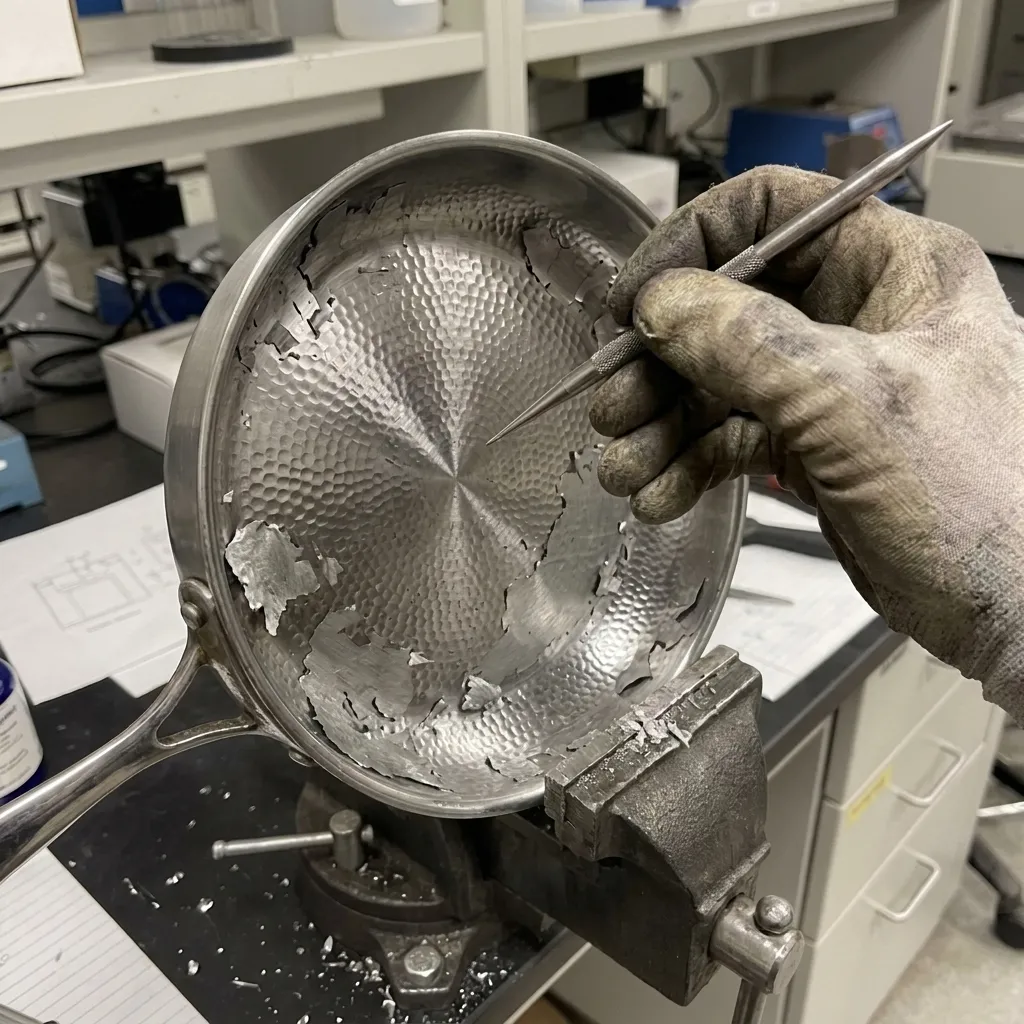
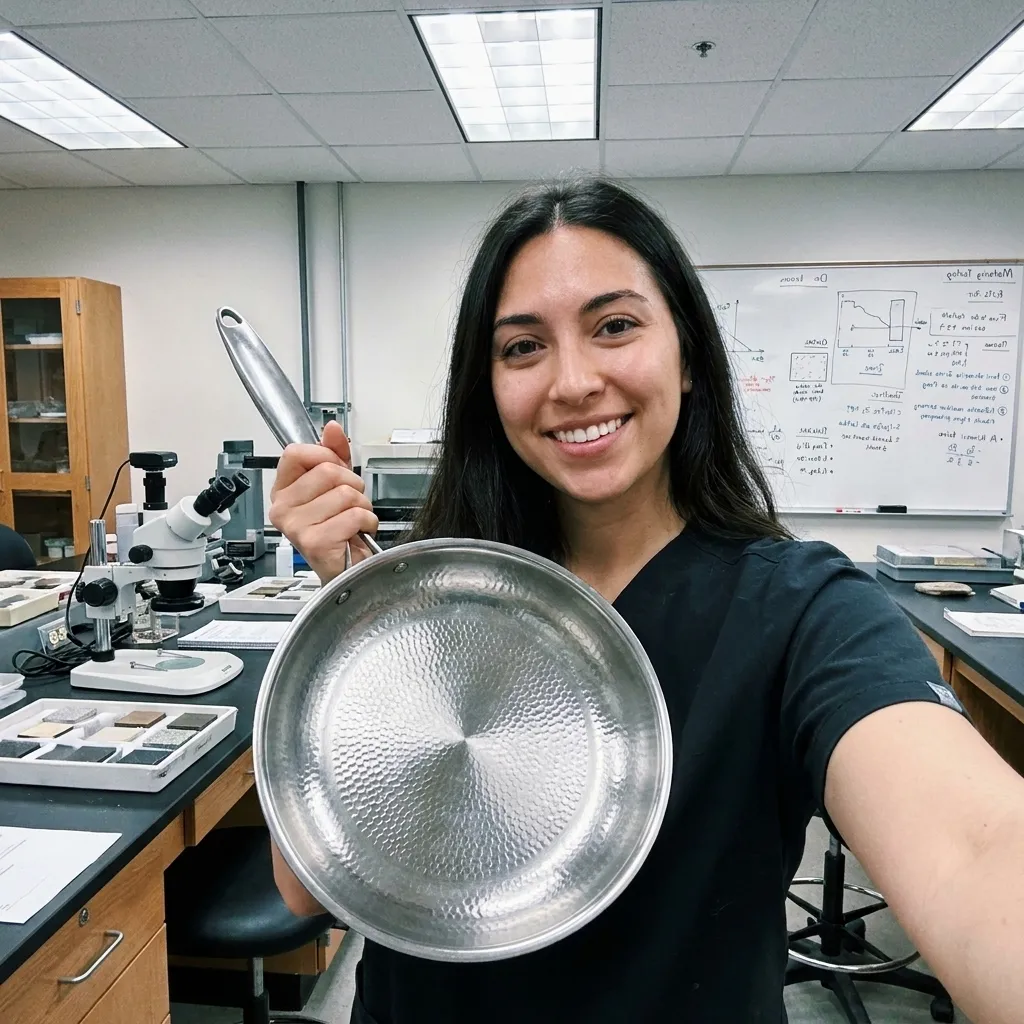
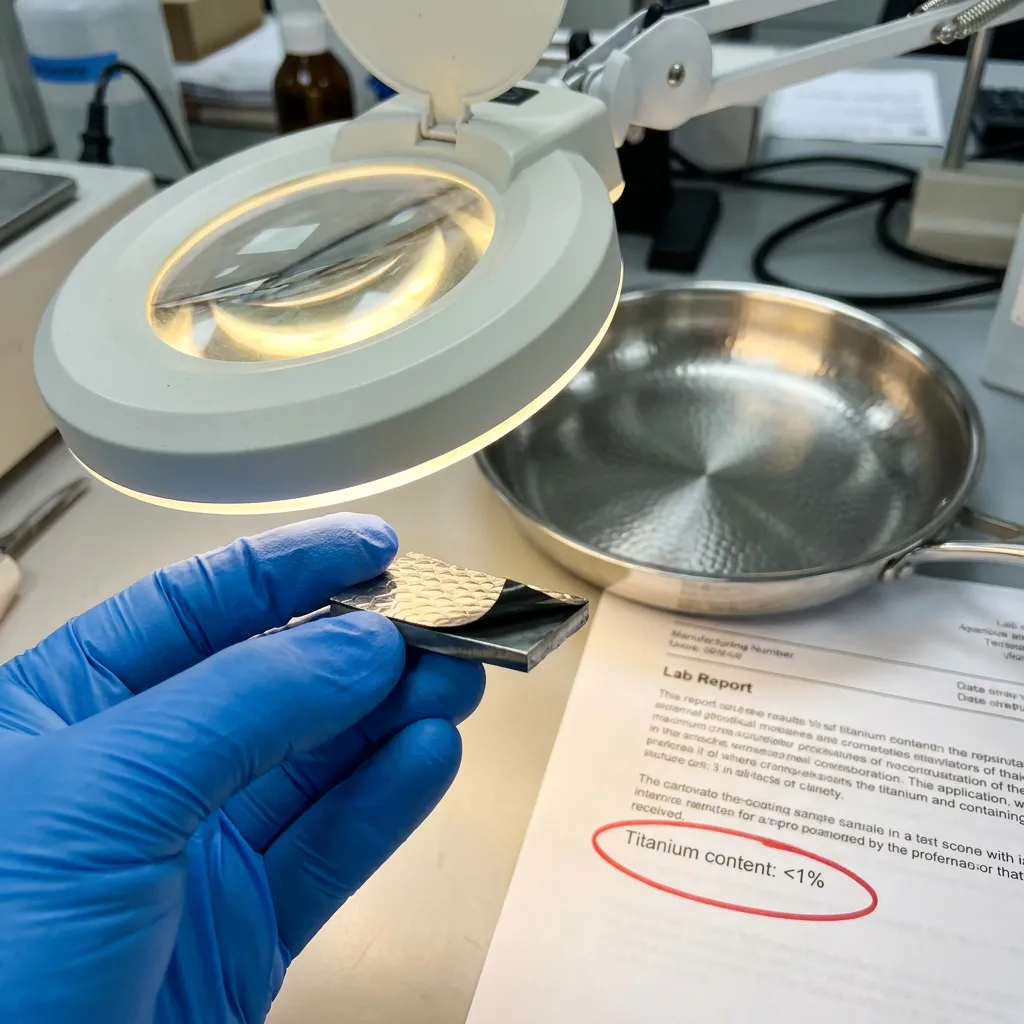
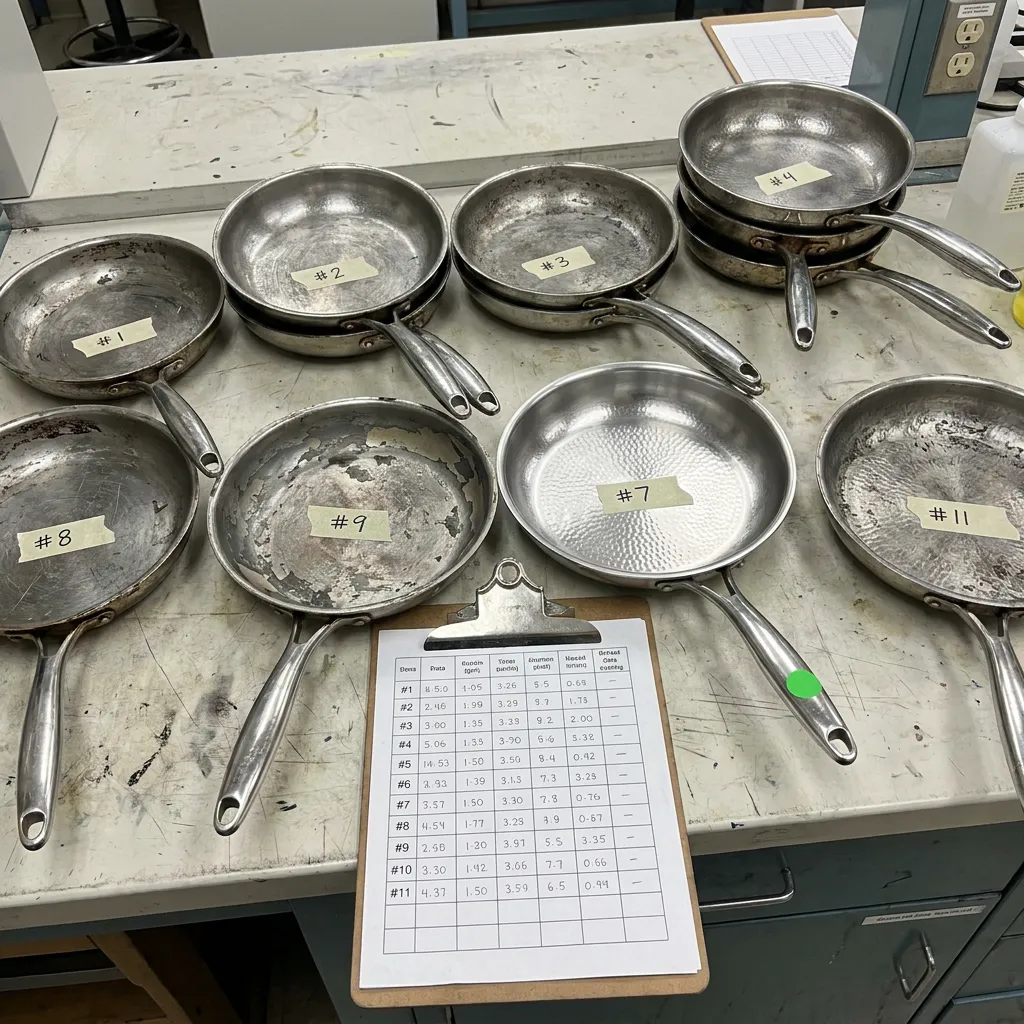
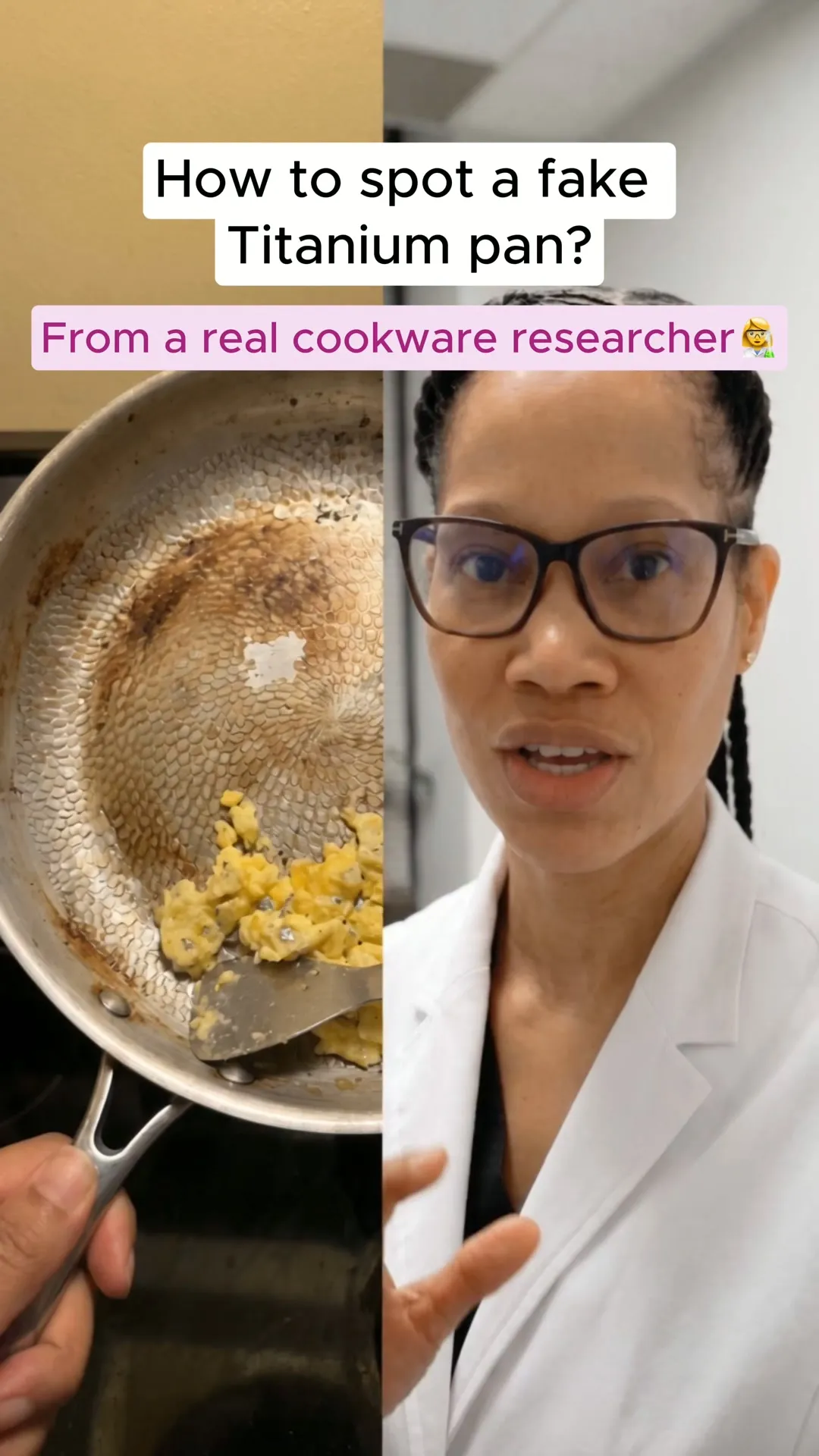
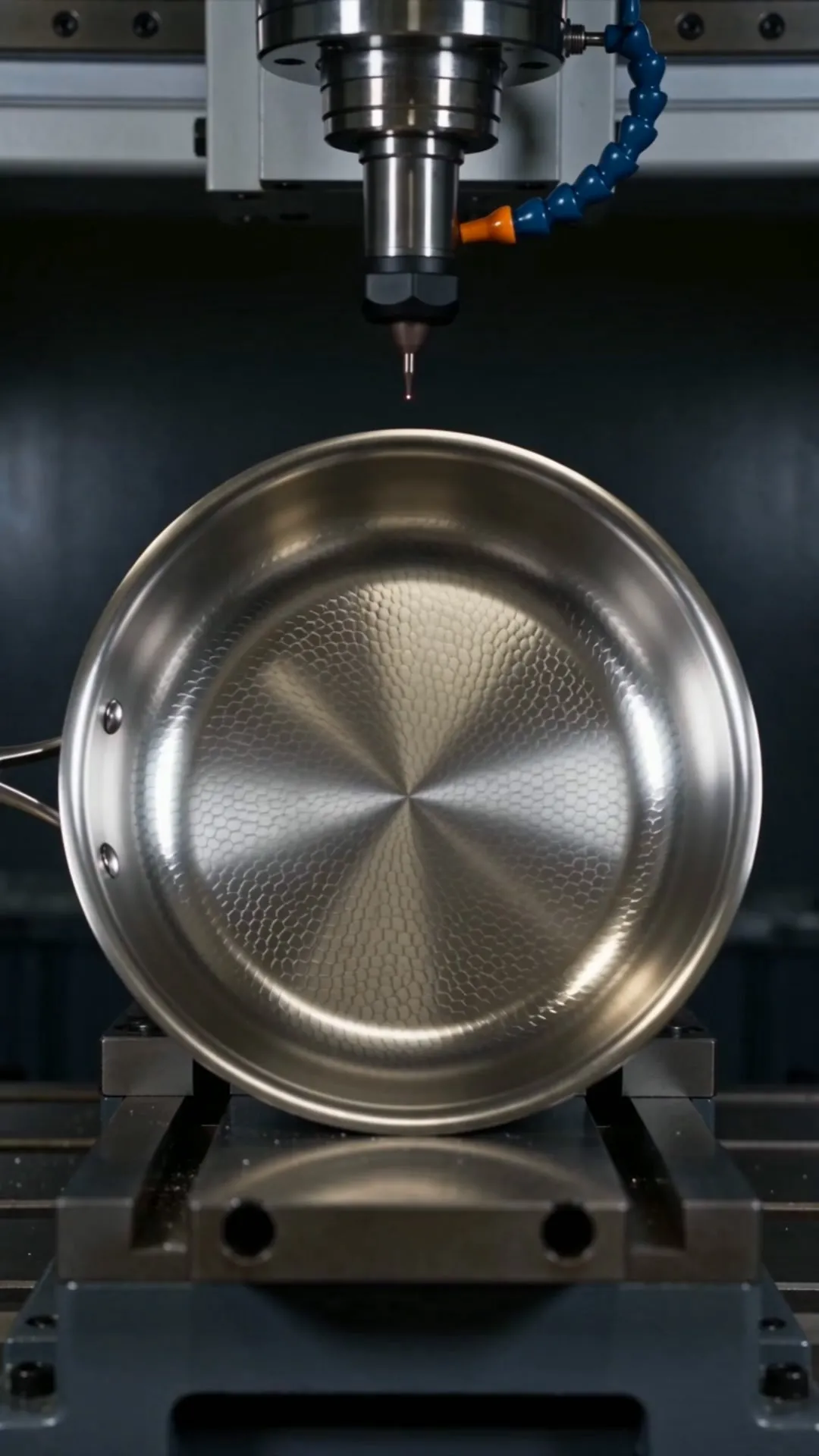
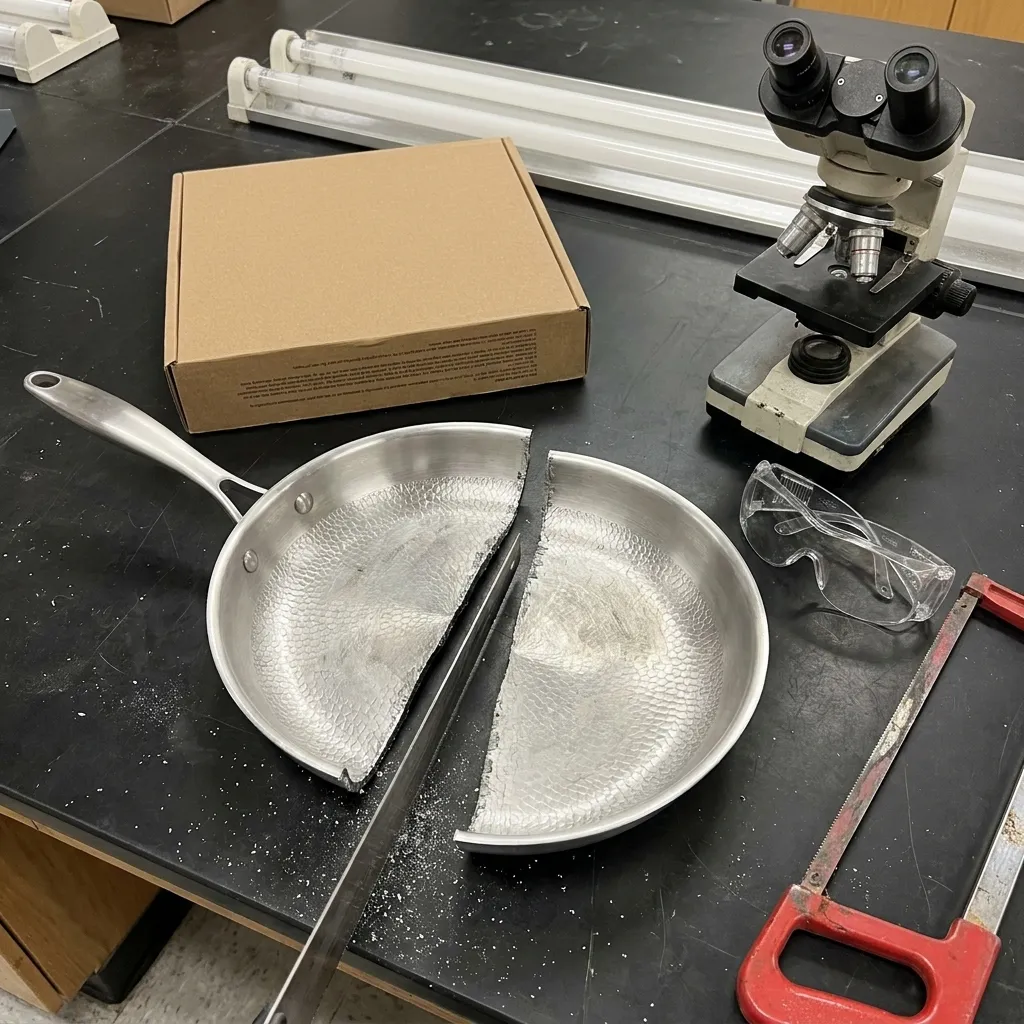
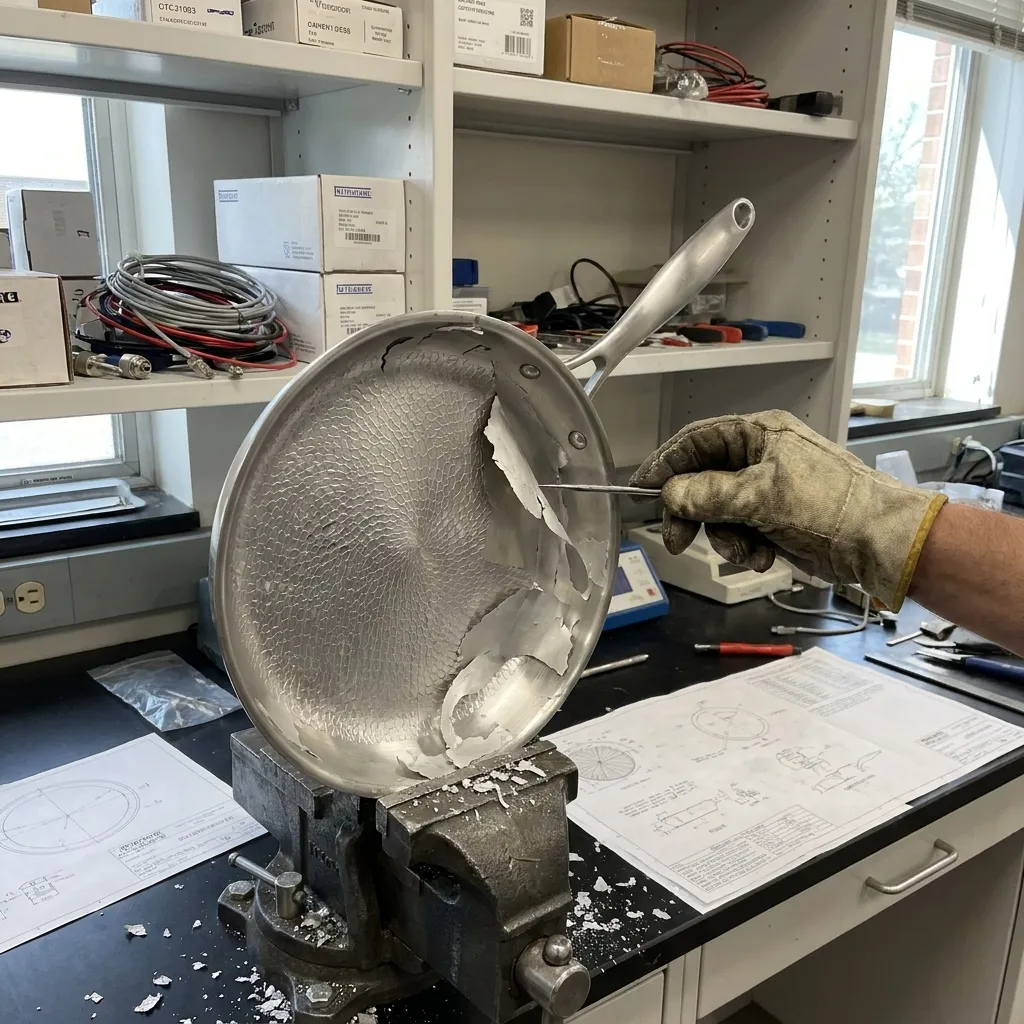
Most “titanium” pans only have a pinch of titanium dust in the coating. The rest is cheap aluminum. I'm a materials engineer — I work with metals for a living. With the Kitchen Health Institute, I spent the last few months doing something most people never do before they buy a pan. I read the back of the box. Then I tested the pans marketed as ""titanium"" on Amazon and in the big kitchen stores — the ones with thousands of five-star reviews and words like ""titanium-reinforced,"" ""scratch-proof,"" and ""lasts a lifetime"" printed across the front. I tested them the way I'd test any material: what is this actually made of, and how does it hold up. And what I found explains why so many people tell the same story. The pan works beautifully for about a month. Then food starts sticking. By month three it's flaking, and they're back to scrubbing and drowning everything in oil — right back where they started. If that's happened to you, it wasn't you. And it wasn't the heat. Here's what's actually going on — physically. Almost every pan sold as ""titanium"" is not made of titanium. It's aluminum. Soft, cheap aluminum. With a non-stick coating sprayed on top. To be allowed to print the word ""titanium"" on the box, the manufacturer mixes a tiny pinch of titanium dust into that coating. That's the whole trick. The substrate underneath is aluminum. The word on the front is titanium. And the only thing touching your food is a coating. From a materials standpoint, this matters more than most people realize. A coating is a sacrificial layer — that's the actual engineering term for it. It sits on top and does the non-stick work until it wears out. And it always wears out. Every heat cycle makes it fractionally thinner. It doesn't matter how gentle you are, how good the brand is, or how much you paid. A coating has a countdown built into it. That's why these pans work for a month and then quit. It isn't a defect. It's the design. And here's the part that frustrated me the most. Buying another ""titanium"" pan to fix this never works — because you're buying the same countdown in a different box. A coated pan cannot solve a coated-pan problem. It's the reason people replace pan after pan, spend hundreds of dollars over the years, and still can't fry an egg without a puddle of oil. A pan you have to replace twice a year isn't a pan you own. It's a subscription you didn't know you signed. So I asked a different question. Not ""which coating lasts longest,"" but ""what if the coating is the problem?"" That led me to the pans that have no coating at all. Real titanium pans aren't aluminum with a word sprayed on them. They're one solid piece of titanium — the whole pan, all the way through. There is no layer sitting on top, so there is nothing to wear out, nothing to peel, and nothing to flake into your food. The food releases because of the metal itself — the surface is hammered with thousands of tiny dimples, so food barely makes contact. And titanium passivates: it repairs its own surface layer in milliseconds when scratched. It's the same property that lets it sit inside the human body for decades without breaking down. You cannot wear out a solid piece of metal the way you wear out a spray-on layer. There's simply nothing to wear out. The problem is that real, solid-titanium pans are rare — and they sit on the same shelves, and in the same search results, as dozens of coated fakes using the exact same word. So I did the work of separating them. I ranked the pans currently marketed as ""titanium"" — which ones are actually solid titanium, which ones are coated aluminum in disguise, and the simple checks that tell you which is which before you spend a cent. If you've bought ""titanium"" more than once. If you've replaced pan after pan and started to think titanium itself was a scam. If you're babying pans and drowning food in oil and calling it normal — There's a reason none of it worked. And it's not what the box told you. Read our full breakdown of the top 5 titanium pans on the market — and how to spot a fake in ten seconds — before you buy another one. Kitchen Health Institute — Read the full report below.
More from Kitchen Health Institute
Trusted by 100,000+ health-conscious families
Kitchen Health Institute
Trusted by 100,000+ health-conscious families
Kitchen Health Institute
Trusted by 100,000+ health-conscious families
Kitchen Health Institute
Up to 65% Off 🔥
Kitchen Health Institute
Save BIG - Up to 65% OFF
Kitchen Health Institute
Up to 65% Off 🔥
Kitchen Health Institute
Save BIG - Up to 65% OFF
Kitchen Health Institute
🍳 Don’t Blame Your Cooking — Fix The Coating First
Kitchen Health Institute
🍳 Don’t Blame Your Cooking — Fix The Coating First
Kitchen Health Institute

🍳 Don’t Blame Your Cooking — Fix The Coating First
Kitchen Health Institute

Cast iron is heavy. Carbon steel rusts.
Kitchen Health Institute
Cast iron is heavy. Carbon steel rusts.
Kitchen Health Institute

 Add to Chrome