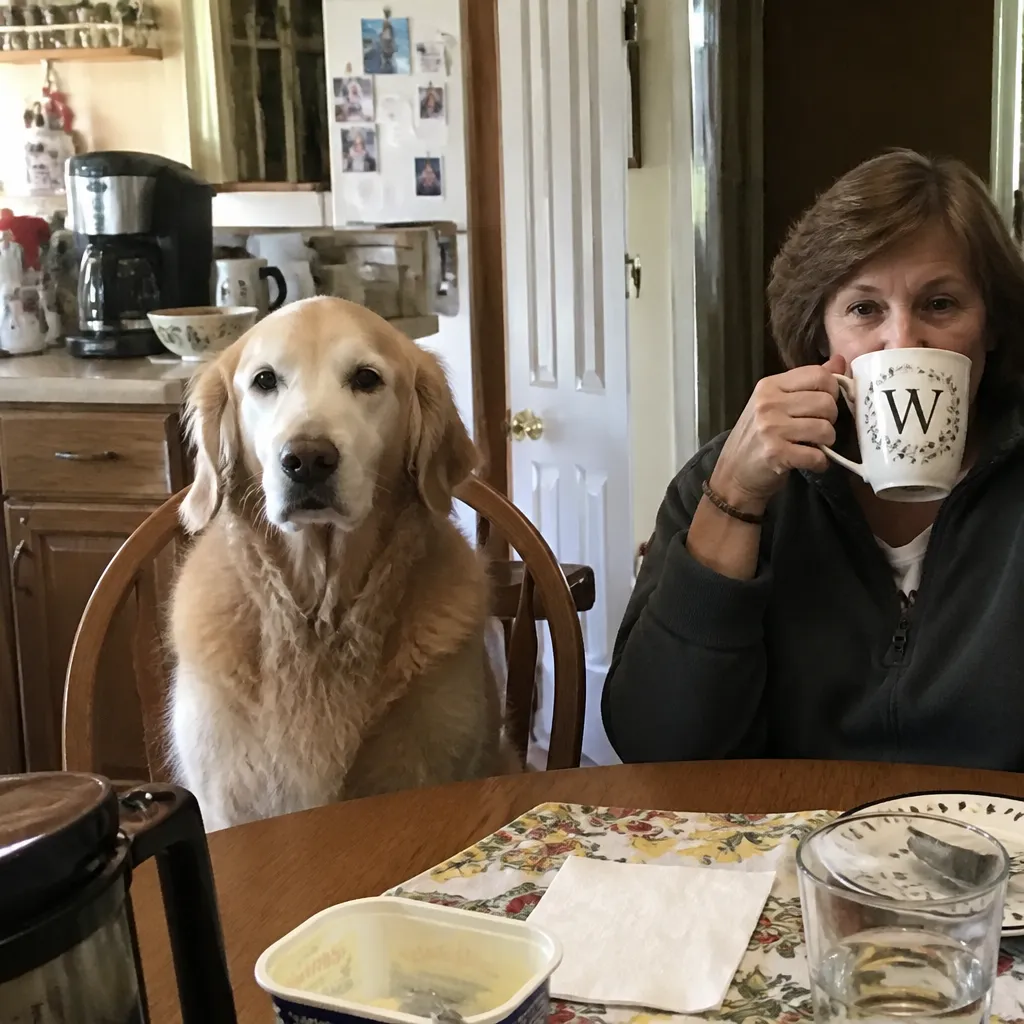
An old dog, a tennis ball, and the morning that changed everything.
Ad Copy
When my dog screamed, I was holding a slice of cheese. I'd been about to give her her morning pill. The cheese was still in my fingers when she went down. That's the detail my mind keeps going back to. Not the sound itself, though I'll hear that one for the rest of my life. Not the way her back legs slid out from under her on the kitchen linoleum. Not me dropping to my knees next to her in my robe at twenty to seven in the morning. The cheese. I was still holding it when I got down on the floor. Still holding it while I had one hand on her side telling her it was okay, okay, I've got you. A little folded square of cheddar with her arthritis pill tucked inside it, the same way I'd given it to her every single morning for the better part of a year. I didn't even realize it was still in my hand until I went to steady myself on the floor and there it was, squashed flat. This was a Tuesday in February. My kitchen, in a little house on the east side of Chillicothe, Ohio, where I've made coffee every morning for twenty-six years. The dog on the floor was Daisy. Eleven years old. A golden retriever with a white face now and the softest ears you've ever felt and the kind of sweet, patient soul that makes people stop us on the sidewalk. The dog who slept on the foot of my bed through my husband's surgery, through my mother's funeral, through both kids leaving for college. My girl. She didn't die that morning. I want to tell you that up front, because I know this already sounds like it's heading somewhere terrible, and it isn't. It's the opposite. Daisy is asleep at my feet as I write this, and an hour ago she beat me to the back door. But I need you to understand what those few seconds on the kitchen floor did to me, because that's the thing that changed everything. That's the reason I'm sitting here writing something I never in my life thought I'd write. Let me back up. My name is Carol. I'm 61. I taught third grade for twenty-nine years at the same elementary school I went to as a girl, and I'm retired now. My husband Jim still works a couple mornings a week at the hardware store downtown, mostly to have somewhere to be. Our two kids are grown and gone, one out in Denver and one twenty minutes away with our grandsons. And for eleven years it's been the three of us. Me, Jim, and Daisy. I'm not a dramatic person. I want that on the record. I'm a retired schoolteacher who grows tomatoes in the backyard and does the crossword in pen and has never once posted anything personal on the internet. I'm the last person you'd expect to be telling a story like this to strangers. So when I tell you I'm making an exception, I need you to understand it's because of what happened, not because I'm the type. Here's the thing nobody warns you about a dog getting old. It doesn't happen all at once. It happens so slowly that you talk yourself out of seeing it, one little excuse at a time. First it was the stairs. She started pausing at the bottom and looking up at them, and I told myself she was just being lazy in her old age. Then it was the car. She used to fly into the back seat. Then she needed a boost. Then she needed me to lift her whole back end in, and she'd let out this little grunt, and I told myself she was just getting settled. Then it was the tennis ball. There's a tennis ball that sat in my backyard for almost a year. Daisy was a golden, which means for ten years that dog lived for the ball. You couldn't say the word. You couldn't even look at the drawer where we kept it. She'd lose her mind, this whole wiggling blur of joy, and we'd be out there until my arm gave out. And then at some point, she stopped bringing it back. Then she stopped chasing it. And then one afternoon I threw it and she just watched it roll across the grass and looked at me, and laid back down. I left it out there. I don't know why. It sat in the grass by the fence through the whole summer and into the fall, and every time I saw it through the kitchen window something in my chest went tight, and I told myself, she's just getting old. Dogs get old. There's nothing to be done about it. That morning with the cheese wasn't where it started. It was just the morning I couldn't lie to myself anymore. The ball had been telling me for a year. I just hadn't wanted to hear it. A few months before that morning, I'd taken her to the vet. He was kind. He felt her hips, watched her walk, and he said the word. Arthritis. Common in goldens her age, he said. We can manage it. Keep her weight down, gentle walks, and he wrote me a prescription for an anti-inflammatory for the pain. And then he said the thing I think about constantly now. He said, "At her age, Carol, we're not going to reverse this. We just want to keep her comfortable." Keep her comfortable. I drove home with a bottle of pills on the passenger seat and that phrase sitting on my chest like a stone. Keep her comfortable. It's the kind of thing you say about someone you've already decided can't get better. And I accepted it, because he's the doctor and I'm a retired schoolteacher who grows tomatoes, and who was I to think otherwise. So every morning, I folded her pill into a slice of cheddar, and she took it, and it helped. A little. She seemed to hurt less. But here's what sat wrong with me, deep down, the part I couldn't shake. The pill made her foggy and tired. And I knew, the way you just know things about a body you've loved for eleven years, that it wasn't actually fixing anything. It was turning the volume down on her pain while whatever was causing the pain kept right on going underneath. I wasn't helping my dog get better. I was just making her decline quieter. And then came the morning with the cheese. The morning she screamed and went down on the kitchen floor with her pill folded in cheddar in my hand. She got up again, that morning, after a few minutes. Shaky. I called the vet and we went in and he checked her over and said it was the arthritis, that it flares, that we could go up on the dose. More of the same pill that wasn't fixing anything. Keep her comfortable. That night I couldn't sleep. I lay there and listened to Daisy shifting and resettling on her bed, this little groan every time she moved, and I thought about her legs going out from under her on that floor. And I thought about my grandmother's collie when I was a girl, and the morning my mother drove him somewhere and came home without him, and how I understood for the first time, at nine years old, that a dog you love comes with a clock you're not allowed to see. Daisy is eleven. Goldens don't get many more years than that. That math kept me up. The fear I couldn't say out loud to Jim, the one that put a pit in my stomach every time she struggled, was that we were walking toward a decision I was nowhere near ready to make. And worse than the fear was the guilt. The feeling that I was failing her. That there had to be something more than a bottle of pills and "keep her comfortable," and that a better person, a smarter person, would have found it already. I would do anything for that dog. Anything. And there I was, doing nothing but watching her fade and feeling sorry about it. Then, that week, my friend Sue called. Sue and I taught together for twenty years. She's got a chocolate lab, Buster, a big goofy boy about Daisy's age, and the year before she'd called me in tears because his back end had gotten so bad she didn't think he had long. We'd cried about our old dogs on the phone more than once, the two of us. But Sue didn't sound like that this time. She sounded like the Sue from fifteen years ago. "Carol," she said, "Buster went up the deck stairs this morning. All of them. By himself. I just stood there and cried." I told her that was wonderful, and I meant it. But I also felt that little stab, the one you feel when somebody else's old dog is doing the thing yours can't anymore. I asked her what changed. New medication? She said no. She said she'd started doing something with him at home. A kind of red light therapy. She'd read about it in one of those golden and lab groups she's in online, a bunch of women our age all comparing notes on their dogs. A certain kind of light, on the sore joints, fifteen minutes a day. She said after a few weeks Buster was moving like a dog years younger. I'll be honest with you, because I promised myself I would be. My first thought was, that sounds like nonsense. A light? I pictured some gadget off late-night television. I'd been let down before, and I told Sue I'd look into it in the voice you use when you have no intention of looking into anything. But that night, Daisy couldn't get comfortable. I lay in bed listening to her groan and shift, groan and shift, and I kept thinking about Buster going up those stairs. And a little after midnight I got up, sat at my kitchen table in my robe, and did the thing I should have done months before. I started reading. I am not a scientific person. I taught eight-year-olds how to read and how to be kind to each other. But I can follow something if I take my time with it. And what I found finally explained the part the vet never had. It explained why the pills were never going to be enough. Here's how I understand it, in my own words. Arthritis pain isn't just "getting old." It's inflammation. The joint gets inflamed, and that inflammation sits in there, day and night, irritating everything around it. It's what drives both the pain and a lot of the ongoing damage. The pill my vet gave me mostly just quiets how much of that pain the dog feels. It doesn't do much about the inflammation itself. That keeps running underneath, every hour of every day, whether she feels it or not. I'm a gardener. So here's the way it finally landed for me. For years I had a climbing rose on the back fence that kept throwing out these sick, yellow leaves. And every summer I'd go out with my shears and snip the yellow leaves off so the bush would look healthy again. And it would, for about a week. Then the yellow leaves came back. Because the problem was never the leaves. The problem was at the root, down in the soil where I couldn't see it, and I was up top fussing with the leaves and calling it gardening. The pills were me snipping yellow leaves. In a year, not one person had given me a single thing for the root. What I read about the red light was a different thing entirely. The reason it isn't a gadget, the reason actual rehab clinics and animal physical therapists use it, is that the right kind of light reaches down into the inflamed tissue and helps calm it at the source. It isn't masking what she feels. It's working on the thing causing it. Every day. The kind of thing you could do at home, in fifteen minutes, on the same bed by the heater where she already sleeps. For a woman who'd spent a year snipping yellow leaves off a dying rose, that made a kind of sense that nothing else had. I read for three nights. I didn't tell Jim, because I half expected to talk myself back out of it. But on the third night Daisy had another bad one, groaning and circling and not able to settle, and I sat there on the kitchen floor next to her bed with my hand on her side. And I looked out the dark window toward where I knew that tennis ball was still sitting in the grass. And I thought, I have been telling myself there's nothing I can do for a whole year. And I don't actually know that. I've never once tried. So I stopped reading and I ordered one. The kind those women with the old goldens kept coming back to, a pad made for dogs called LumaPet. I figured the worst thing that happened was I'd been let down one more time, and I'd lived through that before. It came a few days later. And I'm going to tell you exactly how it went, because I am so tired of stories that skip straight to the happy ending. The first few days, nothing. I draped it over her hips for fifteen minutes while she dozed by the heater, and she liked the gentle warmth of it, she'd sigh and go heavy and sleepy. But I didn't see anything change, and I thought, well, there's another thing I tried. I kept her on the pills. I kept her on everything the vet had told me to do. I just added this on top of it. The second week, something small. The shifting and groaning at night stopped. She'd lie down and just stay down, and sleep, all the way through. I hadn't realized how many months it had been since she'd done that, until she did it again. The third week, Jim noticed before I said a word. He looked up from his chair and said, "She just got herself up off the floor. Did you see that?" I hadn't. But I started watching. And she was getting up on her own, without the heave, without the careful second try she'd been doing for a year. It was not every day. I need you to hear that, because I won't lie to you the way those late-night commercials do. Some mornings were still slow. She's eleven. She has arthritis and she always will. I never once expected her to be a puppy again. But the direction had changed. For a solid year it had only gone one way, down. And now, in little pieces, two steps forward and one step back, it was finally going the other way. And then one afternoon, about five weeks in, I was standing at the kitchen window doing the dishes, and I saw her out in the yard. She had the tennis ball in her mouth. The one that had sat in the grass by the fence for a year. She'd gone and gotten it herself, and she was standing there in the autumn sun looking up at the window, looking at me, with that ball in her mouth and her whole back end going. Asking. The way she used to. And I stood at my sink with my hands in the dishwater and I cried like the dramatic woman I just got done telling you I'm not. I took her back to the vet a few weeks after that for a recheck. He watched her walk across his office and he got this look on his face and he said, "Carol, whatever you're doing, keep doing it." I told him all of it. The pills he gave me, the gentle walks, the light. He said he couldn't tell me which thing was doing what, but that she was moving better than he'd have expected for her age, and to keep going. That was eight months ago now. Daisy is not a young dog. I will never tell you she is. She has arthritis, she always will, I'm careful with her, and there are still slow mornings. But the dog who couldn't get up off my kitchen floor in February is the dog who beat me to the back door this morning, white face and all, that whole back end wagging. She's closer to herself than I ever thought I'd see again. I genuinely did not think I would get to say that. I don't post things like this. I'm a private person. I'm a retired schoolteacher from Ohio. But I'm posting this because of the tennis ball. Because for a year, that ball sat in my grass like a little accusation. Every time I saw it through the window I felt that helpless, failing feeling, and I told myself there was nothing to be done. And I know, I absolutely know, that there are people reading this who have a tennis ball sitting in their yard too. Or a leash on a hook nobody reaches for. Or a spot on the couch their dog can't get up to anymore. People who've been told to just "keep them comfortable" and have quietly accepted that watching their dog disappear is all that's left to do. I'm telling you it might not be. I'm not a vet. Please talk to yours, I did, and I kept Daisy on everything he gave her. But don't do what I almost did, which was accept "there's nothing more we can do" and spend my dog's last good months out in the yard snipping yellow leaves. If you've got an old dog who's slowing down, and your vet has ruled out anything urgent, look into this the way I wish to God I'd looked into it months sooner. Read about it yourself. Don't take the word of a retired schoolteacher in a Facebook post. But look. The one on Daisy's bed is the one I mentioned above, and I'll leave where I found it down at the bottom. Fifteen minutes a day, on the bed she already sleeps on, by the heater she already loves. That's the whole thing. P.S. I think about that tennis ball every single morning now. Not in a sad way anymore. In a grateful way. There was a whole year I was sure I'd never see her carry it again. If you're standing at a window looking at one in your own yard, I want you to know it might not be the end of the story. It wasn't for us. P.P.S. If there's a ball sitting in your grass that your dog stopped bringing back, this is your sign. I waited a year, calling it old age the whole time. Don't wait the way I did. I'd give a great deal to have those months back. This is where I got Daisy's, and they give you a couple months to try it on your own dog and send it back if nothing changes: ivddprevention.com ~ Carol
More from Life With Emma & Pup
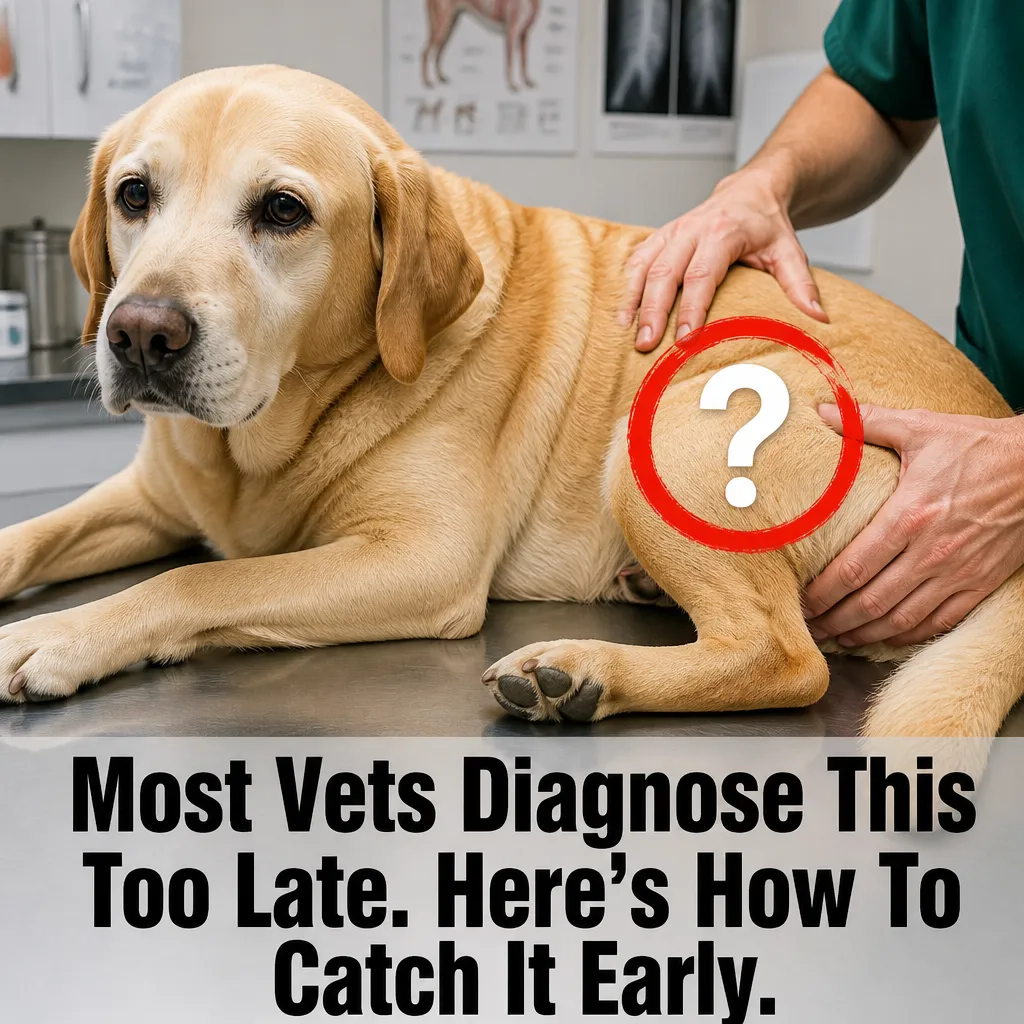
The Cellular Collapse Most Vets Miss
Life With Emma & Pup

Why 660nm matters for joints
Life With Emma & Pup
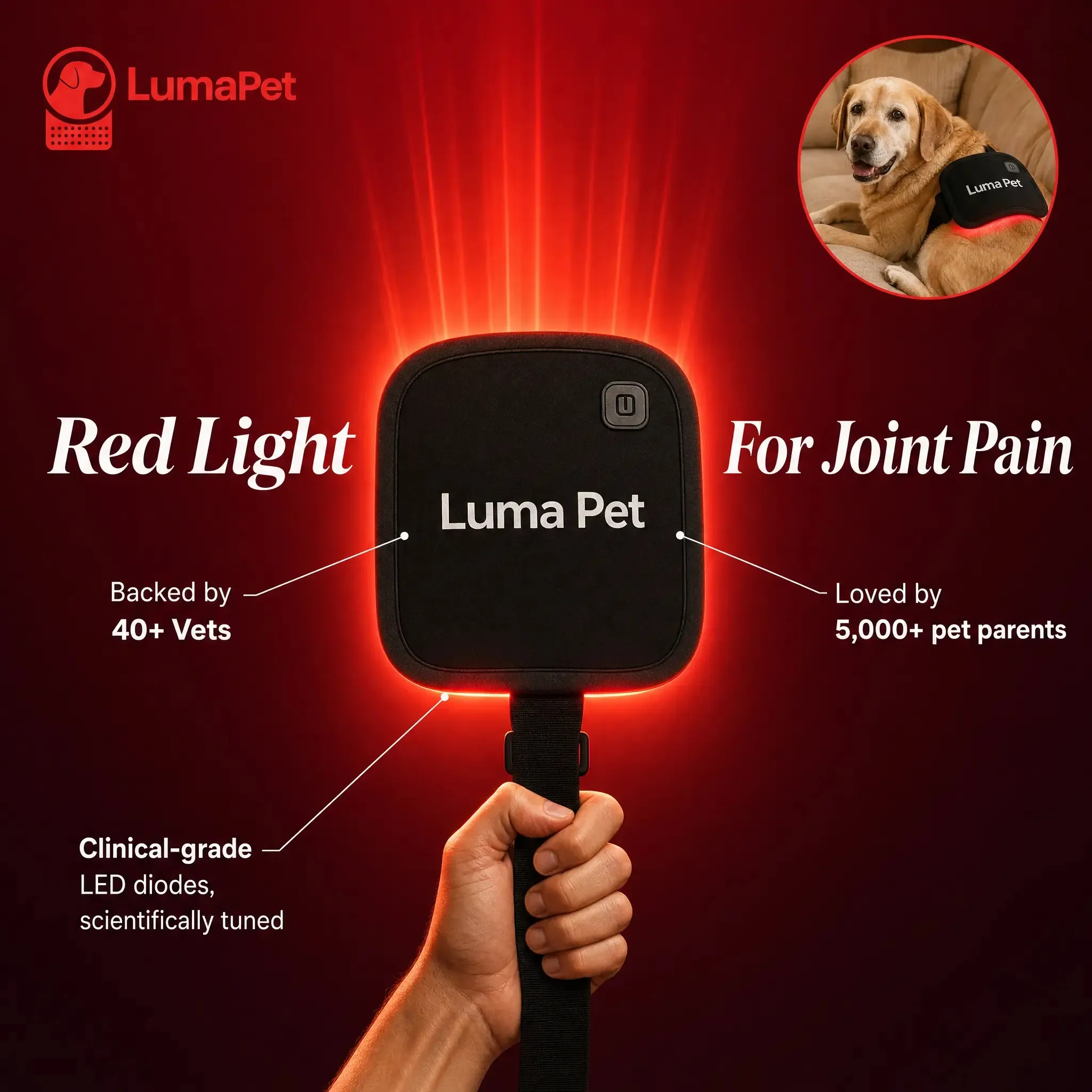
Vet-grade tech for dog joints
Life With Emma & Pup

30% OFF ends today. SHIP4FREE = free.
Life With Emma & Pup
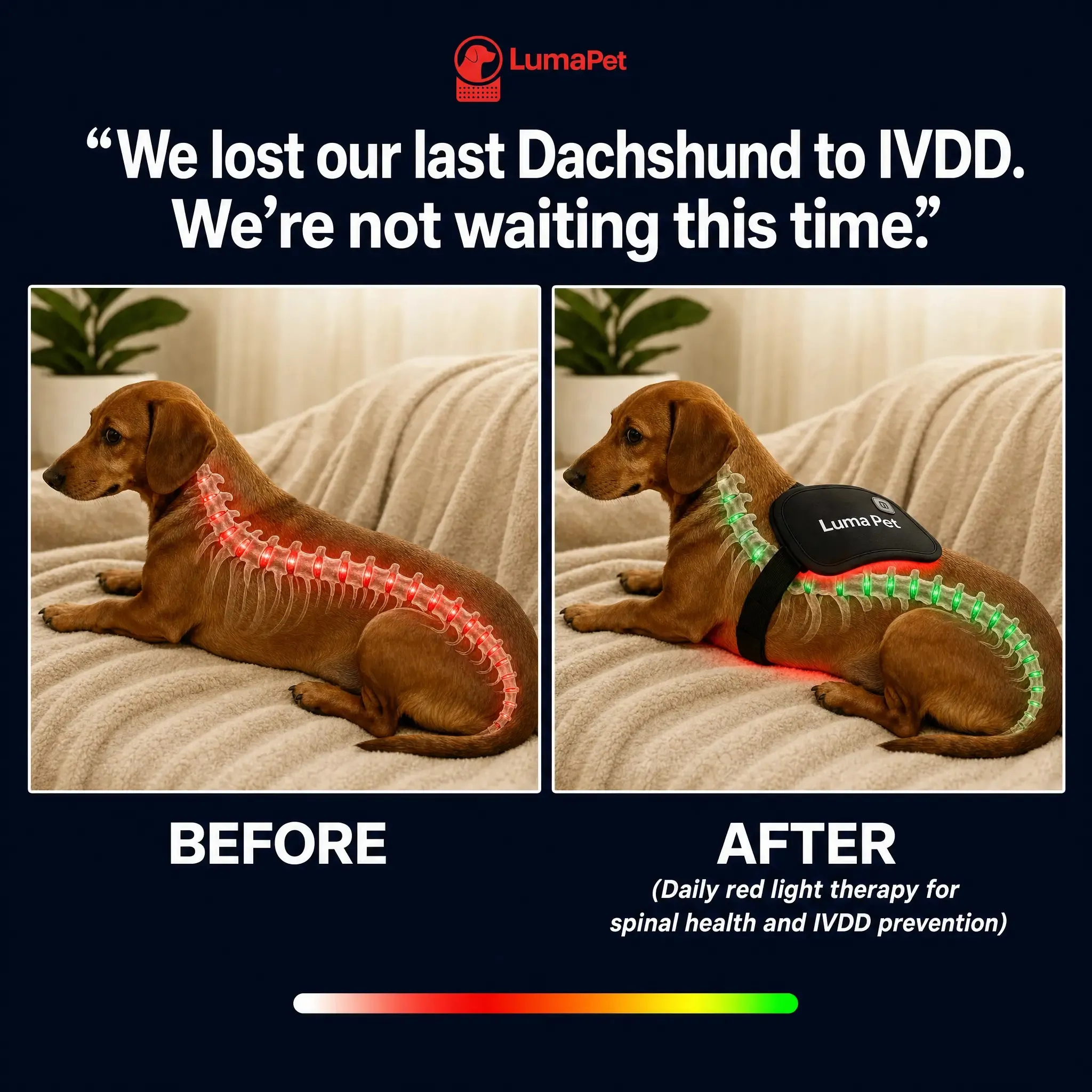
After we lost Bruno, we changed everything
Life With Emma & Pup

Hip dysplasia, what worked
Life With Emma & Pup

30 days. Drug-free joint relief.
Life With Emma & Pup
Keep Your Dog Happy, Healthy, & Active for Longer 🌿
Life With Emma & Pup
Keep Your Dog Happy, Healthy, & Active for Longer 🌿
Life With Emma & Pup
Keep Your Dog Happy, Healthy, & Active for Longer 🌿
Life With Emma & Pup
Keep Your Dog Happy, Healthy, & Active for Longer 🌿
Life With Emma & Pup
Keep Your Dog Happy, Healthy, & Active for Longer 🌿
Life With Emma & Pup

 Add to Chrome