Wash day shedding...
Ad Copy
A lot of my patients thought I was crazy when I told them washing their hair less often could make the shedding worse, not better. Worse. Then I showed them what was actually happening to their scalps between washes. Most women wash their hair about three times a week. That is more than 150 washes a year. And once my patients understood what their regular shampoo and conditioner were doing during every single one, many of them never used those bottles again. Here is what I showed them. Back in 2022, I was buried in skin biology research during my postdoctoral work at Stanford when I came across a study that changed everything for me and my patients. Not because it discovered some new hair-loss drug. But because it explained why the hair women grow after 50 no longer behaves like the hair they had at 30. And how a few simple changes to those 150 washes could stop the shedding and bring back the fullness they had lost. See, you’re not simply losing more of the hair you had at 30. Your scalp is now growing a different kind of hair. In that Journal of Structural Biology paper, researchers called this an “aged hair program.” In plain English, your scalp changes both how it holds onto each hair and how it builds the strand growing from it. The scalp holding each hair becomes easier to disrupt during washing. And the strand growing out of it has a smaller diameter and less resistance to breakage. So more full-length hairs release from the scalp. More strands snap through the lengths. And every strand left behind creates less volume. That is why washing less does not solve the problem. It only puts more time between the washes. It does nothing to change what happens when your new scalp and strands meet the same old products. Those 150 washes are happening either way. So it isn’t about how often you wash your hair. It’s about what you wash it with. Start with shampoo. Most regular shampoos trap you between two bad choices. Clean aggressively enough to remove the buildup, and sulfates strip the protection your scalp has left. Go gentle enough to avoid stripping, and oil and residue stay around the roots. Neither option addresses the locally produced DHT underneath. Your new scalp needs all three: Clear the buildup. Preserve its protection. And reduce the DHT pressure making hair easier to release. That is why switching shampoos never solved it. Every bottle was still designed for the scalp you had at 30. And every wash repeated the same mistake. Then comes conditioner. The hair your scalp grows after 50 creates the opposite trade-off. It needs more protection than the hair you had at 30. But because every strand has less diameter, it can carry less weight. Use a rich conditioner and the coating collapses your volume, clumps the strands together, and reveals more scalp. Use too little and your brush catches in the knots, snapping the weaker lengths after every wash. So ordinary conditioner makes you choose: Protect your hair. Or keep your fullness. But the hair your scalp grows after 50 needs both. That was when I stopped looking for another “better” shampoo and conditioner. I started looking for ingredients that matched the different hair women grow after 50. The first was a powerful antioxidant shown to reduce shedding by 61%. Then I found three plant extracts that keep oil under control without stripping and help your scalp make less DHT at the root. For my patients, the difference was visible within weeks: Fewer full-length hairs wrapped around their fingers. And a smaller clump waiting in the drain. That became the Shampoo. For the Conditioner, I combined tiny protein pieces that reinforce each hair from within with hyaluronic acid that hydrates without weighing it down. They gave fine hair up to 37% more visible volume after one wash. Each strand took up more space, so thinning areas looked better covered and ponytails felt thicker. Then I added a lightweight silk layer that made hair 70% stronger against breakage. That meant fewer snapped pieces in the brush and more length and body staying intact. One bottle helps your changed scalp hold onto more hair. The other makes the different hair growing from it fuller, stronger, and harder to break. Together, they became the KilgourMD Shampoo and Conditioner. The first wash system I built for the hair and scalp you have now, not the ones you had decades ago. For a long time, I only made this system available to patients in my clinic. Two months ago, I agreed to produce one small batch for women outside the clinic. It sold out in two weeks. Honestly, I did not expect that. And to every woman who reached the page after it was already gone, I’m sorry. The second batch is finally back in stock. To make up for the wait, I asked my team to unlock a “forgive us” discount for anyone reading this while the new batch lasts. Below, I’ll walk you through exactly how each bottle works, the studies behind the ingredients, and how to fit both into the routine you already follow. You do not need to wash more often. You do not need to keep stretching your wash days. And you do not need to add another treatment. Same shower. Same schedule. The same 150 washes a year. The same two steps. The only difference is that your wash routine is finally built for the hair and scalp you have now, not the ones you had at 30. Your next wash is happening either way. Make it one that works with your new hair instead of against it. - Dr. James P.S. About that “aged hair program.” Researchers took the newest section of hair growing from women over 50, sliced it with a diamond blade, examined it under an electron microscope, and fired microscopic X-ray beams through it. They found the strand was being built differently from the inside out. It had less diameter, different keratin organization, fewer protective outer layers, and behaved differently around water. That is why the Conditioner contains: KeraShaft V® (the protein peptides) - reinforces the strand from within for up to 37% more visible volume after one wash. ResistHyal® (the hyaluronic acid) - carries moisture inside the hair without the heavy coating that flattens fine strands. Silkgel Neo® (the lightweight silk protein) - protects the vulnerable outside of the strand and makes it 70% stronger against breakage. Each ingredient answers a physical change researchers found in the different hair women grow after 50. P.P.S. The scalp changes too. That is why the Shampoo contains: Resveratrol (the antioxidant) - reduced shedding by 61% in a clinical study. CutiBiome CLR® (the three-plant blend) - helps calm the environment around the roots, control oil, and reduce local DHT production. Piroctone Olamine® (the scalp active) - increased hair amount after eight weeks in a shampoo study involving women. Together, they help keep more full-length hairs on your head instead of collecting in the drain. P.P.P.S. Oily roots create a Goldilocks problem. Clean too aggressively and you strip the scalp. Clean too gently and oil stays behind, clumping your strands together and collapsing your volume. So the Shampoo uses four coconut and plant-based cleansers to remove buildup without sulfates. Then Patchoul’Up® (the oil-balancing plant extract) helps rebalance excess scalp oil by 34%. Not too harsh. Not too weak. Just clean enough to lift oily roots without stripping the scalp or drying your lengths.
More from James Kilgour, MD
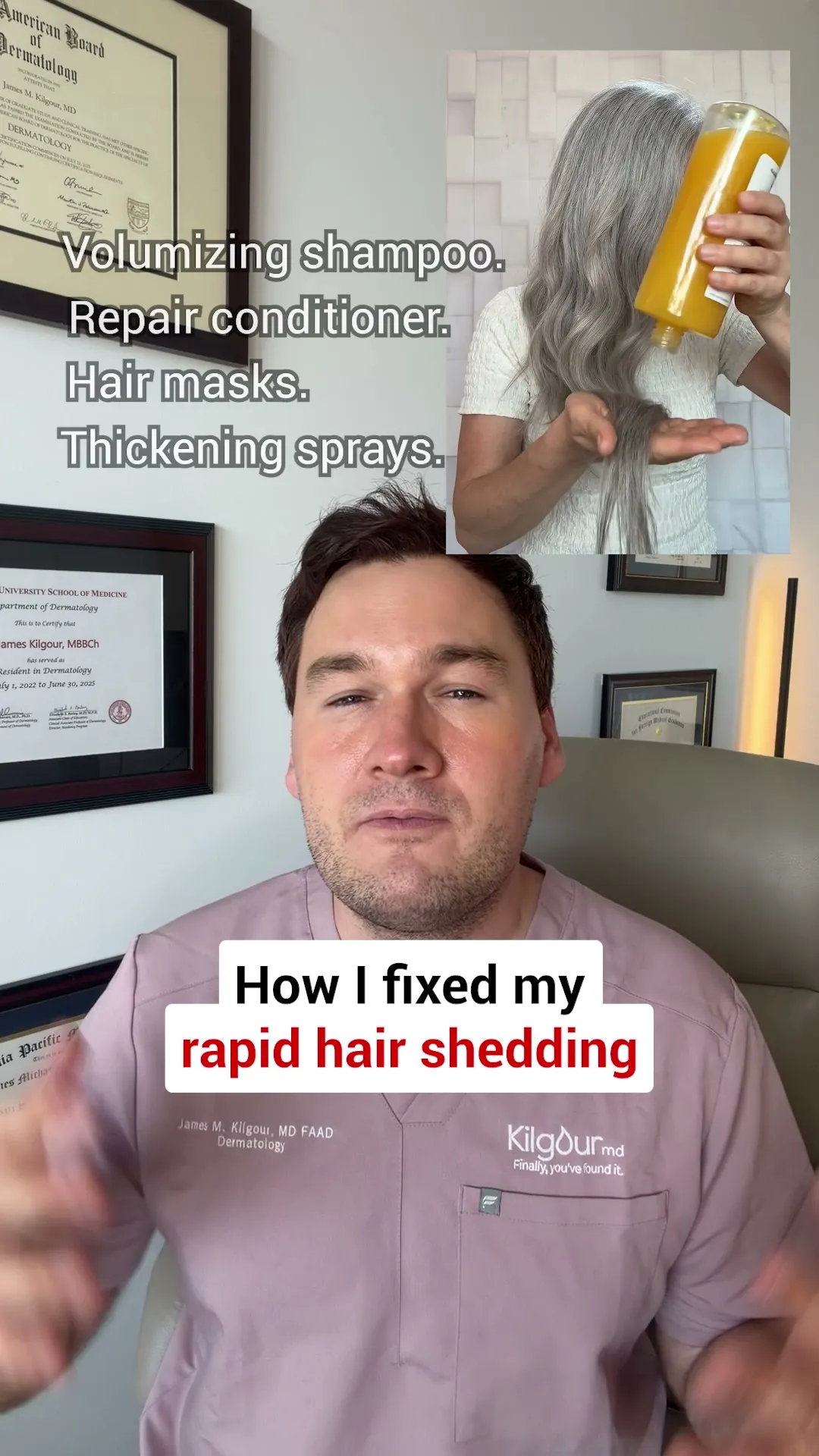
Six weeks and the shedding stops
James Kilgour, MD

Six weeks and the shedding stops
James Kilgour, MD
Six weeks and the shedding stops
James Kilgour, MD

Six weeks and the shedding stops
James Kilgour, MD
Six weeks and the shedding stops
James Kilgour, MD
Six weeks and the shedding stops
James Kilgour, MD
Six weeks and the shedding stops
James Kilgour, MD
Six weeks and the shedding stops
James Kilgour, MD
Six weeks and the shedding stops
James Kilgour, MD
Six weeks and the shedding stops
James Kilgour, MD

Six weeks and the shedding stops
James Kilgour, MD

Six weeks and the shedding stops
James Kilgour, MD

 Add to Chrome