Ad Copy
There’s a routine blood test that tracks with your waist, your triglycerides, and your insulin after menopause. It rarely gets ordered. A rare 2026 study done specifically in 351 postmenopausal women found the lowest vitamin D group (under 21 ng/mL) had over twice the risk of metabolic syndrome versus women above 31, along with higher waist circumference, triglycerides, and insulin, and lower HDL. This was a cross-sectional snapshot, so it can’t prove low vitamin D causes metabolic syndrome. More body fat can also lower circulating vitamin D. And supplement users were excluded, so it doesn’t tell us a pill fixes anything. What I tell my patients: ask for the 25-hydroxy vitamin D test by name. Food sources worth knowing: salmon, sardines, mackerel, egg yolks, UV-grown mushrooms, cod liver oil, and fortified milk or plant milk. If you supplement, use D3, take it with a fat-containing meal, dose to your blood level, and retest. Source: Cota e Souza et al., Arch Endocrinol Metab. 2026;70(5):e260085. Educational, not medical advice. Talk to your clinician about testing and dosing.
More from The Pause Life by Dr. Mary Claire Haver

When should women get their first bone density scan? Many women are told to wait until age 65 for a baseline DEXA scan. In this episode, I explain why waiting until 65 may be too late for many women. Bone loss begins years earlier, accelerates during the menopause transition, and you can lose up to 20% of your bone mass in the first 5 to 7 years after menopause. We also discuss why vitamin D matters for bone health, what levels we aim for in our clinic, and why understanding your individual risk factors can help you have more informed conversations with your healthcare team. The goal isn't to wait for a fracture. The goal is to protect your bones before one happens. Listen to the full unPAUSED Menopause Masterclass episode on labs here: https://youtu.be/c8jUaFBCudc?si=qezDPARSgPOZSOhh #menopause #bonehealth #womenshealth #midlife #hormonehealth
The Pause Life by Dr. Mary Claire Haver
If you’re losing weight in menopause, how much protein do you actually need to protect your muscle? And does eating more protein mean you’ll lose more weight or more fat? What happens to lean tissue as the number on the scale goes down? And where does resistance training fit into all of this? There’s also another piece of the research worth understanding: the relationship between higher protein intake and insulin sensitivity during weight loss. ✨ I break down what the studies actually show in this Substack. Comment MUSCLE and I’ll send it to you. #menopause #womenshealth #muscle #hormonehealth #strengthtraining
The Pause Life by Dr. Mary Claire Haver
The "menopause belly" isn't a lack of willpower. It's a predictable response to changing hormones. As estrogen shifts, where your body stores fat, how you regulate insulin, and even how you build and maintain muscle can change too. Understanding why it happens is the first step toward addressing it with strategies that actually work. I break down what's happening, why it's so common, and the evidence-based tools we have to help. Comment SUBSTACK and I'll send you the full article. #menopause #midlife #bellyfat #womenshealth #perimenopause
The Pause Life by Dr. Mary Claire Haver

When did taking care of our health turn into another way for women to feel like they’re failing? More protein. More exercise. More mindfulness. More optimizing. And if you’re still struggling? The message can become that you simply haven’t done enough. ✨Comment POD and I’ll send you my full unPAUSED conversation with Dr. Lucy McBride about wellness culture, the medical system, and what women actually need to support their health. Lifestyle matters. Exercise matters. Nutrition matters. But as Lucy points out, the problem is when we’re told these things are necessary AND sufficient for health. You shouldn’t have to “wellness” your way out of every health problem. And medicine isn’t off the hook either. Women have experienced plenty of shame within the medical system too. It doesn’t have to be wellness OR medical care. It can be both. #menopause #wellness #womenshealth #healthcare #midlife
The Pause Life by Dr. Mary Claire Haver
It doesn’t have to be wellness OR medical care. It can be both.
The Pause Life by Dr. Mary Claire Haver

The 'Pause Life by Dr. Mary Claire Haver
The Pause Life by Dr. Mary Claire Haver
When should women get their first bone density scan? Many women are told to wait until age 65 for a baseline DEXA scan. In this episode, I explain why waiting until 65 may be too late for many women. Bone loss begins years earlier, accelerates during the menopause transition, and you can lose up to 20% of your bone mass in the first 5 to 7 years after menopause. We also discuss why vitamin D matters for bone health, what levels we aim for in our clinic, and why understanding your individual risk factors can help you have more informed conversations with your healthcare team. The goal isn't to wait for a fracture. The goal is to protect your bones before one happens. ✨Comment POD and I'll send you the full unPAUSED Menopause Masterclass episode on labs. #menopause #bonehealth #womenshealth #midlife #hormonehealth
The Pause Life by Dr. Mary Claire Haver
Why does cholesterol often increase in midlife? Many women are surprised to learn that LDL cholesterol increases by an average of 18% across the menopause transition, even when their diet and exercise habits haven't changed. ✨ Comment POD and I'll send you the full unPAUSED episode about the most important lab tests for women in midlife. In this episode of unPAUSED, I explain why declining estrogen changes the way your liver handles cholesterol, why elevated cholesterol isn't just an aging event but also a hormonal one, and why additional tests like ApoB and Lp(a) may provide a more complete picture of your cardiovascular risk. Understanding these changes can help you have more informed conversations with your healthcare team and take a more proactive approach to protecting your heart health. #menopause #cholesterol #midlife #womenshealth #hormonehealth
The Pause Life by Dr. Mary Claire Haver

“Your labs are normal” is not the same as “you are healthy,” and the difference is costing women years. A reference range is a statistical band, not a health target. You can sit inside it and still feel awful, because the markers that actually explain midlife symptoms often never get ordered in the first place. Fatigue, brain fog, the weight that won’t shift: the answers are frequently in the bloodwork no one ran. This is not you being dramatic. It’s a system that was never built to look closely at women at midlife. In the new Menopause Masterclass I walk you through how to read your own labs, line by line, so you can stop being dismissed and start asking for exactly what you need. Full episode on unPAUSED, link in bio. What’s a lab result you were told was “fine” when you knew something was off? Tell me below. #menopause #perimenopause #menopausematters #hormonehealth #womenshealth midlifewomen hrt labwork thyroidhealth unPAUSED
The Pause Life by Dr. Mary Claire Haver

The unPAUSED podcast is available everywhere you listen to podcast, and full video episodes are on YouTube. I’m Dr. Mary Claire Haver, abort, certified obstetrician and gynecologist and certified menopause practitioner. Welcome to the podcast where we cut through the silence and talk about what it really takes for women to thrive in the second half of life.
The Pause Life by Dr. Mary Claire Haver
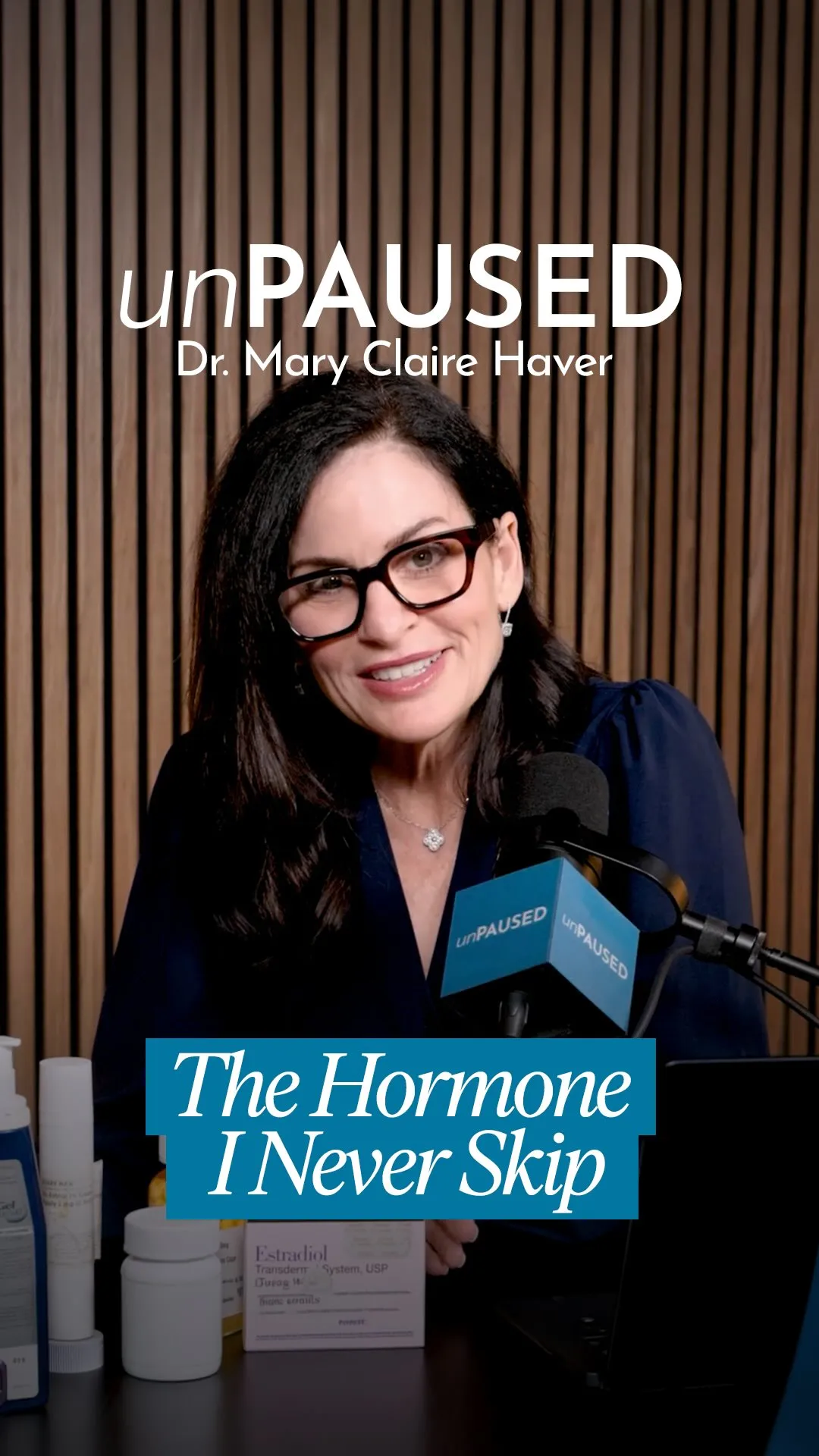
Progesterone doesn't get as much attention as estrogen, but for many women, it's the hormone they notice the most. In this clip, I explain how progesterone may help with sleep, PMS, PMDD, and why some women say it's the one medication they never forget to take. I also discuss why a small percentage of women don't tolerate progesterone well, and what options may be available if that's you. ✨Comment POD and we'll send you the full Menopause Routine episode of unPAUSED. #menopause #menopausesupport #perimenopause #sleep #midlife
The Pause Life by Dr. Mary Claire Haver
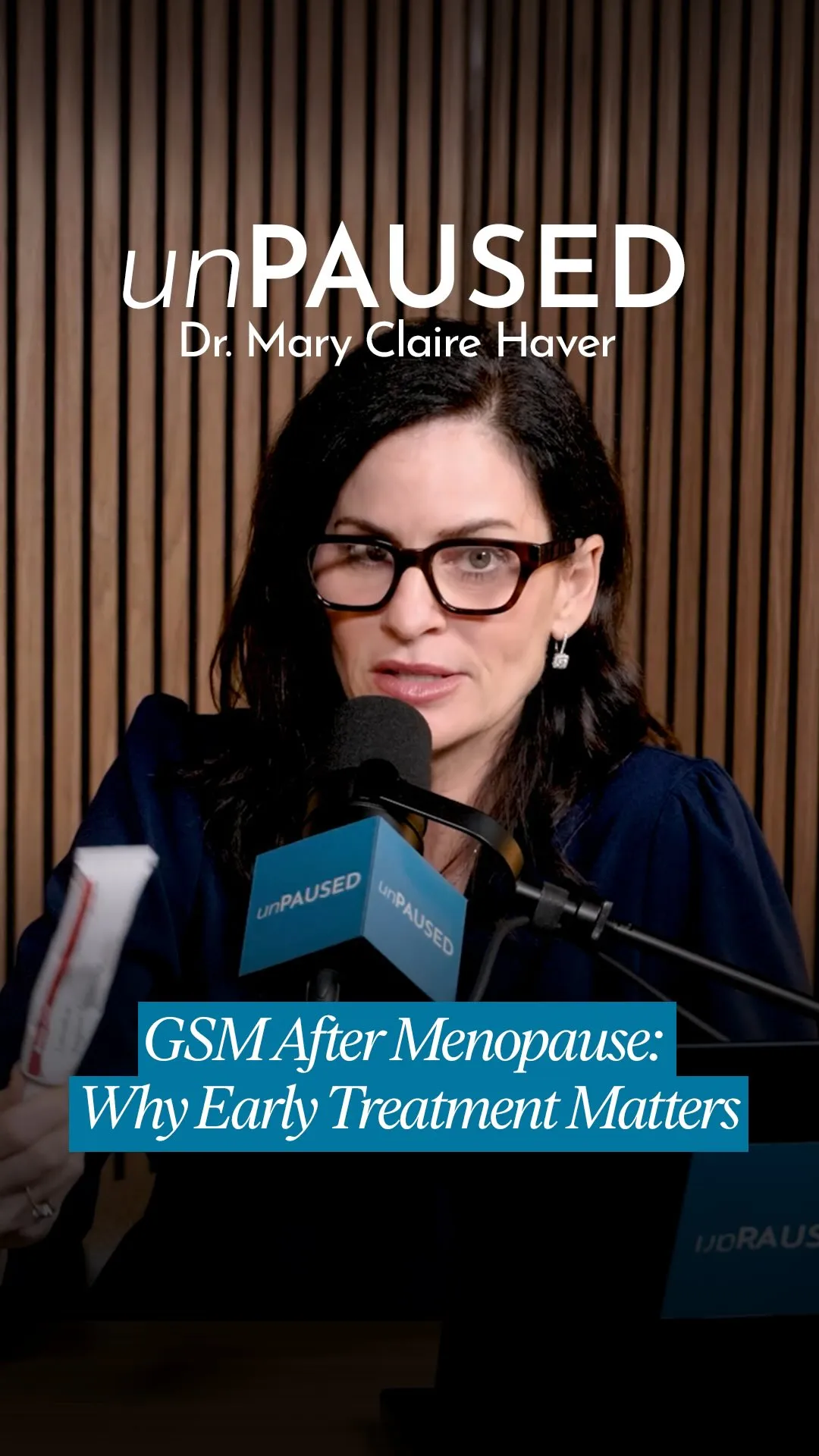
The most common consequence of menopause is also one of the most overlooked. Genitourinary Syndrome of Menopause (GSM) affects the vast majority of postmenopausal women, yet it remains underdiagnosed, undertreated, and rarely discussed. In this conversation, we talk about why GSM is far more than a quality-of-life issue, how vaginal estrogen can help prevent recurrent UTIs, and why proactive treatment matters. This is information every woman deserves to know. ✨Comment POD and we'll send you the full Menopause Routine episode of unPAUSED. #menopause #gsm #hormonehealth #midlife #womenshealth
The Pause Life by Dr. Mary Claire Haver

 Add to Chrome