Tingling in your hands… what’s really going on?
Ad Copy
I drove six hours through Pennsylvania to buy a 1979 Shovelhead chopper from a woman named Eleanor. Her husband had built the bike in 1980. He'd ridden it for 44 years. He died in March. He was 89. He'd ridden the Shovel for the last time eight weeks before he died. I'm a vintage Harley collector. I'm 51. I own four bikes — a '74 Shovelhead, a '92 Heritage Softail, a 2014 Road King, and a 1957 Panhead I've been restoring for two years. I ride about 3,000 miles a year. I work as a CPA. I have a wife and two grown kids. My hands are fine. I've never had any of the problems older riders complain about. I went to Eleanor's house in May because I wanted the bike. I came home with something else. Eleanor lived in a small farmhouse outside Bedford, Pennsylvania. When I pulled up the driveway in my truck with the trailer, she was sitting on her front porch with a glass of iced tea. She was 84. She had her husband's leather jacket folded on the bench next to her. She'd been waiting for me. I walked up to the porch. She stood up. She said — you must be the man from Ohio. I said yes ma'am. She said — Tom would have liked you. You drove a long way. I said — I drove a long way because the bike is special. She nodded. She said — sit down for a minute before we go to the barn. I have something to tell you. I sat down. She poured me iced tea from a pitcher on the porch railing. I noticed her hands as she poured. Steady. Strong. Veins thick but not gnarled. She didn't shake. For an 84-year-old woman pouring iced tea, her hands looked like they could still tie a sailor's knot. I noticed because I notice hands. She sat back down. She said — my husband's name was Tom. He rode motorcycles for 71 years. He started on a Triumph when he was 18 and he ended on that Shovelhead you're about to take home. He died in March of a heart attack in our kitchen. He'd been on the Shovel eight weeks before that. He rode 120 miles the day he had his last ride. He told me when he came home — Ellie, that was a good day. He died nine weeks later in the kitchen making coffee. I said — Eleanor. I'm sorry. She said — don't be. He had the best run a man could have. He died with his hands working and his legs working and a bike he could still ride. Most men don't get that. That's why I called you about the Shovel before I called anyone else. I want her to go to a man who'll appreciate what she means. I said — I will, ma'am. She said — Eleanor. She said — and I have one condition for the sale. I said — alright. She said — I want you to come inside before you take her home. I have a few things of Tom's I want to give you with the bike. They were his. I want them to go with the bike. We walked out to the barn. The Shovel was under a canvas sheet in the corner. Eleanor pulled the sheet off. There she was. Solid black tank. Springer front end. Suicide shift on the left side of the gas tank. Kicker only — Tom had never put an electric start on her. She was beautiful. I'd known from the photos. In person she was something else. Eleanor stood beside me looking at the bike. She said — Tom built this bike the year before I married him. He let me name her. I named her after my mother. Her name is Margaret. I'm going to assume you'll keep that. I said yes ma'am. We loaded the Shovel onto the trailer. Took about an hour to do it right. I strapped her down and double-checked the tie-downs. Eleanor watched the whole thing from a bench in the barn. When I was done she said — come inside. I have those things for you. The inside of the farmhouse was clean and quiet. She led me into a small study off the living room. There was a wooden chair, a desk, and a glass case along one wall. The glass case had photographs in it. Tom on various bikes over 60 years. Tom with riding buddies. Tom and Eleanor on the Shovel with her on the back, both of them smiling. There was a small wooden box on the desk. Eleanor picked it up and handed it to me. She said — open it. I opened it. Inside was Tom's wedding ring. A pair of leather riding gloves. A small ring of keys to old bikes he'd owned and sold. And a heavy solid copper bracelet, dark with age, with three rows of magnets running along the inside. I looked at the bracelet. Then I looked at Eleanor. She said — that was on his left wrist the day he died. It was on his left wrist every day for the 39 years before that. He took it off twice in 39 years to clean it. Other than that it never came off. I said — Eleanor. What is this. She said — sit down. I want to read you something. I sat in the wooden chair. She picked up a folded piece of paper from the desk. It was yellowed at the edges. She said — Tom wrote this in 1991 to a young rider who'd come to visit him. The young rider lost the letter years ago and Tom kept the carbon. I'm going to read it to you now because I think you should hear it. She unfolded the paper. She started reading. The voice was hers but the words were Tom's. "To Daniel," she read. "You asked me last weekend why my hands still work at 64 when your father's stopped working at 58. You asked me what I knew that he didn't. I told you I'd write it down and send it to you. Here it is." "Daniel. Your hands are bearings. The fluid inside your joints is the grease. Every time you grip a clutch lever or twist a throttle, the bearing takes a little bit of wear. That's normal. Happens to every man who's ever ridden a motorcycle. But your body has a cleaner that pulls the wear out of the fluid overnight. It's a specific enzyme. The name doesn't matter to a rider. What matters is that it needs copper to do its job. If the enzyme doesn't have enough copper, it can't clean the fluid. The fluid gets dirty. The bearing wears faster. Eventually the bearing seizes. That's what stops most men from riding when they get old." Eleanor kept reading. I sat there with the bracelet in my hand. "Here's what nobody tells you. After about age 50, your stomach stops pulling copper out of food. Doesn't matter how clean you eat. Doesn't matter if you take a multivitamin every morning. The absorption is gone. Your cleaner enzyme starves. Your bearings grind. By 60 you start to feel it. By 65 you can't grip the bars for a long ride. By 70 you're selling the bike. That's what happened to your father. It would have happened to me if I hadn't gotten lucky." "The luck I got was this. In 1986 I bought a bike from an old man named Frank Iverson who lived outside Lancaster. Frank was 81 and he was selling because he was moving in with his daughter. He was still riding the day he sold me the bike. I asked him how. He told me what I'm telling you. He gave me a copper bracelet off his own wrist before I drove away with the bike. I've been wearing it ever since. I've been wearing one for 5 years as of writing this letter. I'm 64. My hands work the way they did at 30. I plan to ride until I die. If I get that wish, you'll know I was right." Eleanor stopped reading. She looked at me over the top of the paper. She said — Tom died in March. He got his wish. He rode until he died. He was 89. That's 27 years of riding past the age your father quit. He got those 27 years because Frank Iverson handed him a bracelet on a porch in 1986. She said — that's the bracelet in your hand. The same one. Tom replaced the band on it twice over the years. The magnets are the same magnets from 1986. It worked for Frank. It worked for Tom. It's going to work for you. I said — Eleanor. I don't have hand pain. My hands are fine. She said — that's exactly the right time to start. Tom started at 59. Frank had started at 53. Frank told Tom that if he'd started at 45, he wouldn't have had to undo any damage at all. You're 51. You're at the perfect age. You wear this bracelet for the rest of your life, you're going to be 85 still riding Margaret out of that barn at your house. I sat there for a long time. I held the bracelet. It was heavier than I expected. Smooth from 39 years of skin contact. Dark in the way copper gets when it's been on a man's wrist through 30 winters and 30 summers. I said — Eleanor. Can I ask you something? She said — go ahead. I said — your hands. You're 84. When I watched you pour iced tea on the porch I noticed your hands. She smiled. She held up her left wrist. She had been wearing long sleeves. She pulled the cuff back. She was wearing the same bracelet. A smaller version. Solid copper. Two rows of magnets. She said — Tom gave me one in 1988. I've been wearing it ever since. I'm 84 and I knit, I crochet, I can still open any jar in this kitchen. The bracelet doesn't just work for men. It works for anyone over 50 who wants to keep their hands. I said — Eleanor. Where do you get them? She said — Tom used to buy them from a brand called Willis Judd. He'd order them in pairs every few years. Kept them in the desk for when someone needed one. I think there are about ten of them still in the bottom drawer of that desk. He bought the brand because they were the only ones making them right. Solid copper. Not plated zinc. Real neodymium magnets in three rows. Sixty-day money-back guarantee — if anyone he ever gave one to tried it for sixty days and felt nothing, they could mail it back themselves and get their money returned. He thought the guarantee was important. Said it meant the company stood behind what they made. She said — I keep ordering them. I've sent four out in the mail since Tom died. To three of his old riding buddies and to one young rider I'd never met but who'd written Tom a letter. They cost about $80 each. I'll keep doing it until I run out of names. I put the bracelet on my left wrist right there in the study. Eleanor watched me do it. She nodded. She said — that's it. Tom would have wanted that. Now take Margaret home and ride her. I drove the six hours back to Ohio that afternoon. I had the Shovel on the trailer behind me. I had Tom's gloves in the passenger seat. I had the bracelet on my left wrist. I had Tom's letter folded in the glove box. I haven't taken the bracelet off since. That was 11 months ago. I'm 52 now. Margaret is in my shop. I ride her about once a week. I'm not going to tell you I had hand pain that went away. I didn't. I've never had hand pain. That's not the point of this. What I will tell you is that I rode 4,200 miles last year. That's about a thousand more than I usually ride. I did a 600-mile weekend in October on the Road King. I haven't done a 600-mile weekend in five years. My hands felt the same at hour 12 as they did at hour 1. The morning stiffness I'd started noticing about a year before I met Eleanor — and ignored — is gone. I hadn't even told my wife about it. It wasn't bad enough to mention. It's just not there now. If you're a rider — somewhere between 40 and 75 — and your hands work — listen to me. You're at the right age to start. The bracelet doesn't give you anything dramatic in the short term. What it does is keep things the same. It keeps your hands working when they would otherwise quit. It keeps the bike in your shop instead of on Craigslist. It keeps you on the road when you'd otherwise be on the porch. The bracelet is $80. Sixty-day money-back guarantee. If you wear it for 60 days and you feel nothing, you mail it back and you get your $80 back. For a guy with no symptoms, you might not feel anything specific. The proof is what doesn't happen to you in the next 20 years. Eleanor told me something on the porch that I think about a lot. She said — Tom rode for 71 years. The first 50 he did on luck. The last 21 he did on a bracelet. You can't buy more luck. You can buy a bracelet. I bought one. You can too. It's a Saturday morning as I write this. In about an hour I'm going to wheel Margaret out of my shop and ride her up to a coffee place 30 miles from my house. I'm going to think about Tom while I ride. I'm going to think about Eleanor on her porch with her hands still working at 84. I'm going to think about Frank Iverson in Lancaster in 1986. I'm going to think about all the riders in this chain who passed it forward. I'm passing it to you now. The brand is Willis Judd. It's $80. Sixty-day guarantee. Eleanor still has them in the bottom drawer of Tom's desk in a farmhouse in Pennsylvania. She's still mailing them out to riders she's never met. You can order yours directly from the company. Or you can write to Eleanor. She'll send you one. That's how this works now. That's how Tom wanted it. I'll see you out there. If you ever pass me on the road, I'll be the guy on a 1979 Shovelhead named Margaret. You'll know me by the bike. I'll know you by the bracelet.
More from Willis Judd
Tingling in your hands… what’s really going on?
Willis Judd
Tingling in your hands… what’s really going on?
Willis Judd
Tingling in your hands… what’s really going on?
Willis Judd
Tingling in your hands… what’s really going on?
Willis Judd
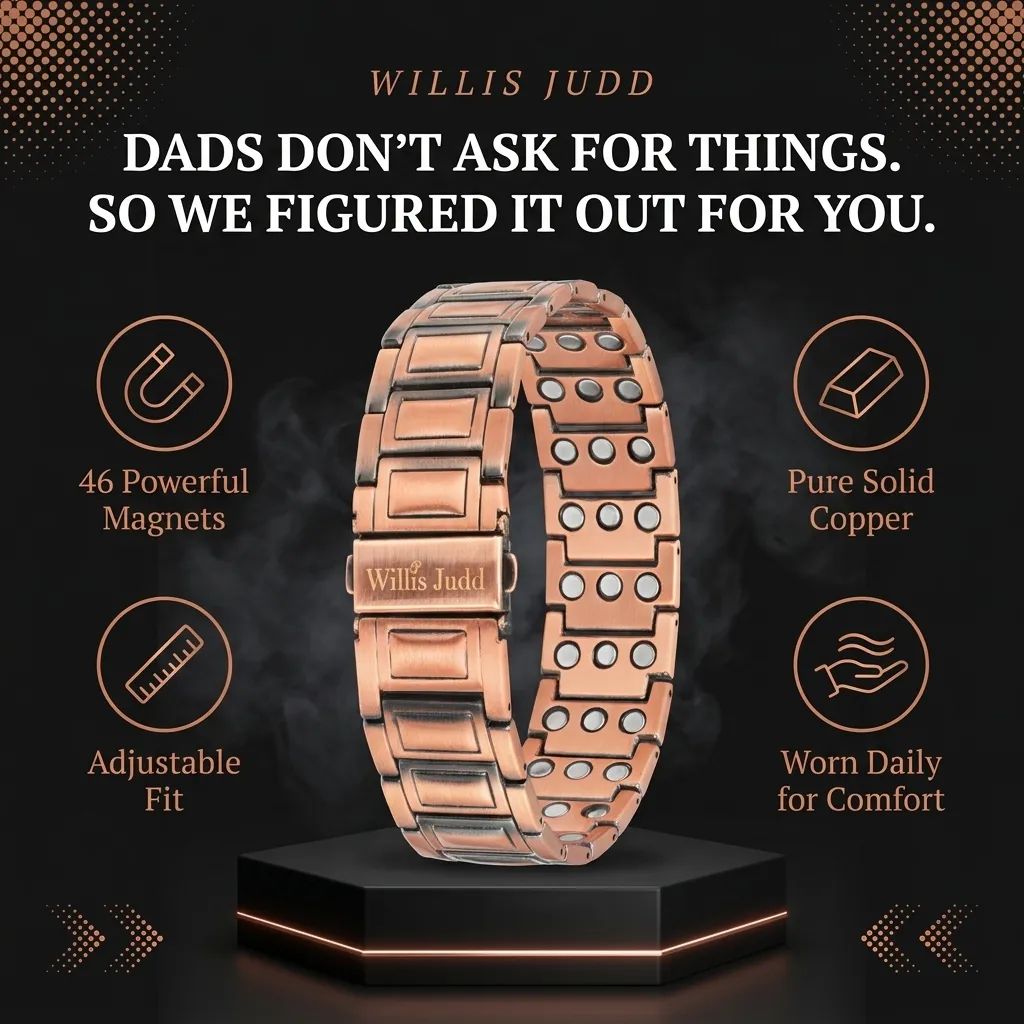
I saw the change before he ever said a word.
Willis Judd
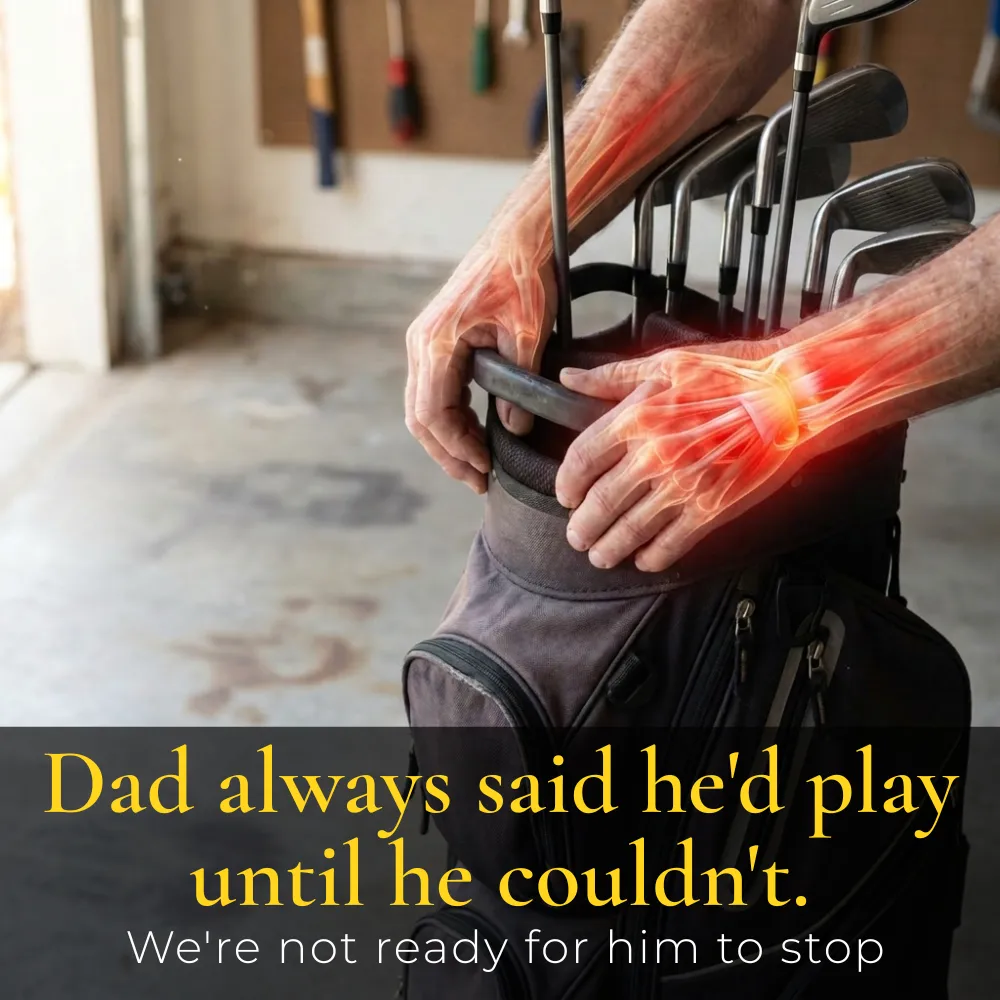
Why This Is A great Fathers Day Gift Copper Magnetic Bracelet
Willis Judd
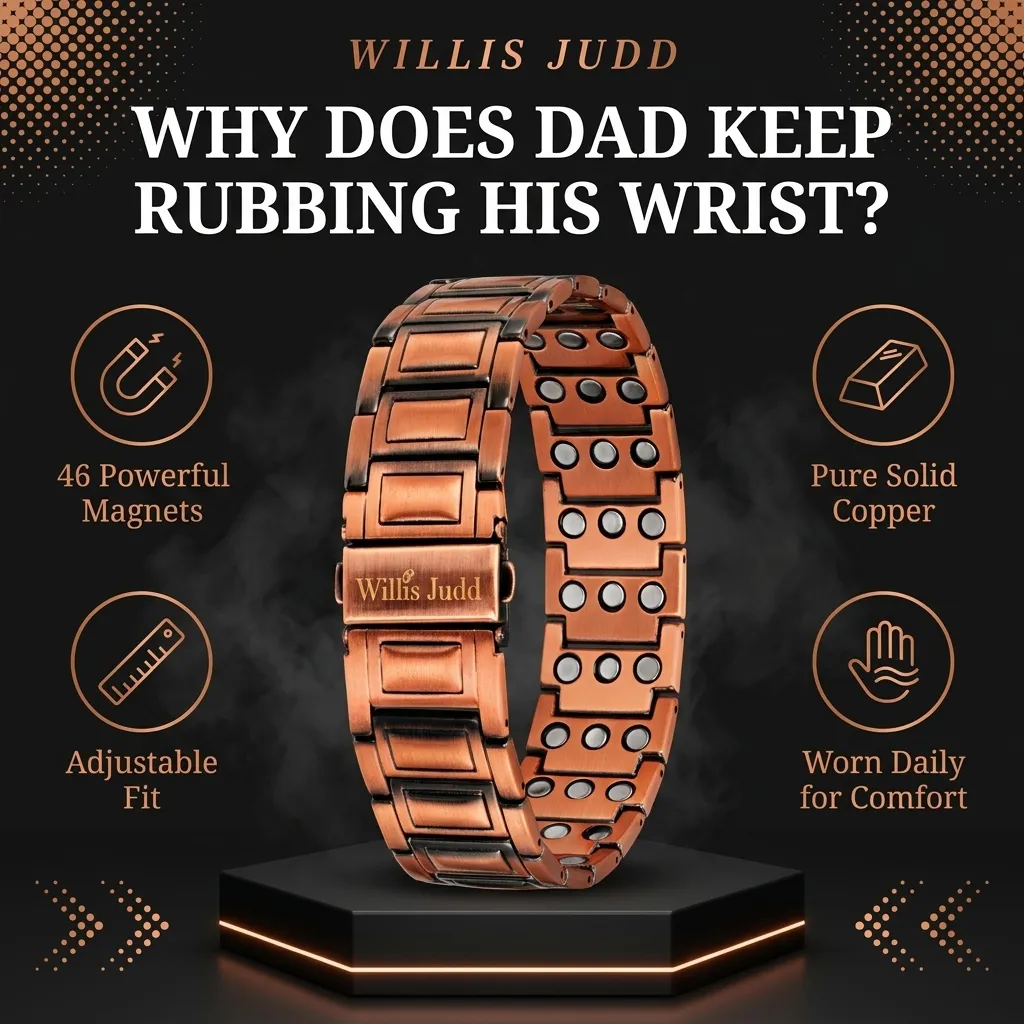
I saw the change before he ever said a word.
Willis Judd
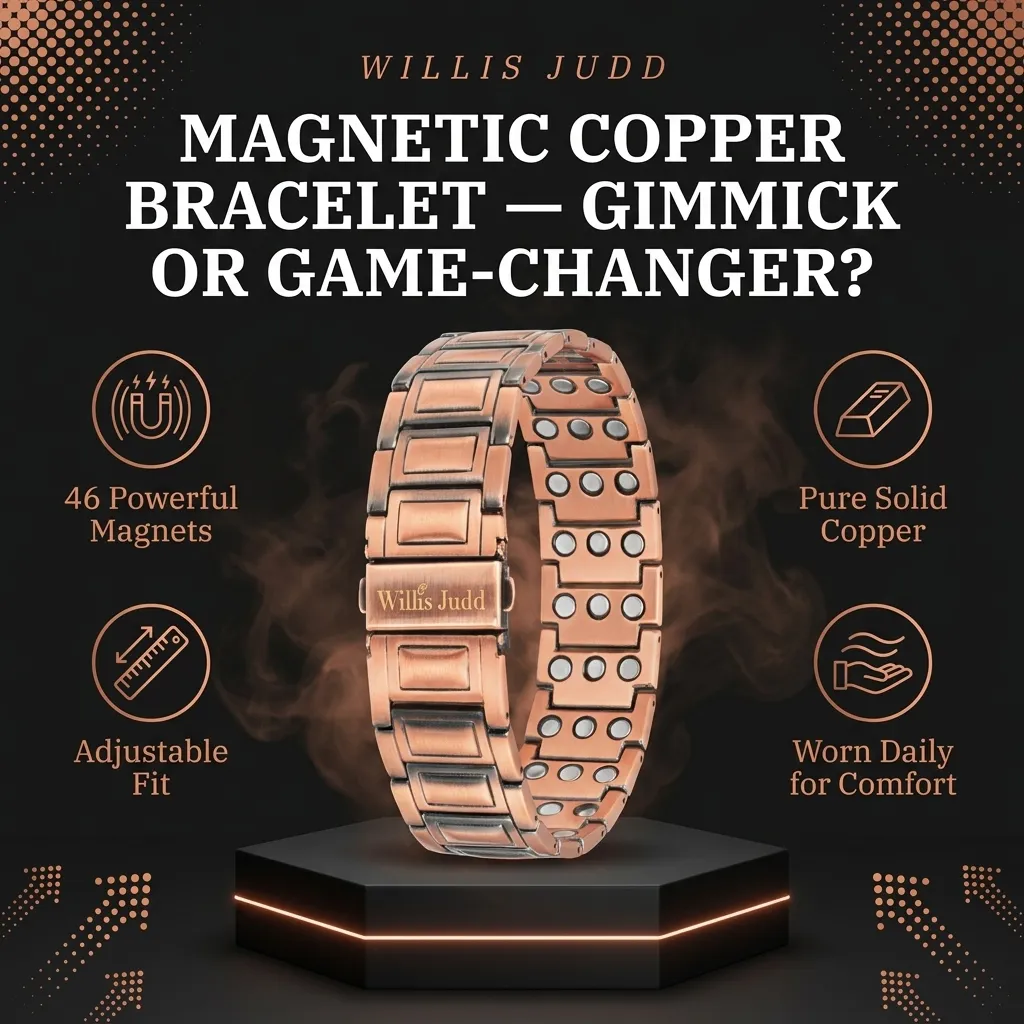
I saw the change before he ever said a word.
Willis Judd
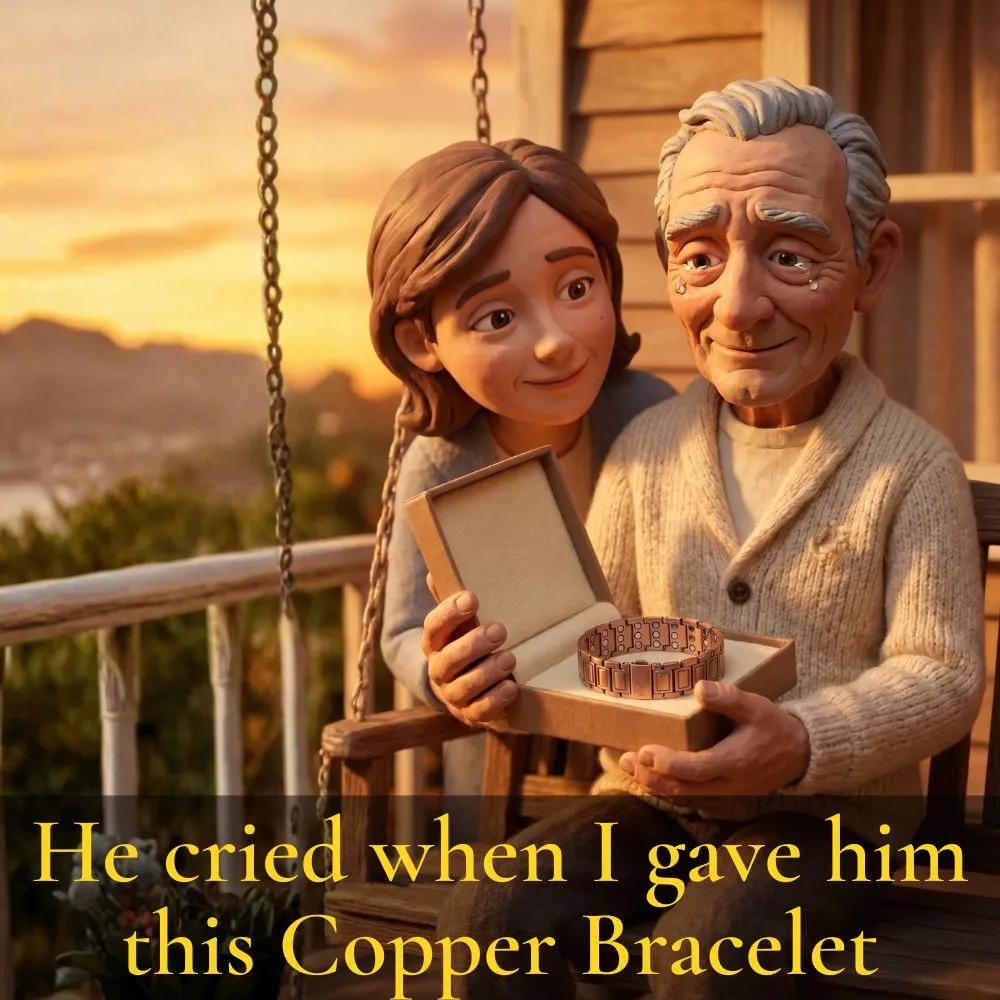
I saw the change before he ever said a word.
Willis Judd
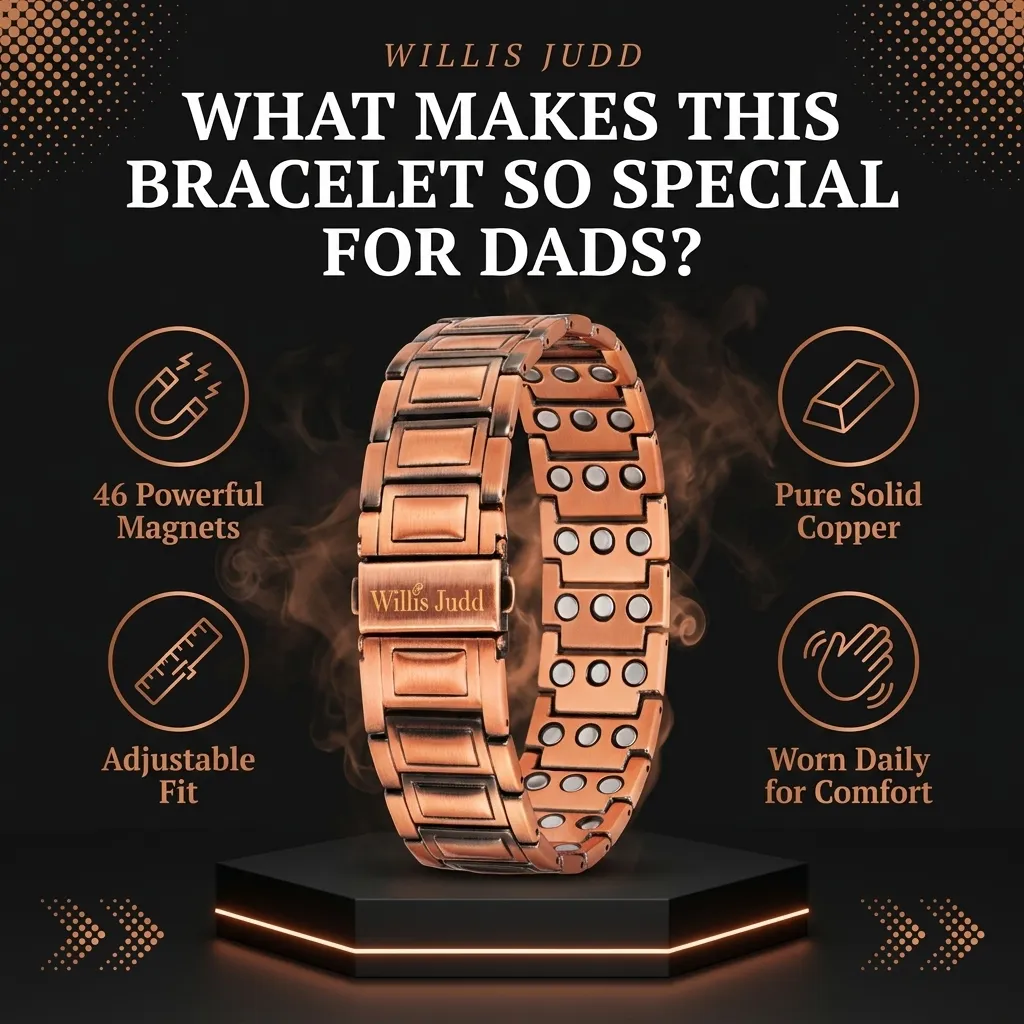
I saw the change before he ever said a word.
Willis Judd
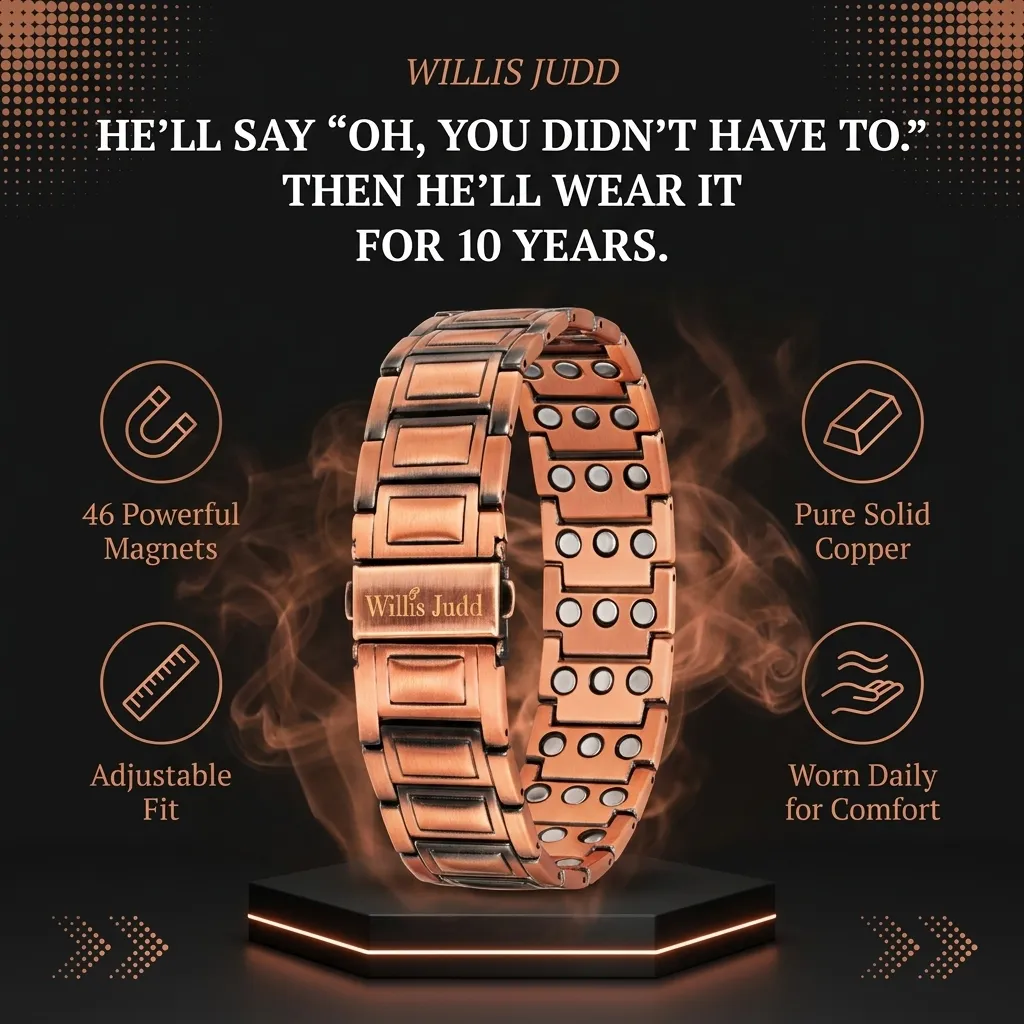
I saw the change before he ever said a word.
Willis Judd
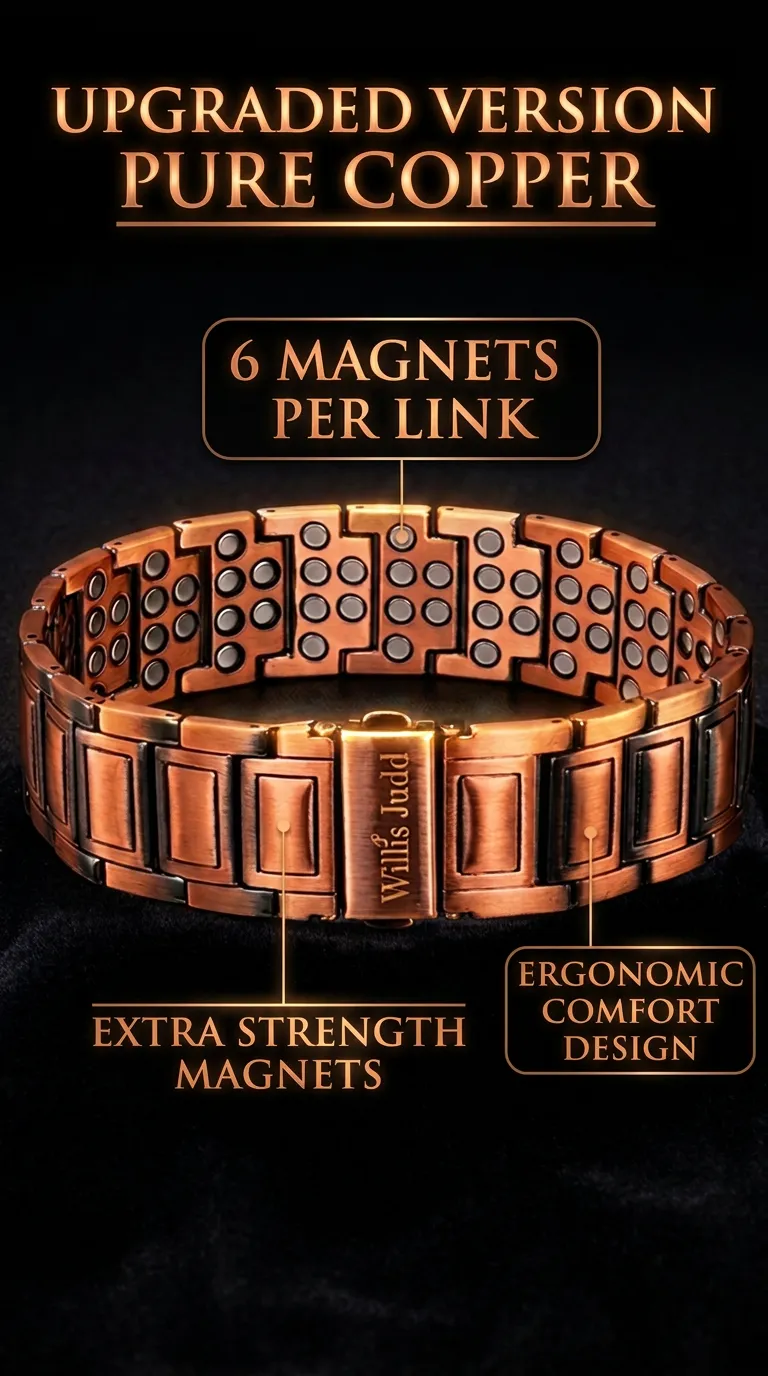
Unlock Your Potential - Our Strongest Magnetic Bracelet
Willis Judd

 Add to Chrome