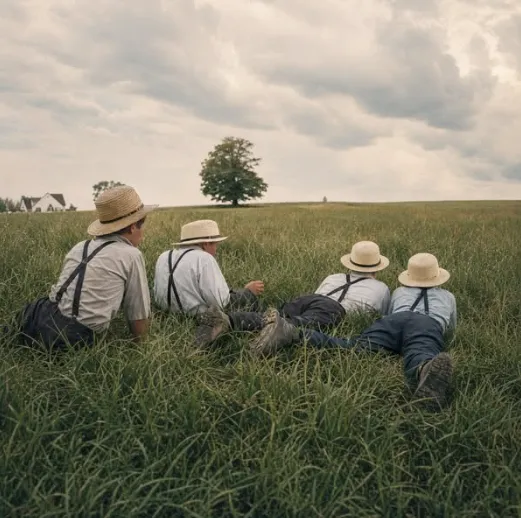
Support stamina and heart health every day
Ad Copy
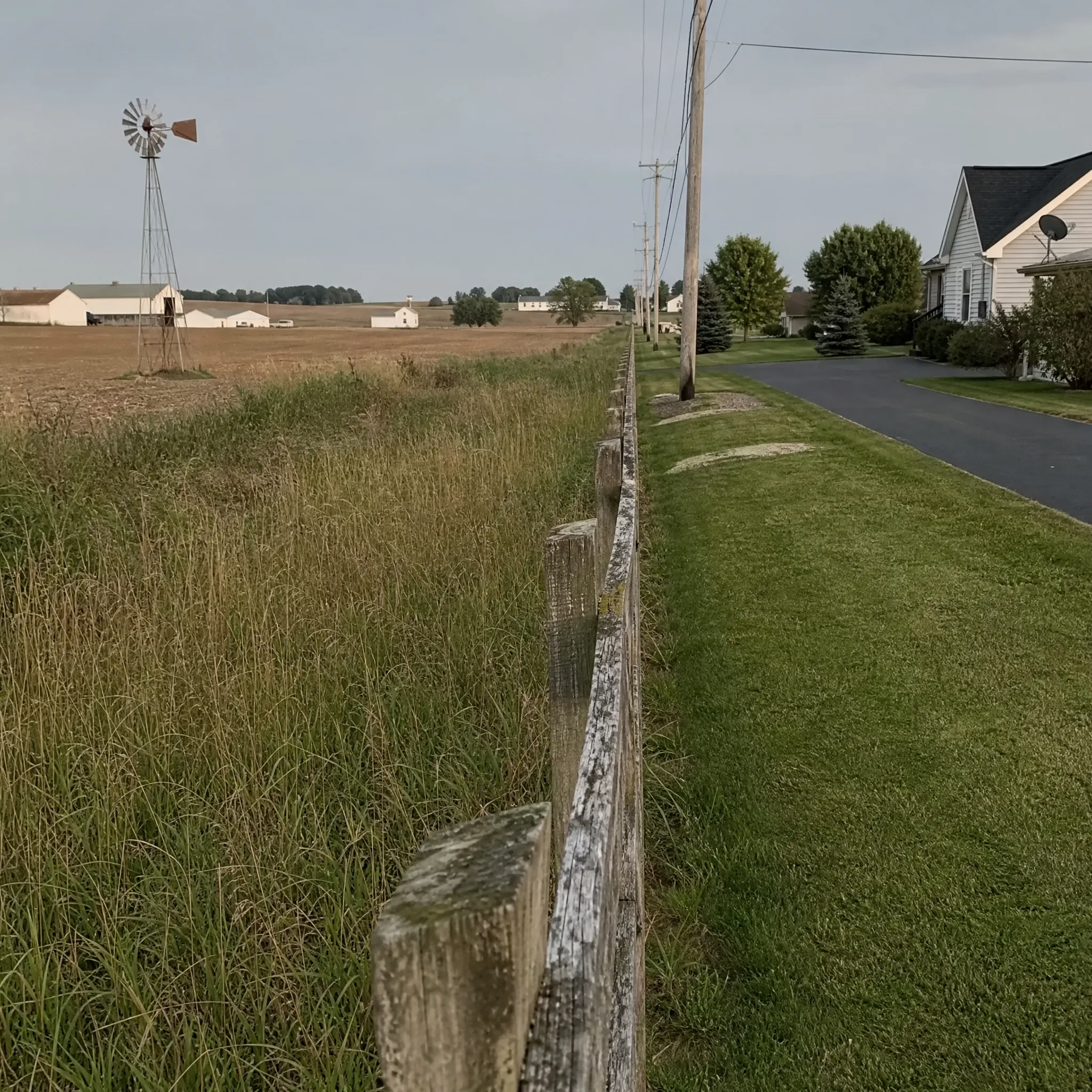
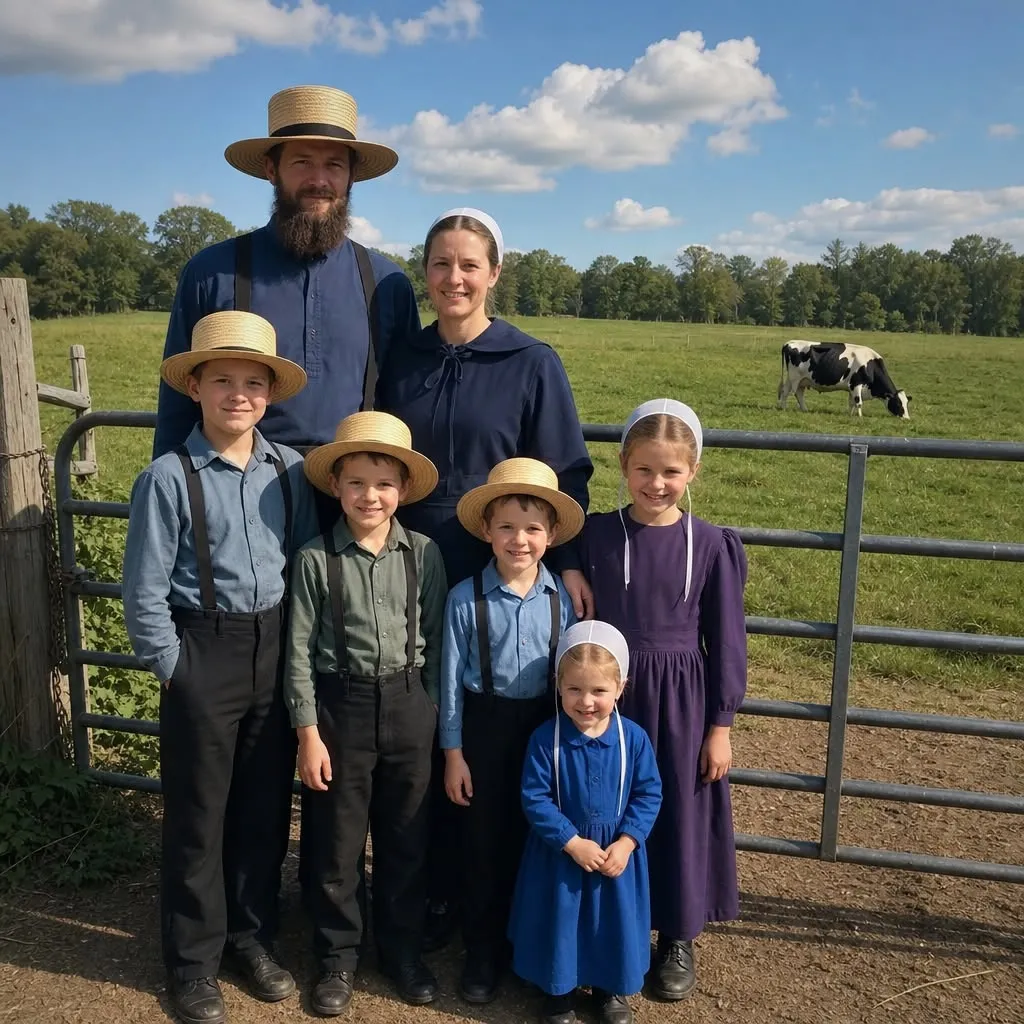
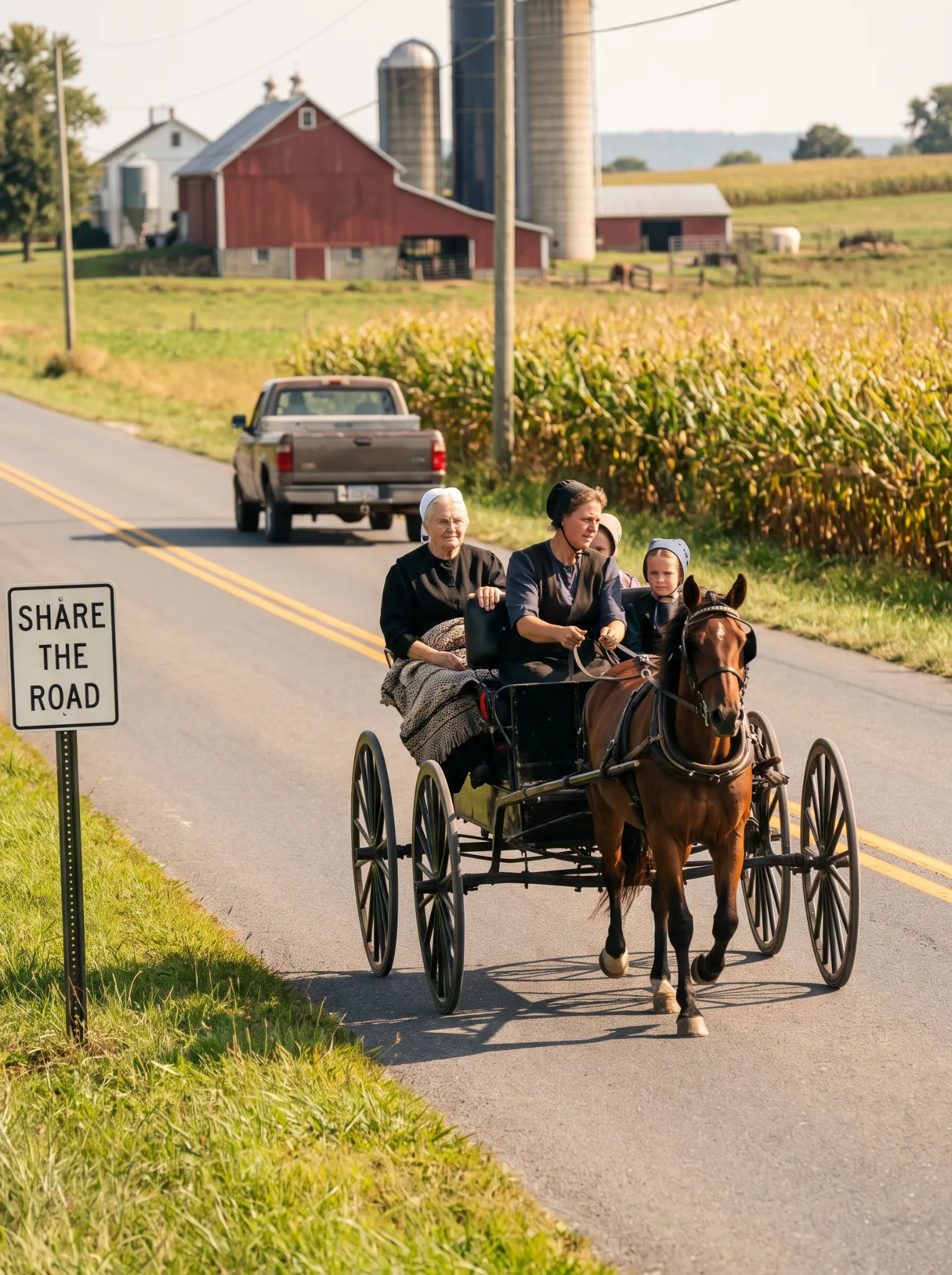
I left the Amish at 19. At 58, my doctor told me something that made me drive back to my father's farm for the first time in 39 years. I sat in the truck at the end of his lane for twenty minutes before I could make myself drive up it. Three hours from Ohio without stopping. You can't call ahead — there's no phone. And I knew that if I stopped, even for gas, I'd turn around. So I sat there at the mouth of a gravel lane I used to walk barefoot, with the engine ticking, like a man at the edge of cold water. Let me back up. This won't make sense otherwise. My name is Eli Beiler. If you know anything about the Amish, you just smiled, because that's about the most Amish name a man can carry. There are probably forty Eli Beilers in Lancaster County right now. But I'm not Amish. Not anymore. Not for thirty-nine years. These days I'm about as English as it gets, which is what they call everyone who isn't them. I run a drywall crew outside Springfield, Ohio. I've got a Silverado, a mortgage, a satellite dish, two marriages behind me and a son from the first one. I drink gas station coffee and I eat what men on job sites eat and I hadn't thought about the farm — really thought about it — in years. I left on a June night in 1986. Out the window, down the stairs with my boots in my hand, duffel bag, my cousin's Chevy idling at the end of the lane with the headlights off. My father was standing on the porch when I came out. He'd heard me. That man could hear a latch lift from two fields away. He didn't yell. He didn't beg me to stay. Amish fathers don't. He said seven words to me. Then he went back inside. I carried those seven words for thirty-nine years without understanding them. It took a doctor's office, and a sheet of paper with my numbers on it, to finally hear them right. So before I tell you what my doctor said, and what I found in my father's cellar — I have to tell you about the night those seven words were said, and why I ran from the best-fed farm in Pennsylvania to a life that nearly killed me. I was born in that white farmhouse, third of eight, in an upstairs room with no electricity in the walls. I want to tell you about the farm, because if I don't, you'll think I ran from something bad, and that's the part nobody understands. I didn't leave because it was bad. Eighty acres outside Gordonville, Pennsylvania. Dairy cows, field corn, tobacco back then — everybody grew a little tobacco back then, it was the cash crop, and nobody saw anything funny about that until later. A garden that fed ten people year-round, and I mean fed them from itself, not from a store with a garden's picture on the label. My mother put up four hundred jars a summer. I know because counting them into the cellar was a job, and it was my job. Green beans, corn relish, chowchow, peaches from the Yoder orchard, tomatoes whole and crushed. That cellar in October looked like a jewelry store. I didn't know it then. You never know it then. And at the end of the far shelf, past all the color, the dark bottles. Small brown bottles, corked, pressed every fall — and every morning of my childhood, before breakfast, before chores, every one of us got the spoonful. The bitter. First, before everything, my mother said, the way her mother said it to her. Bitter as a sermon. Your jaw ached from it. You never forget the taste — that's the point of it, I'd learn. But not for forty years. We worked. Lord, we worked. I was milking by five in summer and school in winter, and my father worked beside us, always, first up and last in. He wasn't a hard man the way English people mean it when they hear "Amish father." He was a quiet man. He'd correct you once, soft, and expect it to hold. His praise, when it came — maybe four times in nineteen years — was one nod, and I'm fifty-eight years old and I can still feel each one of those nods individually. His own father — my grandfather — I barely got. He died when I was six. What I have is a lap, a gray beard, a pocket watch I was allowed to hold, and one memory of him asleep in a chair in the middle of the day, which even at six I understood was strange, because Amish men did not sleep in chairs in the middle of the day. He was fifty-nine. Nobody ever explained it much past "his heart." My grandmother lived with us afterward for twenty-two more years, and here's a detail I filed away for four decades without knowing why: whenever his name came up, she'd get a look — not grief exactly, something with more iron in it — and once, just once, I heard her say to my mother in Deitsch, over the canning kettle: "Twenty years at that mill. The mill ate him." I thought she meant the work. Hold onto that. I did, for thirty-nine years, without meaning to. So why does a boy leave a place like that? Because it's a place where every single day of the rest of your life is already known. That's the truth of it. I could stand in that lane at seventeen and see the whole thing — the farm going to my older brother, me on a neighboring one or in a trade, the same pews, the same hymns sung at the same speed they'd been sung for three hundred years, a beard I'd never shave, and a plot in the graveyard behind the church where I already knew roughly which row I'd get. Some men find that beautiful. My brothers did. My father did. I found it like a hand on my chest. And there were engines. I don't know how else to explain what a V8 does to certain nineteen-year-old boys who've been told no their whole lives. My cousin Menno — he'd left two years ahead of me — would drive out sometimes and park his Chevy down the road, and I'd sit in it, and he'd let me drive it once around the block of fields, and it was over. Some boys it's a girl. Some it's liquor. Me, it was second gear. I told myself I'd visit. That's what you tell yourself. You don't understand at nineteen that when you go, the door doesn't swing shut behind you — I wasn't baptized yet, so they didn't shun me, that part people always get wrong. I could have visited. Legally, churchly, whatever you want to call it, I could have sat at that table any Sunday of my life. Pride is its own shunning. You do it to yourself, from the other side. The night I went, I came down the stairs with my boots in my hand, and my father was on the porch in the dark. Not waiting to stop me. Just standing there, like he'd known for weeks, which he had. He looked at me, and at the duffel, and down the lane to where Menno's headlights were switched off but the engine was running — he'd have heard that too. And he said seven words. I'm not going to give them to you yet. I gave you my word you'd have them before this is done, and you will, at the moment you can hear them the way I finally heard them. Words like that, you don't hand somebody in the second mile of the story. They cost me thirty-nine years. They can cost you ten more minutes. He said them, and he went inside, and the screen door didn't even bang. That's the detail that stayed. He closed it gentle, like it was any other night, and I stood alone on a porch I'd helped paint twice, and then I walked down the lane and got in the car. Now I'll tell you what thirty-nine years of English living does to a Beiler, because this is the part of the story where I need you to watch closely. Nothing in this stretch feels like anything while it's happening. That's what makes it what it is. The first years were good. I won't lie about that either. Springfield, drywall, money in my actual pocket — my own money, a concept I couldn't get over. A truck, then a better truck. I married at twenty-six, had my son at twenty-eight, divorced at thirty-four, the usual English arithmetic. Married again at forty. She's a good woman and she's still here, which as you'll see is more than I deserve. And the food. People ask what's different out here and they expect me to say the clothes or the electric. It's the food. I went from a table where every single thing had been alive on our own dirt that year — to a gas station at 6 a.m., a drive-thru at noon, and whatever's fast at six because everybody's tired. For thirty-nine years. You want to know the honest truth? For the first twenty of them, I loved it. It tastes like freedom. It's engineered to. My mother's cellar had four hundred jars in it. My cellar in Springfield has a water heater and Christmas decorations. And the bitter spoonful? The first morning of my English life, I woke up in Menno's apartment and realized nobody was going to hand me one, ever again. I remember grinning about it. Nineteen years old, grinning at a ceiling because the bitter was behind me. Hold onto that too. Here's the slow part. The part with no scene to show you, because it doesn't happen in scenes. Somewhere in my forties, the stairs at work got taller. Not a day it happened. They just got taller. I started sending the young guys up with the twelve-footers and told myself that's what young guys are for, which is even true, which is how these lies work — every one of them is half true. I quit the softball league at forty-nine. Shoulder, I said. By fifty-four I was tired in a way sleep didn't fix. I'd sit down after supper and the chair would just take me, eight-thirty, gone, remote in my hand. My wife thought it was funny for a couple years. Then she stopped saying it was funny, and started just looking, and a man notices the difference even when he pretends not to. And nobody made me go to a doctor, so I didn't go. Fourteen years, no bloodwork. I want to say something about that, because it took me this whole year to see it. Where I grew up, you are never — not one day of your life — unwatched. The church, the family, the district, everybody in everybody's kitchen. Nineteen-year-old me was suffocating in it. That's half of why I got in that Chevy. Out here I finally got what I wanted. Nobody watching. It takes about forty years to learn what a thing costs. Nobody watching means nobody watching. My grandmother would have had an opinion about the chair at eight-thirty. My father would have had a nod's worth of judgment about the stairs. Out here it was just me and a wife too kind to push and a body quietly filling out paperwork nobody ever read. Then last spring my insurance changed, and the new plan wanted a physical on file, and a girl from the office called twice until I took the appointment just to stop the calls. Twenty minutes. Blood pressure, some questions about my knees. They drew blood and sent me home, and I forgot about it, honestly forgot, the way you forget things you've decided are formalities. Four days later the office called and asked me to come back in. They don't call you back in to tell you you're fine. Dr. Keller. About my son's age, which is its own strange thing, being scolded by a man you could have raised. He had my results up on the screen and he turned it so I could see, all my numbers in their little rows with flags next to them like violations on an inspection report. "Total cholesterol, 271. LDL — the one that matters most here — 197. Blood pressure's 149 over 93. Triglycerides are high." He looked at me. "Fourteen years since your last labs. Honestly, given the diet and the years, it could be worse. But this isn't a watch-and-wait picture, Mr. Beiler. This is a treat-it picture." Then he did the family history. Mother's side, father's side. And I told him, and I watched him do the arithmetic on his little pad. "So your grandfather died of a heart attack at fifty-nine." "Yes." "And your father is — " "Eighty-nine." "Still living." "Still farming. Amish. Lancaster County." He looked at me for a second. And he said the thing. He didn't even look up from the pad when he said it, that's what got me — it was a throwaway line to him, a thing to say while he wrote. "Same blood, opposite endings. One of them knew something." And then, tapping his pen: "Anyway. Atorvastatin, twenty milligrams." Same blood. Opposite endings. One of them knew something. He said it about my grandfather and my father, and he moved on to dosages before the sentence even landed. But it landed on me, and it kept landing all the way home, because I'm the same blood too, and I was fifty-eight, and my grandfather made it to fifty-nine, and I could not have told you — sitting in that truck in the parking lot — which ending I was driving toward. I filled the prescription. I want that on the record, because in a minute I'm going to say hard things about that pill, and you should know I gave it a fair shake first. I was scared, and the man had a screen full of flags, and I took the little white pill every night at the bathroom sink for eleven weeks. Here's what happened in those eleven weeks, and I'll tell it straight. The number came down. We checked at ten weeks: LDL 138, down from 197. Dr. Keller was pleased. The screen had fewer flags. By everything the chart measures, I was a success story. And I was disappearing. It came on so gradual I blamed the season. My legs ached like flu that never arrived. My grip started letting go of things — a mud pan, a cordless, my coffee, twice, in one week, off the same scaffold. I'm a drywall man. My hands are the whole business. Fifty-eight years old and I stood at the bottom of a ladder one morning genuinely negotiating with myself about the climb. And the fog. That's the one nobody warned me about. I'd lose the back half of sentences. Stand in the supply house forgetting what I drove there for. My foreman Rick — twenty-two years with me — asked me twice in one month if I was okay, and Rick has never once asked anybody a feelings question. I told Dr. Keller. He said muscle aches were common, that it usually settles, that we could try a different statin, and that — I remember this exactly — "whatever the discomfort, it beats the alternative." And driving home from that appointment is when my grandmother's voice came up out of forty years of silence like it had been waiting in the back seat. Twenty years at that mill. The mill ate him. Because here's what I knew about my grandfather, the pieces I'd been carrying since I was six without ever laying them side by side. He was the only man in that family, going back as far as anybody could count, who left the farm for wages. Twenty years at the feed mill in town — good money, needed money, nobody faulted him. Twenty years of town lunches and a stool instead of a field. And here's the piece I only fit in later: a man who worked town hours ate town breakfasts. Twenty years of mornings that started at a lunch counter instead of at my great-grandmother's table. Twenty years of mornings without the bitter. And somewhere in there he became a man who fell asleep in a chair in the middle of the day. Asleep in a chair in the middle of the day. Aching. Fading. Fifty-nine. I was fifty-eight, falling asleep in a chair at eight-thirty, aching, fading — with a beautiful number on a screen. And my father — same blood — was eighty-nine, and the last I'd heard from my sister's Christmas letters, he'd put up hay in June. One of them knew something. That's what the doctor said, not even looking up. There was exactly one place on earth to find out what. I told my wife I'd be back Sunday night. She didn't ask questions — she just looked at me the way she'd been looking at me for four years, and put a thermos in the truck. And that's how a fifty-eight-year-old drywall contractor ended up parked at the mouth of a gravel lane in Gordonville, Pennsylvania, engine ticking, thirty-nine years late. I drove up the lane. The farm came around the willows the way it always did, and it was exactly the same, which I was not prepared for. The English world had turned itself over four times since 1986. The farm had painted the barn. An old man came out of that barn. Slower than I remembered. Suspenders, straw hat, a beard gone fully white. He looked at the truck for a long moment. A strange truck with Ohio plates, up his lane on a Saturday. Then I got out, and he looked at me. Thirty-nine years. No letter to say I was coming, because I hadn't known I was coming until Thursday. I stood by the truck door with my heart going like a boy's, and my father looked at me across the yard he taught me to walk in. And the first thing he said — the first thing, after thirty-nine years — was: "You look like your grandfather did. Come inside." Not angry. Not soft either. Level, like a man reading a gauge and telling you what it says. I didn't understand yet what a sentence like that cost, or what it meant that he'd said it from thirty feet away after four decades. My grandfather died at fifty-nine. I was fifty-eight. My father took one look at me across a farmyard and read it in my face and my color and the way I'd climbed out of a truck, and he named it before he even said my name. The Amish will not flatter you. It's a plain people in every direction. I'd forgotten what that felt like — being seen by somebody with no reason to soften it. Inside, the kitchen. Same table. I won't walk you through all of it — some of that afternoon belongs to nobody but us. My mother passed in 2011; I knew that, I'd sent a card, God forgive me, a card. My brother Aaron runs the farm now, lives in the main house with his family; my father lives in the daadi haus attached to the side, which is how it's done. There was pie because there's always pie, and there was a long stretch where neither of us said much, because where would you start. But I'll tell you the part that matters to you. Late afternoon, I laid it all out. The numbers. The pill. The aches, the fog, the dropped tools, the chair taking me at eight-thirty. The doctor's throwaway line — same blood, opposite endings. I put it all on that kitchen table like a man emptying his pockets, because I'd driven three hours for this and pride had already cost me thirty-nine years. My father listened the whole way through without one word. Amish men are the best listeners on this earth; nobody's waiting for their turn to talk. Then he stood up and said, "Come down cellar." Same stairs. Same cool dirt-and-vinegar smell that hit me like a hymn. And the same shelves — Aaron's wife's canning now, but the same order to it, the same jewelry-store shine in the lamplight. And at the end of the far shelf, the dark bottles. More of them than I remembered. Rows of them, corked, pressed every fall, same as always. My father took one down and stood there a minute, deciding where to start. And then my eighty-nine-year-old Amish father explained to me, in that level gauge-reading voice, what I'd have paid any specialist in Ohio to explain and none ever had. "You know how butter goes," he said. "Left out wrong. Not spoiled — turned. Rancid. Nothing was added to it, nothing taken away. Same butter. The air got at it and it turned, and turned butter is not butter anymore. "Iron does the same. You've seen a plow left in the weather. Nobody added a thing to it. The amount of iron never changed. The condition changed." He turned the bottle in his hand. "The old people said blood turns the same way. The fat in the blood. Having it isn't the trouble — a body needs its fat like a farm needs its iron. The trouble is when it turns. And when it turns it gets sticky, and what's sticky builds up, the way scale builds in a kettle, until the day the pipe won't pass. That's the heart attack, Eli. Not the amount. The turning." I stood in that cellar with my mouth open. Because I'd sat in two appointments with a doctor half my age and a screen full of flags, and nobody had ever once separated the amount from the condition. And here was a man born in 1936, by lamplight, doing it with butter and a plow. "The English doctors count it," I said. "That's the number they gave me. That's the number the pill brings down." "Ja." He nodded slowly. "They count it. Counting's not nothing. But Eli — you can count the plow. The count won't tell you the rust." He looked at me. "Your grandfather. They counted him too, at the end. The English doctor in town told him he was sound. Sound. Six weeks before." I didn't know that. Eighty-nine years old and he handed me the missing piece of a man dead fifty-two years like he'd been keeping it in his breast pocket. "The mill ate him," I said. "Grossmammi used to say it." "She said it till she died." He set the bottle on the shelf between us. "Twenty years of town food and a stool. Twenty years of mornings without the bitter — a man can't carry a spoonful to a lunch counter, and he wouldn't have wanted the teasing. She watched him turn the way butter turns, slow, and no counting caught it. And when he passed, she called the family together — I was a young man, younger than your son — and she said: this doesn't happen twice. And she went to her mother's seed that spring and sowed the thistle down every fencerow on this farm, and we have pressed it every fall since, and we will press it when your grandchildren are old." "The bitter," I said. "That's what the spoonful was." "That's what the spoonful was." He almost smiled. "You thought it was punishment. Every child thinks it's punishment. It's the oldest medicine this family owns." "Why the thistle?" "Because of what's in the bitter." He said it like the simplest thing in the world. "The old people called it Mariendistel. Mary's thistle. Her seed line came over with her mother's people, and it was never mixed with anything the English grow. The English grow it in fields now, Eli — fat rows, easy ground, cooked down to powder with heat because slow costs money. And the bitter dies with heat. It's tender, like anything worth keeping. Ours grows where it chooses, on the poor ground along the fences, and poor ground makes strong medicine. Small and dark and bitter as a sermon." He tapped the cork. "The bitter is the medicine. It keeps the blood from turning. The old people knew it the way they knew rain — no, not the why. The what. They knew the what for a hundred and fifty years. The why, you can ask Aaron. Aaron has it from the English scientists." Which is a sentence I never expected to hear from my father in a root cellar: the English scientists. Here's why he said it, and this is the part of the story I couldn't have invented. There's a company. English. Some years back their people came into the county looking — not for milk thistle, for a specific milk thistle. They'd been through the research on what's in the bitter — silymarin, is the word, I'll come back to it — and they'd worked out that the modern farmed crop barely carries it anymore, and that the old wild lines carry it several times over. They went looking for a seed line that had never been crossed, growing the way the old studies grew it. And they found the families who'd been keeping one by hand since before the Civil War. My family. My grandmother's fencerows. That's who Aaron contracts with now — him and a handful of Plain families in the county. It's a real piece of the farm's income. So the next morning — Sunday, after the visiting — I sat in the barn with my brother Aaron, who I'd last seen as a fourteen-year-old boy and who is now a gray-bearded deacon with eleven grandchildren, and my little brother explained the science to me out of the horse's mouth, because he's had it explained to him standing in that very barn by the company's own people, more than once, in detail, because they inspect and they lecture and they pay on spec. "The bitter — the silymarin — it's an antioxidant," Aaron said. "But their man says not like the ones in the English vitamins. Two ways different, and he says it every year like a sermon, so I have it by heart. "One: most of what the English sell scatters everywhere — knocks down everything in the blood, even what the body's using on purpose. The bitter doesn't scatter. It goes after the one reaction — the turning itself, the same turning Daed showed you with the butter — and leaves the rest be. "Two — and this is the one their lab man gets excited about — it holds where the turning starts. It gets into the blood and stands guard at the fat itself, right where the trouble begins. The pills can't do that. The fish oil can't do that. It's the difference between painting rust and priming the steel before the rust ever starts." And then my brother the deacon said the thing that finished the statin question for good. "Now your pill, Eli. Their man was plain about this too. Your pill works by choking a line in the liver, and that line makes two things. The fat it wants to lower, and the spark the muscles run on. One valve, two flows. Choke one, choke both. That's your hands. That's your fog. That's — " and he looked at me the way only a brother can — "that's a man our grossdaadi's age falling asleep in chairs. "And here's the last thing he says, every year, before he gets in his car. That valve sits in the liver, Eli. The same liver the bitter has been tending in this family for a hundred and fifty years. Your pill leans on that organ. The bitter feeds it. Same door. Opposite directions. "The bitter chokes nothing. It stops the turning and leaves the spark." Stop the turning. Leave the spark. My father said it with butter and a plow, my brother said it with a valve, and between the two of them, standing in a dairy barn on a Sunday, I finally understood more about what was happening in my own arteries than eleven weeks and two co-pays had taught me. And I understood something else, colder. The pill had given me my grandfather's last years on purpose. Not as a side effect — as the mechanism itself. It brought the number down and paid for it out of the spark, and it never once, not for one day, touched the turning. I could have ridden that beautiful 138 all the way to a Tuesday morning, sound as my grandfather, six weeks before. Now the part where I play the fool, so you don't have to. Aaron offered to set me up before I left — the company sells the finished drops, that's the whole point, the family grows the crop and the English company does the cold pressing and the bottling and the lab papers. He wrote the name down for me on a feed receipt. I thanked him, took a case of the cellar bottles, hugged my father — thirty-nine years, and it was me who reached first, and that's all I'll say about that — and drove home to Ohio. And then I did the most English thing a man can do. I decided milk thistle is milk thistle, and I could do it cheaper. The cellar bottles ran out in three weeks — my mother pressed for a household, not for the doses the research uses. So I got on my phone and ordered milk thistle capsules, four and a half stars, prime shipping, first result. The feed receipt with Aaron's writing on it stayed in the truck. And here's the devil of it: I felt something. Within days. A little more in the tank, the afternoon wall pushed back an hour. I'd quit the statin by then — I'll say more about the right and wrong way to do that at the end, because I did it the wrong way — and between quitting the pill and the little lift off the cheap capsules, I felt better than I had in two years. I was whistling on scaffolds. I told Rick about milk thistle. I was a man with an answer. Ten weeks in, I paid the walk-in lab for a panel, expecting to frame it. LDL: 181. Off the statin, my count had climbed back up near where it started, and the cheap capsules had done as near to nothing as makes no difference. I was feeling better and turning the whole time. Feeling better is not the proof. I have to say that sentence twice in this story because it cost me ten weeks: feeling better is not the proof. I sat in the truck with that printout and did something I hadn't done in thirty-nine years. I wrote my brother a letter. Plain paper, the whole story, the 181, the four-and-a-half stars. Amish mail moves faster than you'd think. Nine days later I had four pages back in Aaron's careful hand, and I'm going to give you the heart of it, because my brother accidentally wrote the best consumer-protection document I've ever read: "You bought the English thistle, Eli. You bought the field crop, cooked down hot. Their man says the bitter dies with heat — it's tender, like anything worth keeping — and the English powders are dried fast in hot ovens because slow costs money. What's left is dust, brown as a barn floor, and it does nothing. Open one and taste it. If it tastes of nothing, it's dead. The bitter IS the medicine — if your jaw doesn't ache, there's no medicine in it. Ours goes out cold-pressed, cool and slow, the old way, and it reaches the bottle dark as strong tea. That's why they pay us what they pay us and inspect what they inspect. Four things, brother, and this time buy like a farmer and not like an Englisher: the right seed — the old wild line, Mariendistel, not the field crop. Pressed cold, never cooked. The silymarin printed plain on the label — no 'blends,' a blend is where the truth goes to hide. And the lab paper from an outside lab on the very batch, published where you can read it. Anybody can buy stars. Nobody can buy the lab paper. And Eli — the name is still in your truck." The name was still in my truck. Pureveen. That's the company. That's who's been contracting my family's crop — the actual seed line my grandmother sowed down the fencerows in the spring of 1974 — along with the other Plain growers in the county. Seed heads gathered by hand at full ripeness, late summer, when the bitter runs deepest. Cold-pressed on the slow schedule Aaron described. The silymarin printed plain on the label, no blend. The four minerals the old farm table used to supply, in the same bottle — Aaron's man calls them the spark's keepers; I call them the part of my mother's cooking I'd been missing for thirty-nine years. And the certificate of analysis from an independent lab posted on their site, batch by batch, where I checked it against the bottle in my hand — twice, because after ten weeks of brown dust I'd earned my suspicion. Four for four, like the letter said. I did the taste test the night the bottle came, over a saucer at my kitchen table, my wife watching this whole ritual with the patience of a saint married to a convert. One drop on the white saucer: dark as strong tea, and when I touched a drop of water to it, it spread across the china like a stain. And one drop on my tongue. My jaw ached. Fifty years fell off me in one second — I was six years old at my mother's elbow, before breakfast, before chores, first, before everything. I stood over that saucer a long time. My wife finally said, "So it's the real one." The real one. My grandmother's thistle, in a dropper bottle, in Ohio, in my kitchen. It came home before I did. Next morning, one dropper under the tongue, a tall glass of water, and I took my coffee out to the tailgate deliberately to pay attention. About twenty minutes on, it came: warmth down the shoulders and into the hands — hands that hang drywall, hands that know what they feel like at 6:40 — and a clearing behind the eyes like a window shade going up in a room you'd stopped noticing was dim. Now careful, because this matters and I've been the fool twice already. That twenty-minute feeling is not the cholesterol. The turning takes weeks to slow and shows up on lab paper, not on a tailgate. That fast feeling is the simpler gift — the body getting something it had been missing — and the cheap dust gives you a shadow of it too, which is exactly how the cheap dust fools you. What the twenty minutes told me was one thing: the bitter was alive. After ten weeks of ashes, the live thing was finally in my blood. The proof would come on paper. It came on paper. Four weeks: LDL 154, from 181. Eight more weeks, this time at Dr. Keller's office, official, in the chart: LDL 131. Total 214, from 271. Blood pressure 133 over 84, from 149 over 93. And the part no panel measures but my crew can testify to: I carried twelve-footers up the scaffold in March. Rick asked me what I was on. I told him. He laughed until he saw my face. Dr. Keller scrolled the screen for a while. Asked what changed. I told him everything — including that I'd quit the statin cold and alone back in the fall, which is when he stopped scrolling and gave me the lecture I deserved and I'm passing on to you in the postscripts, because he was right about that part. Then he said, "Whatever this regimen is doing — these numbers don't argue with it. Keep it up. I want you back in six months." And he typed it into the chart. Same blood as my grandfather. Different ending being written, one entry at a time. In June, one year almost to the day since a girl from an insurance office pestered me into a physical, I drove back to Gordonville. Not alone. My wife rode with me, and my son flew into Philadelphia and met us, and my father — ninety by then — stood in the yard while three carloads of his English descendants came up the lane, and Aaron's grandchildren showed my son the milk house like it was Disneyland. We had supper at the long table. Twenty-some people, gas lamps coming on as it got dark, food I could name every field of. My father sat at the head, and before we ate, he prayed the silent prayer, and the whole table went still the old way, the way I'd been running from and toward for thirty-nine years. And after, in the quiet before the clatter, he looked down that table at me — at my numbers he'd never see and didn't need to, at my color, at my hands, reading his gauge — and he nodded. One nod. Number five, if anybody's counting, and I am. Then he said to my son, in his level way, "Your father looks like his father now." My father. Eighty-nine at hay time. That's the ending my blood is capable of. That was always the ending it was capable of. Somebody just had to keep the seed. On the porch that night, after the lamps, I finally asked him. "That night. You said seven words to me and went inside. Did you know I'd keep them?" "I knew you couldn't put them down," he said. "That's why I picked them." So here they are. Thirty-nine years, a doctor's throwaway line, eleven weeks of the wrong pill, ten weeks of brown dust, and one cellar shelf of dark bottles later — here is what my father said to a nineteen-year-old boy with a duffel bag, in the dark, gentle as a screen door he refused to slam: "What fed you will be here still." I heard it as a curse for thirty-nine years. The farm will outlast your little rebellion, boy. Crawl back when you're hungry. That's not what it was. It was the plainest sentence a plain man ever said to me, and it was true three ways, and he meant all three. The table would stay set. The door would stay unlatched. And the thing that fed me — the cellar, the dark bottles, the bitter spoonful, the fencerows his own mother sowed the spring after the mill finished eating her husband — would be kept, by hand, seed by seed, year after year, against the day the hungry boy came up the lane at fifty-eight with his grandfather's face. They kept it a hundred and fifty years. It was there when I came back for it. It's there for you too. That's the strange mercy of how this turned out — you don't need the lane or the letter or the thirty-nine years. The same families still grow the same seed line, and Pureveen still presses it the slow way, cold, with the four minerals in the same bottle, and the lab paper is still posted where anybody can read it. One dropper. One glass of water. The bitter goes where the turning starts and holds there — and it chokes no valve and drains no spark. What the pill can't do, and none of what the pill did to me. If your chair takes you at eight-thirty; if the stairs got taller without anybody moving them; if your grip has started voting against you; if there's a number in your chart that's either scaring you or — hear me — comforting you, and something underneath it that no one's ever measured: it's the turning. It was always the turning. Put one drop on your tongue before you swallow the first dose. If your jaw aches, it's alive, and you'll feel the proof of that inside half an hour. The rest of the proof comes on paper, in weeks, the way mine did — and paper is the only proof a wise man trusts. https://pureveen.com/products/pureveen-drops — Eli Beiler P.S. — At that long table in June, Aaron told me what their contract man from the company said the first year, standing in the barn: "You can't hurry a seed that's doing its job." They will not cook the pressing, because heat kills the bitter. They will not blend down the dose, because the studies didn't. My grandmother said it shorter in 1974, by way of my father: this doesn't happen twice. If you take nothing else from a drywall man's story — stop fighting the count and start stopping the turning. The count is half the story. The turning is the ending. And Pureveen carries a 90-day money-back guarantee, so the only thing you're risking by trying is another season of what's already happening. P.P.S. — About the twenty minutes, plainly, because I got fooled in both directions and you don't need to be. What you'll feel that first morning — warmth into the hands, the shade going up behind the eyes — means the bitter is alive and in you. It is NOT your cholesterol fixed by lunch; the turning slows over weeks and shows up at a lab. And the reverse: if some brown powder ever gave you a little lift, that lift was not proof the turning stopped. I whistled on scaffolds for ten weeks while my count climbed to 181. The saucer is proof. The jaw is proof. The lab paper is proof. Feelings are for tailgates. P.P.P.S. — Now the lecture I earned. I quit my statin cold, alone, in a fit of barn-Sunday conviction, and when I finally confessed that to Dr. Keller he went quiet in the way that's worse than shouting, and he was right. Coming off one of these pills on your own can be genuinely dangerous — the rebound is real and it lands on the exact people whose hearts can least afford surprises. My foreman Rick, who started the drops after watching me carry twelve-footers, did it the right way: bottle and research to his own doctor, a plan, bloodwork on a schedule, the dose walked down with somebody watching the gauges. Nine months on, he's off it clean and his hands don't ache on the sanding pole. Do it like Rick. Not like me. I got away with it; getting away with it is not a plan. P.P.P.P.S. — For the one at the other end of the table. My grandmother watched her husband turn for years — watched him fade in a chair in the middle of the day — and she had no numbers, no chart, no lab, and she was right, and the town doctor with the counting was wrong. If you've been watching someone like that — the chair, the stairs, the sentences that trail off — you are not imagining it, and you are not nagging. You're the only gauge in the house that reads condition instead of count. But learn from her the hard lesson too: she saw it and had nothing to hand him. You do. Don't ask a stubborn man if he'd maybe consider looking into it — I'm a stubborn man, and I can tell you exactly how far that gets. Put the glass in his hand. "Take it. For me." Five words. They work on us. And the bitter doesn't check whose name is on the bloodwork — my wife takes it every morning beside me now. Order for the house. P.P.P.P.P.S. — Last thing, and it's arithmetic, not marketing. This is one seed line, kept by a handful of Plain families in one county, gathered by hand once a year at full ripeness, and cold-pressed on a schedule that will not be hurried because hurrying kills it. I've stood in those fencerows. You cannot scale my grandmother's thistle the way the English scale the field crop — when a season's pressing is sold through, it's gone until the seed heads ripen again. I've seen the restock wait from the customer side now, and I keep two bottles in the cabinet the way I keep mud stocked ahead of a job. They run a buy-3-get-3-free right now — three months for you, three for whoever you thought of two paragraphs ago. If there's bloodwork on your calendar inside sixty days, or a table you intend to be sitting at for another thirty years' worth of Junes, order while the season's supply is standing. The 90-day guarantee carries the risk either way. My father kept his half of the bargain for thirty-nine years. The seed was there when I finally came up the lane. Don't take thirty-nine years. https://pureveen.com/products/pureveen-drops
More from Ancient Remedies Co

It was the liver all along
Ancient Remedies Co
It was the liver all along
Ancient Remedies Co
The polyps were never genetic
Ancient Remedies Co
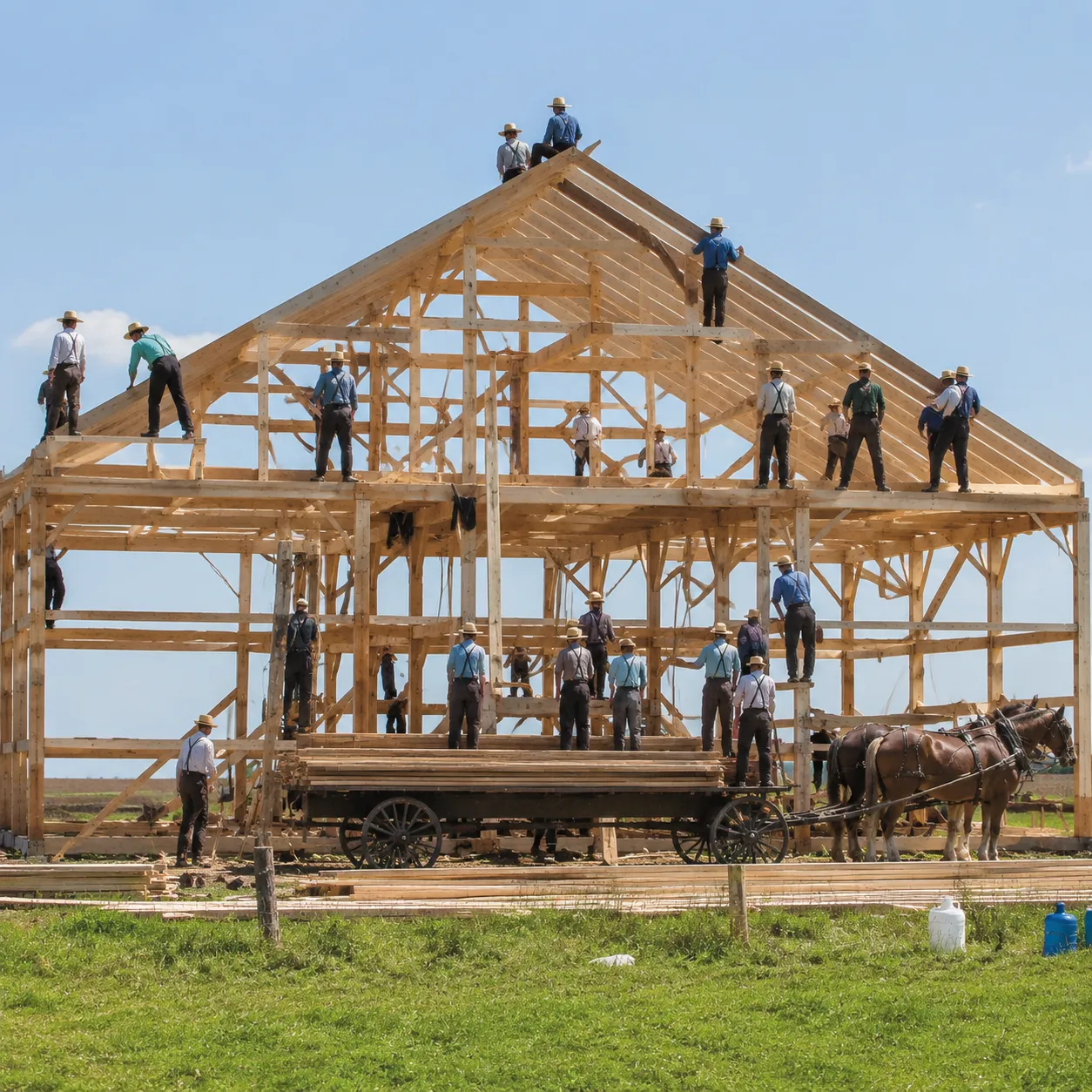
Support stamina and heart health every day
Ancient Remedies Co
The study that disappeared before your doctor could read it
Ancient Remedies Co
Support stamina and heart health every day
Ancient Remedies Co
Support stamina and heart health every day
Ancient Remedies Co
Support stamina and heart health every day
Ancient Remedies Co
Support stamina and heart health every day
Ancient Remedies Co
You gave up coffee for nothing
Ancient Remedies Co
Support stamina and heart health every day
Ancient Remedies Co
The study that disappeared before your doctor could read it
Ancient Remedies Co

 Add to Chrome