
Get Grounded While You Sleep!
Ad Copy
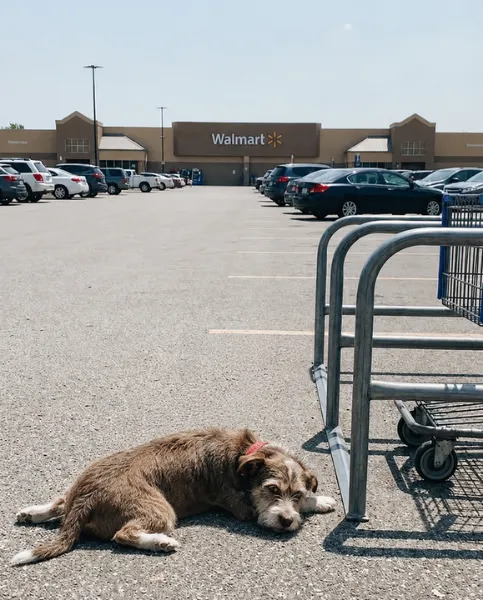
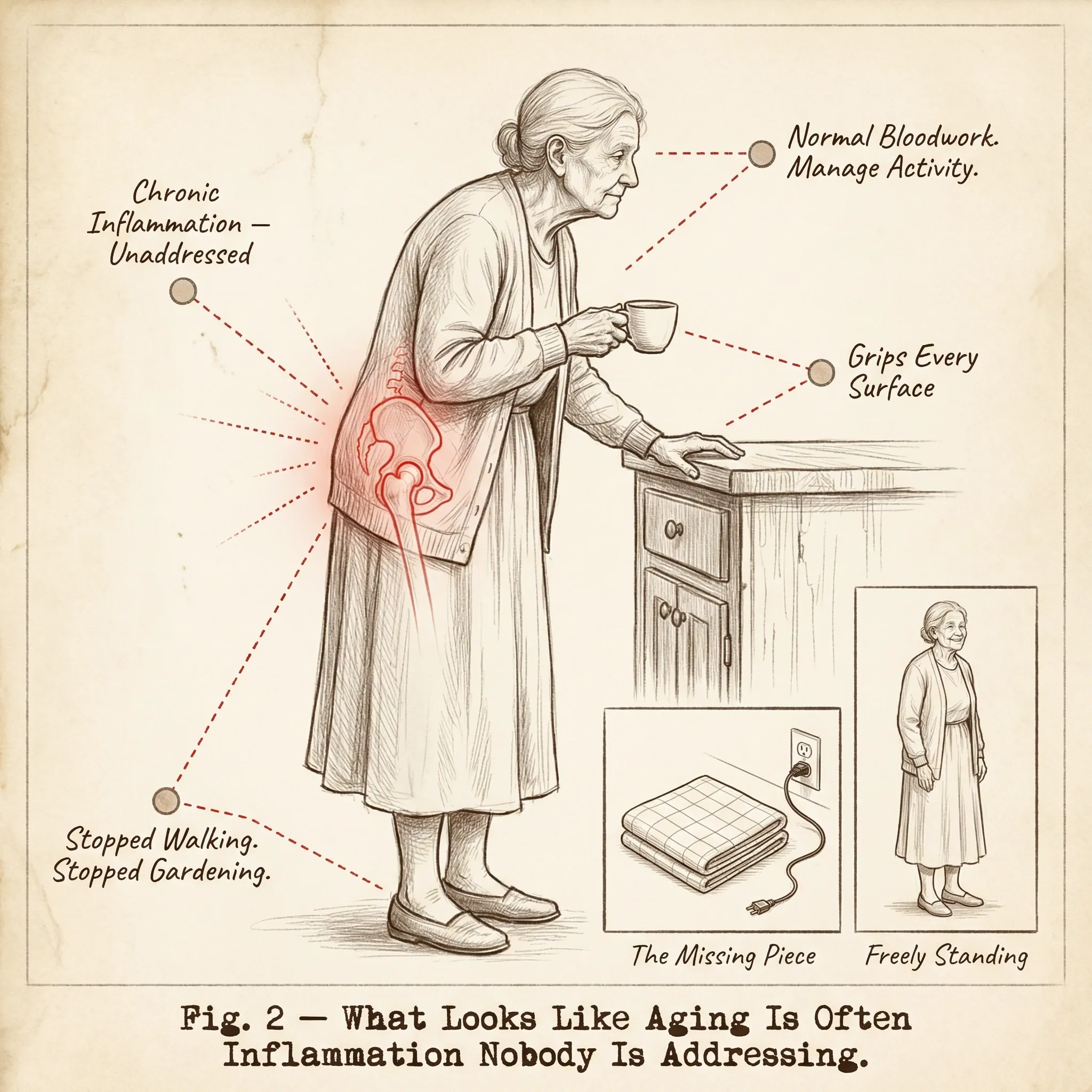
I found a dog in the Walmart parking lot last Tuesday. Small thing. Brown and white. Sitting by the cart return like it was waiting for someone who wasn't coming back. I almost walked past it. I was loading my bags into the trunk — laundry detergent and garbage bags, nothing exciting — and I saw it out of the corner of my eye. Just sitting there. Not barking. Not running around. Just... sitting. Looking at every car that drove by like it was checking to see if this one was the right one. My husband says I can't walk past anything that needs help. A stray cat. A kid who dropped their ice cream. A woman struggling with her grocery cart. He says it like it's a character flaw. I say somebody has to care. I walked over. The dog didn't run. It looked up at me with these big brown eyes — the kind of eyes that are too tired to be scared anymore. Just exhausted. Like it had been waiting a long time and was starting to give up. It had a collar. Faded red. Worn soft at the edges. There was a tag — not one of those fancy engraved ones, but a handwritten one. Someone had taken a blank metal tag and written on it in permanent marker. A name: Benny. And an address. No phone number. Just the address. The handwriting was shaky — the kind of handwriting that belongs to someone whose hands don't work as well as they used to. I pulled the address up on my phone. Thirty minutes away. I stood there in the Walmart parking lot looking at this dog and I had a conversation with myself that I'm not proud of. Thirty minutes is a long drive. I could take him to the shelter. They'd probably scan him. They'd probably call the owner. Probably. But this dog was old. You could see it in his face — the gray around his muzzle, the way he moved slow and careful when he stood up, the cloudy edges of his eyes. An old dog in a shelter is a terrified dog. The noise. The concrete. The cage. And if the owner came looking for him at Walmart and he wasn't there — if she drove to the shelter and they didn't have him yet, or she didn't know which shelter to call — she'd spend the whole night believing he was gone. I know what that feels like. Not the dog part — the part where you lose something you love and the not-knowing eats you alive. The hours between losing it and finding out if it's okay. I wouldn't want someone to put me through that if they could prevent it. Plus I had nothing else to do. It was Tuesday. My day off. Not exactly a packed schedule. I opened the back door of my car. Benny looked at me, looked at the seat, and climbed in like he'd been waiting for a ride. Curled up on the back seat and put his chin on his paws. Like he knew we were going home. I got in my car and drove. The GPS took me off the highway after twenty minutes onto a two-lane road that got narrower the farther I went. Past a dollar store. Past a church with a gravel parking lot. Past a farm stand that was closed for the season. The house was small. White. Set back from the road with a chain-link fence and a yard that was neat but tired — the kind of yard someone used to take care of and still tries to but can't quite keep up with anymore. There was a garden bed along the front with stakes in it but nothing growing. A birdbath that was dry. A truck in the driveway that hadn't moved in a while — you could tell because the leaves had settled around the tires and nobody had swept them. I noticed the fence right away. The gate on the side was broken — one hinge snapped, the gate hanging open at an angle. That's how Benny got out. It was obvious. A simple fix. Twenty minutes with a screwdriver and a new hinge. The kind of thing a husband would take care of on a Saturday morning. Nobody had fixed it. I sat in my car for a minute. Looked at the house. Looked at Benny in the back seat. He was sitting up now. Alert. His tail was moving — not a full wag, just a slow sweep back and forth. He recognized this place. If I'd known what was waiting on the other side of that door — not just a woman, but a story that would change my life — I'd have sat there a little longer. Gathered myself. But I didn't know. So I just opened the back door and walked up to the porch with Benny at my heels. I knocked. It took a while. I heard movement inside — slow, careful steps. A chain lock sliding. The door opened about four inches and a face appeared in the gap. Small. White hair. Eyes that were sharp but tired. "Can I help you?" "Ma'am, my name is Janet. I think this is your —" I didn't get to finish. Benny pushed past my legs and through the gap in the door. The woman stumbled back a step and then she saw him and her whole body changed. Her hands went to her mouth. She dropped to her knees right there in the doorway — slowly, carefully, the way someone kneels when their body doesn't move like it used to — and Benny was in her arms before she hit the floor. She was shaking. Holding this dog against her chest with both hands, her face buried in his fur, and she was saying his name over and over. "Benny. Oh God. Benny. Benny." The dog was crying too — that high-pitched whine dogs make when the person they love comes home. His whole back end was moving. His face was pushed into her neck. He was home. I stood on the porch and watched a woman hold a dog like he was the last thing in the world she couldn't afford to lose. She looked up at me. Her eyes were wet. "The fence," she said. "The gate's been broken for two months. I keep meaning to call someone to fix it but I —" She stopped. Pressed her face into Benny's fur again. "Gene would have fixed it in an hour. He would have fixed it the same day it broke." "Gene?" "My husband." She said it the way you say a word that means more than what it means. "He's been gone eight months. He got Benny for me the year before he died. Said he didn't want me alone in this house." She held Benny tighter. "He still goes and sits by Gene's chair every morning. Every morning. Eight months and he still waits for him. He's the only thing in this house that still knows Gene's name." Her voice broke. "I can't lose him too. He's all I have left." She looked at me. A stranger on her porch who'd driven thirty minutes to bring back a brown and white dog she could have dropped at a shelter. And she said: "Please. Come in. Let me make you coffee." Benny was already inside. And the look on her face — I couldn't leave. Not after that. So I said yes. Her name was Ruth. She was 78. The kitchen was clean the way a kitchen is clean when only one person uses it. One mug on the drying rack. The table had two chairs, but only one had been sat in lately — the other had a stack of medical bills on it. Benny lay down beside the empty one and waited. She made coffee and started talking, and she started with the good part. That's how you know someone really loved somebody. "Gene was a plumber. Forty-one years. The kind people called at 2 AM on Christmas because a pipe burst, and he'd put his boots on and go. He had these hands — twice the size of mine. He could carry a water heater up a flight of stairs by himself. That man could FIX anything." She said "fix" like it meant more than it means. "Fifty-two years we were married. Every Tuesday morning he made coffee before I woke up. Every one." She looked at the chair with the bills on it. "That was his chair." "His doctor put him on Lipitor at 61. Cholesterol was 258. Three months later it was 201 and everyone was happy. He took that pill every night for fourteen years and never missed a dose. Every blood test, the doctor smiled and said the same thing — numbers look great, Gene, keep doing what you're doing." "But he wasn't great. I watched it happen so slow I didn't see it until it was too late. By year three the 5 AM man couldn't get out of bed. By year five the hands that could solder a joint in the dark were dropping wrenches — he'd run them under hot water every morning just to open his fingers. Then the fog. He'd stop mid-sentence and look at me like someone pulled the plug. One night at dinner he asked what he'd done that day. He'd worked a full shift. He couldn't remember any of it." "And every time, the doctor ran the bloodwork and said the same thing. LDL is 91. Outstanding. Some of this is normal at your age. He was 71. The hands that fixed everything for 52 years couldn't open a jar of peanut butter — but his NUMBERS were great." She traced the rim of her cup. "February 12th. I was at the grocery store. I came home and the front door was cracked open. He was in the hallway, face down, his hand on the wall like he'd reached for something to hold onto. Massive heart attack. They call it the widowmaker. LDL of 91. Fourteen years on that pill, every test perfect, and his heart stopped while I was buying eggs." "The cardiologist told me cholesterol management reduces risk, it doesn't eliminate it. Reduces risk. Fourteen years, a body that fell apart, a mind that faded — and it reduced risk. It didn't eliminate anything except my husband." Then she said the thing I've carried with me every day since. "They told us the numbers were the whole story. They weren't. The numbers were the cover of the book. Nobody ever read what was inside." I drove home in silence. Gene's LDL was 91. Gene is dead. Through the kitchen window I could see my husband, Ray. Sixty-one. On Atorvastatin for seven years — the generic version of the same drug. His numbers came down. His doctor's happy. And he's been... dimming. The man who built the pergola over our patio hasn't touched the garage in three years. He opens jars with both hands now and thinks I don't notice. I notice everything. I've watched him sit on the edge of the bed at 5:30 every morning for two years, flexing his fingers open and closed, negotiating with his own hands. Last month he forgot his nephew's birthday — it was on the calendar, we'd talked about it that morning, and by four o'clock he looked at me like I was speaking a language he didn't know. "Leave for what?" He's 61. He's not old. He's on a drug his doctor swears is keeping him safe. And he's becoming someone I don't recognize. I told him about Gene that night — the Lipitor, the fourteen years, the hallway. He looked at me a long time and said, "Jan, I'm fine. My doctor says my numbers are good." He said it the way he always does — not like a man who believes it. Like a man who needs it to be true. That night, after he fell asleep, I sat down at the kitchen table with my laptop and told myself I'd find the answer his doctor never did. The first night was useless. Every site contradicted the last, and every single one was selling something — pills, fear, or confidence in the system. So I stopped hunting for opinions and started looking for an explanation of what I'd watched happen to Gene. Here's what finally clicked. A statin lowers the number by forcing your liver to make less cholesterol. But it does nothing about WHY the cholesterol was high. Your body doesn't overproduce it at random — it makes more in response to damage, to cells under stress from inflammation and years of oxidative wear. The statin shuts off the response. It never touches the damage. It's unplugging the smoke alarm instead of putting out the fire. So what was the fire? Free radicals — unstable molecules that tear through your cells and drive the inflammation sitting underneath everything. Your body is built to neutralize them with antioxidants. And here's what made me want to throw the laptop across the room: two things have left us defenseless against them, and nobody talks about either one. The first is what we've lost. For all of human history our bare skin was in contact with the earth — and the surface of the earth is covered in free electrons, one of the most powerful antioxidants that exists. They flow into the body and neutralize free radicals on contact. But when did your bare skin last touch the ground? We sleep in raised beds, walk in rubber soles, live on the second floor. We've sealed ourselves off from the one thing that kept the fire in check. The second is what we've added. Your phone, your WiFi, the wiring in your walls — every day your body absorbs the EMFs they put out. Researchers call it dirty electricity, and it's one of the biggest hidden sources of the very free radicals burning through you, pouring in all night, the exact hours your body is supposed to be repairing itself. So the fire gets hit from both sides — flooded with dirty electricity, cut off from the only thing that could neutralize it. The statin just watches the cholesterol number while the man attached to it burns down. Slowly. The kind of slow that looks like aging. I found studies — real ones, in journals — showing that grounding the body back to the earth measurably lowered inflammation and oxidative stress. But they were small, and none had follow-ups, and it took me an hour to understand why: you can't patent the earth. No company spends $200 million proving something they can't own and sell. Statins are a $20-billion-a-year business. There's no sales rep walking into your doctor's office to mention that the ground under his feet might work better. Gene's doctor didn't know. Ray's doctor doesn't know. Nobody was going to hand this to us. So I kept going — and the thing every study kept circling back to wasn't a pill or a supplement at all. It was the earth. The free electrons in the ground we stopped touching. Not a drug. Not a supplement with a subscription. A connection to the ground you're standing on. Put the body back in contact with the earth's electrons and the oxidative stress drops, the inflammation that's been smoldering for years starts to fall, and the dirty electricity you've been carrying finally has somewhere to go. Your body starts doing what it was built to do — not masking the damage, but putting the fire out. And because it fixes the cause instead of forcing a number down, the side effects aren't muscle pain and fog and fatigue. The side effects are energy coming back. Clarity. Hands that work again. I ordered a grounding sheet that night. I didn't tell Ray what it was for — I just put it on the bed and clipped the cord into the ground port of the outlet, the way the instructions said. He ran his hand over it. "New sheet. Just sleep on it. For me." He shrugged and got in. The first one I bought barely did anything, and I almost decided the whole thing was nonsense. Then I found out why. Most of what's sold as a "grounding sheet" is junk — a thin silver coating sprayed onto cheap fabric that flakes off in the wash, with barely enough silver to conduct anything. To actually carry the earth's electrons into your body, the silver can't be a coating. It has to be real silver fiber woven through every thread, enough to hold a current, built to keep conducting for years. The only one I found made that way is a small company called GroundingWell — pure woven silver, made in the USA, no coating, no shortcuts. The difference was obvious before I even put it on the bed. You could feel the silver in it. Day five, Ray got out of bed without sitting on the edge first. No pause, no flexing his fingers, no negotiation — he just stood up and walked to the bathroom. I stared at the empty bed for a long time. By week two he was staying up past nine, talking instead of disappearing into his iPad. One night at dinner he said, out of nowhere, "We should have the Johnsons over this weekend." We hadn't had anyone over in two years. Week three I heard a sound I hadn't heard in three years — the garage door going up. He was standing at his workbench, picking up tools and setting them down. Just reacquainting. "Miter saw needs a new blade," he said. He didn't announce a project. But his hands were holding tools again. Week four he mowed the whole lawn and didn't spend the next two days recovering on the couch. His son called that weekend and I heard Ray laughing on the phone — a real laugh, from the chest, the kind I hadn't heard in so long I'd forgotten the sound of it. I went into the bedroom and shut the door. Not because I was sad. Because I was feeling something so big it needed a room to itself. My husband was coming back. At his next checkup the doctor looked at him for a long moment and said, "I don't know what you're doing differently, but you look better than you have in years." For the first time in seven years he asked what had changed — instead of just reading Ray his numbers off a screen. I drove back out to see Ruth a few weeks later and told her everything. The fire. The dirty electricity. The electrons we'd been cut off from. The sheet. The husband who came back. She listened a long time, then looked at the empty chair where Benny was lying and said, "Gene might still be sitting in that chair if someone had told us this three years ago." I reached across the table and held her hand. "I can't change what happened to Gene. But it doesn't have to happen to anyone else." She squeezed back, harder than you'd expect from a 78-year-old woman. "Then tell them." I'm telling you. If your husband is on a statin — Atorvastatin, Lipitor, Crestor, any of them — and his energy is fading, his hands are stiff, his brain is foggy, and his doctor keeps saying "your numbers look great" — the numbers might not be the whole story. They weren't Gene's whole story. They weren't Ray's. If you've been watching someone you love slow down, sit more, do less, and accept it as "just getting older" — maybe it's not aging. Maybe it's a body that's been starved of the antioxidant it was built around and flooded with dirty electricity it can't discharge — while a number on a chart stays excellent. If you're on a statin yourself and something in you knows this isn't right — that the aches shouldn't be this bad, the tiredness shouldn't be this deep, the fog shouldn't be this thick — trust that feeling. I sat across from a woman who watched her husband trust the system for 14 years. The system watched his number and missed his heart. GroundingWell. One sheet. Every night. The earth's free electrons — one of the most powerful antioxidants there is — flowing into your body all night long, neutralizing the free radicals, discharging the dirty electricity, putting out the fire the statin was never built to touch. Addressing the root cause instead of forcing a number down. No oxidative damage left to smolder. No brain fog. No man on the floor of a hallway with perfect numbers and a heart that couldn't hold on. Ruth's husband didn't have this option. Nobody told them. Nobody told them about the fire, or about the electrons that could have put it out. Nobody explained what the drug was doing — and what it wasn't doing. Nobody gave them an alternative. I can't go back and put a grounding sheet on Gene's bed. But I can tell you about the one on mine. https://www.groundingwell.com/products/groundingwell-bedsheet P.S. — Ray has been sleeping grounded for three months now. Last weekend he built a shelf for the mudroom — four hours in the garage, sawdust on his shirt, a look on his face I hadn't seen in years. And you'll feel it before any test could confirm it: the mornings get easier first, then the energy comes back, then the fog lifts like a windshield wiping clear. The statin didn't kill the man you remember. It buried him. This digs him out. P.P.S. — GroundingWell has a 90-day money-back guarantee, the longest in the category. If nothing changes, every penny back — nobody ever offered Ruth a refund for the fourteen years that pill took from Gene. They're a small company and make every sheet in small batches; when they sell out, restocks take months. They're running a promotion right now. Every day on just the statin is another day the fire keeps burning. Gene waited fourteen years. Don't make your husband wait another month. https://www.groundingwell.com/products/groundingwell-bedsheet
More from Charlotte Miller
Get Grounded While You Sleep!
Charlotte Miller

The "Weird Sheet" In Our 5-Star Airbnb
Charlotte Miller
The "Weird Sheet" in our 5-star Airbnb
Charlotte Miller

The Sheet That Helped Her Baby Sleep
Charlotte Miller

Don't Waste Your Money On Grounding Products
Charlotte Miller
Get Grounded While You Sleep!
Charlotte Miller
Get Grounded While You Sleep!
Charlotte Miller
Get Grounded While You Sleep!
Charlotte Miller
Get Grounded While You Sleep!
Charlotte Miller
Get Grounded While You Sleep!
Charlotte Miller
Read this if you know anyone with broken sleep and chronic pain
Charlotte Miller
Get Grounded While You Sleep!
Charlotte Miller

 Add to Chrome