🎃 Natural Support for Your Daily Routine
Ad Copy
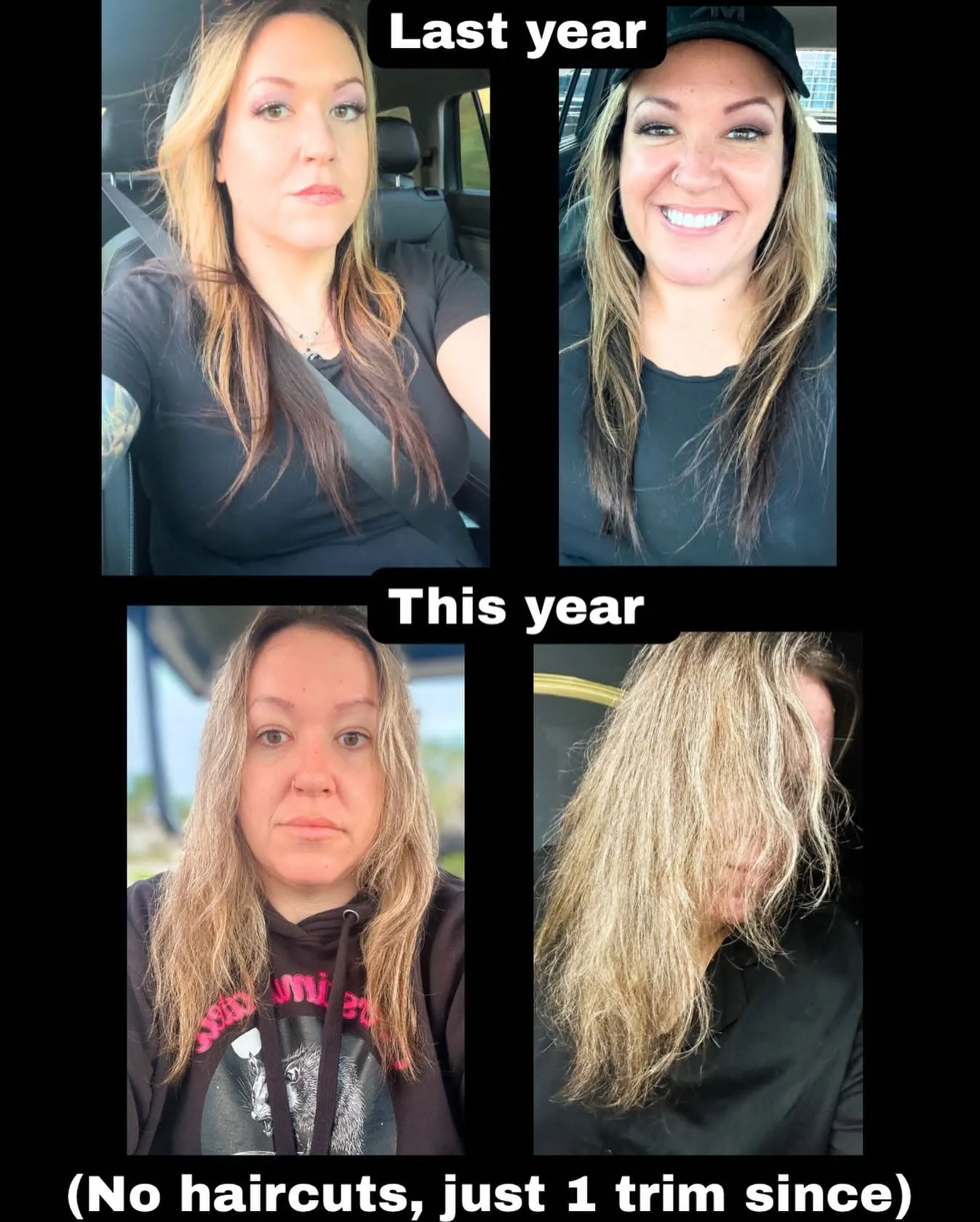
If you've been losing handfuls of hair since starting your GLP-1, your doctor told you "it's normal, it'll grow back," and every biotin gummy and hair vitamin you've tried has done absolutely nothing… I'm about to tell you exactly what's actually killing your hair follicles and why not a single thing you've tried has been able to stop it. And by the end of this, you're going to be furious. Because there are three things happening right now: One — Your hair isn't falling out because of a vitamin deficiency. It has NOTHING to do with biotin, collagen, or keratin. Two — Your doctor is dismissing it as "normal shedding from rapid weight loss" without ever explaining the hormonal cascade that's actively destroying your follicles while they tell you to wait. And three — There's a billion-dollar hair supplement industry selling you ingredients that feed the hair follicle while completely ignoring the hormone that's strangling it from the inside. So let me tell you what happened with my best friend Megan, because her story is going to change how you understand every single strand of hair you've been pulling out of your shower drain. --- For NINE MONTHS Megan watched her hair disappear. She started Mounjaro at 34. The weight came off beautifully. Twenty-two pounds in the first three months. She felt incredible. Her energy was up. Her clothes fit. Her confidence was the highest it had been in years. Then one morning — about four months in — she ran her fingers through her hair in the shower and pulled out a clump the size of a small mouse. She froze. Stood there with the water running, staring at her hand, trying to process what she was looking at. She told herself it was a one-time thing. It wasn't. By month five, she was pulling handfuls out every single shower. Not strands. Handfuls. She'd finish washing her hair and look down at the drain and feel her stomach drop. Every. Single. Time. By month six, her ponytail was half the thickness it used to be. She could feel the difference when she wrapped the elastic. Two wraps became three. Three became four. She stopped wearing her hair down entirely. By month eight, she could see her scalp. Not a little bit. Through the front. Along the part line. At the temples. The sections of her hair that used to be the thickest were now the sections where pink skin showed through under any kind of overhead lighting. She started timing when she left the house based on the angle of the sun so the light wouldn't hit her part line. She stopped going to restaurants with bright ceiling lights. She turned down her sister's wedding rehearsal dinner because the venue had those industrial pendant lights hanging over every table and she knew — she KNEW — every person sitting across from her would be looking at her scalp. Her sister's rehearsal dinner. She told me that's when she realized how bad it had gotten. Not the hair in the drain. Not the ponytail. Not the mirror. The moment she chose not to go to her sister's rehearsal dinner because she couldn't face overhead lighting. That's when she broke down. And that's when I got the phone call at 11pm on a Tuesday. --- What made it worse — what made everything so much worse — was what her doctor said. "Hair shedding is a common side effect of rapid weight loss. It's called telogen effluvium. It typically resolves on its own within six to twelve months." That's it. That was the entire medical response to watching clumps of her hair circle the drain every morning. "Wait." Not: "Let me check your hormone levels." Not: "Let me explain what's actually happening at the follicle level and why." Not: "There's a specific hormonal mechanism driving this that we can address." Just: "It's common. It resolves. Wait." So she waited. And while she waited, she tried everything. Biotin — the supplement every hair loss forum recommends. Twelve weeks. 10,000mcg daily. Zero change in shedding. Zero. Her nails got harder. Her hair kept falling out. Nutrafol — $88 a month. Four months. The premium "clinically tested" hair supplement with ashwagandha, saw palmetto, marine collagen, and biotin. The shedding continued. She said she could feel individual hairs releasing from her scalp when she touched her head. Collagen peptides — six months in her morning coffee. Skin improved slightly. Hair unchanged. Rosemary oil scalp massages — every night for three months. Her bathroom smelled like an Italian restaurant. Her pillow was permanently stained. Hair continued thinning. Mary Ruth's liquid hair growth vitamins — eight weeks. Nothing. Viviscal — the one every dermatologist recommends. $50 a month. Three months. Marginal reduction in shedding that could have been placebo. The thinning at her temples continued. A red light therapy cap — $350. Used it religiously for four months. Twenty minutes every other day. Saw some baby hairs at the crown. Lost more at the temples. Between the supplements, the topicals, the devices, the dermatologist co-pays, and the specialty shampoos — she spent over $3,800 in nine months. Still losing hair. Still seeing her scalp. Still avoiding overhead lights. Still wrapping her ponytail four times. $3,800 and nine months to discover that not a single product she'd tried was designed to address what was actually killing her follicles. --- At this point I'm not sad for her. I'm angry. Because I'm watching my best friend — who is doing everything right, losing weight for her health, following her doctor's instructions, spending thousands on every recommended supplement — lose her HAIR while her doctor shrugs and every product she buys addresses something that has nothing to do with why her follicles are dying. Feeding. The. Follicle. That's what every single product she tried was doing. Biotin feeds the follicle. Collagen feeds the follicle. Keratin feeds the follicle. Nutrafol, Viviscal, Mary Ruth's — they're all designed to deliver nutrients to a hair follicle. But none of them — NOT ONE — addressed the thing that was choking the follicle to death before those nutrients could ever reach it. And that's when I started asking the questions nobody wants you to ask: Why do doctors dismiss GLP-1 hair loss as simple telogen effluvium when there's a specific hormonal mechanism driving it that goes far beyond "shedding from weight loss"? Why does every hair supplement on the market contain the same biotin, collagen, and keratin cocktail that feeds a follicle without addressing the hormone that's miniaturizing it? Why does nobody — not your endocrinologist, not your dermatologist, not your GLP-1 prescriber — ever mention the three letters that explain exactly why your hair is falling out? D. H. T. --- So I went down a rabbit hole. A deep one. I started researching why someone on a GLP-1 would experience accelerated, aggressive hair loss that doesn't respond to any standard hair supplement, that continues despite adequate nutrition, and that specifically targets the areas where follicles are most hormone-sensitive — the temples, the crown, and the part line. And every mainstream medical site gave me the same recycled answer. "Telogen effluvium. Common with rapid weight loss. Will resolve." But then I found something that changed everything. Not a blog post. Not a wellness influencer. A peer-reviewed paper in the Journal of Investigative Dermatology. And it explained a mechanism that I had never heard a single doctor, supplement company, or hair growth influencer mention in connection with GLP-1 hair loss. 5-alpha reductase. And its end product: DHT. Dihydrotestosterone. --- Now pause for a second. You know what's insane? Every hair supplement on the market is designed to nourish the hair follicle. Every shampoo, every topical, every vitamin — they're all working to deliver ingredients TO the follicle, as if the follicle just needs more nutrition. But nobody — and I mean NOBODY in the consumer supplement space — is talking about the hormone that is actively shrinking the follicle, cutting off its blood supply, and forcing it into a permanent resting phase where no amount of biotin, collagen, or rosemary oil can possibly revive it. And that's not an accident. Because once you understand what DHT does to your hair follicle — and WHY it surges during rapid weight loss on a GLP-1 — you realize that every supplement Megan tried, and everything YOUR doctor has probably told you, is treating the symptom of a dying follicle while ignoring the hormone that's killing it. --- Here's what I learned. Your body has an enzyme called 5-alpha reductase. It converts testosterone into DHT — dihydrotestosterone. DHT is five times more potent than regular testosterone. And it has a very specific, very destructive target: your hair follicles. DHT binds to androgen receptors on the hair follicle. When it binds, it triggers a process called follicular miniaturization. The follicle literally shrinks. The blood supply feeding it constricts. The growth phase shortens. The hair that grows from that follicle gets thinner, shorter, and weaker with each cycle — until eventually the follicle stops producing visible hair entirely. This is what's happening every time you see a thin spot spreading. Every time your part line looks wider. Every time you can see more scalp than you could last month. The follicles aren't dead — they're being miniaturized by DHT. Choked. Starved. Forced into dormancy. Now here's the part that connects everything. When you lose weight rapidly on a GLP-1 — Mounjaro, Ozempic, Wegovy, Zepbound, Tirzepatide — your fat cells shrink. And when fat cells shrink, they release stored hormones. Estrogen. Testosterone. Hormones that were sequestered in adipose tissue for years. That flood of released testosterone hits your bloodstream. 5-alpha reductase converts it to DHT. DHT levels spike. And every follicle with androgen receptors — which is concentrated at the temples, the crown, the part line, exactly where you're losing hair — gets hit with a surge of the most destructive hormone your hair has ever encountered. It's not telogen effluvium. It's not "normal shedding from weight loss." It's a DHT-driven hormonal assault on your follicles triggered by the rapid mobilization of stored sex hormones from shrinking fat cells. And it has a specific mechanism that requires a specific intervention — not more biotin. So Megan was: Taking biotin that fed follicles that DHT was actively miniaturizing. Taking collagen that supported hair structure while DHT was cutting off the blood supply to the follicle producing it. Taking Nutrafol that delivered ashwagandha and marine collagen to follicles that DHT had already forced into premature resting phase. Using rosemary oil to stimulate blood flow to a scalp where DHT had constricted the capillaries feeding the follicles that rosemary was trying to reach. Her supplements were trying to feed a follicle that DHT was strangling. They were delivering nutrients to the door of a house that DHT had boarded up from the inside. No amount of biotin can override a follicle that DHT has miniaturized and forced into dormancy. No amount of collagen can rebuild a hair shaft produced by a follicle that DHT has shrunk by 40%. No amount of rosemary oil scalp massage can reopen capillaries that DHT has constricted at the receptor level. THAT'S why her shedding didn't stop despite $3,800 in supplements. The thing killing her follicles — DHT — was running completely undisturbed underneath every product she'd tried. She wasn't nutrient deficient. She wasn't genetically predisposed to baldness. She wasn't experiencing temporary shedding that would self-resolve. She was in an active DHT-driven follicular destruction event triggered by the hormonal cascade of rapid weight loss — and every product she'd bought was designed to nourish a follicle while the hormone destroying it went completely unaddressed. --- And here's the part that made my blood boil. The medical system KNOWS about DHT and hair loss. It's not obscure. It's not emerging research. 5-alpha reductase inhibition is the ENTIRE mechanism behind the most prescribed pharmaceutical hair loss treatment in history — finasteride. It's been documented, replicated, and proven for decades. DHT-driven hair loss is the most understood form of alopecia in medical literature. But the standard clinical response to GLP-1 hair loss doesn't include a DHT assessment. Doesn't check 5-alpha reductase activity. Doesn't explain the hormonal cascade from rapid fat loss. Doesn't differentiate between simple telogen effluvium and androgen-mediated follicular miniaturization. "It's normal. It'll grow back. Wait." Because finasteride — the pharmaceutical DHT blocker — has significant side effects. Hormonal disruption. Mood changes. Contraindicated in women of childbearing age. Most doctors won't prescribe it for women at all. So there's no pharmaceutical they can give you. And if they can't prescribe it, they don't investigate it. If they can't bill for it, they don't explain it. The mechanism exists. The research is published. The solution exists. But because the pharmaceutical version carries risks they won't prescribe for women — the entire conversation stops. "Wait." Meanwhile — your follicles are miniaturizing. Every day. Every week. Every month you wait. DHT continues binding. The miniaturization continues advancing. And there's a point — documented in the research — where a miniaturized follicle has been dormant long enough that reactivation becomes significantly harder. Time matters. And they told you to wait. --- So I kept digging. Reading dermatology journals. Research on 5-alpha reductase inhibition. Studies on natural compounds that block DHT conversion at the enzyme level without the hormonal side effects of finasteride. And I found one compound that kept appearing — not in wellness blogs, not in influencer content, in peer-reviewed clinical research — as the most effective natural 5-alpha reductase inhibitor studied in humans. Pumpkin seed oil. Not marketed as a DHT blocker. Not sold as a hair loss pharmaceutical. Studied specifically for its ability to inhibit 5-alpha reductase — the enzyme converting testosterone to DHT — and measured in clinical trials for its effect on hair density, hair count, and follicular recovery. A 2014 randomized, double-blind, placebo-controlled trial published in Evidence-Based Complementary and Alternative Medicine studied men with androgenic alopecia taking 400mg of pumpkin seed oil daily for 24 weeks. The results: a 40% increase in hair count compared to a 10% increase in the placebo group. Clinically significant. Measured by phototrichography. Peer-reviewed. The mechanism: pumpkin seed oil contains delta-7-sterine and specific phytosterols that competitively inhibit 5-alpha reductase. They sit on the enzyme. They prevent testosterone from converting to DHT. Less DHT means less binding to follicular androgen receptors. Less binding means less miniaturization. Less miniaturization means follicles that were being choked can reopen their blood supply, re-enter the growth phase, and start producing hair again. Not feeding the follicle after it's been miniaturized. Removing the hormone that's miniaturizing it. The same mechanism as finasteride. Without the hormonal side effects. Without the prescription. Without the contraindication in women. --- Megan tried to find a pumpkin seed oil supplement that matched the research. First: the highest-rated one on Amazon. Big bottle. Cheap. Thousands of reviews. Took it for six weeks. Nothing changed. Same shedding. Same hair in the drain. Same thinning. Second: a health food store brand. Eight weeks. Marginal. Maybe slightly less hair in the drain some days. Hard to tell. The thinning continued. She went back to the research. Read the methodology again. The clinical trials used cold-pressed pumpkin seed oil. Extracted without heat. Without chemical solvents. Because the delta-7-sterine — the active compound that inhibits 5-alpha reductase — degrades at high temperatures. Heat-extracted pumpkin seed oil has significantly lower concentrations of the phytosterols responsible for DHT inhibition. She flipped over both bottles she'd bought. Neither listed extraction method. Neither specified cold-pressed. Both just said "pumpkin seed oil." One listed soybean oil as the first ingredient — it was a pumpkin seed oil supplement diluted with soybean oil. She'd been taking diluted, heat-extracted oil with degraded active compounds for fourteen weeks. There was also the dose problem. Most pumpkin seed oil supplements on the market contain 1000mg per softgel of oil that's been heat-extracted, diluted, and stripped of the phytosterol concentration that the clinical research measured. The studies used 400mg of properly extracted, cold-pressed oil — because at that concentration, the delta-7-sterine content was sufficient to measurably inhibit 5-alpha reductase. She was taking the wrong product at the wrong quality at the wrong potency. Between the biotin, the Nutrafol, the collagen, the rosemary oil, the red light cap, the Viviscal, the dermatologist visits, and two bottles of cheap pumpkin seed oil — she'd spent over $3,800 in nine months. --- Then one night Megan is scrolling through a hair loss support group — because that's what her life had become, scrolling hair loss forums at midnight — and she sees someone mention a brand called Everly. She almost kept scrolling. She was exhausted. Skeptical. Done spending money on things that didn't work. But the comment said something that stopped her. "This is the first thing that actually slowed the shedding. I was losing handfuls. I'm barely losing strands now. Six weeks." She went to the site. Ready to be disappointed again. And she almost dropped her phone. Cold-pressed pumpkin seed oil. Properly extracted. Not diluted with soybean oil or sunflower oil or any filler. Pure pumpkin seed oil in a softgel at the concentration where 5-alpha reductase inhibition was clinically measured. No proprietary blends hiding trace amounts behind a combined label. No unnecessary additives. No "hair health formula" stuffed with biotin and keratin to pad the ingredient list and justify the price. Just the compound — pumpkin seed oil — in the form and at the quality that the clinical research actually used. Third-party tested. Formulated for bioavailability. Not a "hair vitamin" that feeds a dying follicle. A DHT blocker that removes the hormone killing it. --- Megan started taking Everly Pumpkin Seed Oil Softgels. After one week? She said she noticed something she couldn't explain. She reached up to scratch her head and when she pulled her hand away — no hair wrapped around her fingers. She'd gotten so used to finding strands every time she touched her head that the ABSENCE felt strange. Like something was missing. She didn't say anything. It was too early. She didn't want to jinx it. After two weeks? The shower drain. She stepped out of the shower and looked down. There was hair — there's always some hair — but it was strands. A few strands. Not the clump. Not the wet mass she'd been staring at every morning for nine months. She stood there dripping wet, looking at the drain, and started crying. Not because it was empty. Because it was NORMAL. It looked like what a shower drain is supposed to look like. And she'd forgotten what that was. After three weeks? She texted me a photo. Just her hairbrush. After brushing her hair. And the brush had what looked like a normal amount of hair in it. Not the dense wad she'd been pulling out of the bristles and throwing away while trying not to look at how much there was. "Look," she said. That's all she wrote. I knew what it meant. After four weeks? The ponytail. She put her hair up for the gym and the elastic wrapped three times. Not four. Three. She'd been at four wraps for five months. She wrapped it again to make sure she wasn't imagining it. Three. She called me from the gym parking lot. "My ponytail is thicker." After six weeks? She was blow-drying her hair and tilted her head forward. The area at the front — the section along her hairline where the thinning had been most visible, the section that made her avoid overhead lights and skip her sister's rehearsal dinner — was different. Baby hairs. Short ones. Standing up along the hairline. Dozens of them. Not wispy shedding. New growth. Follicles that DHT had forced into dormancy were waking up. The miniaturization was reversing. Blood supply was returning to follicles that had been choked for months. And those follicles were pushing out new hair. She took a photo in harsh bathroom light — the light she'd been avoiding for nine months — and sent it to me without a word. I zoomed in. The hairline was fuzzy with new growth. Short pieces standing up everywhere along the part. I called her. She picked up. "I can see them," she said. "They're everywhere. My follicles are coming back." After eight weeks? She went to her hairstylist. The stylist ran her hands through Megan's hair, stopped, and looked at her. "What are you doing differently? You have SO much new growth." Megan said: "I stopped feeding my follicles and started blocking the hormone that was killing them." Her stylist tilted her head. "Explain." She did. DHT. 5-alpha reductase. How rapid weight loss releases stored testosterone from fat cells. How that testosterone converts to DHT. How DHT miniaturizes follicles. How every biotin, collagen, and keratin supplement in the world feeds a follicle that DHT has already shut down. And how pumpkin seed oil — properly extracted, cold-pressed, at clinical concentration — inhibits the enzyme that converts testosterone to DHT in the first place. Her stylist put down her scissors. "I've had twelve clients on GLP-1s lose their hair this year. Every one of them is taking biotin. I'm sending them all this information." After twelve weeks? Megan went back to her dermatologist. Not for a prescription. To show her what happened. Her dermatologist examined her scalp. Looked at the photos from three months ago. Looked at her now. "Your follicular density has improved significantly. The miniaturization along the frontal hairline has partially reversed. What changed?" "I blocked the DHT that was miniaturizing my follicles." Long pause. "How?" "Pumpkin seed oil. Cold-pressed. The phytosterols — specifically delta-7-sterine — inhibit 5-alpha reductase. The same mechanism as finasteride. Without the side effects." Her dermatologist looked at her for a long moment. "The 5-alpha reductase inhibition of pumpkin seed oil phytosterols is documented in the literature," she said slowly. "I typically don't recommend it because there's no standardized pharmaceutical formulation." "There doesn't need to be," Megan said. "The oil works." Her dermatologist made a note in her chart. "Whatever you're doing — your hair density has improved more in twelve weeks than I would have expected from six months of waiting. Continue." Continue. Not: "Let's add minoxidil." Not: "Here's another topical." Not: "Let's wait another six months." Continue. She walked to her car. Got in. Sat there. She texted me one line. "My dermatologist told me to continue. Not wait. Continue. Because my follicles are coming back." I didn't respond for a minute. "Nine months," she said. "I spent $3,800 feeding follicles that DHT was killing. And the solution was blocking the DHT." --- Total improvement at five months: Shedding reduced by roughly 90% — from handfuls per shower to a few normal strands. Visible new growth at the hairline, temples, and along the part line. Ponytail thickness noticeably restored. Scalp no longer visible under overhead lighting. She went to her sister's actual wedding with her hair down. Her hair. Down. Under lights. In photos. Not from another biotin formula. Not from a $350 red light cap. Not from waiting. From blocking the hormone that was strangling her follicles. --- And here's what I need you to understand about what people aren't telling you. Because the second you block the DHT that's miniaturizing your follicles, you don't need their $88/month Nutrafol feeding a follicle that DHT has already shut down. You don't need their biotin gummies delivering a nutrient your body already has enough of. You don't need their rosemary oil scalp massage stimulating blood flow to capillaries that DHT has constricted at the receptor level. Your 5-alpha reductase gets inhibited. Your DHT drops. Your follicles stop miniaturizing. Your blood supply reopens. Your growth phase restarts. Your hair comes back. The way it would have come back months ago — if someone had explained what DHT was doing and how to stop it instead of telling you to wait. --- Now here's what I need you to understand about timing. DHT-driven follicular miniaturization doesn't wait for you to figure this out. Every month that DHT continues binding to your follicular androgen receptors is another month of miniaturization. Another month of follicles being pushed deeper into dormancy. Another month where the window for reactivation narrows. The research is clear: follicles that have been miniaturized for shorter periods respond more readily to 5-alpha reductase inhibition than follicles that have been dormant for years. The sooner you block the DHT, the more follicles you save. The longer you wait — taking biotin, drinking collagen, massaging rosemary oil into a scalp where DHT is actively destroying follicles underneath — the harder the recovery becomes. --- So if you're dealing with ANY of this — hair falling out in clumps every time you shower, your ponytail getting thinner by the month, visible scalp along your part line or at your temples, hair loss that started after beginning a GLP-1 and hasn't responded to any supplement you've tried, hair loss from perimenopause, menopause, PCOS, hypothyroidism, hormonal changes, or stress that your doctor dismissed as temporary — this is the time. Not next month when you've finished the bottle of Nutrafol that isn't working. Not after another three months of waiting for telogen effluvium to "resolve itself." Not when the thinning has advanced to the point where reactivation becomes exponentially harder. Right now. While your follicles are still saveable. Everly Pumpkin Seed Oil Softgels. Cold-pressed. Properly extracted. Clinical concentration. Pure pumpkin seed oil — not diluted with soybean or sunflower filler. Third-party tested. No proprietary blends. No biotin padding. No unnecessary additives. Just the compound that blocks the enzyme that converts testosterone to DHT. Because your doctor isn't coming to explain DHT-mediated follicular miniaturization. There's no pharmaceutical they'll prescribe for it in women. There's no revenue in telling you the $88 supplement isn't addressing the mechanism. There's no follow-up appointment where they investigate why the biotin didn't work. You have to fix this yourself. And now you know exactly what's killing your hair and exactly how to stop it. 👉 https://shopeverly.shop/products/pumpkin-seed-oil-cold-pressed-softgels-3000mg-1-cc-select
More from Everly
🎃 Natural Support for Your Daily Routine
Everly
🎃 Natural Support for Your Daily Routine
Everly
🎃 Natural Support for Your Daily Routine
Everly
🎃 Natural Support for Your Daily Routine
Everly
🎃 Natural Support for Your Daily Routine
Everly

🎃 Natural Support for Your Daily Routine
Everly
Limited Time Offer 👉🏻
Everly

🎃 Natural Support for Your Daily Routine
Everly
The "Triple Relief" Solution No One Talks About
Everly
🎃 Natural Support for Your Daily Routine
Everly
🎃 Natural Support for Your Daily Routine
Everly
The "Triple Relief" Solution No One Talks About
Everly

 Add to Chrome