
Why ancient Greek warriors never needed knee replacements
Ad Copy
Greek hoplites sprinted a full mile into Persian battle lines carrying 50 pounds of bronze armor. That's charging across open ground at full speed with a massive shield, bronze breastplate, greaves, and a nine-foot spear. Over 40 pounds of equipment. Then fighting hand-to-hand for hours without stopping. No timeouts. No substitutions. No medical tents waiting on the sidelines. Just brutal, sustained violence that would shatter a modern soldier's joints in a single engagement. When military historians first studied Greek battle records, they assumed the combat descriptions were exaggerated. So in 2011, a team from Cambridge flew to excavation sites across the Peloponnese to examine skeletal remains of confirmed hoplite warriors. They expected to find kneecaps ground to powder. Hips riddled with arthritis. Ankles fused by decades of calcium buildup. Instead, they found something impossible. 50-Year-Old Greek Warriors With Healthier Joints Than Modern Teenagers The researchers ran every test. Bone density scans. Joint surface analysis. Microscopic examination for stress fractures and wear patterns. The soldiers who'd been sprinting, fighting, and marching in 40 pounds of bronze armor for decades had joints that looked... pristine. No cartilage erosion. No bone spurs. No degenerative damage. Their joint surfaces -- the areas that grind down first in modern populations -- showed minimal wear compared to sedentary Greeks of the same age. Dr. Eleni Pavlou, the lead bioarchaeologist, was baffled. "These results shouldn't be possible," she told her team. "These men absorbed more joint impact in a single battle than most modern humans experience in a year. Their knees should be completely destroyed." But they weren't. Some of these warriors had served for 20+ years, training daily in full armor, fighting in wars that lasted entire seasons, marching hundreds of miles between engagements -- with zero signs of chronic joint damage. Meanwhile, 40-year-old weekend joggers today were getting knee replacements after a few years of casual running on paved roads. Something wasn't adding up. Their Training Methods Weren't Special At All The team spent ten months studying everything about Greek military lifestyle. They analyzed their diet -- basic barley bread, figs, olives, occasional goat meat. Nothing exotic. They studied their training regimen -- grueling, absolutely, but not a miracle joint formula. They tested genetic markers from bone samples -- completely normal Aegean population genetics. They examined their battle formations, their rest protocols between campaigns, their recovery methods after engagements. Nothing explained it. Dr. Pavlou was ready to chalk it up to "warrior selection bias" and move on. That's when one of the junior researchers noticed something the archaeology team had dismissed as irrelevant. The "Primitive" Training Sandals Nobody Took Seriously James Whitfield was a biomechanics specialist on loan from a sports science lab, not an archaeologist. While the others focused on training loads and nutrition, he kept studying the dozens of preserved leather sandals recovered from Greek military sites and gymnasium ruins. And he noticed something remarkable. Every single sandal followed the same design -- thin leather straps, completely flat soles, with open construction that let toes spread completely free. No arch support. No cushioning. No "protective features." Just a flat platform that forced feet to work exactly like they were barefoot. "What if it's not their conditioning?" he asked during a team meeting. "What if it's what they wore on their feet?" The archaeologists laughed. "You think flat sandals protect against knee arthritis?" one scoffed. But James wasn't talking about the sandals themselves. He was talking about what happens to your entire lower body when footwear doesn't constrain your feet. The Experiment That Changed Orthopedic Science Forever James convinced them to run one final test. He recruited modern soldiers to train and march in replica Greek military sandals while wearing motion-capture equipment. Foot strike patterns. Ankle rotation. Knee alignment. Hip mechanics. Then he compared the Greek sandal mechanics to measurements from soldiers training in standard-issue military boots. The difference was staggering. Modern soldiers -- wearing engineered boots with heavy arch support and cushioned heels -- showed severe twisting in their joints. Their ankles collapsed inward with every stride. Their knees twisted aggressively to compensate for their unnatural foot position. The Greek sandal wearers? Their feet moved in perfect alignment. Toes splayed wide. Arches stable. Ankles neutral. Zero rotational stress on the knees. "Their joints aren't twisting at all," Dr. Pavlou muttered, staring at the data. When Modern Soldiers Tried Hoplite Training, Their Bodies Broke Down It had happened before. In 2004, a British special forces unit attempted to replicate a Greek hoplite training protocol as a conditioning experiment. They followed the exact program. Full-weight shield drills. Sprint charges in body armor. Long-distance forced marches. Within two weeks, injuries started piling up. Knee tendonitis. Shin splints. Hip bursitis. Plantar fasciitis. By week four, half the unit was on medical leave. By week six, the experiment was scrapped entirely. Their bodies couldn't handle it. The conclusion at the time? "Ancient Greeks must have been physically superior." But James's research revealed the real difference: The soldiers were wearing modern military boots. Their toes were cramped into narrow toe boxes. Their arches collapsed inward with every step. Their ankles rolled, their tibias twisted, and their knees ground themselves raw. The alignment was missing. The Two Hidden Mechanisms Destroying Your Knees Here's what those Cambridge researchers finally understood: Knee pain isn't just about weak cartilage. It's about two specific things your shoes are doing to you with every single step. Problem #1: The Rotational Trap When you walk, your foot is supposed to create a stable, three-point base. Big toe, little toe, heel. A rigid tripod. That's normal. That's how your body creates stability. But when your toes are crammed into a narrow shoe, that tripod collapses. Your arch rolls inward. Ankle follows. Shinbone rotates inward with it. And your knee? Your knee is a simple hinge joint. It's designed to move forward and backward. It is NOT designed to twist. But every step you take in a narrow shoe forces it to twist anyway. That twisting creates aggressive friction inside the joint. The cartilage beneath your kneecap gets rubbed raw. Inflammation floods in. That's Patellofemoral Pain Syndrome -- "Runner's Knee." Problem #2: The Impact Spike But there's a second problem most people never notice. Modern shoes have thick, cushioned heels that sit about half an inch higher than the front of the shoe. This tilts your body forward slightly -- which forces you to slam your heel into the ground first when you walk. When your heel strikes the ground on all that cushioning, it acts like hitting the brakes in a car. That impact sends a shockwave straight up your leg. And because your foot is locked in place by the shoe, your knee absorbs 100% of that force. Step after step. Day after day. Year after year. The cartilage breaks down. The joint inflames. Arthritis sets in. That's why your knee aches after a long walk. That's why climbing stairs sends shooting pain through your kneecap. That's why the damage just keeps getting worse. Your foot can't stabilize, and every step pounds your knee like a hammer. And after years of this, the damage becomes permanent. Those Greek Warriors Never Had Either Problem Every day, they trained and fought in sandals with wide, flat platforms. Their toes spread naturally. Their arches stayed stable. Their ankles stayed neutral. Zero tibial rotation. Zero knee twist. And because the sandals were completely flat -- no elevated heel -- they naturally landed on the middle of their foot instead of slamming their heel down. Even during full-speed sprint charges into enemy formations. Their foot and calf absorbed the impact before it ever reached the knee. Zero cartilage destruction. After battle, their knees recovered fully. The cycle repeated perfectly, campaign after campaign, for entire military careers spanning decades. Their bodies never accumulated the chronic joint damage that destroys modern soldiers -- despite absorbing far more violent impact than any modern athlete ever will. One Researcher Brought This Secret to Military Medicine Dr. Pavlou returned to Cambridge obsessed with one question: Could you prevent knee degeneration just by changing footwear to allow natural foot mechanics? She started working with military physicians treating chronic knee pain in active-duty personnel. They had soldiers stop wearing their "supportive" boots and switch to wide-toe-box footwear with completely flat soles that let their feet function naturally. The results were undeniable. Knee pain dropped by 58% within eight weeks. Soldiers who'd been recommended for medical discharge were completing full marches and long runs pain-free. One infantryman with "runner's knee" that wouldn't resolve for 14 months was completely healed in six weeks. The physicians were stunned. But the research never went mainstream. Because you can't patent 2,500-year-old Greek engineering. Big Ortho Makes $18 Billion Annually on Knee Replacements Custom orthotics. Cortisone shots that cost $200 a pop. Expensive "motion-control" boots that actually make the problem worse. And the big one: knee replacement surgery. $50,000 per knee. The entire medical-industrial complex is built on the idea that knee pain and joint degeneration are inevitable. That your body breaks down with age and there's nothing you can do about it except manage symptoms with drugs and surgery. But the Greek hoplites prove that's a lie. Knee arthritis isn't inevitable. It's what happens when your foot can't stabilize and every step pounds your joint with brutal force. For 2,500 years, the solution has been hiding in ancient history. And orthopedic companies buried it to protect their profits. The Problem Is You Can't Walk Around in Leather Sandals Every Day Dr. Pavlou knew this. You can't exactly go to work, run errands, or walk the dog in replica Greek military sandals or go totally barefoot. But traditional sneaker companies refused to change their designs -- because narrow, cushioned shoes were more profitable. So, a specialized team of biomechanical engineers stepped in. Their mission was simple: take the exact structural secrets of Greek training sandals and build them into a sleek, everyday shoe designed for modern life. The Breakthrough: Wide Toe Box and Barefoot Sole The problem with most shoes is simple: They trap your toes in a narrow prison AND tilt your body forward with a thick heel. Companies use tight, tapered designs and elevated heels because they look sleek and modern. But they destroy your foot's ability to stabilize and force you to pound your knees with every step. The breakthrough came from archaeological biomechanics. If you could create a shoe with a wide toe box that let toes splay naturally AND pair it with a "barefoot sole" -- completely flat from heel to toe with no elevation... You'd eliminate both mechanisms destroying your knees. The wide toe box lets your toes spread out naturally -- creating that stable tripod base your foot needs. Your arch stays strong. Your ankle stops rolling. Your shinbone stays aligned. Zero rotational stress on your knee. The barefoot sole is completely flat from heel to toe. This forces you to land on the middle of your foot instead of slamming your heel down. Your foot and calf act like a natural shock absorber -- catching the impact before it ever reaches your knee joint. Zero pounding force. Zero cartilage breakdown. Toes spread wide. Heel stays level. Knee stays aligned and protected. After Two Years of Testing, They Finally Perfected It Wide toe box with barefoot sole for natural alignment and shock absorption. Lightweight -- under 6 ounces so your legs don't fatigue. Slip-on design -- no bending down to tie laces. Breathable mesh -- so your feet stay cool all day. Just slip them on. Walk naturally. Your feet stabilize properly for 6-8 hours of activity. Joint alignment restores throughout your body. Pain fades naturally. That's how HF Stride Barefoot Shoes was born. It's a barefoot-style shoe engineered specifically to protect your knees by letting your feet work naturally. Since then, thousands of people have experienced what those scientists discovered: Your knees want to heal. You just need to stop forcing them to twist and absorb brutal impact. Here's What Happens When You Let Your Feet Work Naturally Every Day Tom, 62, had been dealing with knee pain for 15 years. Two orthopedic surgeons told him he'd need knee replacement within the year. He was taking 800mg of ibuprofen daily just to walk without limping. His daughter bought him HF Stride Barefoot Shoes as a last resort. The first week, he could actually put them on without bending down. By week three, the constant aching in his knees had dropped by half. Two months in, he was hiking again. Six months later, he cancelled his knee replacement surgery. His doctor was confused: "Your alignment is better than it was five years ago." Tom just smiled. He knew why. Sarah, 58, couldn't stand for more than 30 minutes without her feet and knees aching. Her feet were so unstable it made her knees throb by midday. She'd tried custom orthotics. They worked for a few weeks, then the pain came roaring back. She started wearing HF Stride Barefoot Shoes daily. Within 10 days, the sharp stabbing pain in her knees was gone. Within a month, she had her balance back. Three months later, she was gardening for hours without thinking about her knees or feet. Michael, 55, had arthritis in both knees and ankles. His joints were so stiff and swollen every morning, he couldn't walk the dog without pain. His rheumatologist said it would only get worse with age. He tried HF Stride Barefoot Shoes. The first thing he noticed was he didn't need to grab the railing anymore. Then, after about two weeks, he woke up and realized his knees didn't hurt. The stiffness was gone. His gait felt natural. He's been wearing them for a year now. His arthritis hasn't progressed at all. If anything, it's better. The Science Is Clear Now A 2022 study measured joint stress in patients before and after switching to wide-toe-box, barefoot-sole footwear. Participants showed: 54% reduction in knee pain after six weeks 62% improvement in ankle stability 47% decrease in chronic hip discomfort Measurably reduced tibial rotation and improved alignment This isn't placebo. This is your body finally getting the mechanics it's been starving for. That's What Makes HF Stride Different Wide toe box - gives your toes room to spread naturally, so your foot creates a stable base and your knee stops rotating inward. Barefoot sole - completely flat from heel to toe, so your body stays level and your knees stop absorbing the impact of every step. Lightweight construction that doesn't fatigue your legs. This isn't a watered-down imitation. This is the real thing. That's why thousands of people swear by it. That's why I wear them every day. That's why I recommend them to everyone I care about who's dealing with knee pain. Here's the Deal Right now, Hike Footwear, the company that makes the HF Stride, is running a limited time Summer Sale: 49% off plus free shipping. They're so confident you'll feel less pain, better balance, and easier movement, they're backing it with a 30-day money-back guarantee. Wear them for 30 days. If you don't feel the difference... Send them back for a full refund. No questions. No hassle. But fair warning: Hike Footwear is a small company. They use quality materials and precision craftsmanship, which means they can't mass-produce like the cheap knockoff brands. Their last restock sold out in 72 hours. If you click and they're already gone, I'm sorry. I wish I could hold a pair aside for you, but I can't. Greek Hoplites Sprinted Into Battle in Full Bronze Armor With Zero Joint Damage. Military researchers tried to bury the findings because it threatens an $18 billion knee replacement industry. But now you know the truth. Your knees aren't broken. They're just forced to twist and absorb brutal impact with every step. And you can fix it today. 👟 Try HF Stride Barefoot Shoes risk-free before they sell out again.
More from Your Health Journal
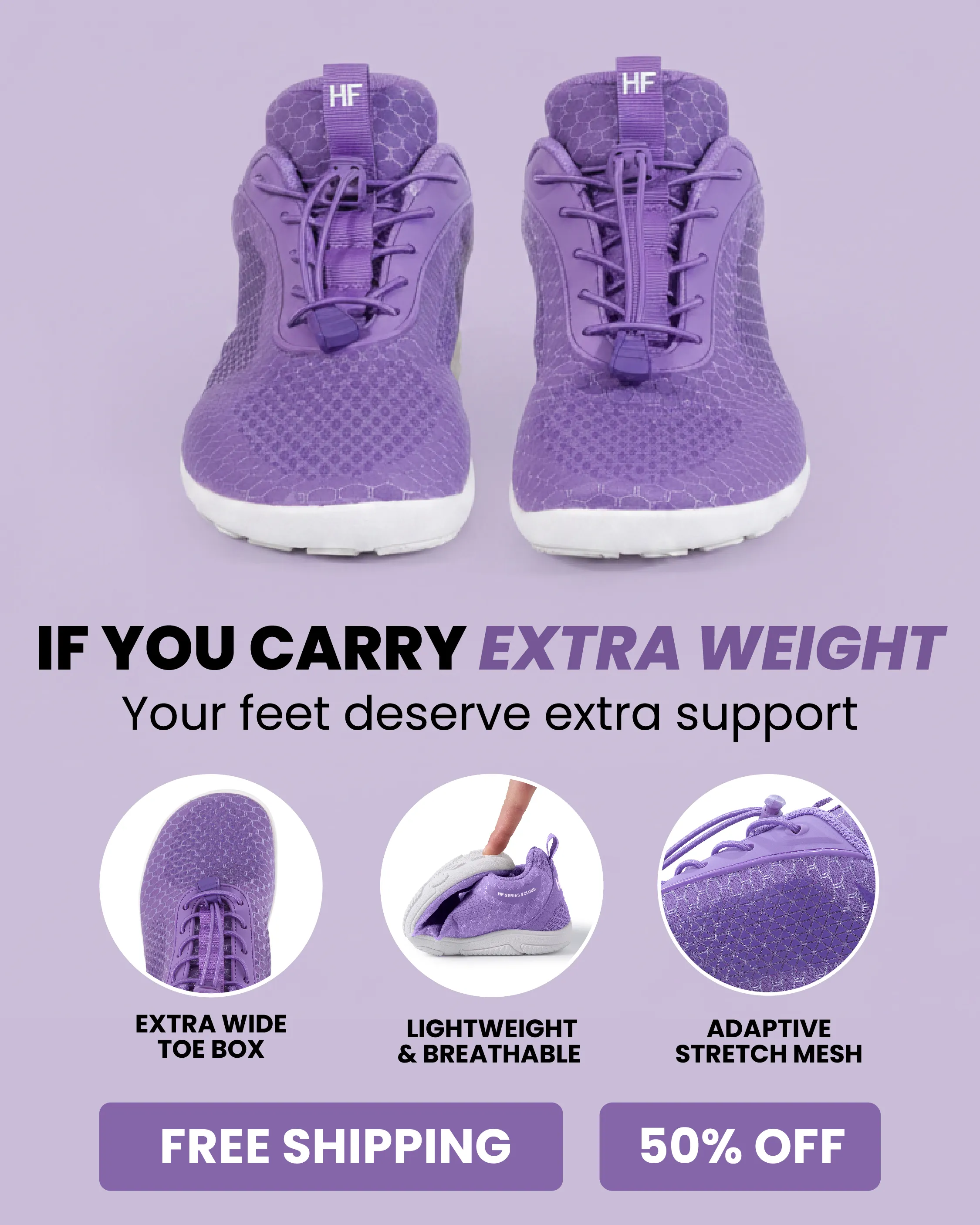
Barefoot shoes for better health 🥰
Your Health Journal

Healthier Feet Start Here 👟
Your Health Journal
Best Walking Shoe 2026!
Your Health Journal
Best Walking Shoe 2026!
Your Health Journal

Healthier Feet Start Here 👟
Your Health Journal

Best Pain Relief Shoe 2026!
Your Health Journal
Barefoot shoes for better health 🥰
Your Health Journal

Seniors: Your first fall isn't bad luck — it's a countdown
Your Health Journal

Best Pain Relief Shoe 2026!
Your Health Journal

Prevent Falls With Better Balance ⚖️
Your Health Journal

Your Cushioned Shoes Are Lying To You
Your Health Journal
Best Walking Shoe 2026!
Your Health Journal

 Add to Chrome