Ad Copy
"Don't die," my wife said, watching me fade away. I'm ready to share this story only now, ten years later. Now, when I'm 50, health professionals and even doctors ask me for advice. When my HRV consistently stays at 88, and I look younger than I did ten years ago. But back then, at 40, I was just an exhausted executive who didn't understand his body was screaming for help. I gave the first 20 years of my career everything. The executive position demanded it all. 12-hour workdays were normal. Food was whatever was within reach, often at my desk during meetings. Exercise? I used to go to the gym, about fifteen years ago. I thought this is how it's supposed to be. You work hard, build a career, health can wait. But at 40, my body refused to wait any longer. 100 pounds of excess weight. Chronic fatigue that didn't pass even after weekends. Brain fog throughout the day. Knee pain climbing stairs. Shortness of breath from two flights. My wife gently said: "Something needs to change." The kids asked me to play soccer, and I couldn't run for even five minutes. I decided it was time to change. Seriously. Like most people, I started with the obvious. I joined a gym. Hired a trainer. I started reading about nutrition. The first two months were tough. Muscles ached after every workout. The diet was hard with constant hunger. But I stuck with it. The result? Lost barely 4 pounds in a month. And complete lack of energy. I thought this was normal. "Just need to push through, the body will adapt." But after three months, I started missing workouts. Not from laziness. I physically couldn't. I woke up more exhausted than when I went to bed. Knee pain got worse. Something was wrong. That's when I came across an article about elite athletes who use HRV to monitor recovery. Heart Rate Variability. It's not your pulse. It's how flexibly your heart adapts between beats. A healthy nervous system gives high variability. An exhausted one means the heart beats monotonously, like a metronome. HRV shows how ready your body is to handle stress. Handle training. Handle life. I measured my HRV. Result: 28 ms. I checked the norms. For my age, healthy HRV starts at 50-70 ms. People in excellent health measure 70-90+. 28 is the level of chronic exhaustion. I was doing everything "right." Training, eating clean, trying to get enough sleep. But my nervous system was stuck in survival mode. Constantly. This was the turning point in my understanding of health. Most people do the same thing: add more. More workouts, more restrictions, more effort. But if the foundation is broken, if your nervous system is in "alert" mode 24/7, nothing else works. Your body can't recover from workouts when it's in constant stress. Can't sleep properly. Can't lose weight because it's holding onto everything as backup. HRV isn't just a number. It's an indicator of whether your body can even use everything you're doing for it. And until you fix this, everything else will work at half capacity. Or not work at all. I started studying nervous system recovery protocols with the same intensity. Breathing techniques based on scientific research. Not just "breathe deeply," but specific methods for activating recovery. Sleep architecture. Not just the number of hours, but the quality of cycles. Temperature protocols. Light. Movement practices. Not just intense workouts, but movements for recovery. Gentle practices that calm the system rather than excite it. I tested everything for months, tracking HRV daily. Some things worked. Many didn't. I kept detailed records, looked for patterns, and built a system for myself. It took almost three years of experiments to understand what works and what's a waste of time. And if I had Ruut back then, at the start of the journey, I would have saved years of searching. Ruut is everything it took me three years to understand. In a structured plan. Breathing practices, sleep routine, movement. All based on your HRV, adapting daily. 10 minutes a day. Specific protocols that change depending on what state your body is in today. The first weeks I just followed the protocols and observed. Morning breathing exercises. Sleep recommendations. Gentle movement practices that I built based on my HRV. Second week: 42. I noticed I was falling asleep faster. Sleep became deeper. Four weeks in: HRV 54. My body started changing. Without extra effort. Simply because it was finally working properly. Brain fog completely cleared. I could work on complex projects for hours without losing concentration. Three months in: HRV is 77. Knee pain disappeared completely. Can play with the kids without getting winded. My normal form returned. People started noticing. "What are you doing? You look 10 years younger!" I proudly talked about my journey. About HRV. About how the nervous system works. Now I'm 50. My HRV consistently stays at 88. I look younger than 40. Running with my kids. Sleeping deeply. Working with a clear head. Energy for everything. People in the health industry ask me about my approach. Doctor friends are interested in the protocols. But most importantly, I know how my body works. And how to keep it in optimal condition. Here's what I want to say: It took me almost three years. Hundreds of hours reading research. A ton of mistakes and dead ends. To understand: the foundation is the nervous system. Everything else builds on it. You don't need to walk this path. Ruut is all the knowledge I gained over years. Structured. Personalized to your state. Breathing practices, sleep routine, movement. 10 minutes a day that adapt to what your body needs today. Not guesswork. Not universal advice. Protocols that work. Over 500,000 people use Ruut. 81% feel improvement in energy and recovery within the first month. You can get this in three minutes. Take the free HRV test to discover what’s draining your body. It can completely transform your life. Make you unrecognizable in a year. Give you energy you forgot about.
More from Andrew Sukhostavskyi
Easy to Follow HRV Training Plan
Andrew Sukhostavskyi
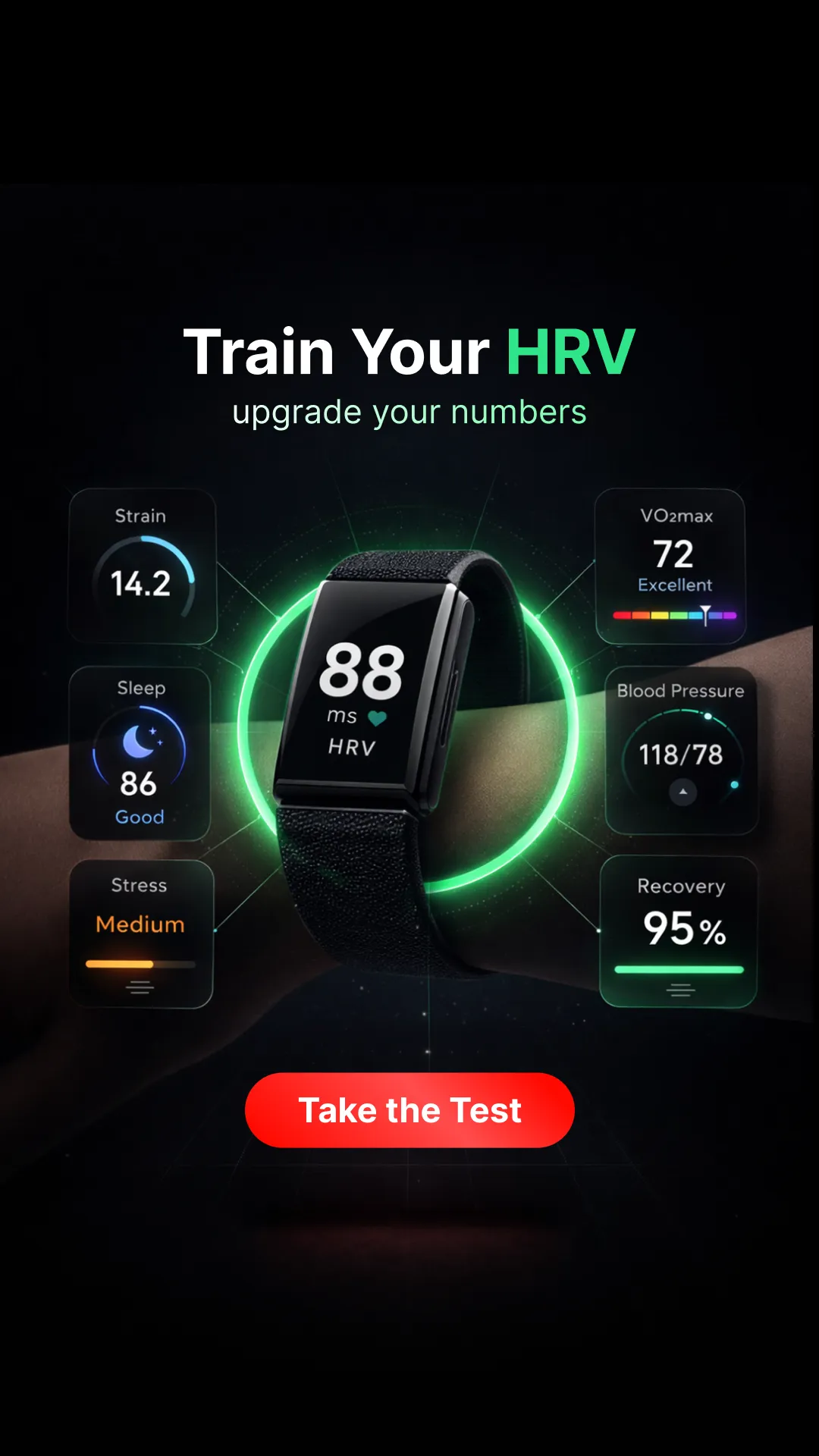
Easy to Follow HRV Training Plan
Andrew Sukhostavskyi
Easy to Follow HRV Training Plan
Andrew Sukhostavskyi
Easy to Follow HRV Training Plan
Andrew Sukhostavskyi
Easy to Follow HRV Training Plan
Andrew Sukhostavskyi
Easy to Follow HRV Training Plan
Andrew Sukhostavskyi
Easy to Follow HRV Training Plan
Andrew Sukhostavskyi
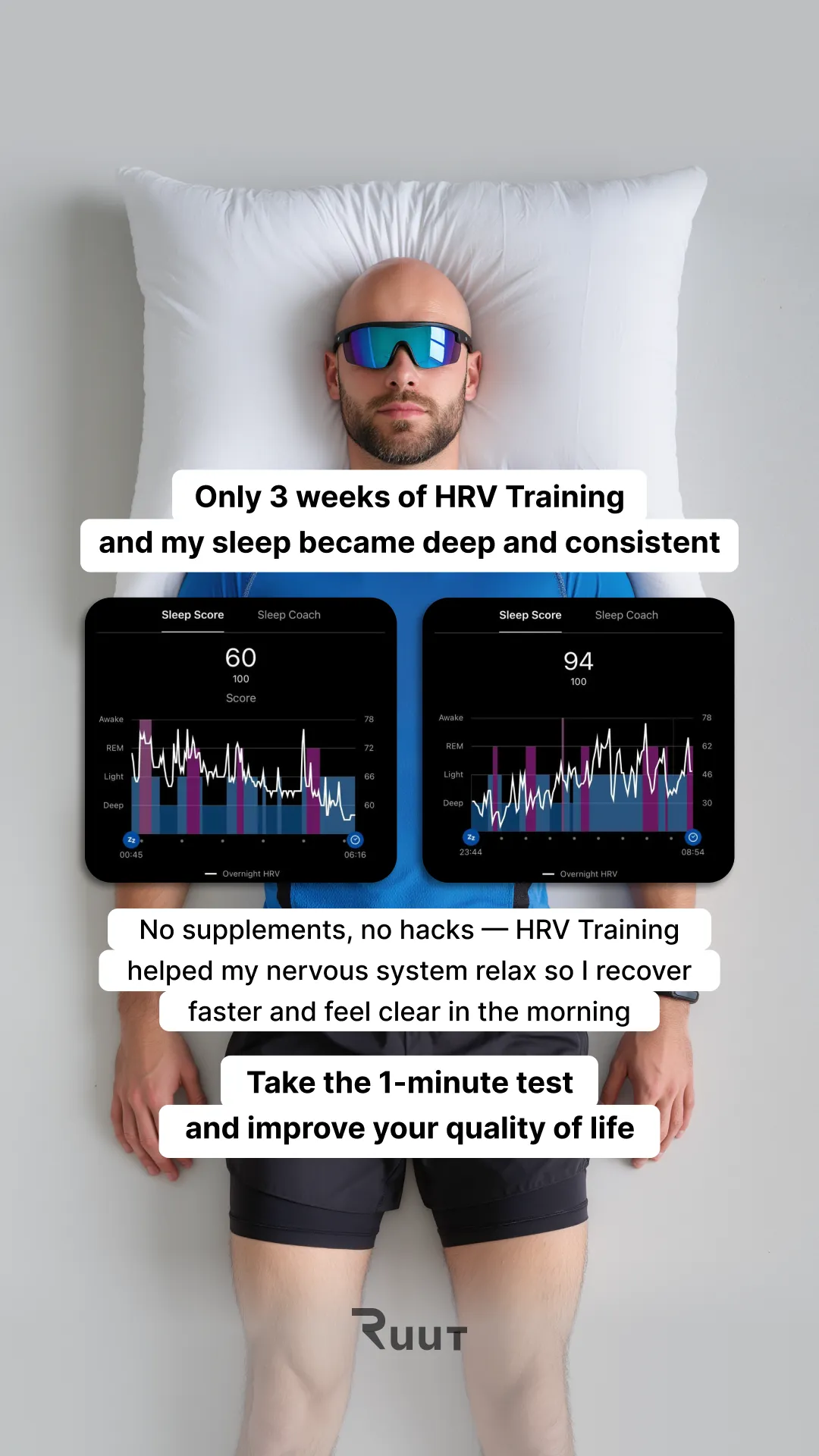
Easy to Follow HRV Training Plan
Andrew Sukhostavskyi
My sleep coach told me something I didn't expect: "Your problem isn't sleep." I woke up again at 3 AM. Wide awake, mind racing. This had been my reality for the past two years. Wake up multiple times every night. Dreams about stress and problems that wouldn't stop. Even when I slept eight hours, I'd wake up exhausted, like I hadn't rested at all. My fitness tracker showed barely any deep sleep. Just light, restless cycles that left me drained. The exhaustion affected everything. My focus was shot. Everything felt urgent and overwhelming. Simple tasks took forever because my brain couldn't process them efficiently. I started working longer hours to compensate for low productivity. It only made things worse. More effort, less sleep, worse results. My temper got short. I'd snap at my kids, apologize, then snap again the next day because I had no patience left. My wife would find me passed out on the couch most evenings, too tired to function. I tried everything over those two years. Blackout curtains, magnesium, melatonin, meditation apps, breathing exercises. Changed my entire routine. No caffeine after 2 PM, no screens before bed, optimized room temperature. Nothing worked. I kept tracking obsessively. The data never improved. After months of this, my wife said I needed professional help. She found a sleep coach who specialized in chronic sleep issues. In the first session, I brought all my data. Months of tracking, everything I'd tried. He looked through it, then said: "Your problem isn't sleep. It's your nervous system." I didn't understand. I'd tried everything for sleep. What did my nervous system have to do with it? "Sleep happens when your nervous system shifts into recovery mode," he explained. "All your sleep hygiene doesn't matter if your system won't downshift." He had me measure something called HRV. Heart Rate Variability. Result: 31. Healthy range for my age: 50-70. "Your nervous system is stuck in stress mode," he said. "Even when you're lying in bed. That's why nothing's working. Your body doesn't feel safe enough to fully rest." Everything clicked. The constant wake-ups, the racing mind, the exhaustion despite hours in bed. "Train your HRV," he said. "Retrain your nervous system to shift between stress and recovery. Fix that, and everything else follows." I found Ruut's HRV Training that night. 10 minutes a day. Breathing practices, movement techniques, sleep schedule optimization, nutrition habits, and biohacking methods that teach your nervous system how to downshift into recovery mode. Week one: HRV went from 31 to 38. Woke up one morning without that heavy dread. Just felt... normal. Week two: HRV hit 46. The constant tension in my shoulders and jaw started releasing. That tight feeling in my chest began to ease. Week three: HRV at 54. The afternoon crashes disappeared. My focus sharpened. I could actually retain information when reading. One month: HRV 70. Energy felt stable for the first time in years. No more peaks and crashes. Could handle stress without it draining me for days. My boss noticed. "Whatever you're doing, keep doing it. You're sharp again." Three months: HRV at 95. Sleeping through the night. My body is transformed. I stopped checking the data obsessively. Could feel the difference without needing numbers to confirm it. Here's what I learned: You can't hack sleep with bedroom optimization. If your nervous system is stuck in stress mode, nothing else matters. HRV training fixes the foundation. Everything else follows. Over 500,000 people use Ruut's HRV Training. 87% report better sleep within the first month. 10 minutes a day. That's what it took to fix what years of sleep hacks couldn't touch. Your body wants to rest properly. It just needs to learn it's safe. Take the free HRV test. See where your nervous system is. Start now.
Andrew Sukhostavskyi
Easy to Follow HRV Training Plan
Andrew Sukhostavskyi
Boost your VO₂max. Transform your endurance.
Andrew Sukhostavskyi
Unlock the Endurance Your Body Is Capable Of
Andrew Sukhostavskyi

 Add to Chrome