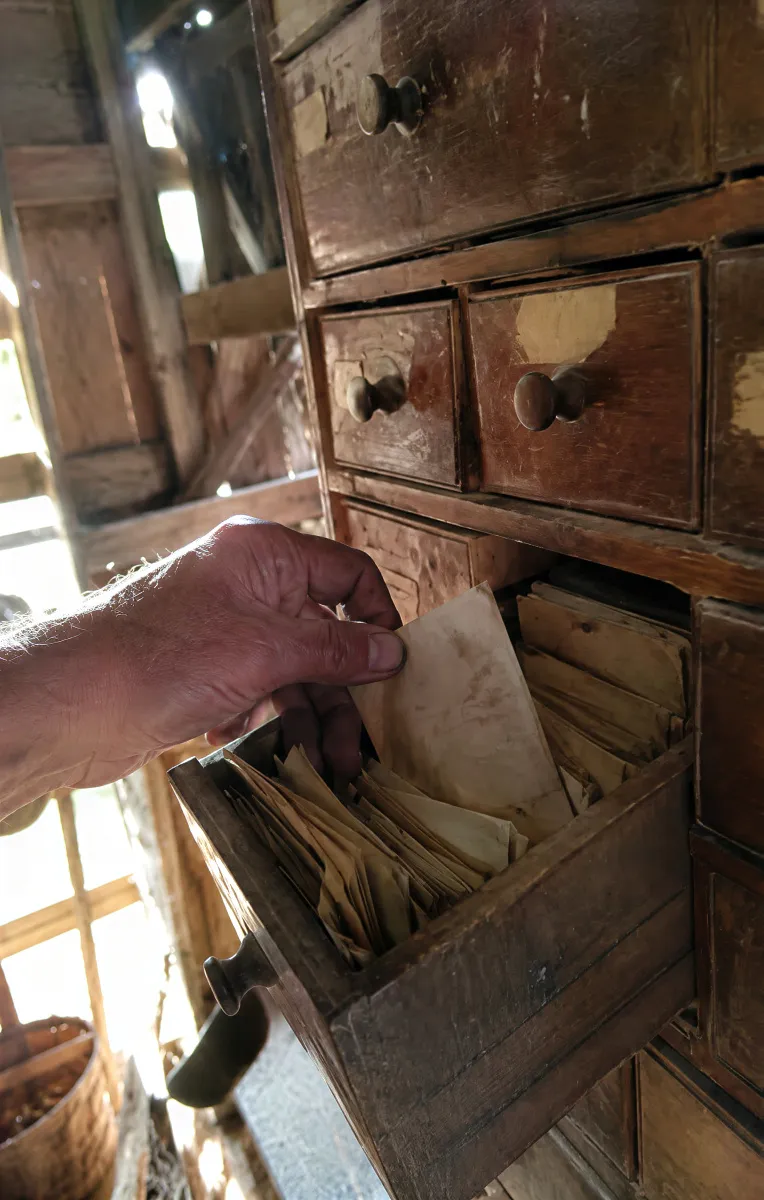
I Thought the Wormwood Nobel Prize Story Was a Scam
Ad Copy
The first time somebody told me a plant mentioned in the Bible had won a Nobel Prize, I thought they were lying. Plants don't win Nobel Prizes. And the Bible isn't a medical journal. So I looked it up. And that's when things got interesting. In 2015, a scientist named Tu Youyou shared the Nobel Prize in Medicine for a discovery involving sweet wormwood. An actual plant. A real medical breakthrough. A real Nobel Prize. But the part that made me sit up wasn't the plant. It was what the discovery had been used to treat. Parasites. I stared at my laptop for a long time. Because I'd spent nearly thirty years teaching people how to recognize misleading health claims. And I was about to dismiss something that had a real piece of science behind it without even checking. Now, before you start thinking I'm going to tell you the Bible contains a secret cure for parasites, let me stop you. That's not what I found. Not even close. What I found was more complicated. And the reason I kept digging had nothing to do with wanting to buy another supplement. It had to do with my wife. My name is William. I'm 64 years old. Retired. For twenty-nine years, I worked in consumer investigations. Insurance complaints, misleading advertisements, false product claims, people promising desperate families things they couldn't possibly deliver. I've heard every sales pitch you can imagine. The miracle pill. The ancient secret. The hidden ingredient. The doctor who supposedly isn't allowed to talk. The little-known discovery that pharmaceutical companies are terrified you'll find. I've investigated enough of those claims to recognize the language before somebody finishes the first sentence. So when my neighbor brought up wormwood at a Saturday barbecue, I laughed. Not a little smile. I actually laughed. He was telling everybody about a video he'd seen. A man claiming there was a plant in the Bible that scientists had later proved could kill parasites. He said the Nobel Prize proved it. I asked where he'd heard that. Facebook. Of course. I said, "Frank, you can't believe everything a guy with a beard says in a Facebook video." He got annoyed. Told me to look it up. I told him I would. Not because I believed him. Because I wanted to show him exactly where the story fell apart. That night I opened my laptop. Typed in the Nobel Prize. Medicine. And there it was. Tu Youyou. Sweet wormwood. Artemisinin. A discovery that changed malaria treatment. I read it twice. Then I went to the Nobel Prize website and checked it again. The connection was real. But it wasn't the story Frank had told. Tu Youyou's work involved Artemisia annua, a particular species commonly called sweet wormwood. She studied old Chinese medical writings and eventually helped identify artemisinin, a compound that became the basis for important antimalarial medicines. The Bible mentions wormwood too, but in passages about bitterness and judgment. And the plants called wormwood aren't all the same species. So no, the Bible hadn't predicted a modern parasite supplement. And no, a bottle of ordinary wormwood capsules hadn't won a Nobel Prize. But here's what I couldn't get out of my head. Scientists had taken an old medicinal plant seriously enough to study it. And that work had helped produce a genuinely important treatment for a parasitic disease. That didn't prove every traditional remedy worked. It proved that dismissing something simply because it was old wasn't very scientific either. I leaned back in my chair. Looked at the clock. 1:47 AM. I'd spent the evening trying to prove Frank was an idiot. Instead, I'd found a research question I wanted to understand. Then I heard my wife moving around upstairs. And I remembered why I'd been so irritated about parasite cleanses in the first place. Her name is Linda. We've been married thirty-seven years. She's sixty-one. And if you'd met her five years ago, you would never have guessed she'd become somebody who was afraid to eat dinner. Linda used to host every holiday. Thanksgiving. Christmas. Easter. Birthdays. If there was a reason to get the family together, she would be in the kitchen two days ahead of time making sure everybody had something they liked. She was the kind of woman who brought extra folding chairs because she always invited more people than we had room for. She didn't know how to sit still. She volunteered at church. Went walking with her sister. Had lunch with two friends every Thursday. Kept flowers in every room, even the laundry room. That was Linda. Then about three years ago, she started getting bloated. At first it was just after dinner. She'd loosen the top button of her jeans and say she must have eaten too much. I told her that happened to everybody. Then the cramping started. Then the bathroom problems. Some mornings she'd have diarrhea before she finished her coffee. Other days she wouldn't be able to go for three or four days. Her doctor started looking into it. Diet. Medications. IBS. Other possible digestive conditions. Linda began keeping track of what she ate. Then she started cutting things out. Dairy first. Then gluten. Then onions. Then garlic. Then apples. Then beans. Before long, half the food in the house was labeled something-free. Gluten-free. Dairy-free. Low-FODMAP. No added sugar. No artificial sweeteners. You couldn't open the pantry without finding another expensive package of something that tasted like cardboard. I used to make jokes about it. I regret that. Because while I was making jokes, her life was getting smaller. She stopped going to Thursday lunch with her friends because she couldn't find anything on the menu she trusted. Stopped eating popcorn at the movies. Stopped coming with me on longer drives. Started asking where the bathroom was before agreeing to go anywhere. Then the exhaustion came. Linda had always been the person who woke me up. Now I'd get out of bed at seven and find her still asleep at nine. She'd sit down after lunch and fall asleep with the television on. I'd ask whether she wanted to go for a walk. She'd say maybe tomorrow. Tomorrow became next week. Next week became next month. Then her bloodwork came back. Her ferritin was very low. Vitamin D was low too. Her doctor explained that the deficiencies needed treatment and further investigation. She started taking iron. It made her stomach worse. So she tried a different preparation. She took vitamin D. Bought probiotics. Tried digestive enzymes. Peppermint oil. Fiber powders. Anything that sounded reasonable. And every few weeks there seemed to be another box arriving at our front door. One evening I opened the bathroom cabinet to get some aspirin. And I counted the bottles. Seventeen. Seventeen bottles of things Linda had bought to try to feel normal again. Some almost empty. Others barely opened. A few I didn't even recognize. I did the math. Hundreds of dollars. Probably more than a thousand by then. I stood there holding a bottle of wormwood drops. And something in me snapped. Not at Linda. At the whole business of selling frightened people one hope after another. Because I'd spent most of my career looking at misleading claims. And now the person I loved most was spending money on products I couldn't find good evidence for. I went downstairs with the bottle. "Linda, what's this?" She looked at it. "Wormwood." "I can read that. Why are you taking it?" She was quiet. Then she said, "Somebody in my IBS group said parasites can cause stomach problems." I asked whether she'd been tested. She said her doctor was still working through the possible causes. I asked whether she even knew which parasite the product was supposed to treat. She said no. I told her this was exactly how people got taken advantage of. And then I said something I wish I could take back. "You're smarter than this." She looked at me. Didn't shout. Didn't argue. She just started crying. And said, "William, I just want to feel better." That shut me up. For the first time in months, I didn't have anything clever to say. I was so busy being the man who spotted scams that I'd forgotten my wife was the woman who was sick. I sat down beside her. Put the bottle on the table. And listened. Really listened. She told me she was tired of being tired. Tired of never knowing what would happen after she ate. Tired of looking at a menu and feeling afraid. Tired of being the grandmother who couldn't take the children to the park because she was worried about needing a bathroom. Then she said something that made my chest hurt. "I miss being myself." I'd heard that phrase before. In interviews with families. In complaint files. From people who had spent years trying to get answers about their health. But I'd never heard it from Linda. Not like that. That night, after she went to bed, I went back to my laptop. I wasn't trying to win an argument anymore. I wanted to know what was true. I started with parasites themselves. Not supplements. Not Facebook groups. The actual organisms. And the first thing that became obvious was how loosely people used the word. Parasites. As if it described one thing. Like everybody with bloating was dealing with the same hidden enemy. But a hookworm is different from a tapeworm. A tapeworm is different from Giardia. Pinworms are different from Strongyloides. Different life cycles. Different ways people get infected. Different symptoms. Different tests. Different treatments. Some intestinal parasites can cause major problems. Hookworms, for instance, can contribute to iron-deficiency anemia because they feed on blood. Giardia can cause diarrhea, bloating, weight loss, and trouble absorbing nutrients. Other parasites can cause different symptoms. And some infections cause few symptoms at all. That's where things became personal. Linda had low ferritin. She had low vitamin D. She had chronic stomach problems. So I understood why she was wondering whether the three things might be connected. But those findings didn't prove she had parasites. There were other explanations. Blood loss. Celiac disease. Inflammatory bowel disease. Dietary restriction. Other problems with absorption. And sometimes multiple things happening at once. I wrote all of them down. Not because I suddenly thought I was a doctor. Because after years of reading bad advertising, I wanted to be able to tell the difference between a real medical possibility and a story somebody had invented to sell a bottle. Then I read about ivermect*n. The actual history. The discovery. The Nobel Prize. And something else surprised me. In 2015, the Nobel Prize in Medicine had recognized two separate breakthroughs involving parasitic diseases. One led to ivermect*n, through work involving microorganisms found in soil. The other led to artemisinin, through Tu Youyou's work with sweet wormwood. Two different discoveries. Two different origins. Two very important medical advances. And I'd seen online ads blending them together as if every herb called wormwood had the same proven medical effects. That wasn't right. Ivermect*n works against certain parasites. Artemisinin-based medicines treat malaria. Neither fact proves that a traditional wormwood supplement treats intestinal worms. But I couldn't ignore the broader point. Sometimes natural substances do lead scientists to important medicines. The discovery isn't the marketing claim. The discovery is the beginning of the testing. That distinction mattered. Because a familiar plant could be worth studying. Without being a proven treatment for whatever somebody claimed. I started reading about the plants Linda had been buying. Wormwood. Black walnut. Cloves. Pumpkin seeds. And the more I read, the more I wondered why these four names kept appearing together. I found old herbal references. Traditional preparations. Accounts of people using bitter plants for digestive complaints. I found discussions of wormwood being used in traditional worm remedies. Black walnut hulls in North American folk preparations. Pumpkin seeds in different cultural traditions. Cloves used in food and herbal mixtures. Then I looked for modern research. Not testimonials. Not product reviews. Research. Wormwood contains compounds scientists have studied for a variety of biological effects. Some work on compounds from Artemisia plants has investigated activity against particular parasites. Black walnut contains juglone, which can affect organisms and cells in laboratory experiments. Pumpkin seeds have been investigated for compounds that may interfere with worm movement or attachment. Clove contains eugenol, a compound with several biological activities studied in laboratories. I could understand why somebody might be curious about those ingredients. What I couldn't find was reliable evidence proving that one supplement containing all four eliminated every kind of human intestinal parasite. Or destroyed every parasite egg. Or broke through invisible walls inside the gut that supposedly protected all worms from medication. Or worked better than appropriate prescription treatment. Those were much bigger claims. And the evidence didn't justify making them. But I also didn't think the entire history of the plants was meaningless. There was a difference between saying, "This has been used traditionally and certain compounds are being investigated," and saying, "This cures every parasite infection." The first was a reasonable subject to explore. The second required human clinical proof. I thought about Linda standing in the kitchen. Holding that little brown bottle. Her face wet with tears. "I just want to feel better." I understood now why she'd been drawn to the herbs. She wasn't trying to be a scientist. She wasn't trying to prove a conspiracy theory. She was looking for something that might make tomorrow less miserable than today. And I had mocked her for it. I closed my laptop. Went upstairs. And apologized. She was reading in bed. I sat down beside her. Told her I'd been wrong to speak to her that way. Then I told her what I'd learned. About the Nobel Prize. The different plants. The traditional remedies. And what the research actually showed. She listened. Then she asked me one question. "So do you think I should take wormwood?" I thought for a moment. And told her the truth. "I think we should find out what's making you sick before we decide what you need." She nodded. It wasn't the exciting answer she'd been hoping for. But it was an answer we could act on. The next morning we made another appointment. And I went with her. I wish I could tell you that appointment changed everything. That one test gave us the answer. That one treatment fixed three years of stomach problems. It didn't happen like that. Her doctor listened. Reviewed the tests she'd already had. Asked more questions. Talked about the deficiencies. Her bowel symptoms. The foods she'd stopped eating. The supplements she was taking. And whether parasite testing made sense in her circumstances. There were still questions. Still appointments to attend. And still some things we had to wait for. But something about that visit felt different. I wasn't sitting there waiting to catch the doctor saying something wrong. I wasn't trying to prove that Linda had parasites. And I wasn't dismissing the possibility, either. We were trying to understand what was happening. For the first time in a long while, Linda wasn't doing that alone. When we got home, she sat at the kitchen table. Looked at the list of appointments. Then looked at me. "You're really going to come with me to all of these?" I told her yes. She smiled. Not a big smile. Just a little one. But I hadn't seen it in a while. And I knew what it meant. She wasn't carrying the whole thing by herself anymore. I also started thinking about those seventeen bottles in the cabinet. Some contained ordinary vitamins. Some contained ingredients her doctor had recommended. Others had been bought because she'd read a story that frightened her. I wanted to sort them out. Not throw everything away. Not replace everything with something new. Just understand what was there. We laid the bottles on the kitchen table. One at a time. Read the labels. Wrote down the ingredients and directions. And brought the list to her pharmacist. It took almost an hour. At the end, Linda looked at the table and laughed. "You know what?" "What?" "I can't believe I've been trying to keep track of all of this." Neither could I. That was when I remembered the ingredient list from my research. Wormwood. Black walnut. Pumpkin seed. Clove. I wondered whether there was a way to review those traditional ingredients without buying a separate bottle of everything. So I started looking at companies that combined them. And that's when I found Holior. At first I assumed it would be more of the same. Another parasite-cleanse product. Another page full of dramatic claims. Another bottle that looked different but contained the same familiar ingredients. So I looked closely. The formula brought together wormwood, black walnut, pumpkin seed, clove, and additional botanical ingredients. All in a softgel. That was simpler than Linda's collection of separate tinctures and capsules. But convenience wasn't enough for me. I'd spent too many years investigating claims to stop asking questions just because the product looked polished. I read the ingredient list. The directions. The statements about the formula. I wanted to know whether the product had been tested for the outcomes people were talking about online. And whether any of the ingredients might interact with Linda's medications. I also wanted to know whether people were confusing the wormwood in the supplement with the sweet wormwood involved in Tu Youyou's Nobel-recognized discovery. Because those aren't interchangeable facts. An extract from Artemisia annua led to artemisinin. That didn't mean a softgel containing wormwood had been shown to cure intestinal worms. And the Bible's mention of wormwood didn't change that. But I could see why the traditional ingredients interested people. They had histories. They contained compounds that researchers had explored. And Holior combined several of those ingredients into one product. For someone interested in a botanical digestive supplement, that was a reasonable thing to investigate. As long as they understood what it was. A supplement. Not a proven replacement for prescription antiparasitic medication. And not a diagnostic test. I showed the label to Linda. She looked at it. Then looked at the collection of bottles on the counter. "At least that's easier to keep track of." I agreed. But we decided we'd get professional advice about the ingredients and interactions before adding another product to her routine. We'd made enough guesses. I wasn't interested in making another one. What I did next was something I'd never expected. I started keeping a notebook. Not about supplement advertisements. About Linda. Her appointments. Her symptoms. What she'd eaten. Her bloodwork. How she slept. The days when she had energy. And the days she didn't. I wanted us to be able to see what was really happening. Not just what we hoped was happening. Week one. Nothing dramatic. She still had bad afternoons. Still had stomach cramps some nights. Still got frustrated when a meal bothered her. But she was following a plan. We knew what tests were being done. And why. For the first time in months, she wasn't ordering a new product every time somebody in an online group mentioned a different ingredient. Week two. She started talking about cooking again. Not cooking a huge Sunday meal. Just dinner for the two of us. She made chicken. Rice. A few vegetables she'd been able to tolerate. Then sat at the table and ate with me. No phone. No searching for symptoms. No reading another list of foods she wasn't supposed to eat. Just dinner. It felt like something I hadn't realized we'd lost. Week three. She came downstairs one morning before me. I found her making coffee. That used to be ordinary. For months I'd been the one making it while she slept. She looked up and said, "Don't look so surprised." I laughed. And poured myself a cup. Week four. Our daughter stopped by with the grandchildren. Linda had made a little plate of snacks. Nothing fancy. But when the kids came through the door, she was standing in the kitchen. Not lying upstairs. Not sitting in her chair waiting for the visit to be over. Our youngest grandson hugged her around the waist. She put her hand on his head. Then looked over at me. And I saw that same little smile. Week six. She had another appointment. More test results. More discussion about what was improving and what still needed treatment. Her doctor explained the findings. Talked about the iron. The vitamin D. And the digestive symptoms. Some things were clearer. Others needed more attention. But the direction was better than it had been when we'd started. We weren't treating a good day as proof that a product cured her. Or a bad day as proof that parasites were hiding inside her. We were following actual information. Week eight. She agreed to go to lunch with her friends again. I drove her. She was nervous. I could tell. She'd checked the menu the night before. Asked me twice what time I'd be picking her up. But she went. When I came back, she was standing outside the restaurant talking to the other women. Laughing. I sat in the car for a minute before she saw me. Because it had been so long since I'd seen her like that. Week twelve. We went through the notebook together. Looked at the first entries. How often she'd been uncomfortable. How tired she'd been. How many appointments we'd had. Then looked at the more recent pages. I won't tell you every symptom had disappeared. It hadn't. And I won't tell you one supplement had caused every change. We couldn't know that. There were medical treatments, dietary adjustments, and other things happening during the same period. But she wasn't as frightened. And she wasn't trying to manage seventeen bottles and three different internet theories at the same time. She felt more like herself. And I was finally acting like her husband instead of an investigator trying to win an argument. That meant more to me than any dramatic discovery. A few months later, Frank came over again. The same neighbor who'd started the Nobel Prize argument at the barbecue. He asked whether I'd ever looked up wormwood. I laughed. Told him I'd spent more time reading about it than he could imagine. He grinned. "So I was right?" I told him he was right about one thing. The Nobel Prize connection was real. But the rest was more complicated. I explained Tu Youyou. Sweet wormwood. Artemisinin. The separate ivermect*n discoveries. And why none of that proved an ordinary wormwood supplement could eliminate human intestinal parasites. Frank listened. Then said, "Well, that's not what the guy in the video said." "No," I told him. "It isn't." We sat there for a while. Then he asked how Linda was doing. I told him. The appointments. The improvement in her day-to-day life. The way she'd started cooking again. The lunch with her friends. He nodded. "That's good." Then he said something I wasn't expecting. "Maybe I should get my stomach checked too." I asked why. He said he'd been having trouble for months. Bloating. Cramping. Bathroom problems. He'd been thinking about buying the same cleanse he'd seen online. But now he wasn't so sure. I told him to talk to his doctor about the symptoms and whether testing was appropriate. He said he would. And I think that was when the whole thing finally made sense to me. The most important thing I'd learned wasn't which bottle to buy. It was how easily a real scientific discovery could turn into an exaggerated sales promise. And how easily fear could make somebody believe that promise. But it was also how easily a skeptical person like me could become so dismissive that he stopped listening to someone who genuinely needed help. Both mistakes mattered. I'd made one. Linda had been pulled toward the other. And the only way out was to ask better questions. I'm sixty-four now. I've investigated misleading claims for most of my adult life. I still don't believe a plant becomes a cure because it's mentioned in a religious text. I still don't believe a supplement has proven itself because an advertisement mentions a Nobel Prize. And I still don't believe every woman with bloating, low iron, or IBS symptoms secretly has parasites. But I no longer laugh at somebody just because she's curious about traditional herbal remedies. Because those remedies have histories. And sometimes studying traditional medicinal plants has led to important scientific discoveries. That's what happened with artemisinin. What matters is what researchers were able to isolate, test, and demonstrate. Not the promise somebody attached to it later. That's the lesson I took from wormwood. And it's the lesson I wish I'd understood before I stood in our kitchen holding Linda's bottle and told her she should know better. If you're bloated after meals. If your stomach cramps at night. If you keep switching between diarrhea and constipation. If your ferritin is low. If your vitamin D is low. If you've been told you have IBS but still feel like something hasn't been explained. I understand why you're looking for answers. I watched my wife do it for three years. And there are a lot of possible explanations. Some involve the digestive tract itself. Some involve blood loss or how your body absorbs nutrients. Some involve dietary changes. And certain intestinal infections can cause digestive symptoms and nutritional problems too. But symptoms don't tell you which cause is responsible. Parasites are real. They can cause illness. But they aren't the answer to every stomach problem. And you shouldn't have to guess. If you've taken ivermect*n for a confirmed infection and still feel unwell, talk to the clinician treating you about appropriate follow-up. Different parasites require different treatments. And continuing symptoms don't automatically mean hidden eggs survived or that another cleanse is needed. If you're interested in traditional botanical ingredients, there's another question worth asking. What is actually in the product? Wormwood. Black walnut. Pumpkin seed. Clove. These are plants people have used in traditional preparations. Scientists have investigated compounds in several of them. But the fact that those plants have a history doesn't establish that combining them clears parasites from humans. That's where I think a lot of advertisements go too far. Holior puts those traditional ingredients together with additional botanicals in one softgel formula. The product directions say three softgels daily before breakfast. It's more convenient than buying several separate tinctures and capsules. And if you're interested in a botanical digestive supplement, you can review the formula and decide whether it's something you want to discuss with your doctor or pharmacist. But I wouldn't tell you it replaces prescription treatment. I wouldn't tell you it kills every parasite egg. And I wouldn't tell you to ignore serious symptoms because a bottle makes a convincing promise. I've spent too many years watching what happens when people believe a product can do something it hasn't been proven to do. What I can tell you is where to review the ingredients and current product details. https://holior.com/products/wormwood-cc I began this whole investigation because I wanted to prove my neighbor wrong. Then I realized I was wrong about something much more important. My wife didn't need me to win an argument. She needed me to listen. To take her symptoms seriously. To help her find answers. And to stop treating her desperation like stupidity. A few days ago, Linda made Sunday dinner. The whole family came. The grandchildren were running through the kitchen. Our daughter was telling some long story about work. Frank stopped by to return a ladder he'd borrowed. Linda was standing at the stove, laughing at something one of the children had said. I stood in the doorway for a moment. Just watching. The smell of dinner. The noise. The ordinary chaos. Everything we'd been missing. Linda looked over. "What are you staring at?" I told her nothing. She rolled her eyes. Then handed me a plate and told me to set the table. I did. And I thought about the night I'd found those seventeen bottles in the bathroom cabinet. The night she'd cried and told me she just wanted to feel better. I can't give back those three years. But I'm glad I finally stopped trying to prove everybody wrong long enough to hear what she was telling me. That's what changed everything for me. Not a miracle bottle. Not a secret cure. A real question. And the willingness to follow the answer wherever it led. Almost forgot the link to the formula I researched. Here it is: https://holior.com/products/wormwood-cc ~ William Brown, fictional retired consumer investigator P.S. The Nobel Prize story is real, but the details matter. In 2015, Tu Youyou shared the Nobel Prize in Medicine for the discovery of artemisinin from sweet wormwood, Artemisia annua, as an important treatment for malaria. Separate work involving soil microorganisms led to ivermect*n. Neither discovery means a commercial wormwood supplement has been proven to clear intestinal parasites. P.P.S. Wormwood is mentioned in the Bible, including Revelation 8:11, where it is associated with bitterness. That's an interesting historical and religious connection, not medical evidence that taking wormwood cures an illness. P.P.P.S. If you're a woman over 35 with very low ferritin, low vitamin D, and ongoing IBS-like symptoms, please don't treat that combination as proof of parasites. Low iron and persistent digestive problems can have several causes, and some need prompt investigation. Ask your doctor which possibilities make sense for your situation. P.P.P.P.S. The part of Holior I found interesting was the combination of familiar traditional botanicals in one formula. Wormwood, black walnut, pumpkin seed, clove, and additional ingredients. The product's full label, current price, directions, and return policy are available on its page. Check those before buying, and review possible interactions with a pharmacist. P.P.P.P.P.S. If you've been spending money on one parasite cleanse after another, think about what you're trying to accomplish. A supplement may be of interest as part of a wellness routine, but it doesn't tell you whether you have an infection. And it doesn't replace an appropriate diagnostic test or treatment. https://holior.com/products/wormwood-cc
More from William Brown
Wait... THIS Is How Our Meat Gets Handled?
William Brown
The Plant My Mother Trusted Took Me Years to Understand
William Brown
The Plant My Mother Trusted Took Me Years to Understand
William Brown
The Plant My Mother Trusted Took Me Years to Understand
William Brown

I Thought the Wormwood Nobel Prize Story Was a Scam
William Brown
I Thought the Wormwood Nobel Prize Story Was a Scam
William Brown
The Plant My Mother Trusted Took Me Years to Understand
William Brown
I Thought the Wormwood Nobel Prize Story Was a Scam
William Brown
The Plant My Mother Trusted Took Me Years to Understand
William Brown
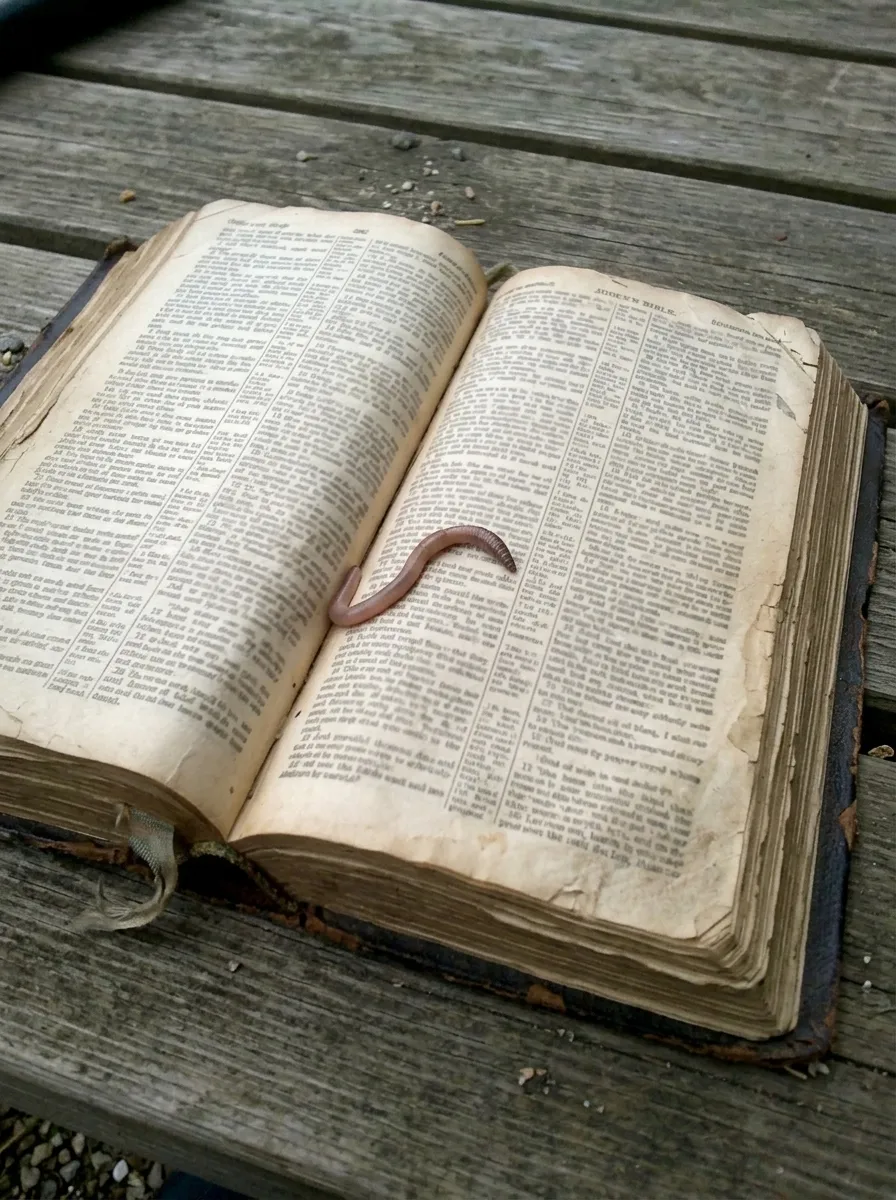
I Thought the Wormwood Nobel Prize Story Was a Scam
William Brown
The Plant My Mother Trusted Took Me Years to Understand
William Brown

I Thought the Wormwood Nobel Prize Story Was a Scam
William Brown

 Add to Chrome