Ad Copy
Three ingredients: wool, water, and soap. That’s all it takes to make felt the way nomadic peoples of the Asian Steppe have made it for about 5,000 years. Wool from heritage Kyrgyz sheep, raised on small, family-run farms. Warm water. Vegetable-based soap made from cottonseed oil. Worked together with heat and pressure, the wool fibers lock into felt — no needles, no glue, no synthetic fibers. Under Soviet rule, this practice was nearly lost, and now it’s UNESCO-protected. Our partner Tumar, a women-owned workshop in Bishkek, Kyrgyzstan, is part of the community of Kyrgyz felters who brought it back. Some of our felt is still made by hand and the rest is made on Soviet-era wet-pressing machines that Tumar brought back to life after years out of use. From there, our slippers are finished in different ways. Some are molded and shaped by hand, and others are stitched at a sewing machine. However a pair is finished, its felt starts in the same place: wool, water, and soap. Comfort sourced from centuries of wisdom. #Kyrgies #Tumar #WoolFelt #WetFelting #HeritageCraft #MadeInKyrgyzstan
More from Kyrgies
The Tian Shan Mountain Blanket
Kyrgies
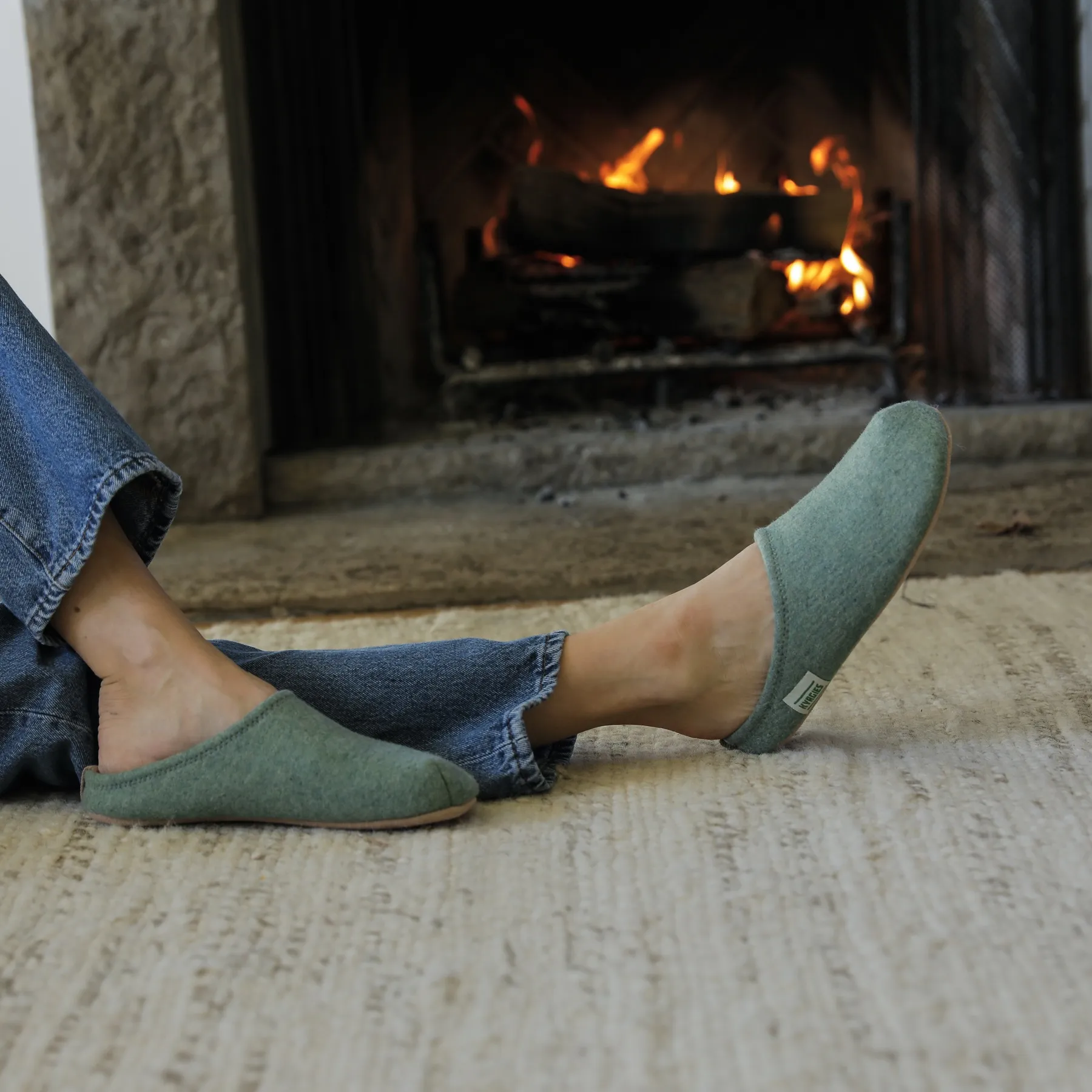
Barefoot, but better
Kyrgies
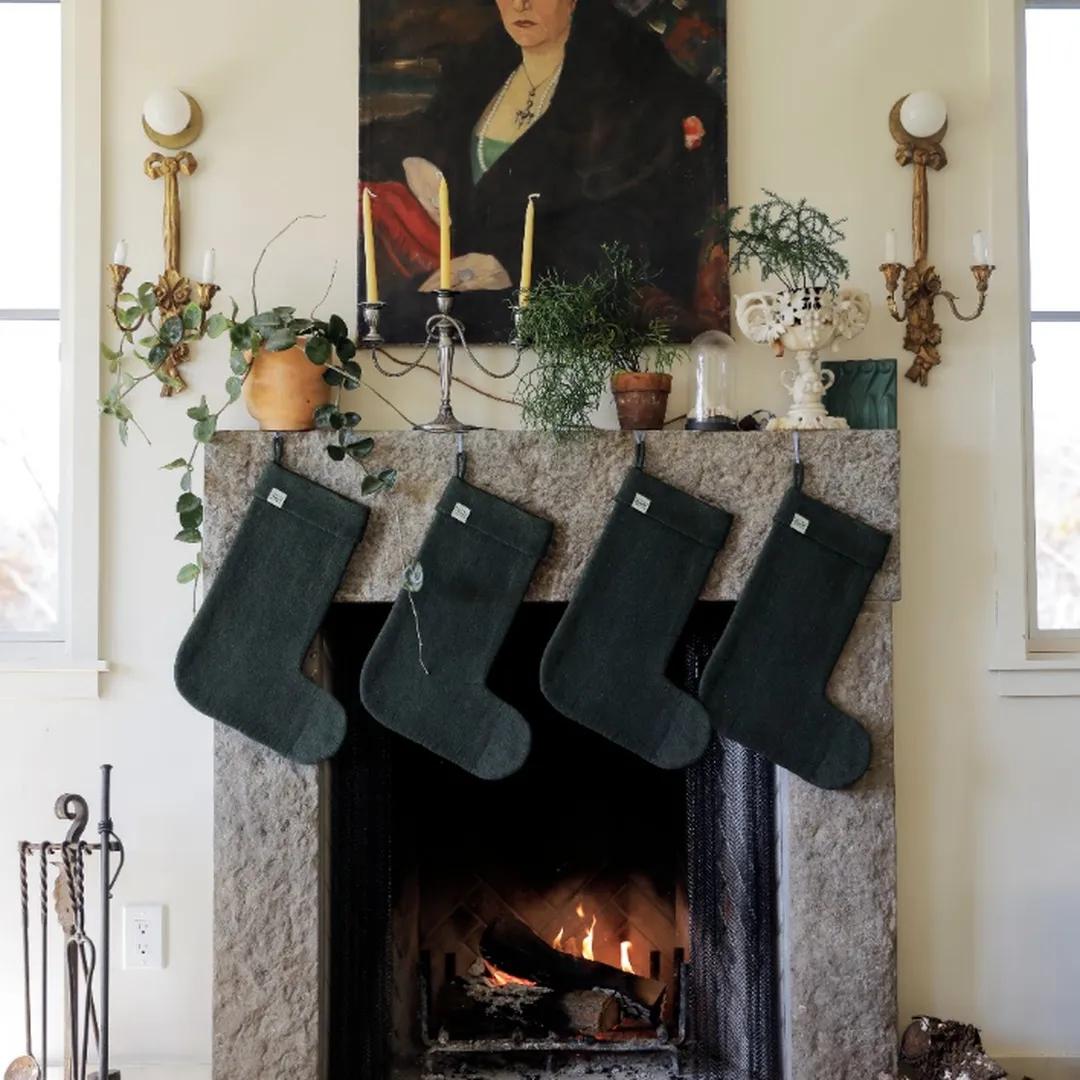
Made by hand in Kyrgyzstan
Kyrgies
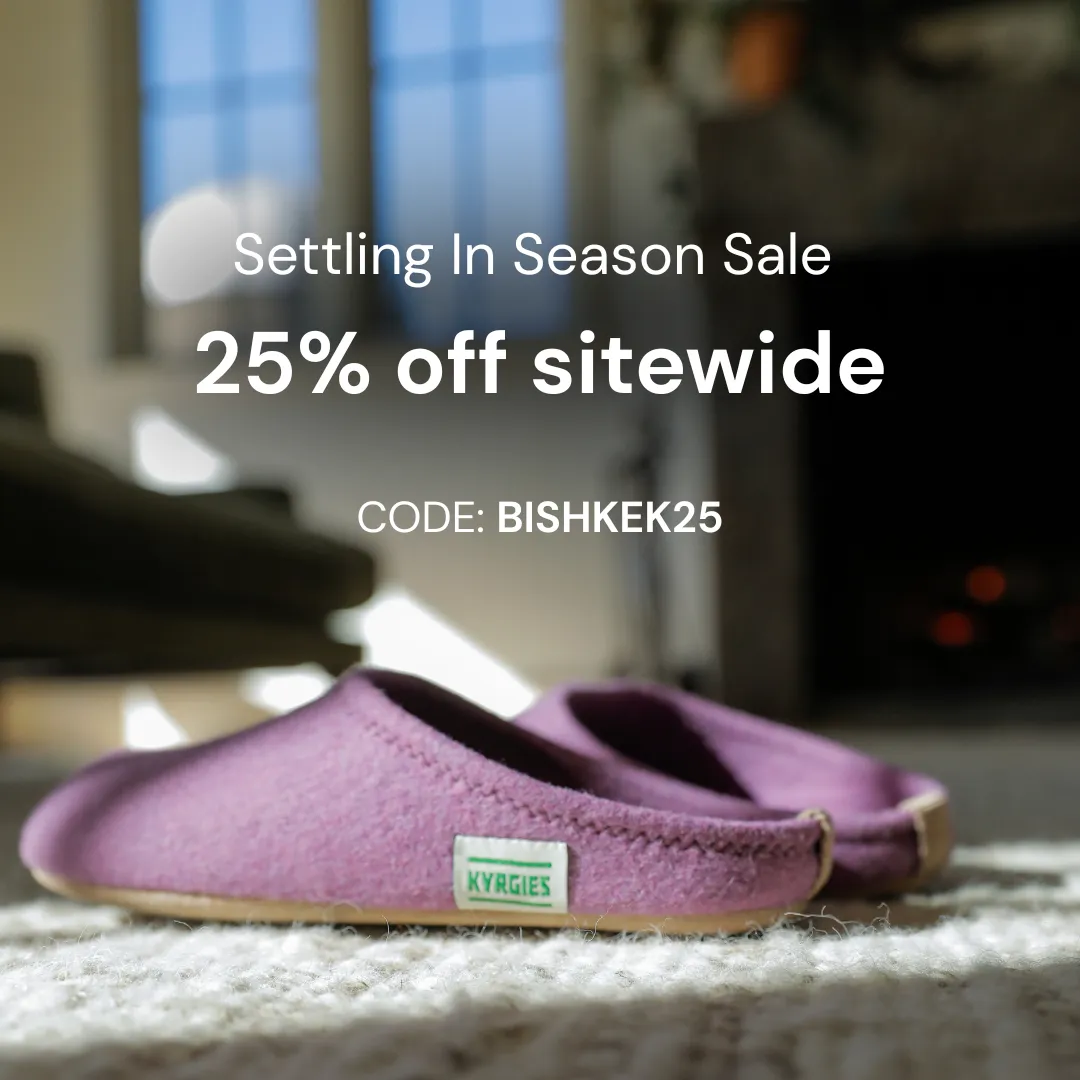
Code: BISHKEK25
Kyrgies

Code: BISHKEK25
Kyrgies
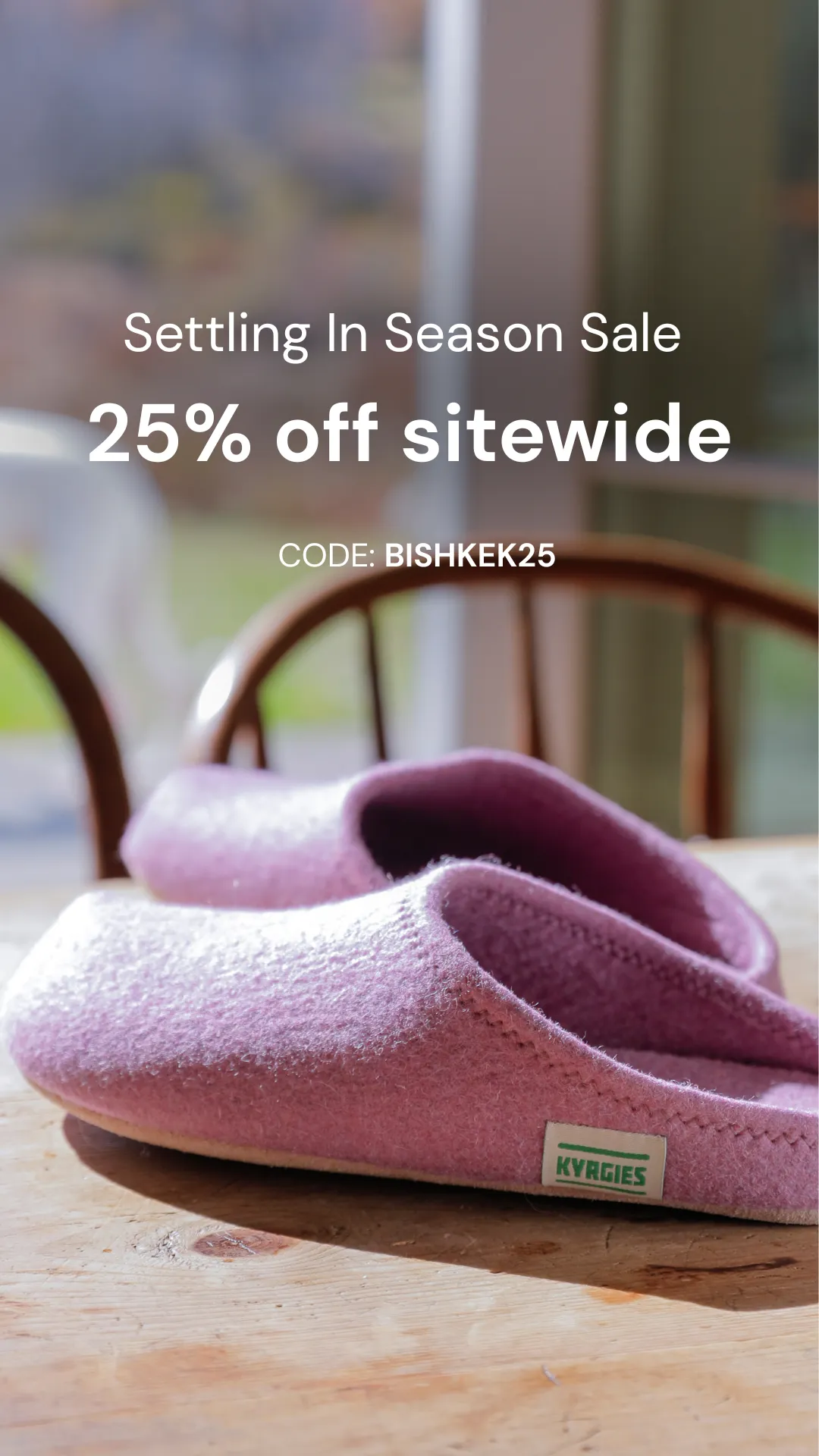
Code: BISHKEK25
Kyrgies
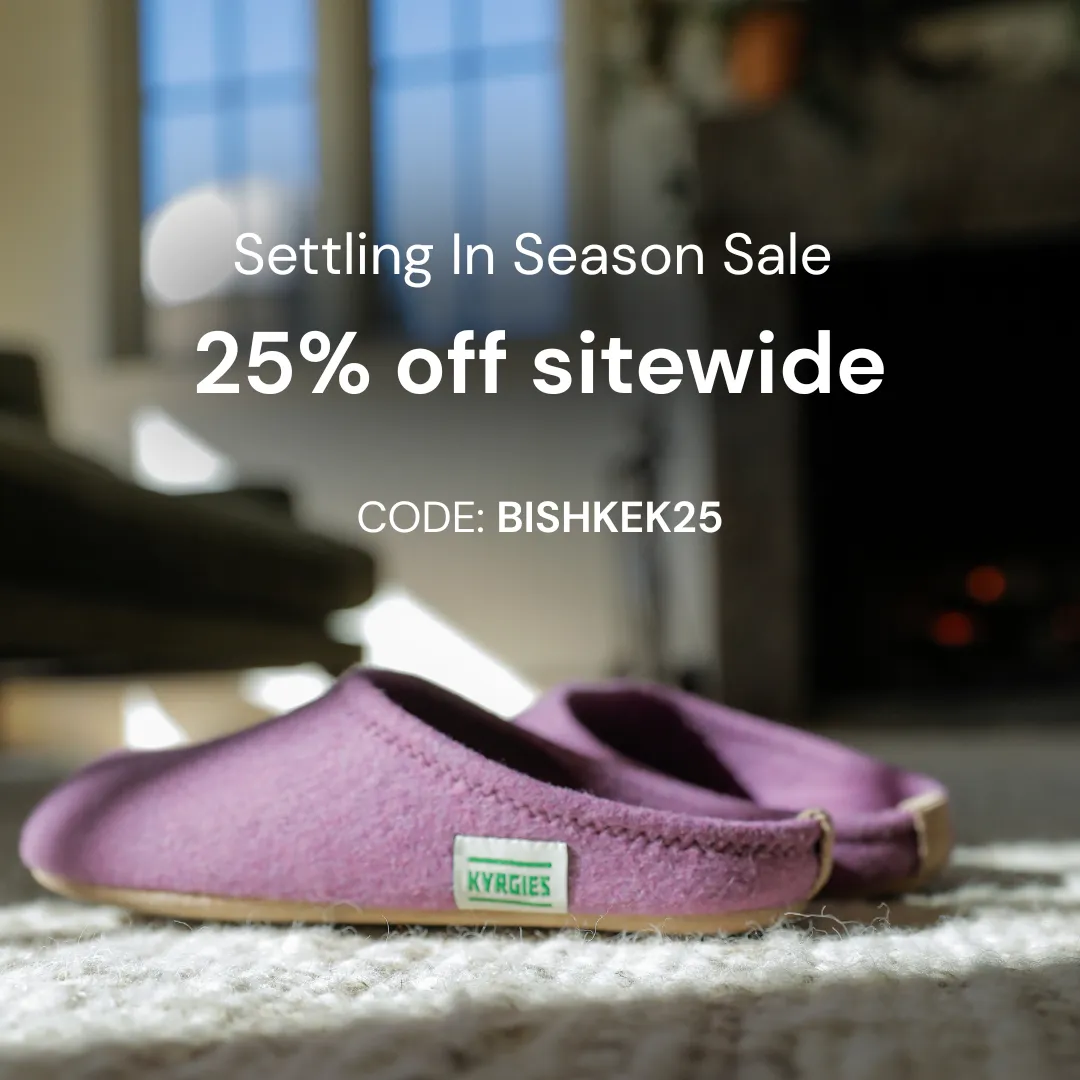
Code: BISHKEK25
Kyrgies
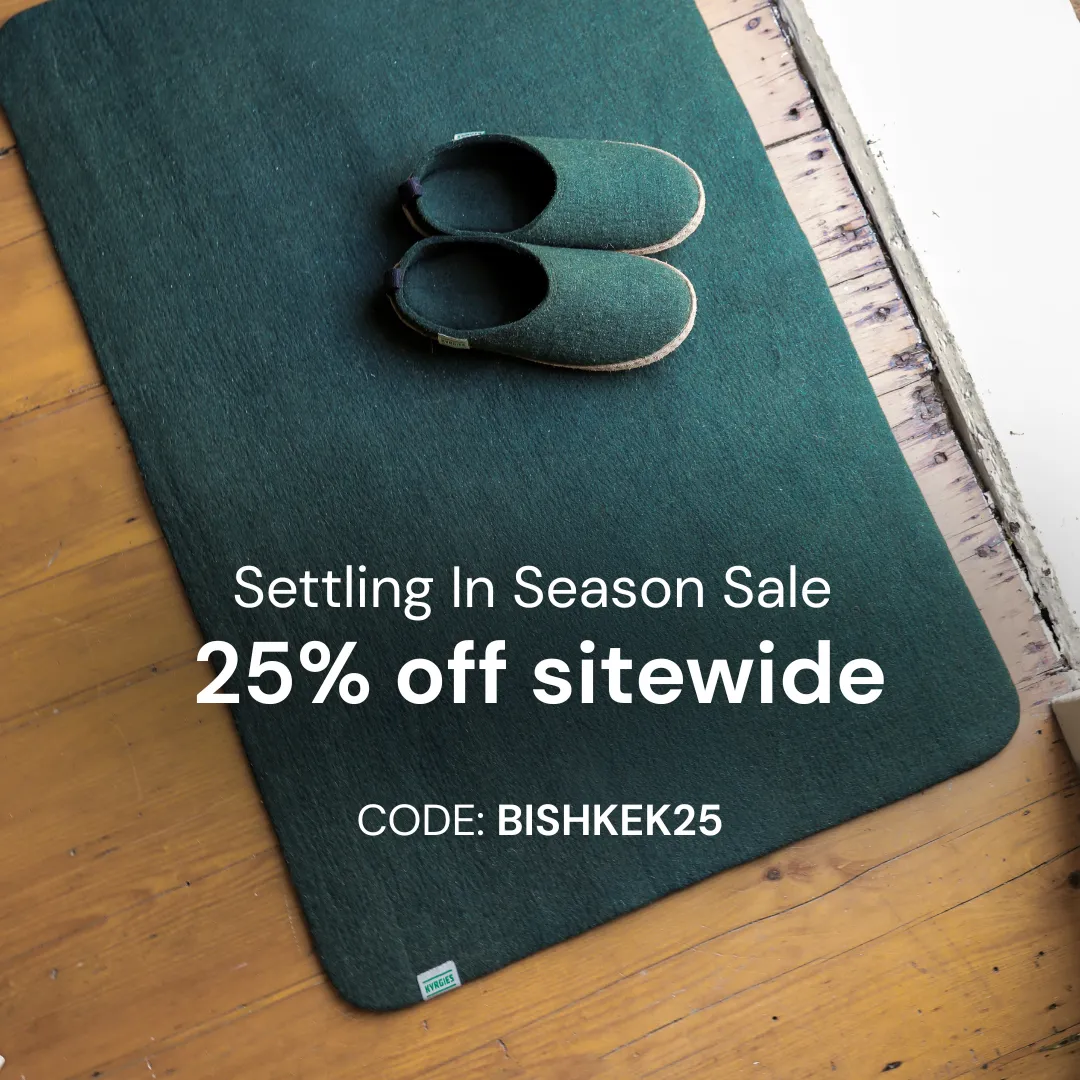
Code: BISHKEK25
Kyrgies
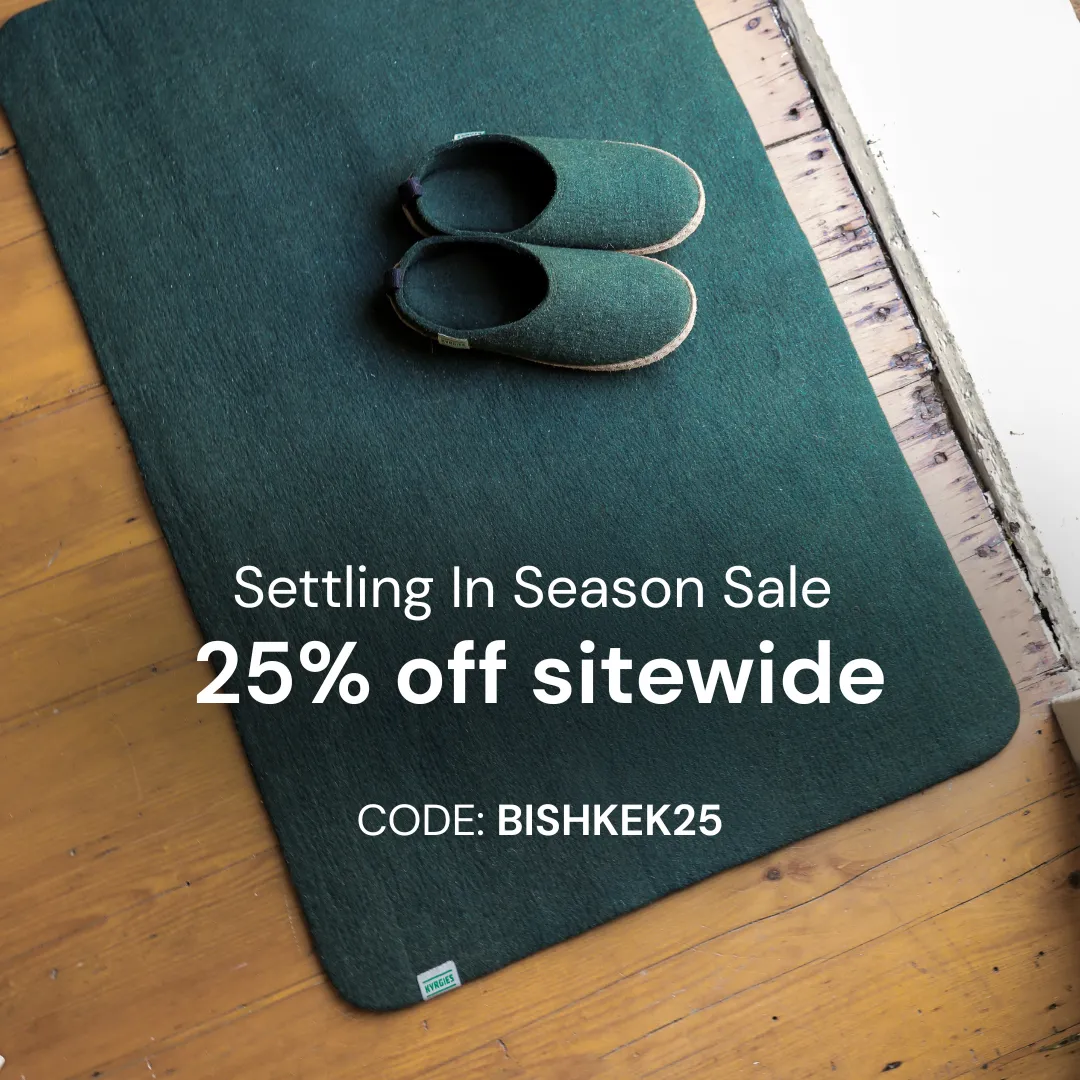
Code: BISHKEK25
Kyrgies
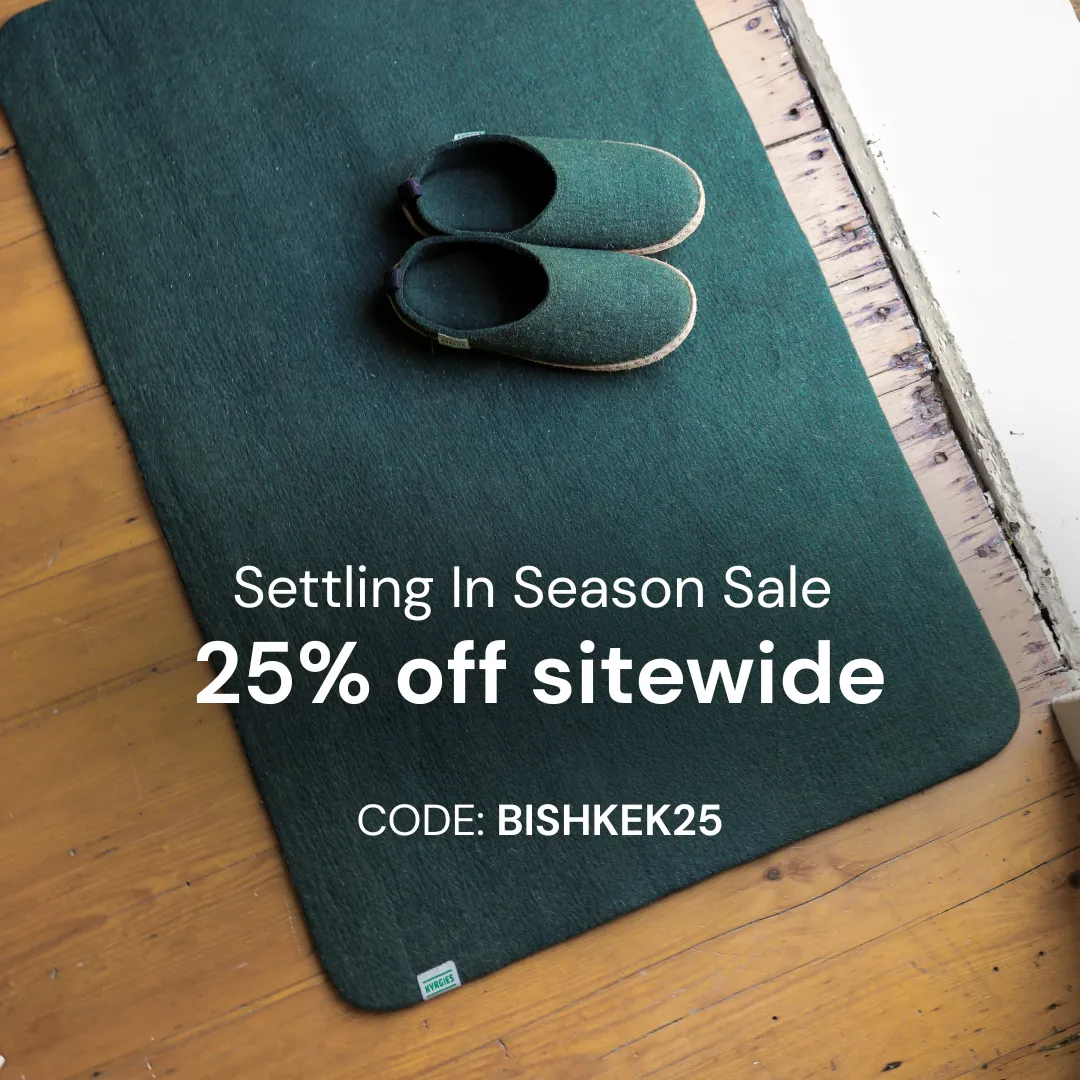
Code: BISHKEK25
Kyrgies
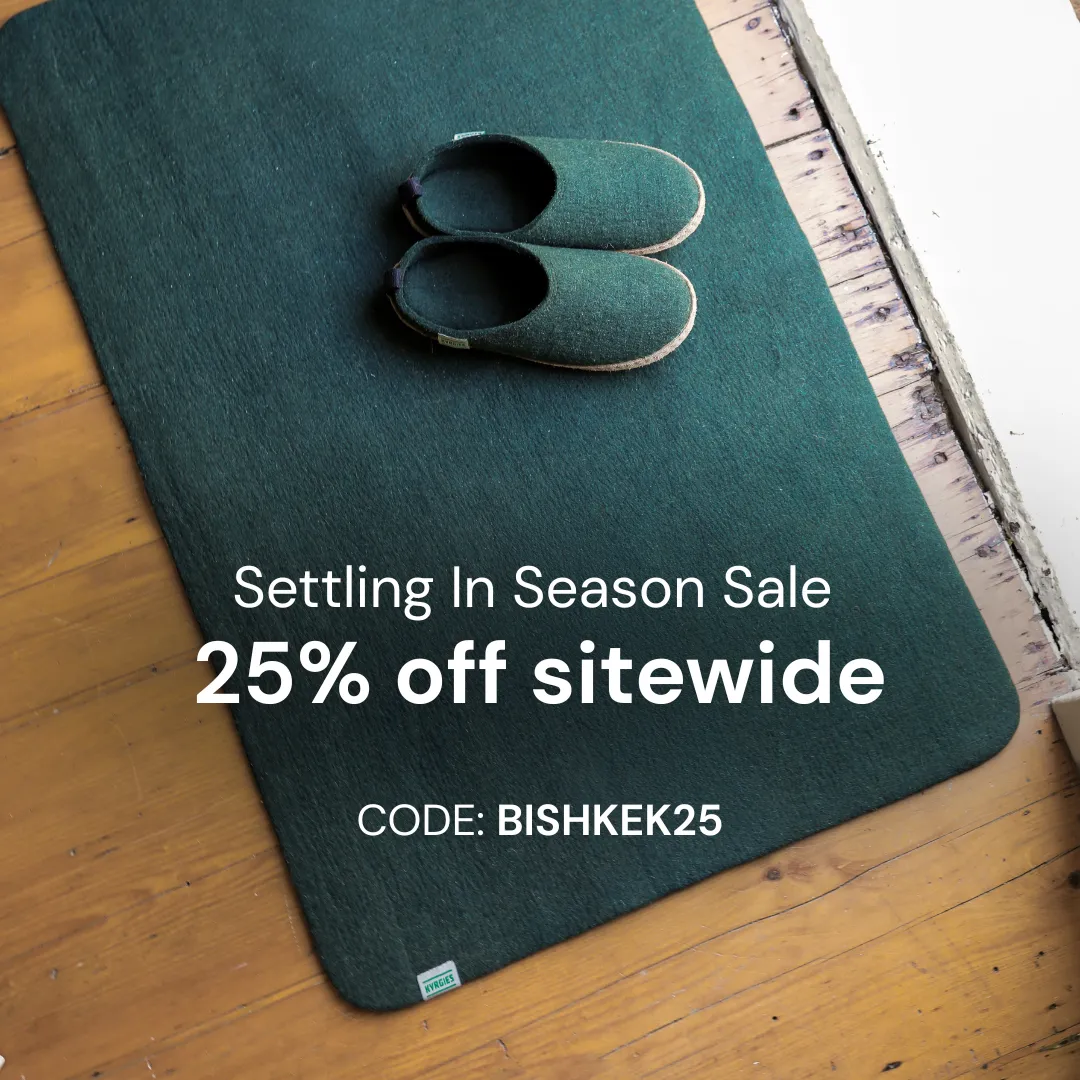
Code: BISHKEK25
Kyrgies
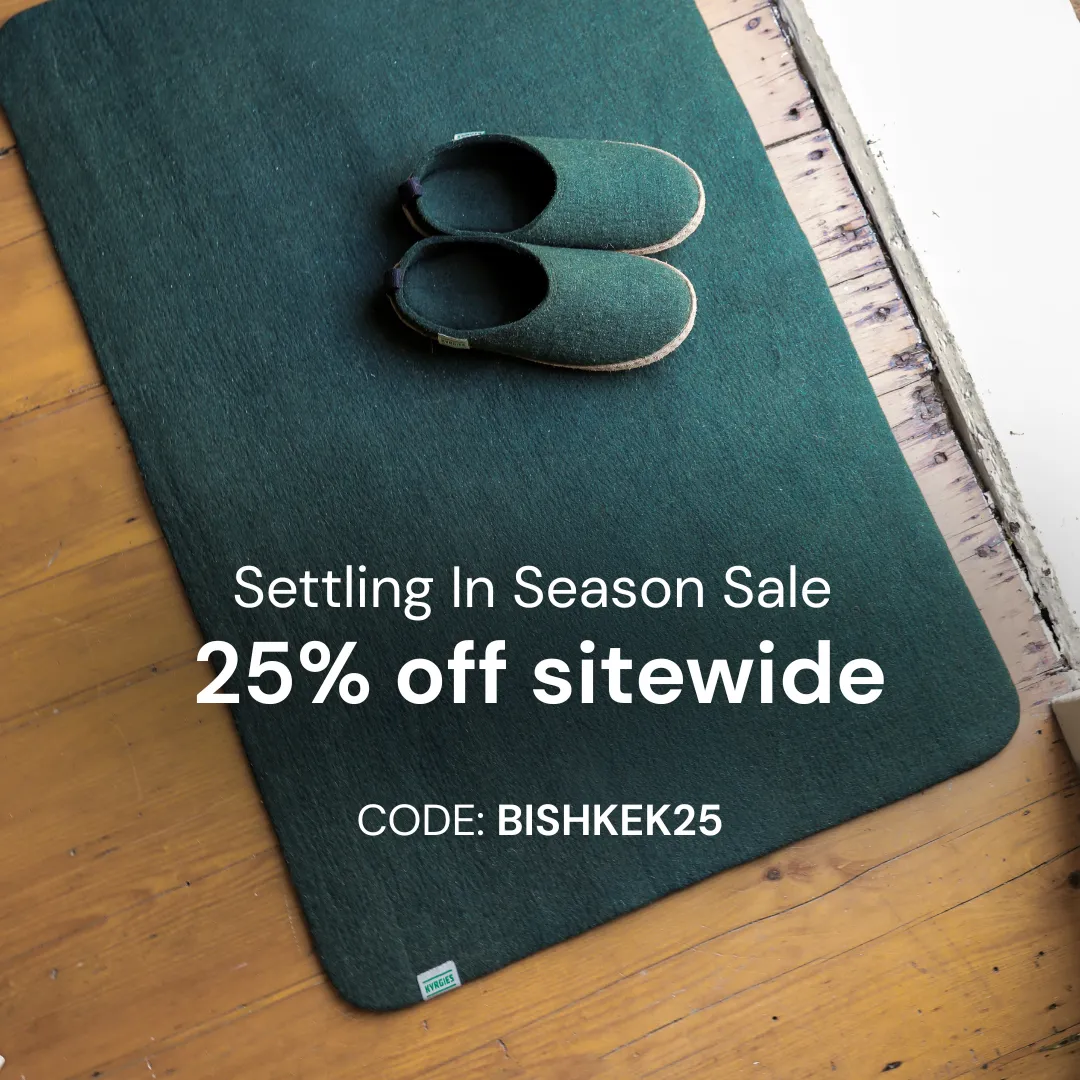
Code: BISHKEK25
Kyrgies

 Add to Chrome