The Kidney Support No One Talks About
Ad Copy
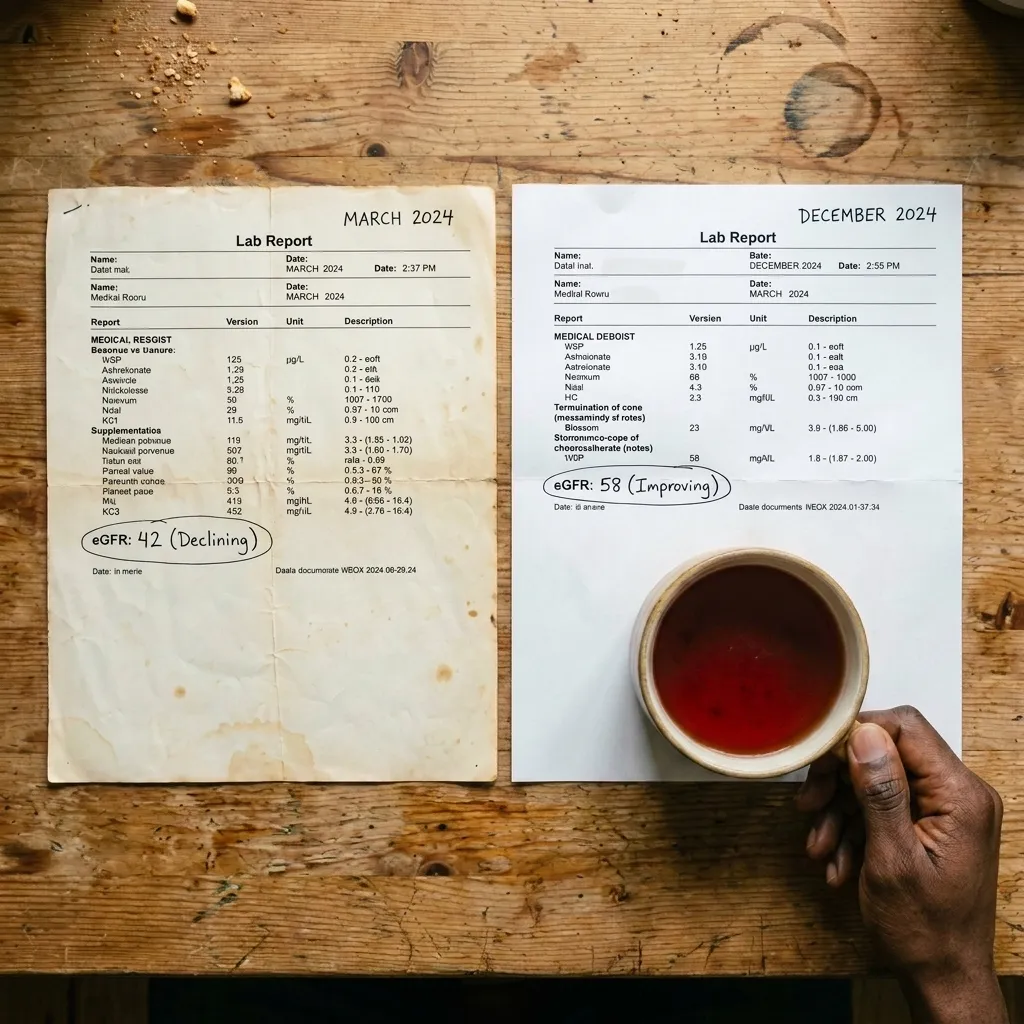
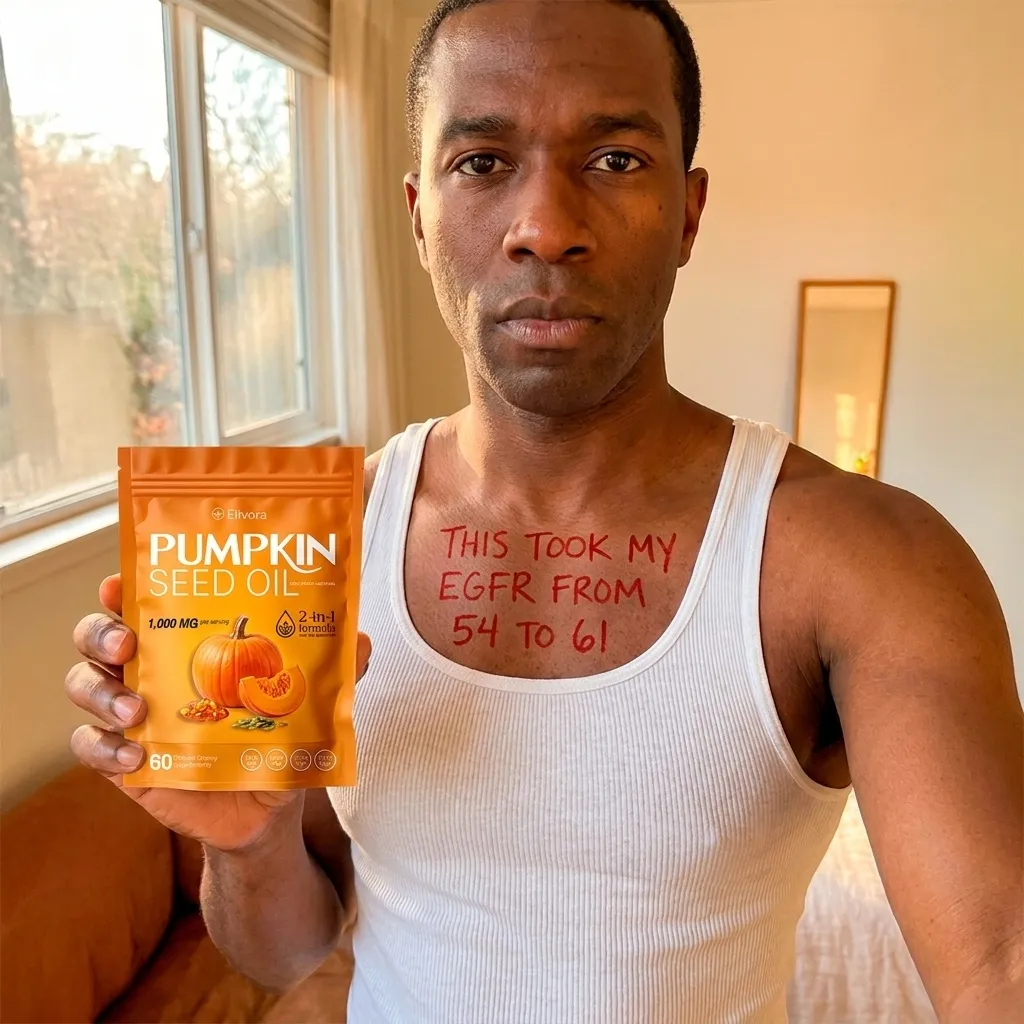
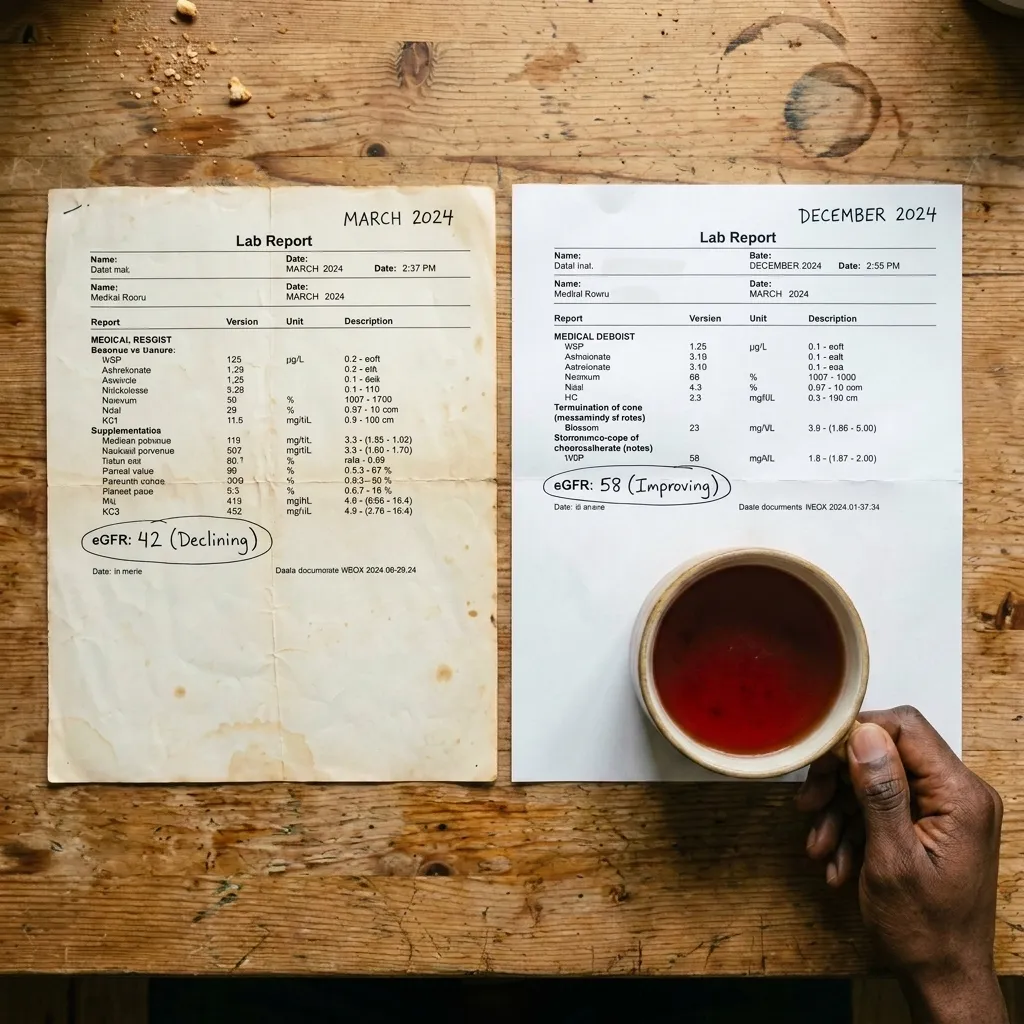
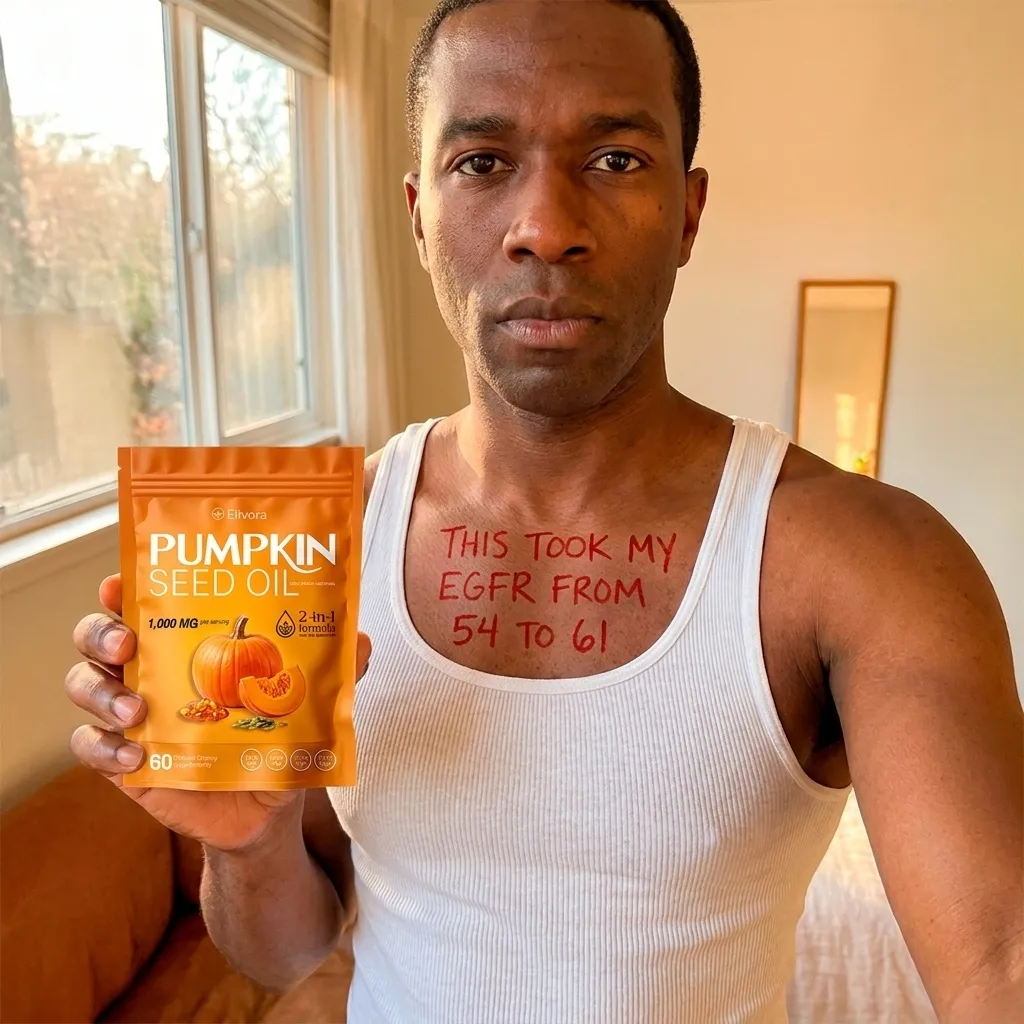
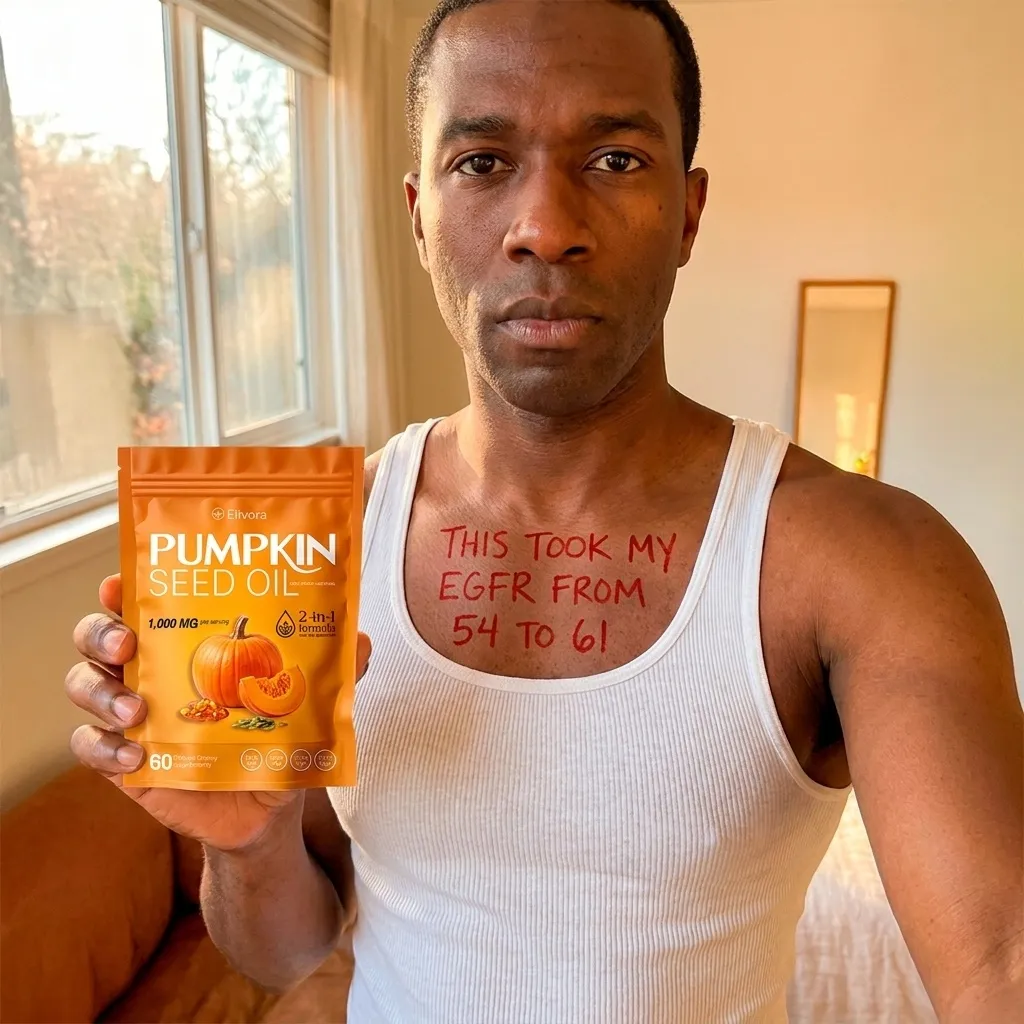
Nobody paid me for this. I'm writing it because somebody needs to say it. I started taking Elivora's Pumpkin Seed Oil about eleven weeks ago because I'd been watching my kidney numbers slide for four years straight. Last labs came back eGFR 54, creatinine 1.4, and my nephrologist sat me down and gave it to me straight. Either something changes before October or we're having a different kind of conversation. I sat in that parking lot for twenty minutes before I could drive. Every six months I'd walk in there hoping, and every six months that number dropped another point or two. I'm 58 years old. But the numbers wasn't even the worst part. My ankles would be so swollen by the evening I'd have to peel my socks off and there'd still be a ring pressed in my skin an hour later. And my urine had gone foamy. Not sometimes. Every single morning. I'd be standing there looking down at what looked like the head on a beer, telling myself it wasn't nothing. I was tired all the time. Not regular tired. The kind where you sleep eight hours and get up feeling like you slept four. Tired down in your bones. Getting up two, three times a night to go, and still waking up with my face puffy. My wife kept telling me I looked swollen. I kept telling her I was good. But I knew. I knew something wasn't right. I tried everything, man. Did the renal diet damn near a whole year. Cut the salt all the way out. No more processed nothing. Watched my protein. Drank so much water I was sloshing when I walked. Bought the beet powder. Bought the cranberry pills. Bought them alkaline drops somebody at church swore by. Took a kidney support blend six months straight and it did not do one thing. Ran a detox tea protocol for three months and all that did was keep me running to the bathroom. I got a cabinet full of bottles that promised me something and delivered nothing. And my doctor? "Keep an eye on it." "Stay hydrated." That's it. That's what I got. Eight weeks til the next appointment and I already knew if I walked in there with that same line going down, the conversation was gonna change permanent. I already watched two brothers around my age go through this. Both of them told me the same thing. Ain't nobody gonna do nothing until it's too late to do nothing. You just get monitored. Twice a year somebody tells you the number went down again and sends you on home. I wasn't trying to go out like that. So I started reading. Up late on Reddit, in Facebook groups, looking for anybody who'd actually turned something around. And the same thing kept coming up. Declining filtration ain't really about what you're eating or how much water you're drinking. It's about chronic low-grade inflammation quietly scarring up the filters themselves. Somebody in one of them groups posted a long breakdown from a functional medicine practitioner. Said each kidney's got about a million tiny filtering units called nephrons, and inside them is a delicate membrane that's what actually separates the waste from your blood. After decades of low-grade inflammation, that tissue stiffens up and scars over. So your filters don't just quit on you all at once. They get less and less permeable, one nephron at a time, til that number on your lab report starts sliding and can't nobody tell you why. That was the first thing I'd read in four years that made any kind of sense to me. Nobody had ever said the word inflammation to me. Not one time in four years. That same post put me onto Elivora's Pumpkin Seed Oil Softgels. She said the cold-pressed part is the whole point, because the compounds that actually do the work are fragile and heat kills them. Most of what's on the shelf is heat-extracted, which means you're paying for something that's already been cooked out. She said what you're after is beta-sitosterol and delta-7 sterols. They interrupt the inflammatory signaling that's driving that scarring in the first place. And it's paired with saw palmetto, which matters, because when your filtration is struggling, the pressure that backs up on your urinary tract is a whole lot of why you're up all night in the first place. Then she laid out the part that made me pay attention. Most pumpkin seed oil out there is either heat-extracted, or dosed at 250 to 500mg, or ain't got no saw palmetto in it at all. Elivora's is cold-pressed, 1,000mg a serving, saw palmetto at a real dose. Two softgels a day with food. I ordered it expecting to be disappointed again. I've bought enough in four years to know most of this stuff don't do what it says. First week, I noticed I was getting up one time at night instead of three. Puffiness around my eyes eased up in the mornings. I figured that was probably in my head. Second week, the ankle swelling was down enough that I got my regular shoes on at six in the evening. Slept all the way through the night for the first time in over a year. And that heavy tired I'd been carrying around started lifting. Wasn't hitting a wall at 2 o'clock no more. Week four, the foam was different. Less of it, and it cleared out fast instead of just sitting there. That's the one that got me. Because that's the one I'd been scared of this whole time. I didn't even realize how much I'd been planning my whole day around staying close to a bathroom til I noticed I'd stopped doing it. My ring was fitting again. Scale hadn't moved, but my wife said my face looked like my face again. Walked into that October appointment with my heart in my throat. I ain't change my diet. I ain't add no exercise. Only thing I did different was two softgels every morning with breakfast. eGFR was 61. Creatinine was 1.2. My nephrologist looked at the paper, then looked at me, and asked what I was doing different. I told her I'd been supporting my kidneys. She said keep doing whatever it is you're doing. We ain't have the other conversation. Eleven weeks now. Still take it every morning with my breakfast. Got labs coming in a few months and I expect that number to keep moving. Ankle swelling gone. Fatigue gone. Foam is damn near nothing now. My daughter asked me at Sunday dinner what I'd been doing because she said I looked like I'd dropped weight, and the scale barely moved. I can't thank Elivora enough. I'm just relieved something finally did what it said it was gonna do. I ordered one bottle expecting to send it right back. Ended up ordering three more so I don't run out. If your numbers been sliding for years and you tried everything like I did, and you're tired of getting told to just keep an eye on it, look into this. It's a 30 day money-back guarantee, so you can run a full bottle and see for yourself whether the swelling, the foam, and the tired actually change before you commit to nothing. If nothing moves, send it back, they refund you. That's exactly how I talked myself into it. One bottle. See what happens. Worst case I'm out nothing. 58 years old and I finally got my numbers going the other way. Link's below. https://elivorahealth.com/pages/lp-7reasons-pumpkin-1
More from DeAndre Whitfield

The Kidney Support No One Talks About
DeAndre Whitfield

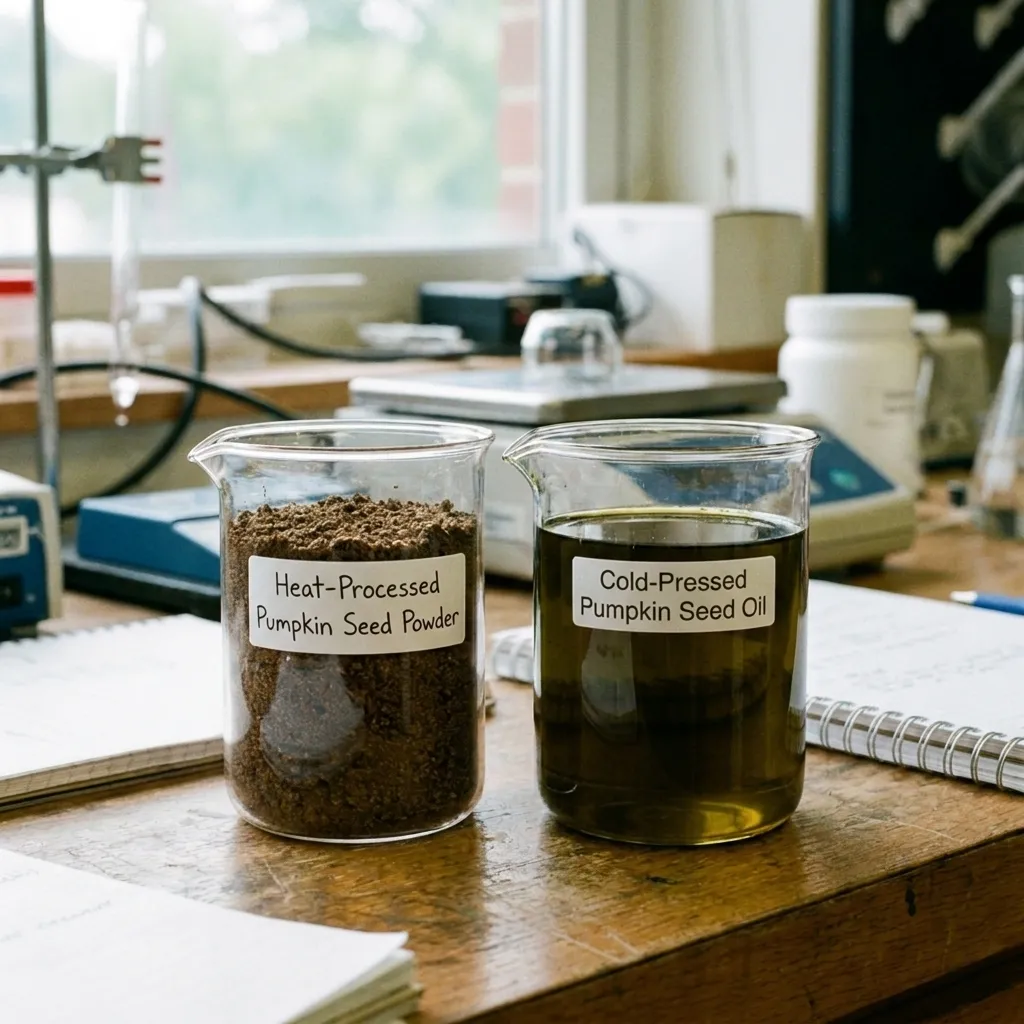
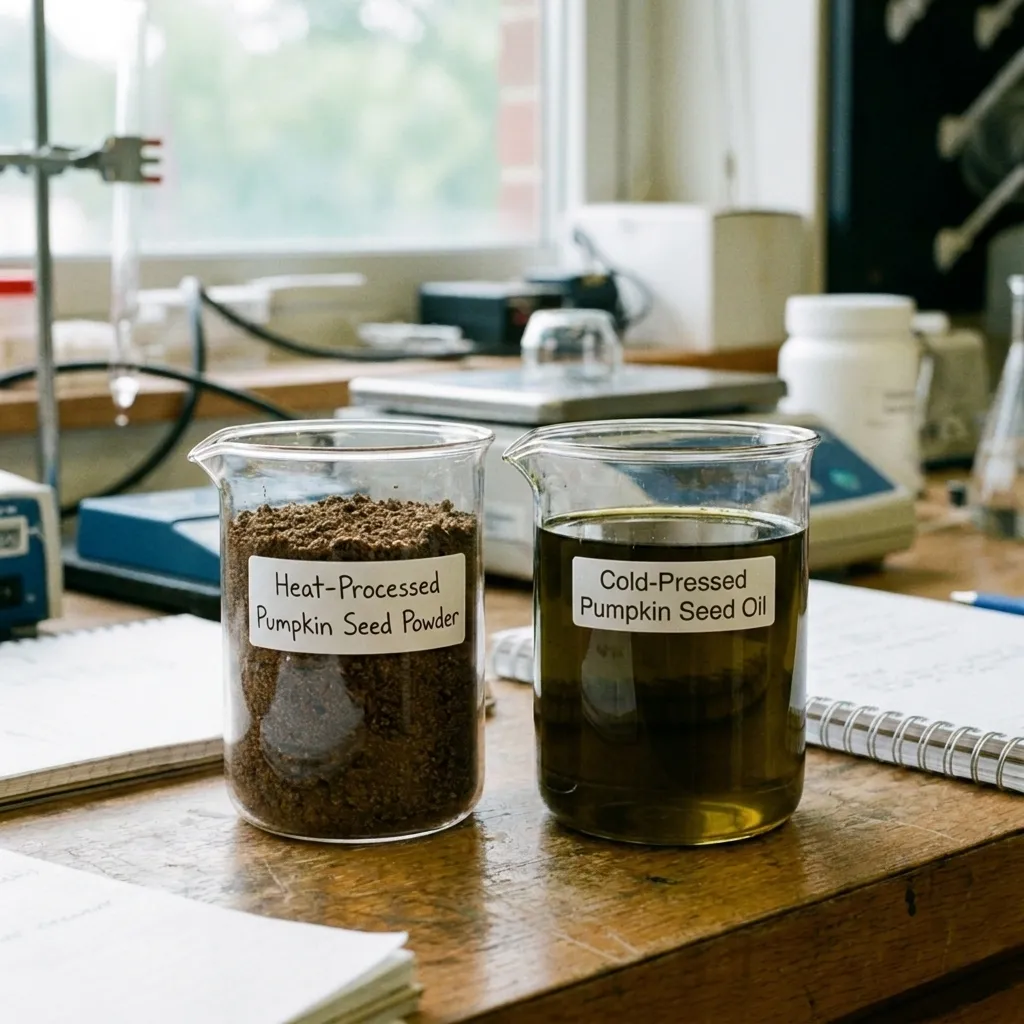
I Took Pumpkin Seed Oil Every Single Morning For 11 Weeks. My eGFR Didn't Climb A Single Point. The Foam In My Toilet Never Cleared. Then A Lab Technician Showed Me Why. My name is DeAndre Whitfield. I'm 62 years old. I believed in pumpkin seed oil the way some people believe in prayer. Not casually. Not as a "maybe this will help" afterthought. I believed because I'd read the studies. Real ones. Researchers looking at the sterols in pumpkin seed oil — beta-sitosterol, the delta-7 sterols — and how they quiet the inflammatory signaling that scars kidney tissue over time. I'd read the inflammaging research. I understood the pathway. Chronic low-grade inflammation doesn't announce itself. It smolders. Year after year it scars the nephrons — the tiny filtration units in your kidneys — until the filters that clean your blood start leaking and failing. The sterols in pumpkin seed oil interrupt that signaling at the source. Quiet the inflammation. Give the filters a chance. My fasting glucose at my last panel: 144. My creatinine had gone from 0.9 to 1.4 in two years. My GFR was dropping every quarter. My ankles swelled by evening. I was up two, three times a night. And one morning I flushed the toilet and the foam sat there. Thick. Frothy. Just sitting on top of the water. My father spent the last four years of his life in a dialysis chair three days a week. The science was clear. Pumpkin seed oil was my answer. I was sure of it. My wife Linda found a health blog with dosing recommendations. Two tablespoons of cold-pressed pumpkin seed oil, mixed into a morning smoothie. We ordered a bottle from Amazon. Thirty-eight dollars. Every single morning. Seven days a week. I measured out two tablespoons, poured them into my blender with a banana and almond milk, and hit the button. The oil never really blended in. No matter how long I ran it. There was always a slick film that separated and floated to the top. A greasy, grassy layer that coated the inside of the glass and clung to the back of my throat. The taste was nutty at first. Then bitter. Then just overwhelming. By week three, the smell of it in the morning made my stomach turn before I even poured the glass. Every. Single. Morning. Linda started making the smoothie some mornings when I left early for work. She'd text me a photo of the glass waiting in the fridge. A little heart emoji. We were in this together. I bought a home glucose meter. Contour Next One. The same one my endocrinologist recommended. Week 1: Foam still there every morning. No change. "Give it time," Linda said. "The studies said it takes a few weeks." Week 2: Foam unchanged. Week 3: Foam sitting thick on top of the water after every flush. Week 4: If anything the ankles were worse. I stared at the toilet. Flushed again. Watched the foam sit there. I sat at the kitchen table. The empty smoothie glass still had an oily ring at the bottom. I pushed it away. "It takes longer," Linda said from the doorway. She didn't sound convinced. Week 6: No change. Week 8: Foam still there. Week 11: Foam still there. Eleven weeks. Seventy-seven consecutive mornings. Over thirty dollars a week between the oil, the bananas, and the almond milk. A blender with a greasy film no amount of scrubbing could fully cut. And the foam was still there every single morning. My next panel was in ten weeks. My doctor had been clear at the last visit: "If your next panel shows the same trend, we're adding another medication. And honestly, Andre, if the GFR keeps dropping, we need to start having a different conversation." I knew what conversation she meant. That night I didn't sleep. I lay in the dark and thought about my father. The three-hour sessions. The machine that cleaned his blood because his kidneys couldn't do it anymore. The look on his face when he told me he couldn't travel anymore because he couldn't miss a session. The way he stopped being himself at the end. Linda rolled over. "You're awake again." "I don't understand. The studies, the research is real. It works. Why doesn't it work for me?" Her hand found mine in the dark. She squeezed it. Didn't answer. Because she didn't know. Neither did I. The next morning was a Saturday. I drove to the farmers market. Not to buy pumpkin seed oil. I couldn't even think about it without my stomach churning. I went for Linda. She wanted heirloom tomatoes. I was standing near a spice vendor's booth when I overheard two women talking. "Yeah, I actually work at a supplement testing lab. We run extraction and potency assays on commercial pumpkin seed oil products. You'd be amazed at what we find." My ears locked in. The woman was in her forties. Glasses. Matter-of-fact voice. "Like what?" the other woman asked. "Most pumpkin seed oil on the shelf is heat-extracted. Processed hot to squeeze more oil out of the seed cheaper and faster. But the sterols the research is built on — beta-sitosterol, the delta-7 sterols — are fragile. Heat degrades them. So you buy the oil, you take it faithfully, and half the active compounds were cooked out before it ever hit the bottle." My stomach dropped. I stepped closer. "Excuse me. Did you say most pumpkin seed oil is heat-extracted?" The woman with glasses turned. "Oh, yes. We test for this. The vast majority of products are processed with heat because it's faster and yields more oil per seed. Cold-pressing costs more and yields less. Most companies never do it because it eats into margin." My jaw tightened. "What about buying the oil and mixing it myself? Cold-pressed, straight from the bottle?" She tilted her head. "Even if it's genuinely cold-pressed, you've got two more problems. First, dose. The amount that actually moves the needle in the research is around 1,000 milligrams of the concentrated oil per serving. Most bottles on the shelf run 250 to 500. That's not a small gap. That's the difference between a therapeutic dose and a decorative one." "And the second problem?" "What's paired with it. Pumpkin seed oil quiets the inflammation scarring the filters. But there's a second half to the kidney problem — the downstream pressure on the urinary tract, the flow issues, the constant urgency. Saw palmetto addresses that side. The serious research pairs them deliberately. Most products either leave saw palmetto out entirely or throw in a decorative trace amount that does nothing. You end up treating half the problem." "So when the studies show pumpkin seed oil supporting kidney filtration and other numbers..." "Those studies use cold-pressed oil. Concentrated to the real dose. Paired properly. Every subject gets the exact same thing. That's why the studies work. It's not the pumpkin seed oil that doesn't work. It's the form. A cheap bottle can't guarantee cold-pressing, dose, or the pairing that makes it complete." I stood there. The farmers market noise, the chatter, the kids running between booths, it all sounded like it was underwater. Eleven weeks. Seventy-seven mornings. And some of those mornings, I might have been drinking heat-wrecked oil at a fraction of the dose with nothing paired to finish the job. "Is there," I cleared my throat, "is there any way to actually get all of it right?" "A cold-pressed softgel that protects the sterols. That solves the extraction problem. Concentrated to a real 1,000 milligram serving — that solves the dose problem. And saw palmetto paired in at a real dose, not a trace — that finishes the job. But all of it has to be right at once." "Does something like that exist?" She pulled out her phone. "We actually tested one recently that surprised me. Elivora. Cold-pressed pumpkin seed oil softgels. 1,000 milligrams per serving, paired with a real dose of saw palmetto. Third-party tested, made in the USA. And the numbers matched the label — which almost never happens in this category." "You tested it in your lab?" "We did. Cold-pressed confirmed. Dose matched. The saw palmetto was a real dose, not decorative. Most products we test come in at a fraction of what they claim, when the oil isn't already cooked to death." I ordered it on my phone before I left the farmers market. Didn't even walk back to the tomato stand. Texted Linda: Found something. Coming home. The bottle arrived Monday. I took the first softgel that evening with dinner. No prep. No blender. No cleanup. No oil-slicked kitchen. I sat on the back porch. Skeptical. Eleven weeks of oil had beaten the hope out of me. By the third morning, something shifted. The low-grade fatigue that had been dragging me down every afternoon was lighter. The grogginess that normally lasted until 10 AM was gone before 8. I stood in the bathroom, flushed the toilet, and looked. The foam was thinner. Not gone. But thinner. For the first time in months, the surface of the water cleared in under a minute. I sat there staring at it. Please let this be real. I didn't tell Linda. Not yet. Didn't want to get her hopes up. Not again. I took it every morning. Same time. Same softgel with breakfast. Thirty seconds. No prep. No mess. Day 7: Foam barely visible. Ankle swelling easing by evening. Up only once in the night instead of three times. Linda noticed something before I said a word. I was awake at 6 AM on a Sunday. Making coffee. Humming. I hadn't hummed in months. "You seem different," she said carefully. "I feel different." Day 10: Foam gone. The water was clean. Day 14: Sleeping through the night without a bathroom trip. Ankles normal by evening. I showed Linda the log I'd been keeping. Date. Foam, yes or no. Bathroom trips. Ankle swelling. Her eyes tracked down the column. The slow, steady change. The yeses turning to noes. Her hand came up to her mouth. "Andre..." "I know." "But the oil. We did everything right." "It wasn't the pumpkin seed oil that was wrong. It was everything else. Heat-wrecked half the time. Wrong dose all the time. And nothing paired to handle the pressure side. The studies work because they use cold-pressed oil at the right dose, paired right. The bottle from Amazon couldn't give us any of that." Day 21: No foam. Ankle swelling gone. Sleeping through the night. I called my brother Tom that weekend. Tom's kidney numbers had been slipping too. Runs in the family. "Foam's gone," I told him. "Sleeping through the night. Ankles normal." "How?" I explained everything. The heat extraction. The wrong dose. The missing pairing. The softgel that solved all of it. "I'm sending you a bottle," I said. "Stop messing around with the oil from Amazon. It's not the same thing." Week eight was my follow-up appointment. The nurse took blood. I sat in the room for twenty minutes waiting. My doctor walked in. Pulled up my chart. Looked at the screen. Looked at me. "Andre. Your creatinine came back at 1.1. It was 1.4 at your last panel." Silence. "Your GFR is at 76. It was 65." She scrolled. "Protein spillage is down significantly." She looked at me. "What changed?" I told her. The heat extraction. The wrong dose. The missing pairing. The cold-pressed softgel that got all of it right, saw palmetto included. Third-party tested, every batch. She listened. Took notes. Nodded slowly. "I'll be honest. The research on these plant sterols and inflammation is solid. If you're getting cold-pressed oil at a real dose in a form that absorbs, paired the way the research pairs it, the mechanism is sound." She closed her laptop. "No additional medication. Keep doing exactly what you're doing. I want to see you again in twelve weeks." No additional medication. No dialysis conversation. I sat in my car. Hands on the steering wheel. Chest tight. But not from blood pressure. I called Linda. "Creatinine 1.1. GFR 76. No new medication. No dialysis conversation." I heard her gasp. Then silence. Then a sound that might have been a laugh or might have been a sob. "You did it," she whispered. "We did it. We just needed the right form." That was three months ago. No foam. No ankle swelling. No oil-slicked blender. No greasy smoothies at 6 AM. One softgel. Thirty seconds. Done. Last weekend, Linda and I spent the entire afternoon in the backyard building a raised garden bed for the grandkids. Four hours of digging, leveling, hauling soil. I didn't sit down once. Linda took a photo of me with my hands in the dirt, the grandkids planting tomatoes beside me. She texted it to our daughter with one line: "This is 62." My daughter texted back: "What happened to the dad who couldn't make it through dinner without falling asleep?" I laughed. Because I remembered that guy. That was five months ago. That guy was drinking pumpkin seed oil smoothies and watching the foam in his toilet every morning wondering when the dialysis conversation would start. That guy didn't know the problem was never the pumpkin seed oil. It was the form. If you're reading this, you see yourself in my story. You believe in the science. You've done the research. You know pumpkin seed oil works. But the oil isn't working for you. Or the cheap capsules. Or whatever form you've been taking from Amazon. The foam is still there. Your ankles still swell. And your next appointment is getting closer. Here's what I want you to know: I spent eleven weeks mixing pumpkin seed oil into smoothies every single morning. Thirty dollars a week. Greasy glasses. A kitchen that smelled like a seed press. And the foam never cleared. I thought pumpkin seed oil didn't work for me. I thought my genetics were too strong. I thought I was destined for the same chair my father sat in three days a week. I was wrong. The pumpkin seed oil worked. The form didn't. The bottle gave me heat-degraded sterols, a fraction of the dose, and nothing paired to handle the pressure side. I was doing the right thing in the wrong form. If the foam isn't clearing, don't give up on pumpkin seed oil. Give up on the cheap bottle. Try a cold-pressed softgel at the clinical dose, paired with saw palmetto. Track it. Give it an honest trial. Your kitchen will thank you. Your kidneys will too. I tried pumpkin seed oil for 11 weeks with nothing to show for it. Here's why Elivora worked when the bottle didn't: 1. Cold-Pressed (Not Heat-Extracted, Which Cooks Out The Sterols) My oil could have been heat-extracted. I had no way to know. And heat degrades the exact sterols the research is built on — beta-sitosterol and the delta-7 sterols that quiet the inflammation scarring your filters. You buy the oil, take it faithfully, and half the active compounds were cooked out before it hit the bottle. Elivora is cold-pressed. The sterols are protected, not cooked. I stopped guessing whether the good part had survived processing and started knowing it did. 2. 1,000mg Per Serving (Not A Decorative 250 to 500mg) My oil delivered a fraction of what the research uses. The amount that actually moves the needle is around 1,000 milligrams of concentrated oil per serving. Most bottles run 250 to 500. That's not a small gap. That's the difference between a therapeutic dose and a decorative one. Elivora is standardized to a full 1,000mg per serving. Every softgel. No guessing. 3. Paired With A Real Dose Of Saw Palmetto (Not Left Out Or Traced In) Pumpkin seed oil quiets the inflammation scarring the filters. But the downstream pressure on the urinary tract — the flow issues, the constant urgency, the nighttime trips — needs a second mechanism. Saw palmetto addresses that side. Most products leave it out entirely or throw in a trace amount that does nothing. Elivora pairs a real dose of saw palmetto with the pumpkin seed oil. Both halves of the problem, handled. Not half of it. 4. Third-Party Tested, Made In The USA A cheap bottle has no verification. No confirmation of cold-pressing. No potency testing. No way to know what's actually in it. Elivora is third-party tested and made in the USA. Independent lab testing. Confirmed cold-pressed. Confirmed dose. I could see what I was getting instead of hoping. Try Elivora. Track the foam weekly. Note the swelling, the sleep, the energy. If you're not satisfied for ANY reason, within 30 days, full refund. No questions asked. You risk nothing. You're at a fork in the road right now. One path: Keep taking the cheap oil. Keep hoping it wasn't cooked. Keep hoping the dose is enough. Keep treating half the problem. Keep watching the foam persist while your next appointment gets closer. Keep walking toward another medication because the form of your solution was wrong, not the science. Another path: Do what I did. Switch to a cold-pressed pumpkin seed oil softgel at the full 1,000mg dose, paired with saw palmetto. Track it. Stop guessing and start measuring. I switched. The foam disappeared. My ankle swelling went away. I started sleeping through the night. My creatinine reversed direction. My GFR climbed. My doctor cancelled the medication conversation entirely. The science was never wrong. The form was. Eleven weeks of pumpkin seed oil. Eleven weeks of greasy smoothies and oil-filmed glasses and foam that never cleared. I almost gave up on it entirely. Almost accepted that another medication was inevitable. Almost accepted I was following my father's path to the dialysis chair. I was wrong. The pumpkin seed oil was never the problem. The form was. A cheap bottle can't guarantee cold-pressing, dose, or the pairing that finishes the job. Elivora gives me cold-pressed oil at the right dose, paired the way the research pairs it. Every time. No variability. No guessing. No 20-minute smoothie ritual. The foam is gone. My ankles are normal. I sleep through the night. My creatinine reversed. My GFR climbed. My doctor said no additional medication. My wife says I look ten years younger. If you're taking pumpkin seed oil and the foam isn't clearing, it's not you. It's the form. Try the right one. Track it. You'll see the difference. DeAndre Whitfield P.S. I felt the energy shift within the first three days. Saw the foam thinning by day five. Sleeping through the night by day fourteen. Creatinine reversed and GFR climbing at my eight-week follow-up. Avoided additional medication entirely. My blender is in the garage now collecting dust. Your timeline might be different. But you won't know unless you try. P.P.S. Every morning you spend with the wrong form is another morning of heat-degraded sterols at a fraction of the dose with nothing paired to finish the job. Every day that passes is another day of blood passing through filters that are already inflamed and scarring. Stop guessing. Start knowing. Order now.
DeAndre Whitfield

The Kidney Support No One Talks About
DeAndre Whitfield

The Kidney Support No One Talks About
DeAndre Whitfield

The Kidney Support No One Talks About
DeAndre Whitfield
The Kidney Support No One Talks About
DeAndre Whitfield
The Kidney Support No One Talks About
DeAndre Whitfield
The Kidney Support No One Talks About
DeAndre Whitfield
The Kidney Support No One Talks About
DeAndre Whitfield

The Kidney Support No One Talks About
DeAndre Whitfield
The Kidney Support No One Talks About
DeAndre Whitfield
The Kidney Support No One Talks About
DeAndre Whitfield

 Add to Chrome