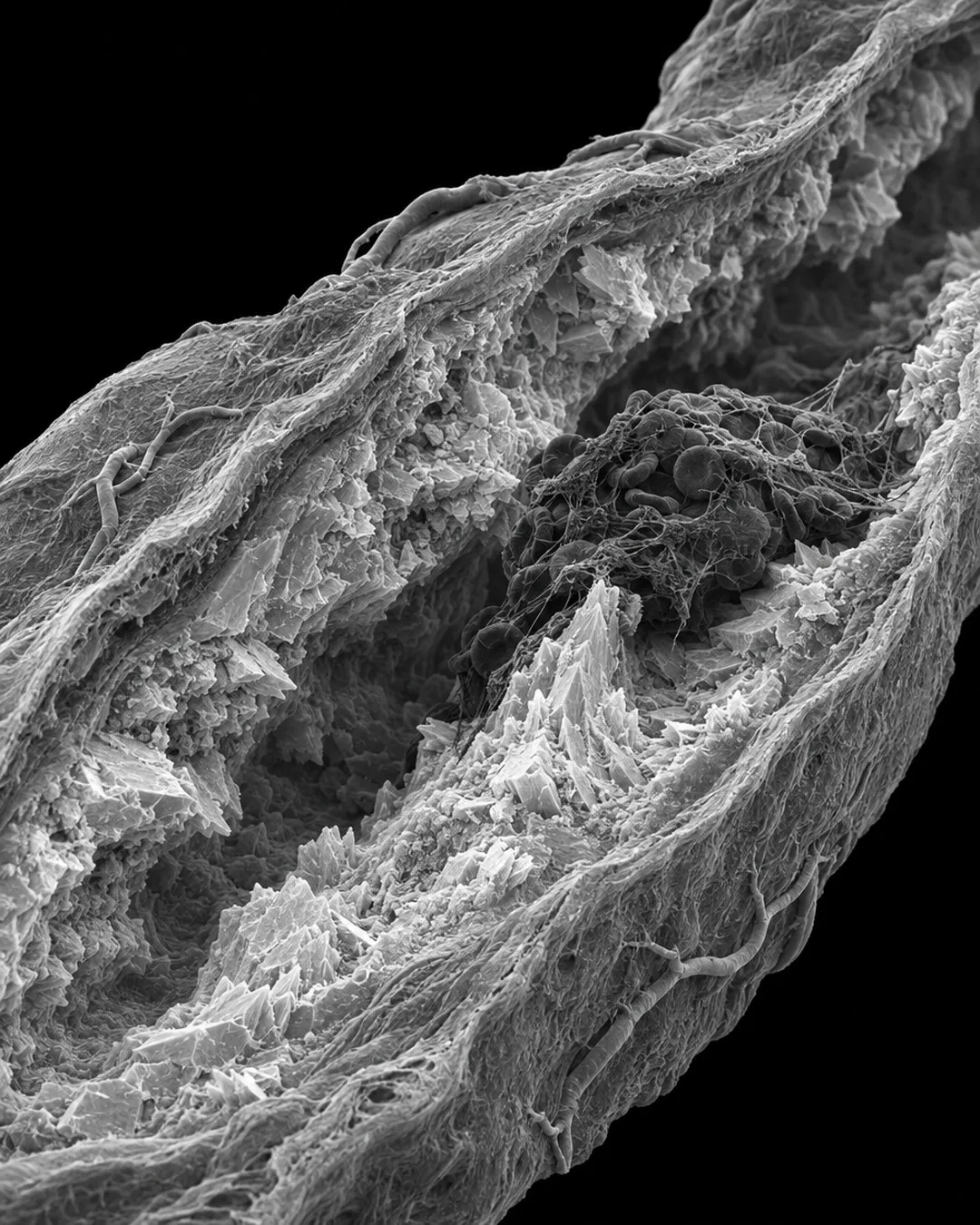
The surgeon held up a piece of his diet
Ad Copy
I run the heart-lung machine in open-heart surgery, and the first thing you learn in that room is that butter is what ends up on the surgeon's forceps. So I took my husband's butter away and fed him margarine and Egg Beaters for years. Last spring I stood outside my own operating room and watched the surgeon pull a yellow plug of fat out of HIS heart anyway. My name is Janet. I'm 67, and I've been a cardiac perfusionist at a hospital in Wooster, Ohio for 30 years. When a surgeon stops your heart to fix it, I'm the one moving your blood and breathing for you till he starts it again. About 6,000 men have had every drop of their blood run through my tubing. And I still missed it in my own bed. My husband Dale is 69. He put in furnaces and air conditioners for 40 years and he's been a type 2 diabetic for 14 of them. For the last eight years, since his LDL first climbed, I've done everything his doctor told me to do. I took the butter out of our house and put margarine on his toast every single morning. I switched him to Egg Beaters and skim, and three nights a week he pushed whole wheat pasta around his plate without a word. Every Sunday night I filled his pillbox at the kitchen table, metformin morning and night, and later the statin and the blood pressure pill. I bragged to the girls at work that Dale was compliant. And I sat next to him at every single cardiology appointment and listened to his doctor read the numbers off the screen. Year 1: "Butter's the worst thing he can put in his mouth. More fiber. Recheck in six months." LDL came down a little. That night Dale ate his whole wheat spaghetti and didn't say a word. Year 3: "LDL's creeping back up. Let's start atorvastatin. Ten milligrams." Within two months his legs ached all the time. He'd sleep ten hours and wake up gray. I told the doctor. He said "adjustment period." Year 5: Dale started getting chest tightness on the stairs. Fourteen stairs from our living room to our bedroom. He'd stop halfway up with a hand on the banister and blame his knees, and I let him. I told the doctor. He said "probably anxiety" and added lisinopril for blood pressure. Year 8: his A1C sat at 6.4 and his LDL at 98, and Dale's ankles started swelling. His socks left trenches in his skin by bedtime. He started forgetting words in the middle of sentences. I brought it up at the next visit. The doctor pulled up the lipid panel on his screen and said "lipid panel excellent, patient doing very well." And me, the heart lady, I said thank you, doctor, and drove him home believing it. That visit was nine weeks before the bypass. Three weeks before the night, our grandson Caleb was staying with us for the weekend. He's eight. Dale was going upstairs to get Caleb's backpack. I was at the bottom of the stairs folding laundry. Dale made it seven steps and went the color of dishwater. Then his bladder let go, and a dark stain spread down his khakis onto my carpet, with Caleb standing right below him on the bottom step. I ran up with a towel and Dale shoved it back at me and hissed, "Get the f*ck away from me, Janet." Caleb tugged my sleeve: "Grandma, why did Pop-Pop pee on the stairs?" I said his knees were bad. Me. That was the best I had. I told myself the chart said excellent, and the chart doesn't lie. I'd heard surgeons say that to scared wives for 30 years. The night was last spring. March. Around 2 in the morning Dale jolted up with his undershirt wet through, and Sunday's chili came up all over my pillow. I went for my phone to call an ambulance. He smacked it across the room and called me a hysterical old b*tch. He'd had chili heartburn a hundred times, and every one of those times I was the one who'd told him that's all it was. So I sat up beside him with two fingers on his wrist and let him talk me out of it. At 4:30 he couldn't finish a sentence. His lips were gray. Out where we live an ambulance takes twenty minutes and my hospital is nine, so I drove him in my nightgown with a towel on his lap. They took him straight to the cath lab, and by seven he was on my OR table for an emergency triple bypass. Hospital policy says no perfusionist runs a family member's case, and they wouldn't let me past the door. So I stood at the operating room window in scrubs a nurse grabbed out of my own locker and watched a perfusionist I trained myself run Dale's pump. I watched them open my husband's chest. The artery down the front of his heart, the one we call the widowmaker, was packed so solid the surgeon had to core it out like a drain line before he could sew a graft on, and he pulled out a long yellow plug and held it up to the light for the resident, right in front of my window. Same yellow as the tub in my fridge door, the one I'd scraped onto his toast every morning for eight years. I did that to him. His LDL at that last visit had been 98. And I stood there looking at that plug and I thought one thing. That plug didn't care what his LDL was. I'd grown it in my kitchen. Dale came through with three grafts, and cardiac rehab started two weeks later. But they'd only routed his blood around the clogs. The lining that made them was still in there, and the veins they sewed in clog on that same lining, a lot of them inside ten years. I've pumped for men back for their second one. I knew what Dale's next ten years looked like. And Dale went home on the same diet and a bigger dose of the same statin. Two weeks after the surgery I was in the hospital cafeteria pushing a salad around. A woman sat down across from me. Her name is Céline, a perfusionist from Lyon, France, about 60, three months into an exchange in our department. We'd worked a case together that morning. She watched me stab a crouton for a minute before she said a word. "In Lyon we eat butter, cream, cheese, pork fat. And our men die of hearts at a fraction of your rate. Everybody says it's the wine. It isn't the wine." I just stared at her. "You and I spend all day keeping blood off rough spots in a circuit," she said. "What do you think his arteries are?" She didn't have to finish. Thirty years I've watched blood snag on one bad seam in my lines, and I'd never once thought about the inside of Dale. "You took the butter out of his blood," she said, "and left his lining torn up." I sat there with my fork in my hand. The LDL is the symptom, she said. Years of inflammation and daily blood sugar spikes turn the inside lining of the vessel, the endothelium, rough and angry, and it stops making the nitric oxide that keeps it relaxed. The LDL floating past snags on those rough spots and gets dragged into the wall, where it goes rancid, and that's your plaque. I said, "Then why's every chart I've ever read graded on LDL?" "Because LDL's the part you can count," she said. The vessel stiffens around it, and one morning it tears. The statin's like turning down the flow on a circuit with a bad seam. Less blood goes by, but the seam's still there grabbing at it, and the damage keeps going where nobody's looking. Dale swallowed every pill on time for eight years, she said. The trouble was everybody acting like swallowing them was the cure. I told her about the toast and the pasta. She didn't let me finish. "For a diabetic it's worse. Every carb meal is another spike scraping the lining, and you fed him pasta three nights a week and toast every morning under that margarine. You did what the doctor said, and every plate was one more scrape." I asked her what fixes it. She said true Ceylon cinnamon carries two compounds that matter. Cinnamaldehyde helps that rough lining heal so the fat's got nothing to snag on, and MHCP blunts the sugar spike off his toast so it stops scraping the lining raw again every morning. I was out of that cafeteria before she finished. I had the answer I wanted and I didn't wait for the rest. On my way home I bought a jar of cinnamon at Kroger. I put it in Dale's oatmeal every morning for three weeks and nothing happened. Then I ordered cinnamon capsules off Amazon, top rated, thousands of reviews. Three more weeks. Still nothing. I went back to Céline and told her it wasn't working. I showed her the bottle and she handed it straight back. "That's cassia. It's a cheaper tree out of China with hardly any of what you need, and its coumarin beats up the liver. European food safety regulators flagged it. A quarter teaspoon a day passes the limit." Then she said, "Even if it was real Ceylon, a dry capsule still fails. The compounds are fat-soluble. Without oil they pass straight through." I said, "You want me to put OIL into a man with plaque?" I'd read that MCT oil raises cholesterol. She laughed at me. She said, "It's one softgel. Not a frying pan. The carrier is the point. Without it you're swallowing dust." Then she wrote on a napkin what it had to be: DNA-verified Cinnamomum verum from Sri Lanka, concentrated 12 to 1 so one softgel equals 7,200 milligrams, suspended in organic MCT oil, and third-party tested. I still have that napkin in my scrub pocket. She said the dust in a shelf capsule never makes it into his blood, so whatever number is on the label doesn't mean a thing. She'd spent her first month here hunting for one that passed all four, because her own husband was flying over to visit and she wasn't letting him eat American food without it. She found one. Resia. Before I ordered it I called the company. I asked for the lab certificate and the species DNA result before I'd give it to him, the same way I won't prime a circuit till I've checked every lot number, and I asked about coumarin too. It was in my inbox before supper. Eight weeks out from surgery, rehab three mornings a week, and he still stopped on the seventh stair with his hand on the banister, and his socks still left trenches by bedtime. I ordered one month to see. Every pill in Dale's Sunday box stayed exactly where it was. He just added one softgel with breakfast. Week 1: nothing. Week 2: the trenches his socks left in his ankles weren't as deep, and he finished a whole story at dinner without losing the word. Week 4: I was at the bottom of our stairs with the laundry basket when Dale started up with Caleb right behind him. He went up all 14 with no hand on the banister, and Caleb counted every one of them out loud, and yelled LIFTOFF at the top. I stood at the bottom with the basket in my hands and I cried. Week 6: our daughter's furnace quit, and Dale got down on his back on her basement floor, swapped the igniter, and got himself back up without grabbing my arm. She looked at me over his head and mouthed, "What did you DO?" His legs had quit aching sometime that month. He only noticed because I asked. Week 12: we went back to the cardiologist. The nurse took his pressure twice because she didn't believe the first one: 124 over 76, from a man who'd sat at 151 for two years. His LDL came back at 82, but it was the triglycerides that made her read it twice, down almost a hundred points. The doctor looked at the screen, then at Dale's ankles, and said nothing at all. He didn't even ask what changed. He just closed the chart. Dale's been taking it every morning for six months now. One softgel with breakfast. If your husband stops on the stairs and says it's his knees, or his socks leave trenches in his ankles by bedtime while his doctor keeps saying "doing very well," look at him, not the chart. If you fill his pillbox every Sunday and there's a margarine tub in your fridge right now because somebody told you butter would kill him, you're doing exactly what I did. A man with type 2 is about twice as likely to die of his heart, and "managed" doesn't change that one bit. It didn't for Dale, and it WON'T for yours. The lining is the problem, and in eight years of appointments nobody once asked about it. I spent eight years managing a number while the inside of his arteries went rough, and then one night I drove my husband to the hospital in my nightgown with a towel on his lap. Dale kept every one of his pills, and your husband keeps his too. You just give the lining the one thing that pillbox can't. It's called Resia. One softgel with breakfast. There's a 90-day money-back guarantee on every order. If you don't see it on him, you get every dollar back. The only thing I've asked for back since is my laundry basket, because Dale keeps carrying it upstairs. Refills ship every 30 days and you can stop or cancel any time. I checked that twice before I signed up, because I'm the kind of woman who reads the circuit checklist twice. The one month their warehouse was empty, Dale went eleven days without, and on day nine I caught him on the seventh stair with his hand on the banister again. So now I order three months at a time and I don't wait. Last week I ran another man's triple bypass. I'd read his chart before we went on pump. LDL 91. "Well controlled." I stood at my pump and watched the surgeon hold up the same yellow plug, and his wife was out in the waiting room believing every word of that chart. I went out to the waiting room after and couldn't make myself say a word to her. So I'm saying it to you. The margarine tub's out in our garage now. Dale keeps his furnace screws in it. 👉 https://tryresia.com/products/ceylon-cinnamon-7200mg-equivalent-with-mct-oil Janet P.S. The cinnamon in most grocery stores and most capsules isn't even the same plant. It's cassia, from a different tree, with almost none of the compounds that matter, and the coumarin in it adds up fast on your liver, the organ that handles cholesterol. Pull one apart over the sink and it's brown dust that never makes it into his blood. P.P.S. Dale's still on his statin and his metformin. Keep yours. Tell your doctor you're adding Resia and get the panel drawn again at twelve weeks. That's what we did. P.P.P.S. Dale asked me to say one thing to the men. You took every pill they handed you. Nobody ever put the lining on it.
More from Glucose Wellness Hub
Buy 2 Get 1 Free
Glucose Wellness Hub

Make Metabolic Wellness Part of Every Day
Glucose Wellness Hub

Make Metabolic Wellness Part of Every Day
Glucose Wellness Hub

Make Metabolic Wellness Part of Every Day
Glucose Wellness Hub
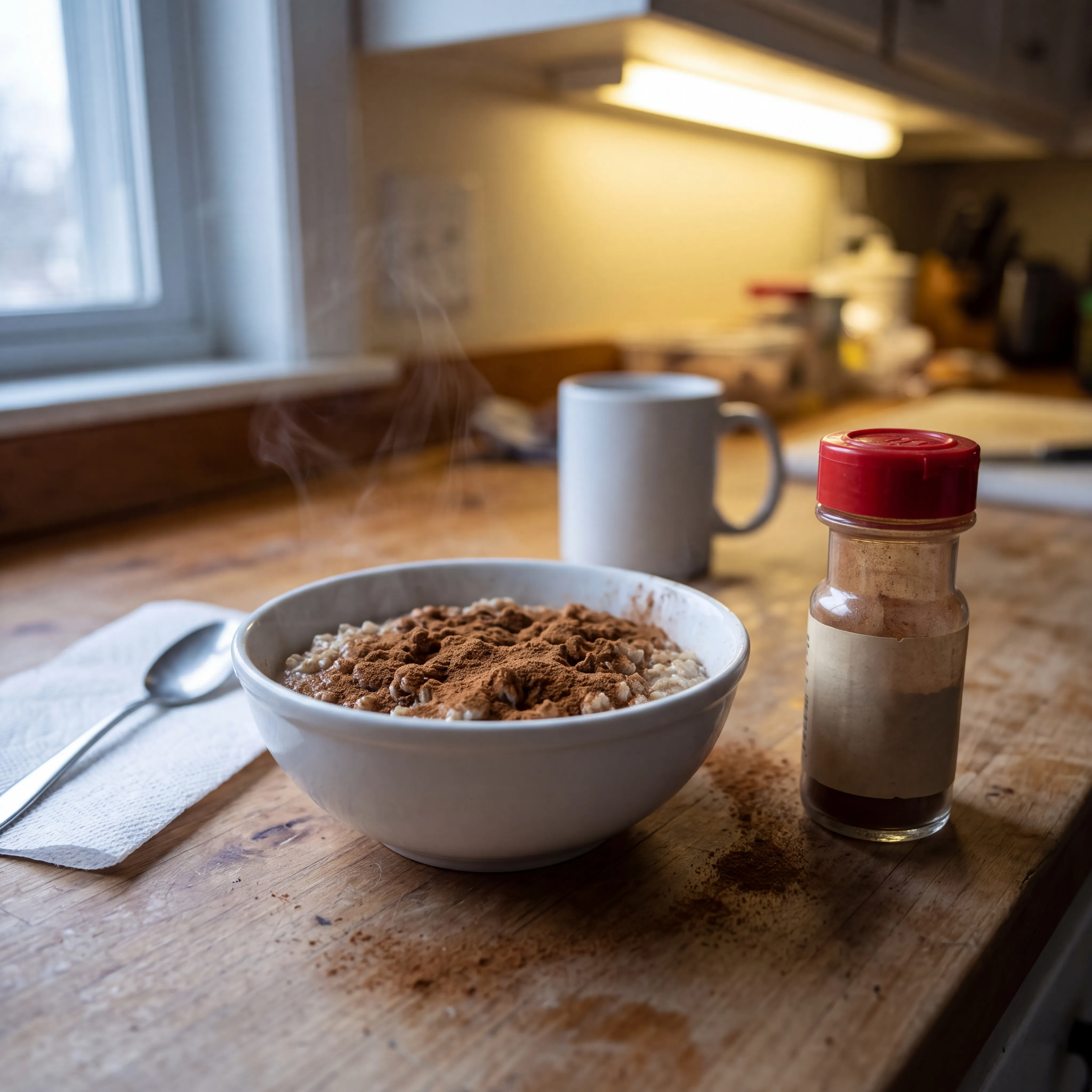
Make Metabolic Wellness Part of Every Day
Glucose Wellness Hub
Buy 2 Get 1 Free
Glucose Wellness Hub
Buy 2 Get 1 Free
Glucose Wellness Hub
Buy 2 Get 1 Free
Glucose Wellness Hub
Buy 2 Get 1 Free
Glucose Wellness Hub
Buy 2 Get 1 Free
Glucose Wellness Hub
Buy 2 Get 1 Free
Glucose Wellness Hub

Resia was created for people who've tried everything to manage their blood sugar—and still feel like they're fighting a losing battle. We don't make pills that mask symptoms. We make softgels designed to help your cells respond to insulin again, so glucose finally moves where it belongs—and your kidneys, eyes, and body get relief. Thousands of diabetics have turned to Resia because traditional options weren't enough. Our formula combines Ceylon cinnamon bark extract with pharmaceutical-grade MCT oil—simple, natural, and backed by the kind of results you can see in your labs. Try Resia risk-free for 90 days. If your blood sugar and A1C don't improve, you pay nothing. No paperwork, no hoops. Just real results or your money back. We're here because we know what it's like to feel ignored by the system—and we're giving you a way forward.
Glucose Wellness Hub

 Add to Chrome