
Put an End to Osteoarthritis Knee Pain for Good?
Ad Copy
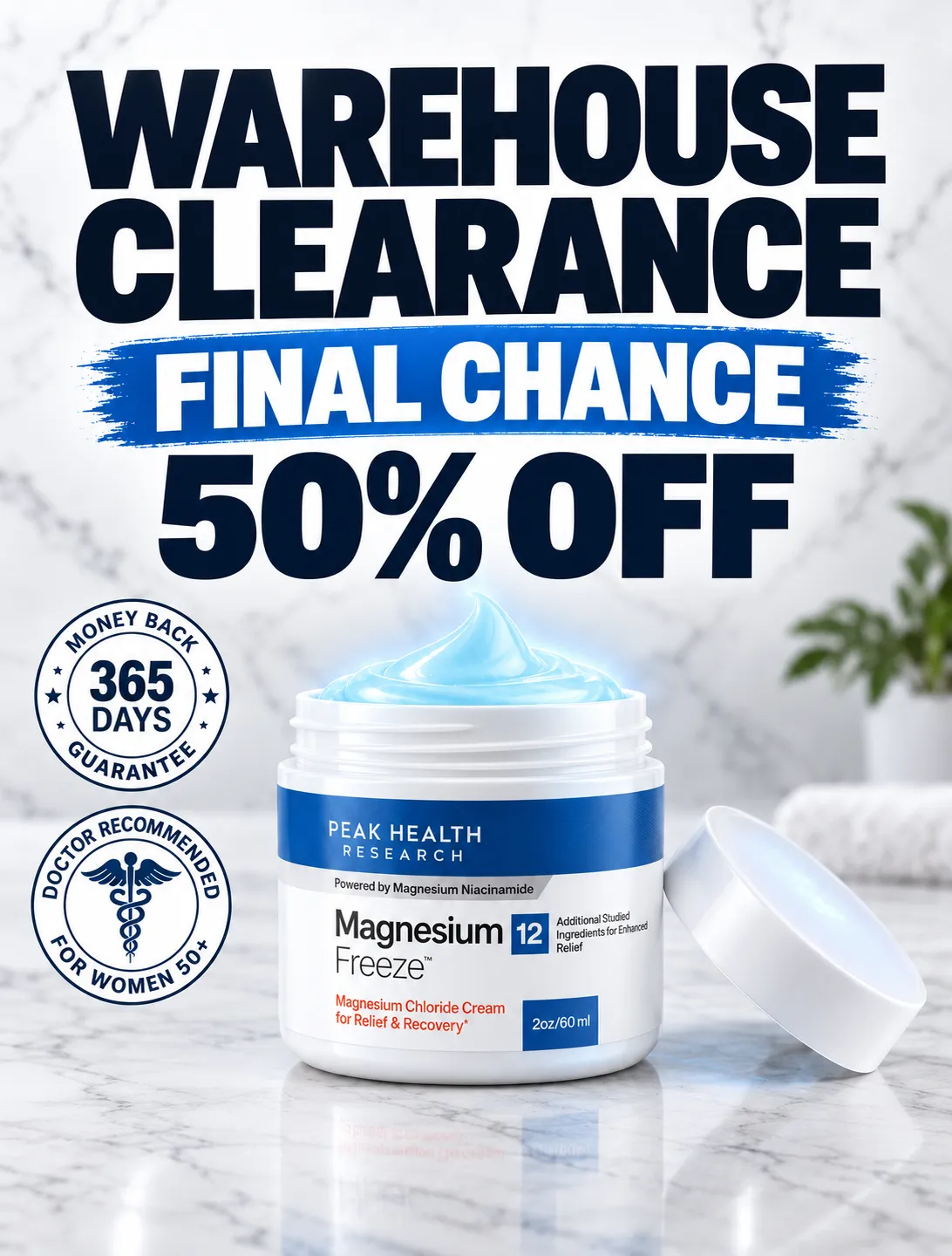
What happens if someone with bone-on-bone knee pain uses Magnesium Freeze every day for 30 days? Day 1. You rub it directly over the knee. Within minutes, you feel that cool-to-warm wave move across the joint. Instead of swallowing another pill and hoping some of it eventually reaches your knee, you're putting the ingredients directly over the tissue that needs them. Magnesium. Niacinamide. Arnica. Frankincense. Twelve ingredients working in three layers. And for many people, the first thing they notice isn't that the knee feels numb. It feels quiet. Like somebody finally turned down the noise inside the joint. Day 3. You get out of bed expecting that familiar stiffness. It's still there. But it doesn't seem to hang on as long. That's important. Because bone-on-bone isn't just about two bones rubbing together. Cartilage is living tissue. A thick, wet cushion maintained by living cells inside the joint. And those cells depend on a cellular spark called NAD. When you're young, you have plenty of it. The repair crew keeps working. But after 50, that spark starts fading. The cells get tired. And tired cells can turn into what researchers call "zombie cells." Not fully alive. Not dead. Just sitting inside the joint releasing enzymes that can break down the cushion and interfere with the body's normal repair signals. Day 5. You walk downstairs. And halfway down, you realize something strange. You haven't grabbed the railing yet. For many people, this is where the morning stiffness starts breaking earlier. The knee starts moving before the rest of the day gets away from you. Because you're no longer only trying to cover up the pain. You're supporting the environment around the joint. Magnesium and niacinamide provide raw materials involved in NAD production. The cool-to-warm sensation encourages circulation around the area. And arnica, frankincense, aloe, vitamin E and the other botanicals help calm the inflammation surrounding the joint. Three things happening at once. Support the tired repair crew. Calm the inflammation. Protect the cushion that's still left. Day 7. You stand up from your favorite chair. Normally there's that pause. That little moment where you brace yourself before putting weight on the knee. This time you just stand. Many people say this is the first week they realize something is actually changing. Not because the knee suddenly feels twenty years old. Because they stop thinking about it every five minutes. And that's a big difference. Day 10. The stairs feel different. Getting out of the car feels different. You bend the knee farther before that familiar catch shows up. And the stiffness that used to follow you halfway through the morning is starting to break before your coffee is finished. This is where people make a mistake. They assume bone-on-bone means there's nothing left to support. But "bone-on-bone" is an X-ray description. It doesn't mean every living cell inside your joint disappeared overnight. For many knees, there's still cartilage left. Still living tissue. Still a repair crew. The problem is that repair crew may have been running on fumes for years. Day 14. Something starts happening that you almost don't notice. You stop planning your day around your knee. You don't look for the closest parking spot automatically. You don't calculate how many stairs are inside the restaurant. You don't wonder whether you're going to regret walking around the store. Your knee simply isn't demanding as much attention. And that's when it hits you: Maybe the answer was never only another cortisone shot. Another anti-inflammatory. Another round of "manage the pain until you're ready for surgery." Maybe someone should have asked a different question. Before they take the joint apart... Did anyone ever try supporting the cartilage that's still there? Day 21. You test it. Maybe it's kneeling in the garden. Walking farther than usual. Playing with your grandkids. Going down the stairs normally instead of sideways. Something you slowly stopped doing because your knee had trained you not to trust it. And you realize you just did it. For me, it was getting back into a catcher's crouch. Three weeks earlier, I couldn't bend my knee enough to catch my grandson's fastball. Now I was back there with the mitt on. I caught a full round. And when we were finished... I stood back up on my own. That was when I canceled my surgery. Day 30. For many people, the biggest difference isn't just what they feel. It's what they stop feeling. That stiffness every morning. That ache when they stand. That hesitation before the stairs. That constant thought sitting in the back of their mind: "How much worse is this going to get?" The knee feels quieter. Movement feels easier. And you're no longer treating the joint like a mechanical part that's already dead. Because cartilage isn't dead material. It's living tissue. And living tissue needs support. That's the idea behind Magnesium Freeze. Instead of another pill traveling through your digestive system... You rub it directly over the knee twice a day. Magnesium and niacinamide support the cellular pathways involved in NAD. A cool-to-warm wave supports circulation around the tissue. And a blend of arnica, frankincense, aloe, vitamin E and other botanicals helps soothe the joint. Twelve ingredients. Three layers. One simple goal: Support the knee you still have before someone replaces it with metal. Now let me be clear. Some knees really are too far gone. Severe deformity. Complete joint collapse. Those cases still belong with an orthopedic surgeon. And you should never stop medication or cancel a scheduled procedure without speaking with your doctor. But a lot of people aren't there yet. They've simply been told: "Once the cartilage is gone, it's gone." "Manage the pain." "Come back when you're ready for the replacement." Before you accept that as your only road... Try supporting the joint you still have. More than 30,000 people have already tried Magnesium Freeze. 90% report improvement within the first week. Fewer than half of one percent ask for their money back. And every order is protected by a 180-day guarantee. Use it consistently. Give the knee time. And if you're not happy with what you feel, send it back for a refund. Right now it's 50% off. As low as $19/jar. Less than many people spend on the copay for another shot that only buys them a few weeks. So before you let someone take the joint apart... Feed the cartilage you still have. Tap below now.
More from Osteoarthritis Research Center

Put an End to Osteoarthritis Knee Pain for Good?
Osteoarthritis Research Center

Put an End to Osteoarthritis Knee Pain for Good?
Osteoarthritis Research Center

Put an End to Osteoarthritis Knee Pain for Good?
Osteoarthritis Research Center

Put an End to Osteoarthritis Knee Pain for Good?
Osteoarthritis Research Center
Put an End to Osteoarthritis Knee Pain for Good?
Osteoarthritis Research Center

Put an End to Osteoarthritis Knee Pain for Good?
Osteoarthritis Research Center

Put an End to Osteoarthritis Knee Pain for Good?
Osteoarthritis Research Center

Put an End to Osteoarthritis Knee Pain for Good?
Osteoarthritis Research Center

Put an End to Osteoarthritis Knee Pain for Good?
Osteoarthritis Research Center

Put an End to Osteoarthritis Knee Pain for Good?
Osteoarthritis Research Center

Put an End to Osteoarthritis Knee Pain for Good?
Osteoarthritis Research Center

Put an End to Osteoarthritis Knee Pain for Good?
Osteoarthritis Research Center

 Add to Chrome