If you want to feel like you again... read this 👆
Ad Copy
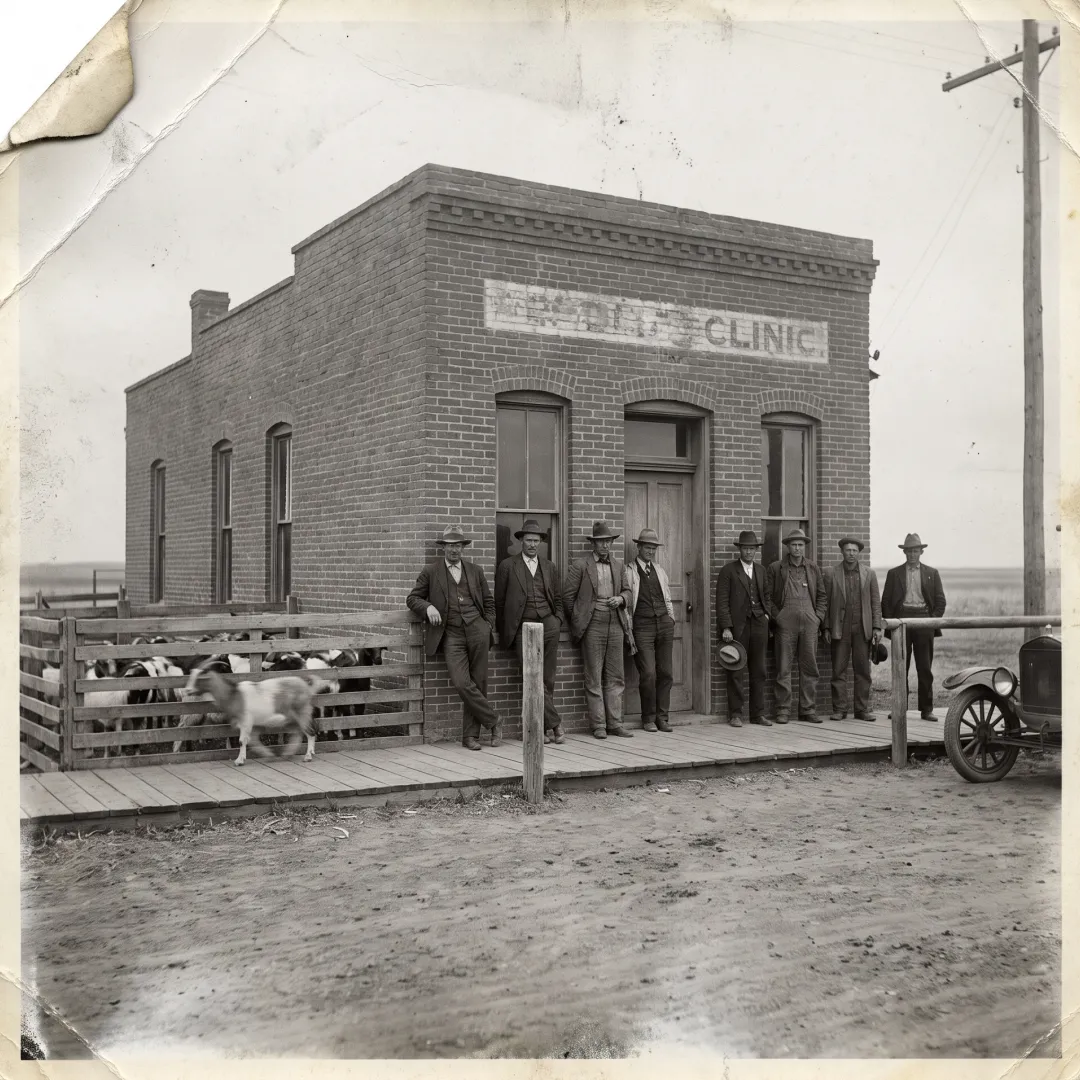
For three years I woke up at 4 every morning feeling like half the man I used to be, and what finally fixed it was something a German healer had his patients do in 1896: lie down on the bare ground and sleep there... About twenty years later, a Kansas doctor was sewing goat glands into tired men for $750. He signed 42 death certificates. Men kept lining up. Guess which one history remembers. I teach American history at a high school in Lincoln, Nebraska. I'm 58. Every spring I teach the goat-gland doctor to my sophomores, and every spring they laugh. This year I stopped laughing. I added up what I'd spent on the modern version in three years. $1,300, in boosters and a clinic subscription. The healer's name was Adolf Just. He trained as a bookseller, not a doctor. In 1896 he opened a nature-cure retreat called the Jungborn in the Harz mountains of Germany. Franz Kafka stayed there in July 1912. Just had spent years lying awake himself, in what he called his "long and severe nervous suffering." So he did something nobody else would. He took his patients out of their "high bedsteads," the tall bed frames of the day that kept a sleeper well up off the floor, and moved them down to the ground. Then onto the grass itself. "Entirely naked, even without a shirt," he wrote, under quilts, with nothing between them and the earth. He admitted the first nights were often worse. Then, he wrote, "even in cases of protracted and obstinate insomnia, a long, exceedingly refreshing and strengthening sleep will set in." Strengthening. That was his word. He didn't get the idea from a lab. He got it from watching animals. Deer and hares, he wrote, scrape away the leaves to lie on bare earth. Wild boars dig themselves into it. Animals "strive to get into especially close and direct touch with the bare earth when they rest and when they are sick." He put it all in a book called "Return to Nature!" It went through twelve German editions, sold around 50,000 copies, and was translated into English, French, Italian, Spanish and Hindi. People bought it. Then they forgot it. Because men wanted something faster. In 1918, a man named John R. Brinkley opened a clinic in Milford, Kansas. He sold tired men goat glands. Surgically put in. $750 an operation, at first for men who'd lost their vigor, then for nearly anything that ailed a man. By 1923 he'd built his own radio station to sell it. In 1930 the Kansas medical board took away his license. That same year he ran for governor of Kansas as a write-in and got more than 180,000 votes. He signed death certificates for 42 people. And his radio kept selling it. Nobody had offered those men anything better. Meanwhile, in 1957, a famous American science writer filed Just's sleeping on bare ground in a book called "Fads and Fallacies in the Name of Science." So the goat glands got a governor's race. And the earth got filed under fads. Today the goat glands are a T-booster at the gas station counter, and a clinic in your phone that wants you on a monthly plan. Then, in 2004, two researchers tried Just's idea again, in a study published in the Journal of Alternative and Complementary Medicine. Nobody slept in a field. People who slept badly slept in their own beds, on a pad wired to the earth, for eight weeks. And they measured what Just never could: the stress hormone cortisol, every four hours, day and night. At night, it came down. Most of them said they slept better. A bookseller with a field of quilts had it right a hundred years early. Here's why that matters to a man. Most of a man's T-levels are made while he sleeps. A letter in the medical journal JAMA said it plainly: the majority of a man's daily release happens during sleep. And it keeps building through the last hours of the night. Think of bread dough left to rise overnight. It needs the whole night. Punch it down at 4 in the morning and you get a flat loaf. That's what a 4 a.m. wake does. Your stress hormone, cortisol, is supposed to stay low all night and rise with the morning. After years of stress and short nights, it starts rising early. You're wide awake at 4, and the dough gets punched down. A 2012 study in the journal Clinical Endocrinology found exactly that. Men who woke early and lay awake in the second half of the night had lower T-levels the next morning. And you feel flat by 2 in the afternoon. Every day. For most of human history, men had help with that. They slept on the earth. They worked on it barefoot. The earth carries a natural charge. When your skin touches the ground, that charge flows into your body. It settles your nerves and quiets your body's stress alarm, so your cortisol comes down at night and your body can rest and rebuild. It's called grounding. It's what Just's patients were doing on the grass. Now we sleep on foam and box springs, upstairs. We wear rubber soles all day. We go weeks without our bare feet touching dirt. The alarm goes off at 4. And the loaf comes out flat. A bookseller watching deer in 1896. Researchers with saliva tubes in 2004. Same answer: put a sleeper back on the earth, and the night goes quieter. A study measured night-time cortisol coming down when people slept grounded. And JAMA tells us when a man's body does most of its work: at night. The "fad" was pointing at the right hours all along. Of course, I wasn't going to sleep in my backyard. It's Nebraska. In January my backyard is a sheet of ice. Then a former student of mine, now an electrician, told me something over coffee. "Mr. Hanley, almost every house in Lincoln is already sitting on a copper rod in the dirt. You're just not touching it." That third hole in your wall outlet, the round one under the two slots, is a ground port. It runs to a copper rod driven into the earth outside your house. Every house built in the last few decades has them. It's code. So the same earth Just's patients slept on is already wired into your bedroom wall. What's missing is something to carry it to you while you sleep. Now that's carbon fibre, woven through a cover that goes over your mattress and under your own fitted sheet. Plug its cord into the ground port, and your bed is connected to the earth. No electricity reaches you. It only uses the ground. I ordered one in February, the week I stopped laughing at Brinkley. First thing, I checked my outlet with the little tester in the box. Three lights. I plugged in, put the sheet on, and lay down at 10. About a second later, my whole body let go, like I'd set something heavy down. I woke at 4 the first night anyway. But I drifted back off. And at 6 I got up without hitting snooze, for the first time since I can remember. By the end of the first week, 4 a.m. was coming and going without me. By the end of two weeks I was sleeping straight through. That's cortisol staying down at night, and a man getting his whole night back. I used to grade papers on Sunday afternoons because I was asleep in my chair by 8:30 every weeknight. Now I grade them at the kitchen table at 9, with the radio on. My wife asked what had gotten into me. I told her a German bookseller and a goat-gland doctor. In April I had my yearly blood work. Three years of "low normal for your age" on my T-levels. This time my doctor circled the number in red and wrote "???" beside it. Then he called to ask what I'd changed. 100,000 people are already sleeping on one. And what they notice is ordinary, and it's everything: 🔸 Sleeping through 4 a.m. 🔸 Getting back to sleep fast if you do get up 🔸 Waking up before the alarm, rested 🔸 No wall at 2 in the afternoon 🔸 Awake for the evening, not asleep in the chair by 8:30 🔸 Blood work that finally matches how you feel 🔸 Feeling like yourself again by the weekend Brinkley sold tired men surgery. Today they sell you boosters and monthly plans. Just sold them nothing. He just put them back on the ground. Cover on the mattress. Your own sheet over it. Cord in the ground port. Two minutes, once. Then it keeps you connected to the earth all night, which works on the 4 a.m. wake no booster ever reaches. And your body gets the whole night to rest and rebuild, the way it already knows how to. 👉 Click below to learn more. One warning, though. Grounding sheets are the new booster aisle. Plenty of junk. A lot of them use silver thread that washes out in a few months. A lot of them give you no way to check that your outlet is even grounded. Some are knockoffs nobody ever tested. And most never answer the question every man asks first: you want me to plug my bed into the wall? I went with Down to Ground. Carbon fibre, woven through the whole cover. No silver coating to wash out. It grounds the same on the 1,000th wash as on the first. The cord only uses the ground port. No electricity reaches you. There's a tester in the box, so you know your outlet works before you lie down. Just 2mm thin, under your own sheet. My wife didn't notice it for a week. Every cover is hand-tested before it ships. I've since bought two more. One for my brother. One for that electrician, who told me he'd been meaning to. Right now the Down to Ground mattress cover is 42% off, with free shipping. It comes with their Grounding Guarantee: if it doesn't ground you like barefoot earth, they replace it. One more thing. The site was already showing low stock when I looked. If your size is gone when you click, I'm sorry. I'd hold one for you if I could. There's no back room I can send you to. Check back. If it's there, I'd take it. In 1896, Adolf Just put sleepless people on the bare ground, and wrote that a "long, exceedingly refreshing and strengthening sleep will set in." About twenty years later, men paid $750 for goat glands instead. My sophomores still laugh at Brinkley. This year I told them about Just, too. You don't need a field or a surgeon. The ground is already in your wall. 👉 Click below to check.
More from Down To Ground
🚨 BLACK FRIDAY. EXTRA 20% OFF. 🚨
Down To Ground
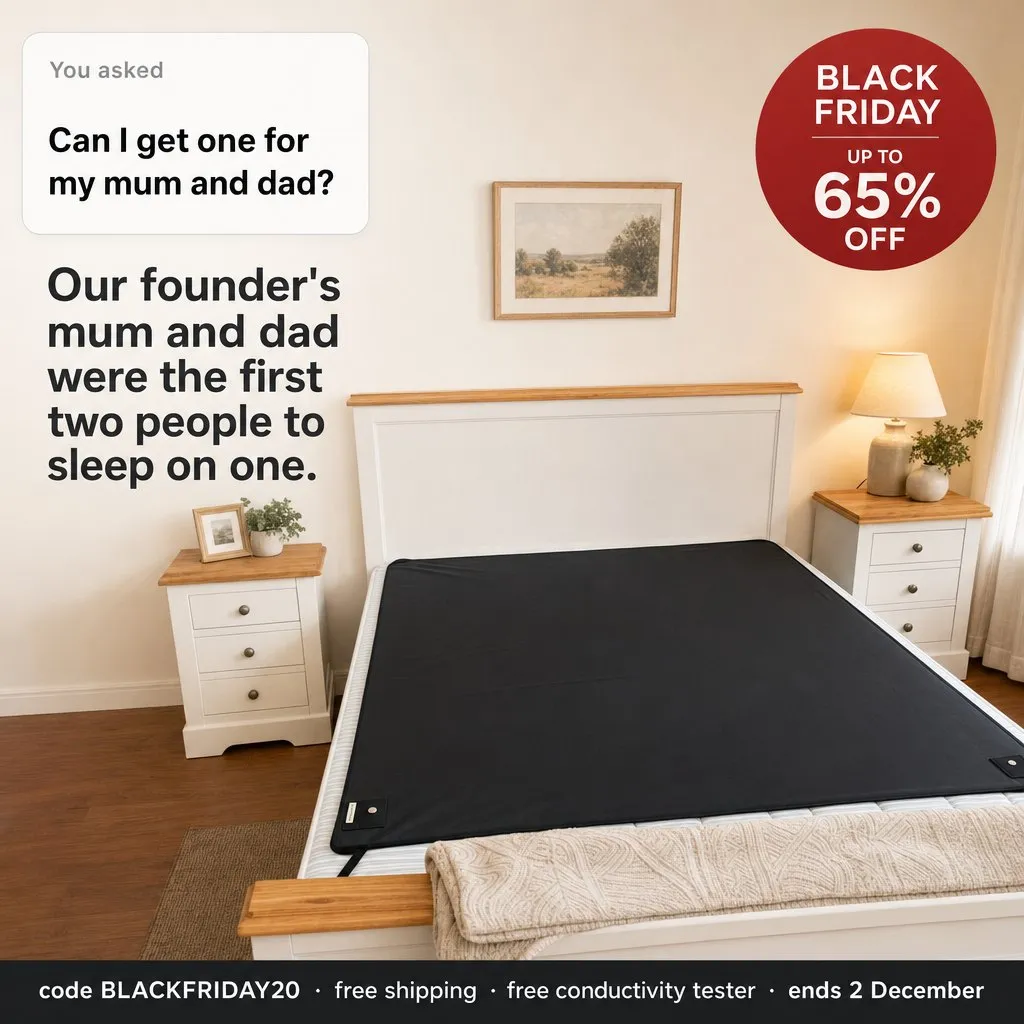
🚨 BLACK FRIDAY. EXTRA 20% OFF. 🚨
Down To Ground
🚨 BLACK FRIDAY. EXTRA 20% OFF. 🚨
Down To Ground
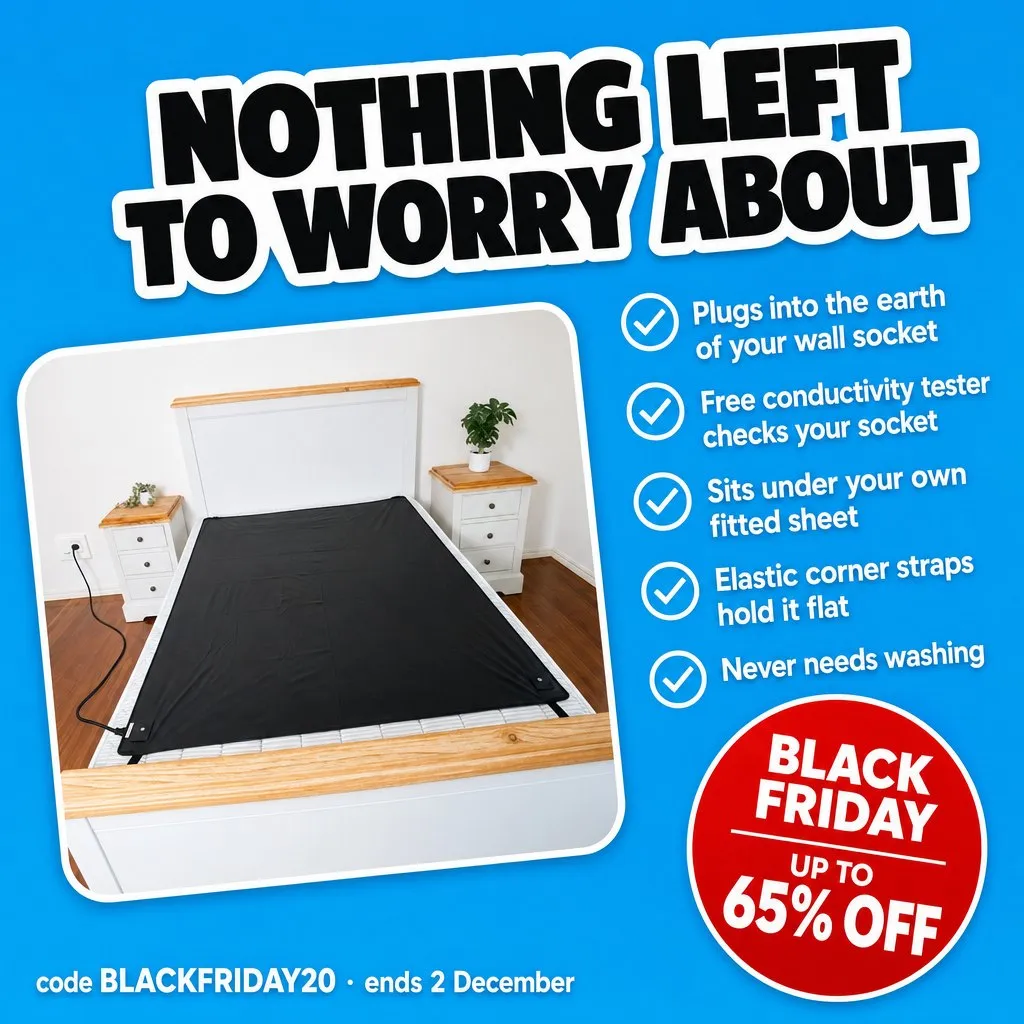
🚨 BLACK FRIDAY. EXTRA 20% OFF. 🚨
Down To Ground
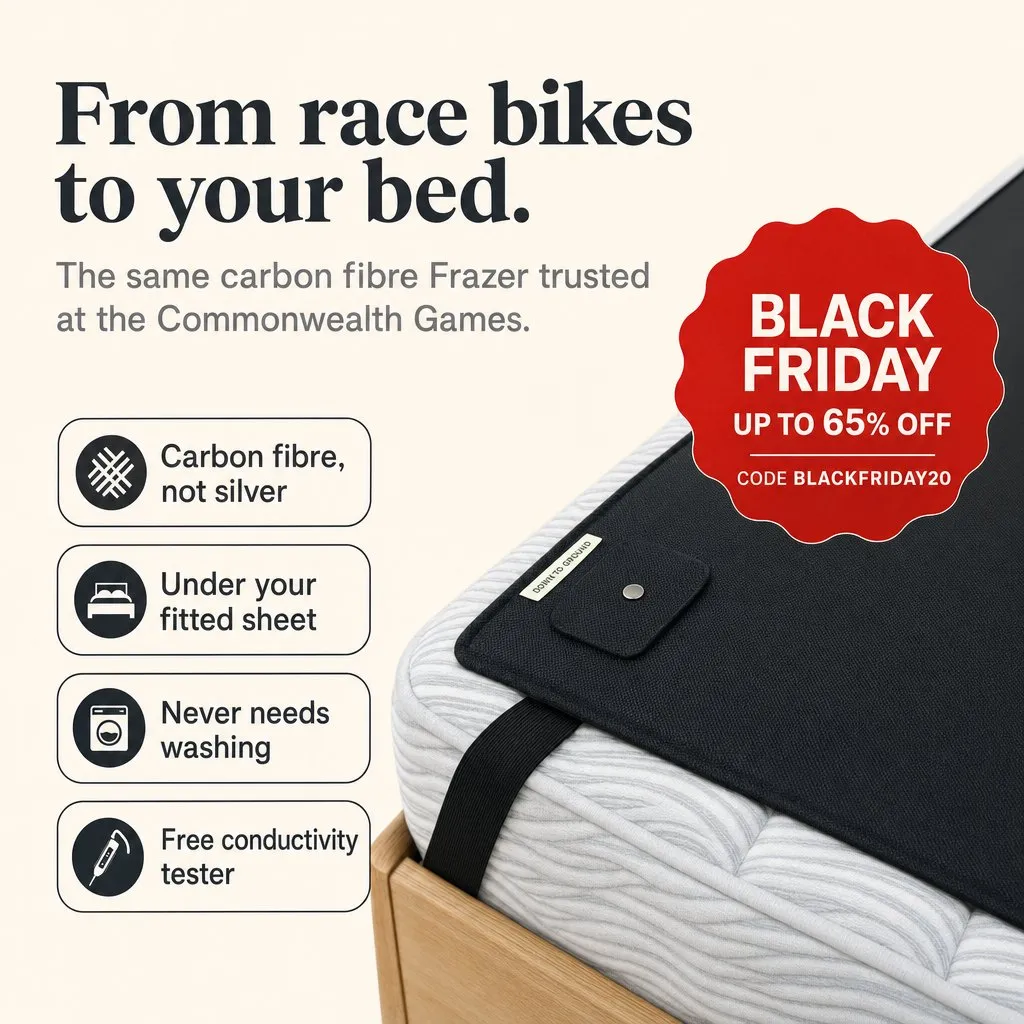
🚨 BLACK FRIDAY. EXTRA 20% OFF. 🚨
Down To Ground

🚨 BLACK FRIDAY. EXTRA 20% OFF. 🚨
Down To Ground
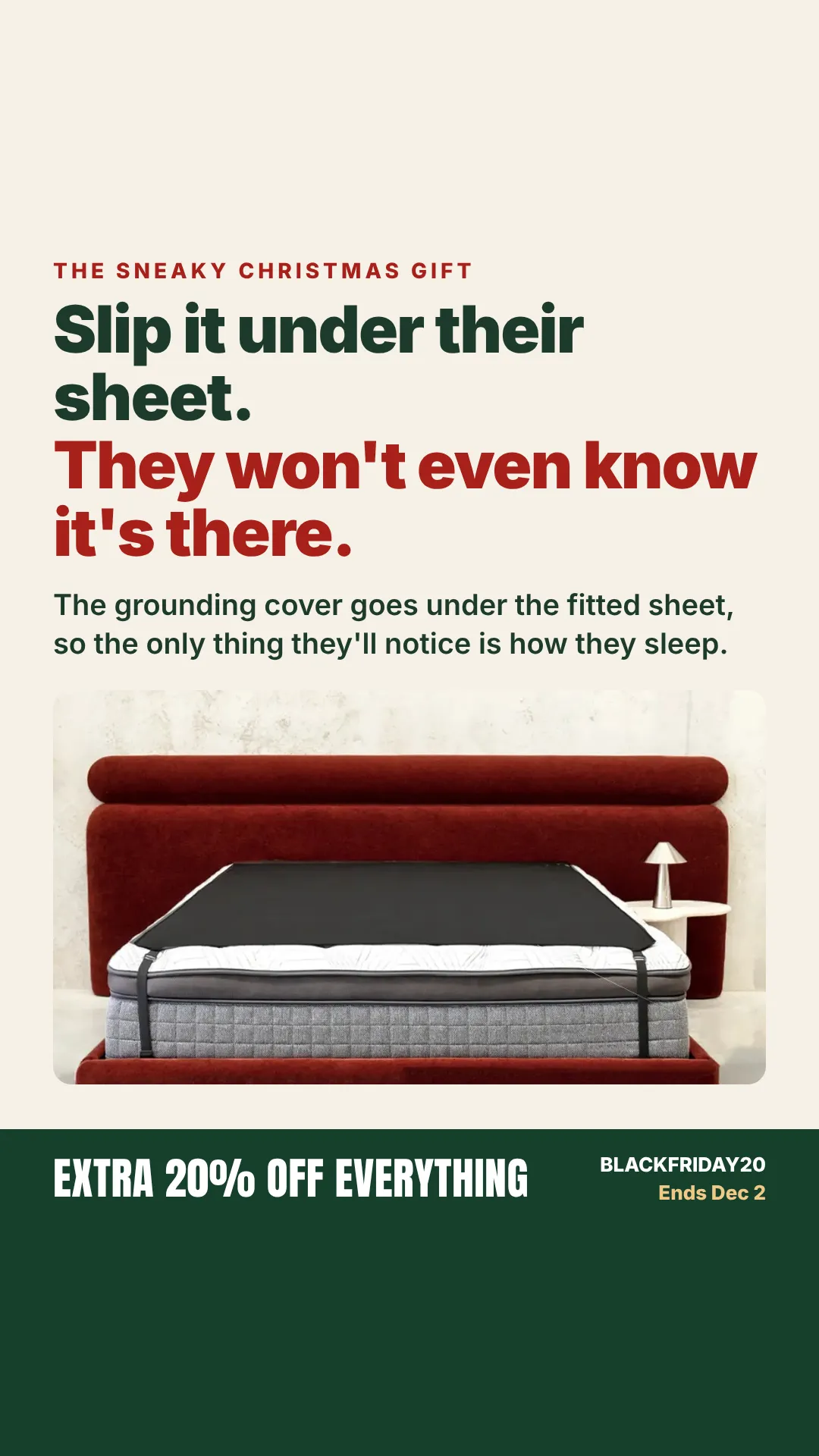
one for their bed, one for yours
Down To Ground
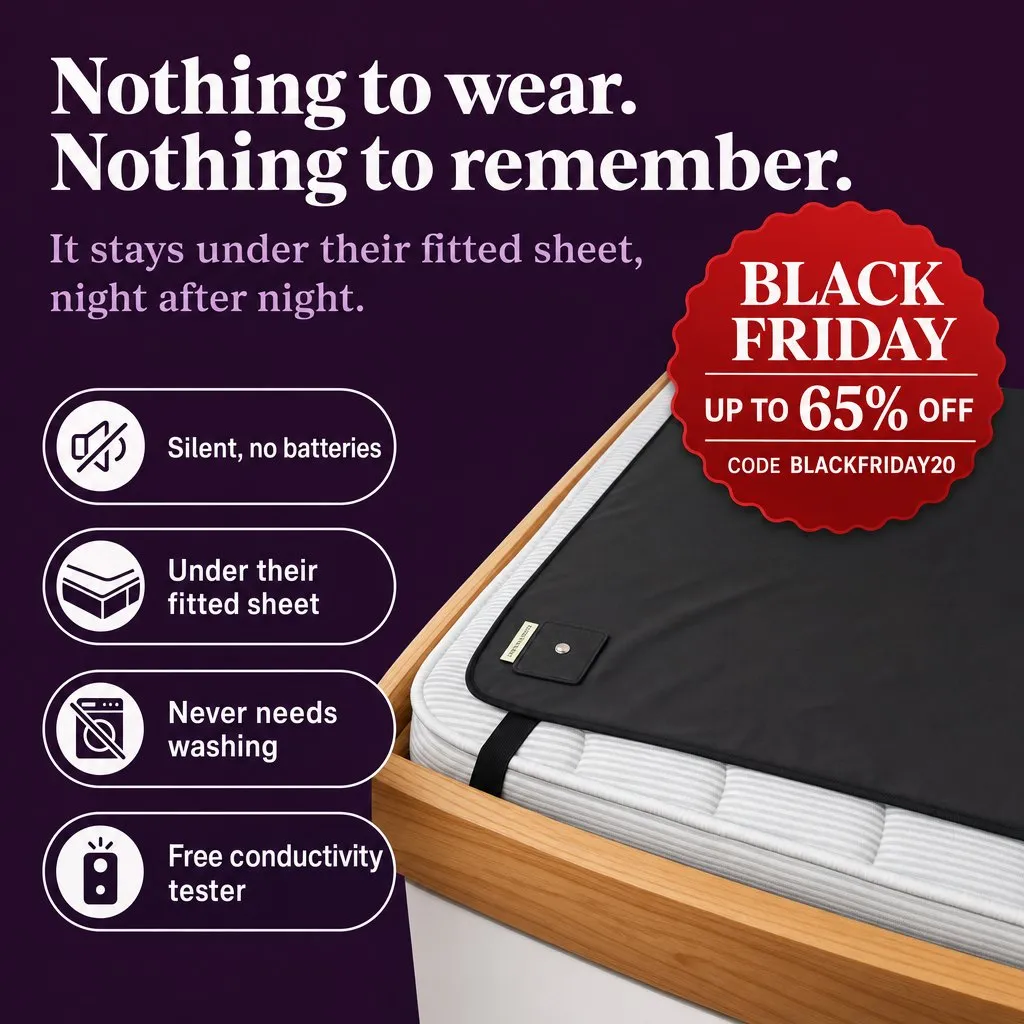
🚨 BLACK FRIDAY. EXTRA 20% OFF. 🚨
Down To Ground
🚨 BLACK FRIDAY. EXTRA 20% OFF. 🚨
Down To Ground
🚨 BLACK FRIDAY. EXTRA 20% OFF. 🚨
Down To Ground
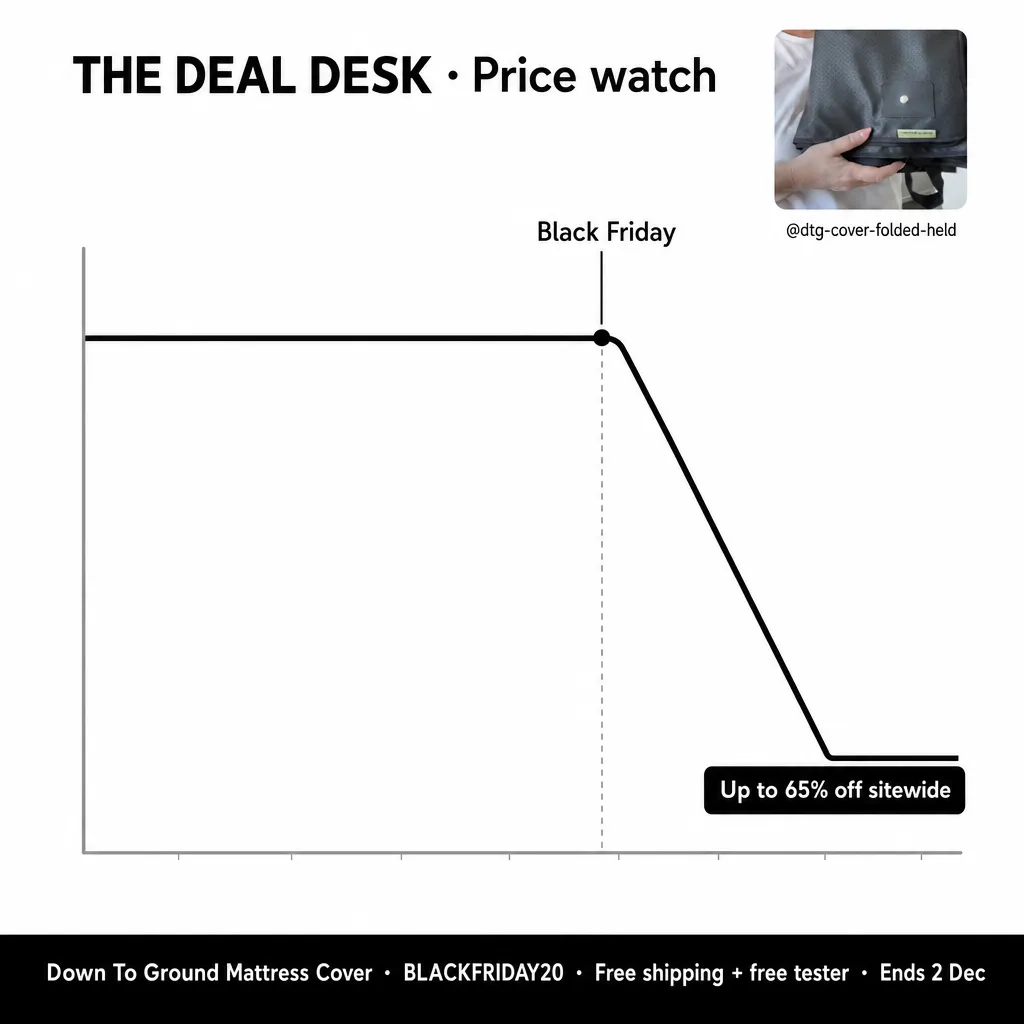
🚨 BLACK FRIDAY. EXTRA 20% OFF. 🚨
Down To Ground
🚨 BLACK FRIDAY. EXTRA 20% OFF. 🚨
Down To Ground

 Add to Chrome