Feel like yourself again
Ad Copy
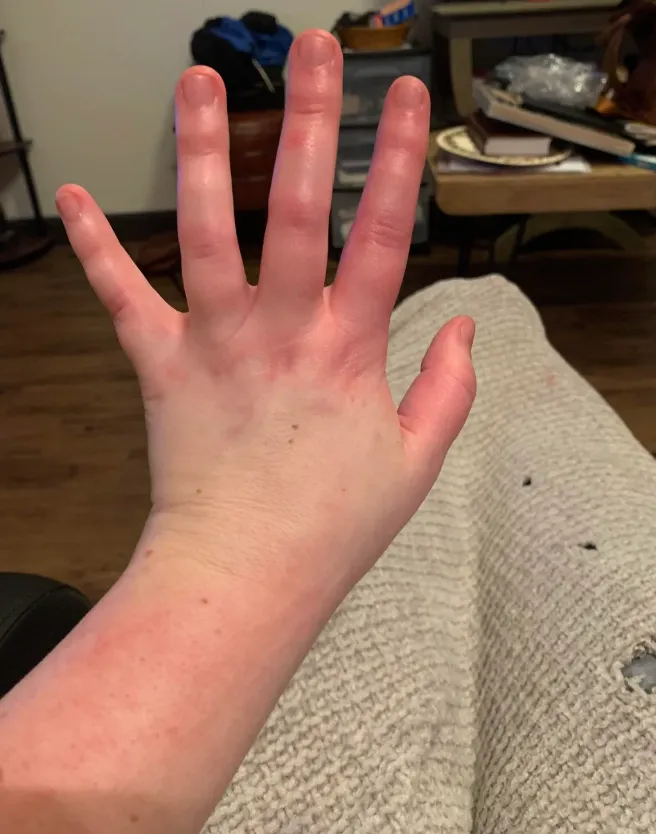
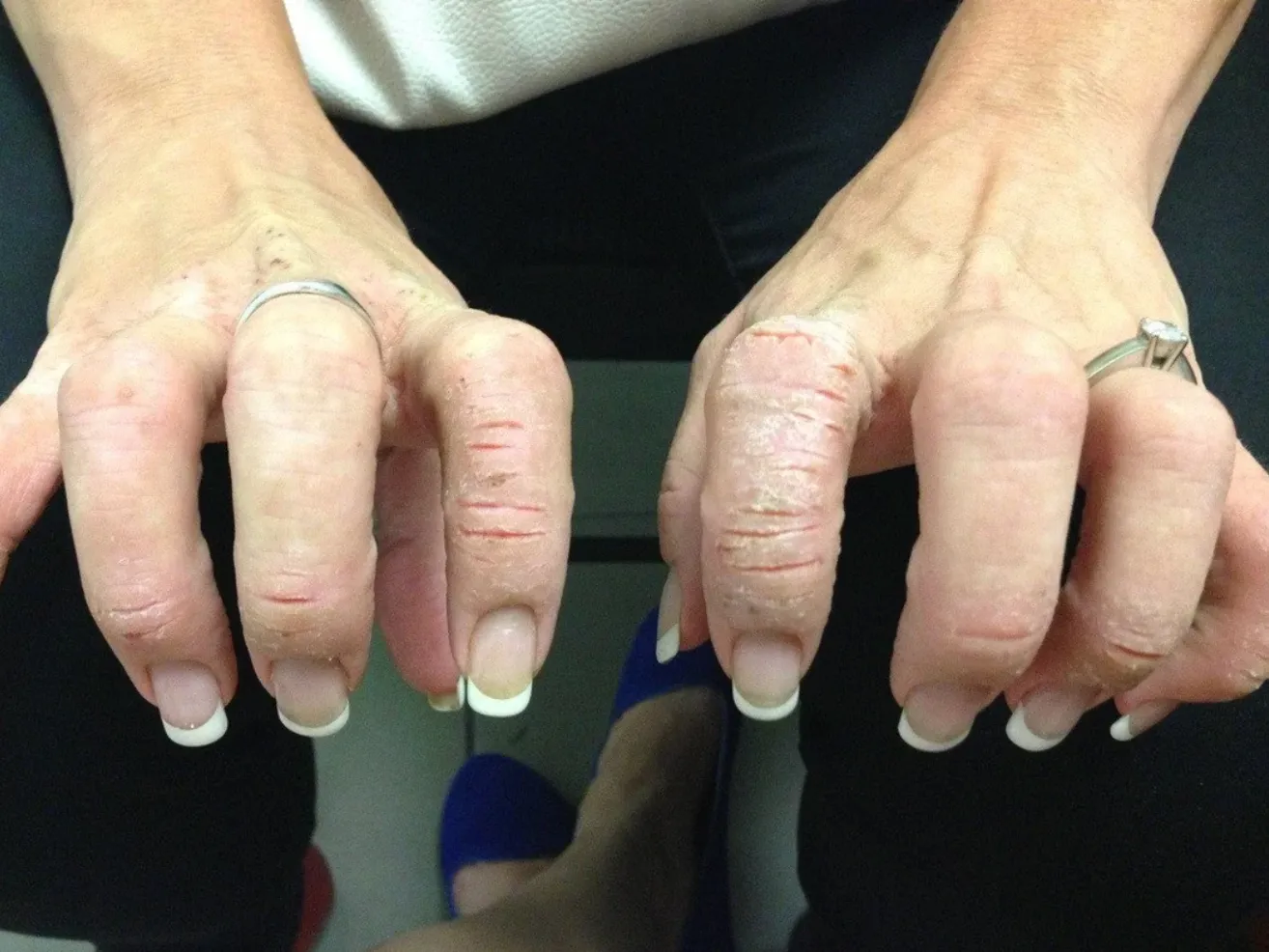
I've been running my hands under hot water for ten minutes every morning before I can pick up my scissors. I've done it for two years. None of my clients know. I've been doing hair for 31 years. I own Curl & Co., on Mercer Avenue in Lawrenceville, New Jersey. I opened it in 2004 with a $14,000 loan and a used shampoo bowl I drove to Pennsylvania to pick up in my brother's truck. My name is on the sign. My name is in the window. Last April on my daughter Emma's wedding morning, in a Hampton Inn off Route 1, there was no back sink to disappear to. I made it through two curls. By the third one the iron was shaking in my grip and Emma's eyes found mine in the mirror. I said "let me grab Kayla, I want a second set of hands for the updo." Like it was a choice. I sat on the edge of the hotel bed and watched my 23-year-old assistant finish pinning my daughter's veil. My husband was standing in the doorway. He's barely said anything since. But I've seen the way he watches my hands at dinner now. It's the look of a man who's already worried. I want to tell you who I was before this started. I'm Donna. Donna Caruso. I'm 58 years old. I've lived in the same house on Fieldstone Drive in Lawrenceville since 1999. My husband Rick and I bought it the year we got married. Three bedrooms, a back porch I painted myself twice, a kitchen that smells like whatever I'm cooking on Sunday. I used to do a full set of foil highlights in 47 minutes. Not rushing. Just working. My regulars knew not to book anything for two hours because I'd be done in one. I can tell a client's hair type by running my fingers through it once before I've even reached for a comb. Fine, dry, over-processed, heat damaged — I feel it before I see it. Thirty-one years of that. Your hands learn things your eyes take longer to catch. I gave my first real haircut when I was 14. My neighbor Mrs. Ferrara sat on a stool in our kitchen and my mother stood behind me the whole time with her arms crossed, not saying a word, letting me figure it out. When I was done she looked at Mrs. Ferrara in the hand mirror and said "Donna did that." Not me. Donna. I never swept another salon's floor. I went straight from my mother's kitchen to cosmetology school to my own chair. These hands. These same hands. Two Tuesdays ago I was doing a precision cut on a woman named Carol who has been coming to me for eleven years. I've cut Carol's hair maybe 140 times. Same bob, same length, same part. I could do it in my sleep. I have done it half asleep. I was cutting the left side. Clean line, jaw length, the way she likes it. My scissors were open. I went to close them and my hand locked. Not cramped. Locked. Like the joint just stopped. The scissors hung open in my hand for a second that felt much longer than a second. I closed them. Finished the cut. Told Carol she looked great. Charged her, hugged her, watched her walk out. Then I went into the back room where we keep the color supplies and I stood next to the shelf of Wella boxes and I looked at my hand under the fluorescent light. I opened and closed it six times. Testing it. Like I was checking a hinge. My assistant Kayla was up front with the next client. Nobody saw. But I knew. I stood back there for longer than I should have and I felt something I don't let myself feel very often. I felt scared. Not scared of the pain. The pain I've been managing for two years. Scared of what happens the day I can't manage it anymore. Because this salon is not just where I work. This is what I am. And if my hands stop working, I don't know what's left. I want to back up. This didn't start two Tuesdays ago. This has been coming for four years and I've been staying one step ahead of it and pretending that counted as fine. It started in my feet. Standing on tile from eight in the morning until six at night, five days a week, for three decades. I figured that was just the job. I bought thick-soled shoes and a rubber mat for my station and I stopped complaining about it because every hairdresser I know has the same problem. Then my shoulders. Holding a blow dryer out at arm's length, hour after hour. I started switching hands more. Started letting Kayla take the longer blowouts on my heavy days. Told myself I was training her. Told myself it was good for her development. Then my wrists. The repetitive motion of the scissors — open, close, open, close, ten thousand times a day for thirty years. I bought lighter scissors. Japanese steel, $380, the lightest pair I could find. I told my clients I'd upgraded. I didn't tell them why. Then about two years ago, my fingers. The grip was the first thing. Couldn't squeeze the color brush through a full foil set without my hand cramping halfway through. I started taking longer breaks between applications. Told clients it was better for processing. It wasn't. Then the bobby pins. I used to be able to place twenty pins in two minutes without looking. Now I drop them. I drop them constantly. I have a small dish on my station I sweep them into when no one's watching rather than try to pick them up off the floor one at a time. Then the mornings. The pain in my knuckles before I get out of bed. Like the joints had been packing themselves in tight overnight and needed twenty minutes to remember how to open. I started running them under hot water. Five minutes at first. Then ten. Rick noticed. Of course he noticed. We've been married 26 years. He started opening my car door from the outside before I could reach for the handle. Started unscrewing the wine bottle before he brought it to the table. Does it without saying anything. Like it's just what he does now. I love him for it. And I hate myself for needing it. I know that's not fair. But there it is. I went to my doctor last winter. Dr. Mehta. I've been seeing her since 2009. She listened to everything. She did x-rays. She did blood work. She said it was osteoarthritis. She said it was consistent with my age and the physical demands of my work. She gave me a pamphlet about anti-inflammatory foods and a prescription for a stronger ibuprofen and she told me to reduce repetitive hand motions where possible. I'm a hairdresser. Repetitive hand motions are the job. I took the pamphlet. I took the prescription. I started eating more salmon. Nothing changed. I want to tell you what actually scared me about the wedding morning. It wasn't handing the iron to Kayla. It wasn't sitting on the bed. It was Emma's face in the mirror in the two seconds before she smiled at me. Emma is 29. She's the kind of person who calls me on her lunch break just to talk. She remembers everything — every client story I've ever told her, every fight Rick and I ever had, the name of every woman who's sat in my chair since she was old enough to listen. She's been watching me work her whole life. When I told her I wanted to grab Kayla, she didn't argue. She didn't ask why. She just said "okay, Mom" and looked back at her own reflection. But I saw her face before she turned. She looked worried. Not surprised. Worried. Like this wasn't new information. Like she'd been watching something happen for a while and this was just the morning it showed up in a hotel room. She looked at me the way I used to look at my own mother in the last few years before her hands got bad enough that she had to close her salon. My mother did hair for 40 years. On Greenwood Avenue. She had a chair in her house before she had a shop. I used to sit on the floor next to her as a little girl and watch her hands move. When her arthritis got bad she didn't tell anyone for two years. She just quietly started doing less. Fewer clients. Shorter days. Simpler styles. I watched it happen and I didn't understand it then. Standing in that hotel room at 58, I understood it. Because I'd been telling myself for four years that I wasn't there yet. That I was still Donna Caruso, the woman with the hands, the woman with the salon, the woman who could read your hair before she touched it. And in one half-second look from my own daughter, I saw that she'd already started writing a different story about me. The one I was terrified of. I didn't sleep the night we got home from the wedding. I lay there next to Rick and listened to him breathe and I thought about my mother on Greenwood Avenue, quietly doing less. Fewer clients. Shorter days. I thought about how I watched it happen and told myself it wouldn't be me. I got up at 4:20 in the morning. I went to the kitchen. I made coffee. I opened my laptop, which I mostly use for booking appointments and ignoring emails. But I sat there in the dark in my robe and I started searching. I started with what Dr. Mehta had told me. Osteoarthritis. Repetitive use. Part of aging. I wanted to know if there was more to it than that. I wanted to know if thirty-one years of scissors and blow dryers had added up to something with a different name underneath. What I found over the next two and a half hours changed how I'm thinking about all of it. I'm not going to pretend I understood everything I read. I do hair. I can tell you exactly what's causing your split ends and why your color is pulling warm and what you've been doing wrong with your flat iron. But molecular biology is not my thing. What I am good at is pattern recognition. You do hair for thirty years, you stop seeing the cut and you start seeing what's causing the problem. The breakage that looks like damage but is actually diet. The thinning that looks like genetics but is actually stress. You learn to read past the surface. So I read. And I started following the pattern. And the pattern that started forming as I read was this. Inflammation is what's actually destroying joints. Not age — inflammation. Chronic, low-grade, never fully resolved, eating away at cartilage over years. But what I hadn't been told was what was driving the inflammation. What was keeping it switched on. The answer was free radicals. And I actually understood this part. Because I work with oxidation every day. When I bleach hair I'm triggering a controlled oxidative reaction. It breaks apart the color pigment in the hair shaft. And what do we add to every treatment to protect the hair from that damage? Antioxidants. Their job is to neutralize the oxidative process before it destroys the structure. Free radicals work the same way. Unstable molecules that damage tissue the way bleach left on too long damages hair. From the inside out. Slowly. Then all at once. Your body neutralizes them with electrons. And here's where the pattern stopped me. The earth has a limitless supply of free electrons. When you make contact with the ground, they flow into your body and neutralize free radicals directly. For most of human history that happened automatically. Bare feet on soil, on grass, on sand. Modern life changed that. Rubber soles. Concrete. Flooring. We are almost never in contact with the ground anymore. So the free radicals accumulate. The inflammation never fully resolves. The joints keep breaking down. I thought about thirty-one years of tile floors and rubber-soled shoes. It wasn't that my hands were old. My hands were inflamed. And the inflammation had nowhere to drain. I spend my career protecting hair from oxidative damage. Turns out my joints needed the same principle. Just on a different scale. That's where I found grounding sheets. I want to be honest with you. I'm a hairdresser from Lawrenceville, New Jersey. The wellness thing I do is a multivitamin and a walk when it's not raining. I am not the person who buys something called an earthing product at 6 in the morning on her laptop. But I kept reading. A grounding sheet is woven with conductive silver threads. You plug it into the ground port of a regular wall outlet — not the live electricity, just the ground port, the third prong, the one connected to a rod driven into the earth outside your house. When you sleep on it, the electron transfer happens the same way it would if you were lying on grass. Your body gets the electrons it needs to neutralize free radicals. All night. Every night. For 31 years I've been standing on rubber soles on tile floors. I have had almost zero contact with the earth. Not because I'm unusual. Because that's modern life. That's all of us. I sat at my kitchen table and I thought about the dish of dropped bobby pins on my station. I thought about Kayla finishing Emma's veil. I thought about Rick opening my car door before I can reach the handle. I thought about my mother on Greenwood Avenue, quietly doing less. I thought, oh. Oh. So that's what it was. I'm not telling you a sheet is going to fix everything. I'm a hairdresser. I deal in what I can see and touch and measure. I don't do miracles. But for the first time in four years I had a name for what was happening that wasn't just get older, take more ibuprofen, do less. The name was: inflamed. And disconnected from the one thing that drains it. I bought a GroundingWell sheet that morning. Rick came downstairs at seven and found me still at the laptop and I told him what I'd been reading and he looked at me the way he looks at me when he's deciding whether to argue or just let me try. He let me try. It came in three days. You put it on top of your fitted sheet. You plug it in. You go to sleep. I want to tell you what happened over the next few months. But I want to be careful. I'm not the person on Facebook telling you about a miracle. I'm a hairdresser from New Jersey. We don't do miracles here either. But here's what I noticed. The first three weeks, nothing. I'm being honest. I lay on that sheet every night and woke up the same way I always had. I almost told Rick to box it up. He told me to give it more time. In the second month, I was getting ready for work one morning and I realized I was already in my apron. I hadn't run the hot water. I stood in the back room and tried to remember if I'd done it and forgotten. I hadn't. I'd just gotten up, made coffee, driven to the salon, unlocked the door. The same as always. Except the part I'd been doing for two years wasn't there anymore. I hadn't noticed it leave. It just left. Around week seven, I dropped a bobby pin on the tile floor mid-blowout. I reached down and picked it up without thinking. I didn't realize what I'd done until I was already back at the client's hair with it in my hand. I stood there for a second. I kept going. But I felt something move. In the third month, Rick poured the wine at dinner and slid the glass over to me and then just watched. He didn't reach for the jar. He didn't get up to help. He just watched me pick it up and open it. He looked back at his plate without saying anything. But I saw his face. Last Thursday I did a full set of foil highlights on a client from start to finish, one hour and forty minutes, without stopping once to shake out my hand. When she left I sat down in my chair and looked at my hands in the mirror. Kayla was sweeping up nearby. She glanced at me and said "you good?" I said "yeah, I'm good." And I meant it in a way I hadn't meant anything in a long time. And here's the moment I want to leave you with. Last Sunday Emma came in for her first trim since the wedding. She does this every eight weeks. Has since she was a teenager. She brings coffee, she sits in my chair, she talks the whole time. She sat down. I put the cape on her. I combed her out. I didn't run the back sink first. I picked up my scissors. I sectioned her hair. I started cutting. My hands didn't lock. I worked through the whole cut. Trim, texture, blow dry, round brush. Forty-five minutes. Emma talked about work and about her husband and about a trip they're planning to Portugal. I listened and I worked and I didn't put the scissors down once. When I was done I turned her toward the mirror. She looked at herself for a second. Then she looked at me in the reflection. She said "Mom, it looks really good." I said "it always does." And I kept going. I didn't shake out my hand. I didn't catch Kayla's eye across the salon. I didn't feel Rick watching me from a doorway. I just did my daughter's hair the way I've been doing it since she was four years old. Like a woman who's been doing it her whole life. I want to say something to you, if you've read this far. If you're a woman who works with her hands, or used to, and you've been told for years that the stiffness and the locking and the pain when you wake up are just part of getting older — I want you to think about what I found at that kitchen table at 4 in the morning. "Just getting older" is sometimes a story we tell ourselves about something that has a different name underneath. The inflammation in your joints has a source. Free radicals accumulating because your body hasn't had what it needs to neutralize them. That's not a life sentence. That's a gap that can be addressed. I'm not your doctor. I'm not telling you what to do with anything you're already taking. Talk to your doctor. Show her this if you want. But the thing I wish I'd known four years ago, when my wrists first started giving me trouble between clients, is that there are answers besides a pamphlet and a stronger anti-inflammatory. GroundingWell is what worked for me. A sheet woven with conductive silver threads that you plug into the ground port of your wall outlet while you sleep. That's it. You don't change anything else. You just sleep on it. They give you 90 days, and if nothing changes you send it back and they refund you. No questions. I'm on my third sheet. I bought one for my mother. If you've got hands you used to be proud of, and they're not what they were, I want you to at least look at it. Because I did my daughter's hair last Sunday. And I almost missed the chance to do that, because I almost let myself believe what everyone kept telling me was just aging. If you want to look at it, here's where you can. P.S. The 90 days is what got me to try it. I figured if nothing changed in a month I'd send it back and tell Rick he was right. I never sent it back. I just kept sleeping on it. P.P.S. Rick poured the wine at dinner last week and didn't move the bottle to his side of the table afterward. He just left it in front of me. He hasn't said anything about it. Neither have I. But I noticed. And I think he knows I noticed. P.P.P.S. If you're a daughter watching your mother quietly do less — fewer clients, shorter days, simpler things — don't wait until you see the look on her face in a hotel mirror on your wedding morning. Don't wait until she's invented a reason to hand the iron to someone else. Just have the conversation. She'll listen. She's tired of hiding it too.
More from Grounding Health Benefits
Experience the Magic of Grounding
Grounding Health Benefits
Click to learn more about grounding
Grounding Health Benefits

Natural Varicose Veins Relief
Grounding Health Benefits
Take The 30 Sec Quiz
Grounding Health Benefits
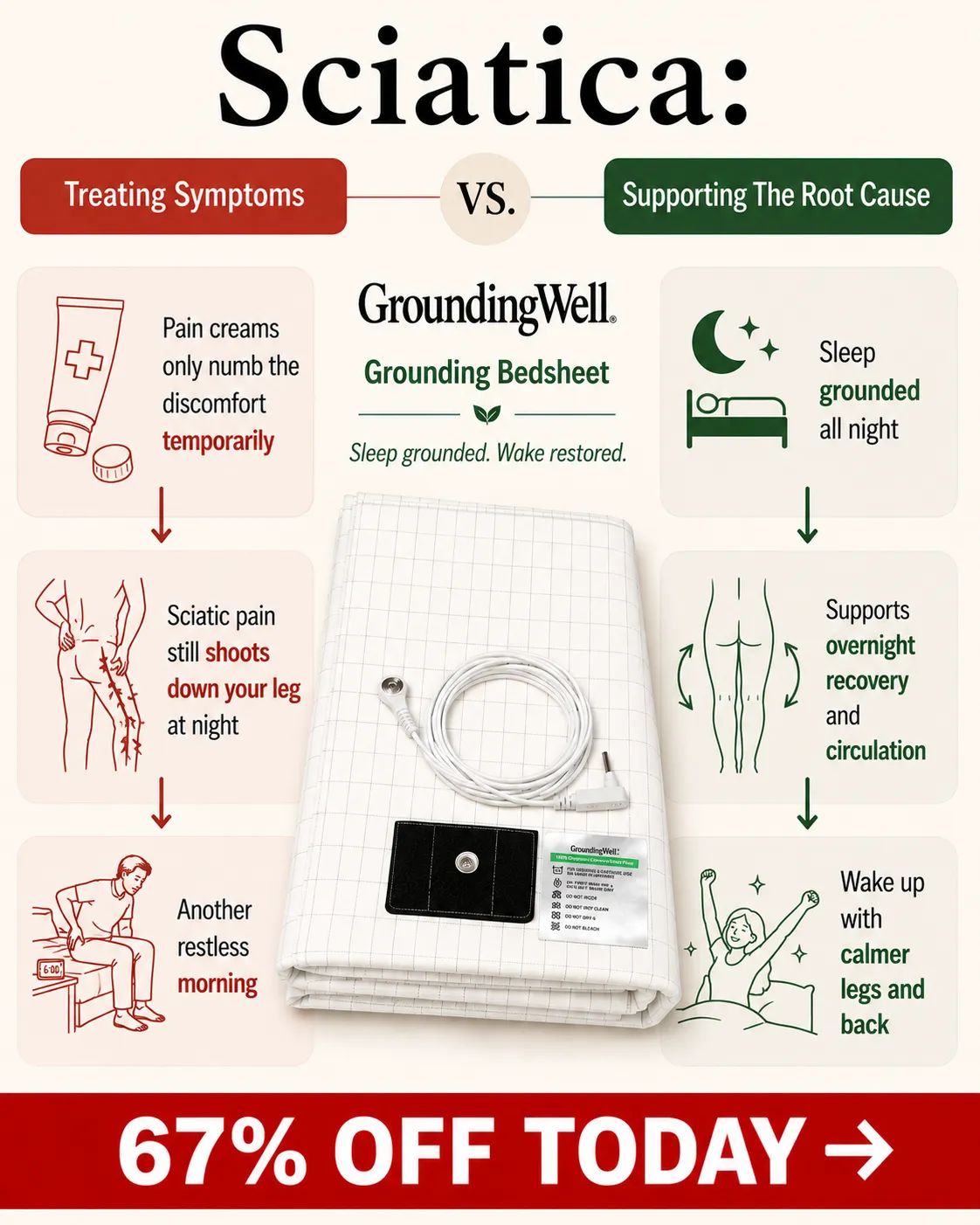
3 Ways To Relieve Back Pain
Grounding Health Benefits
Take The 30 Sec Quiz
Grounding Health Benefits
Feel like yourself again
Grounding Health Benefits
3 Ways To Relieve Back Pain
Grounding Health Benefits
Click to learn more about grounding
Grounding Health Benefits
Click to learn more about grounding
Grounding Health Benefits

Get Grounded While You Sleep!
Grounding Health Benefits

Tired All the Time? Embrace Earth’s Healing Energy!
Grounding Health Benefits

 Add to Chrome