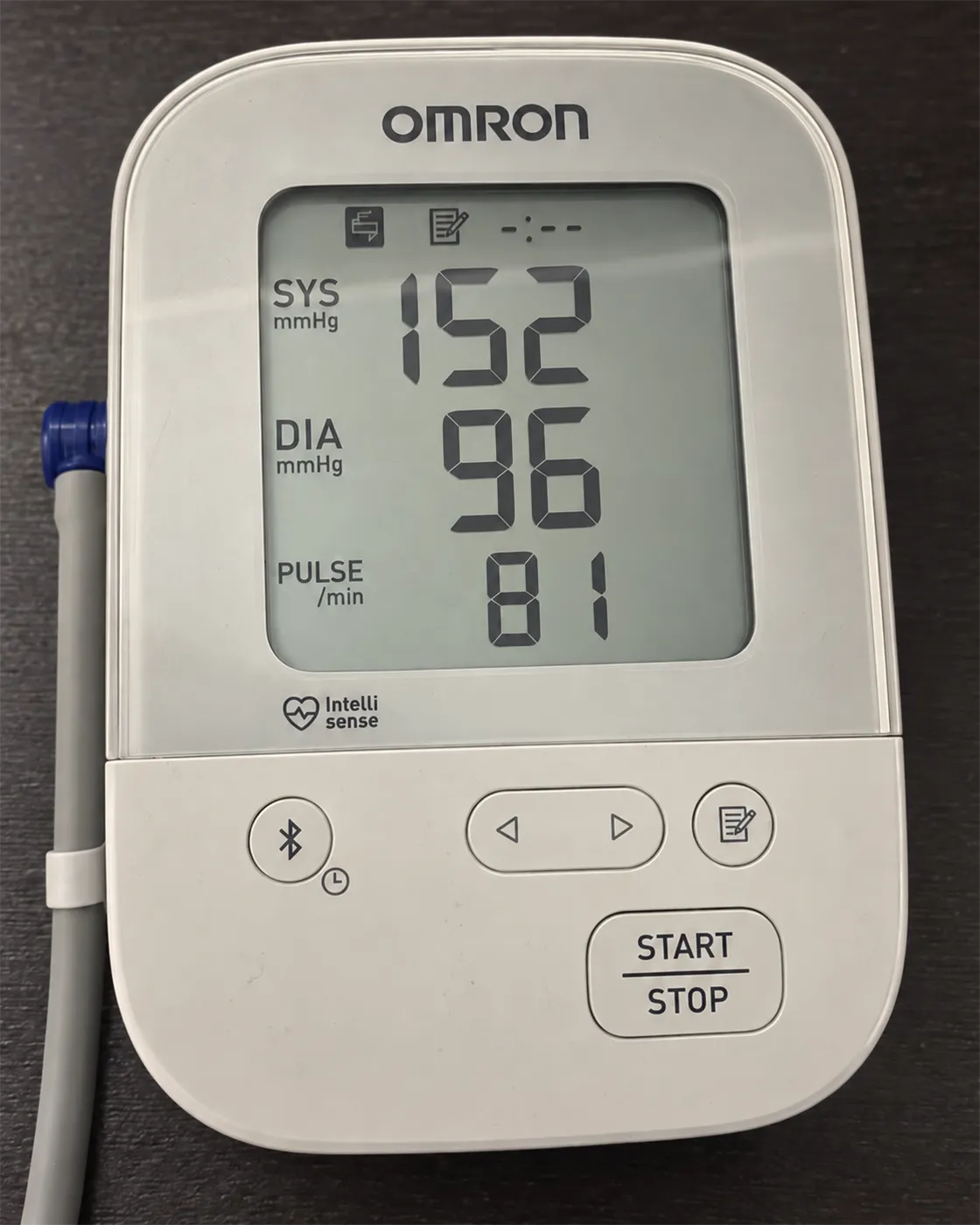
Lower Blood Pressure Naturally
Ad Copy
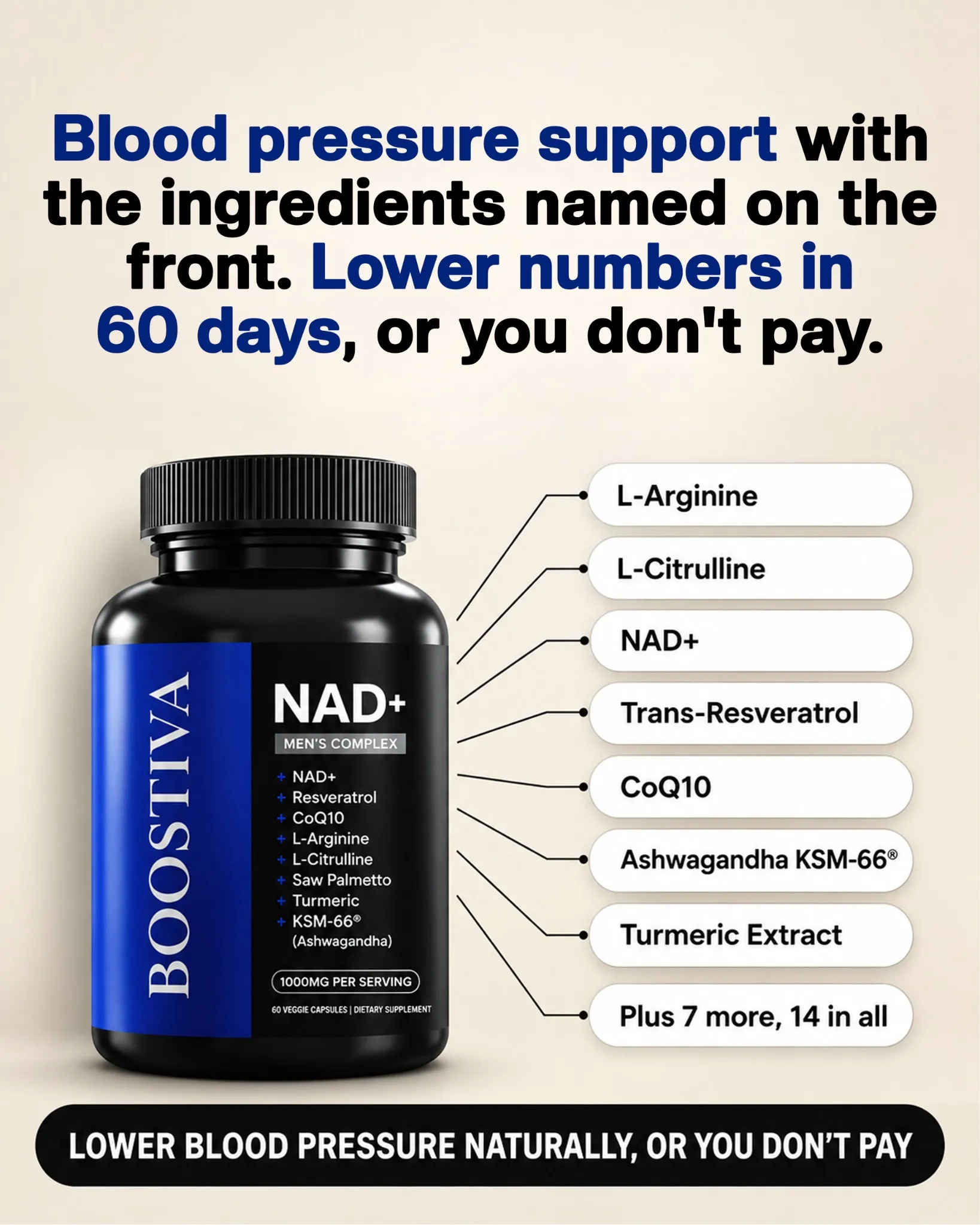
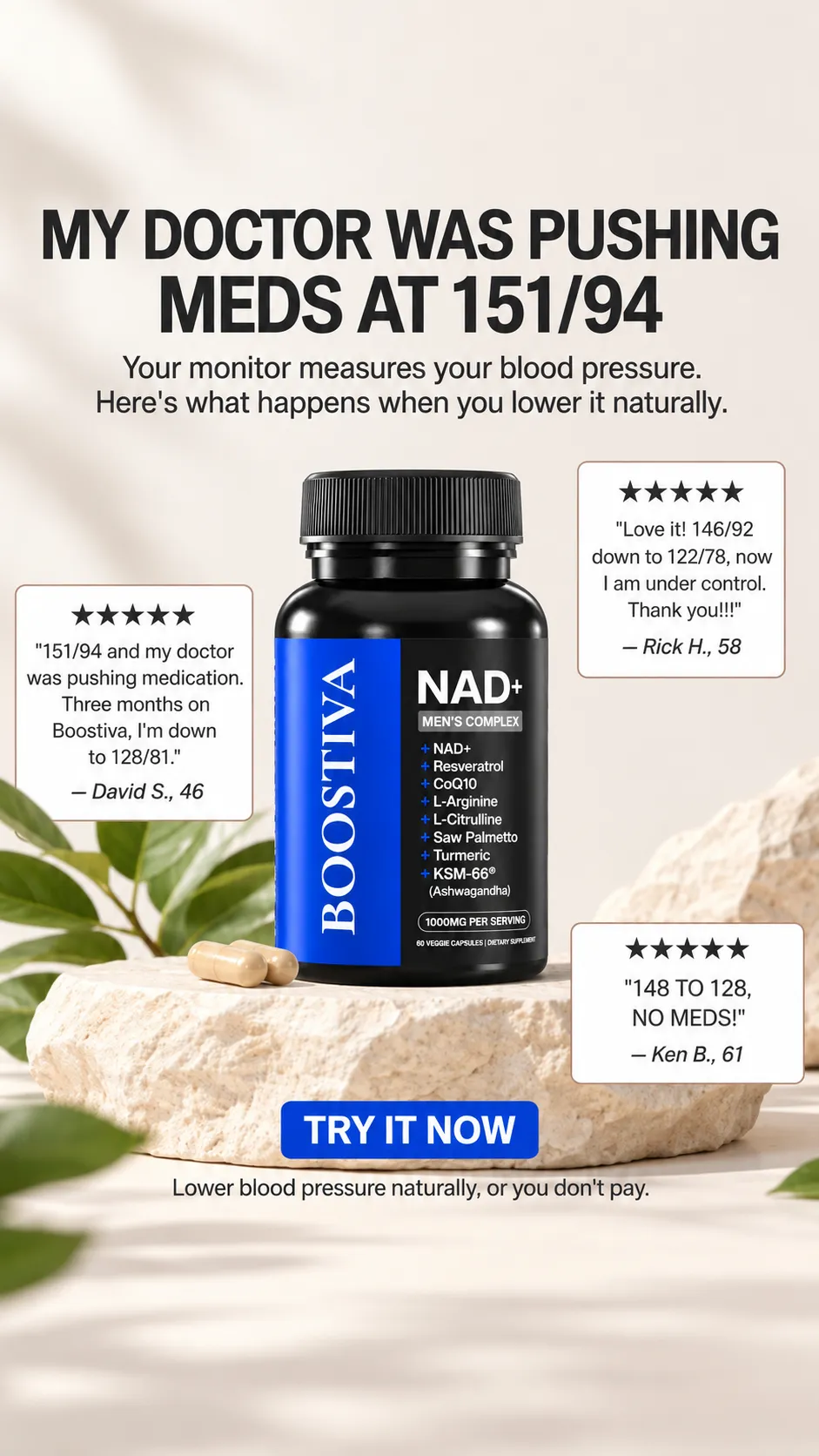
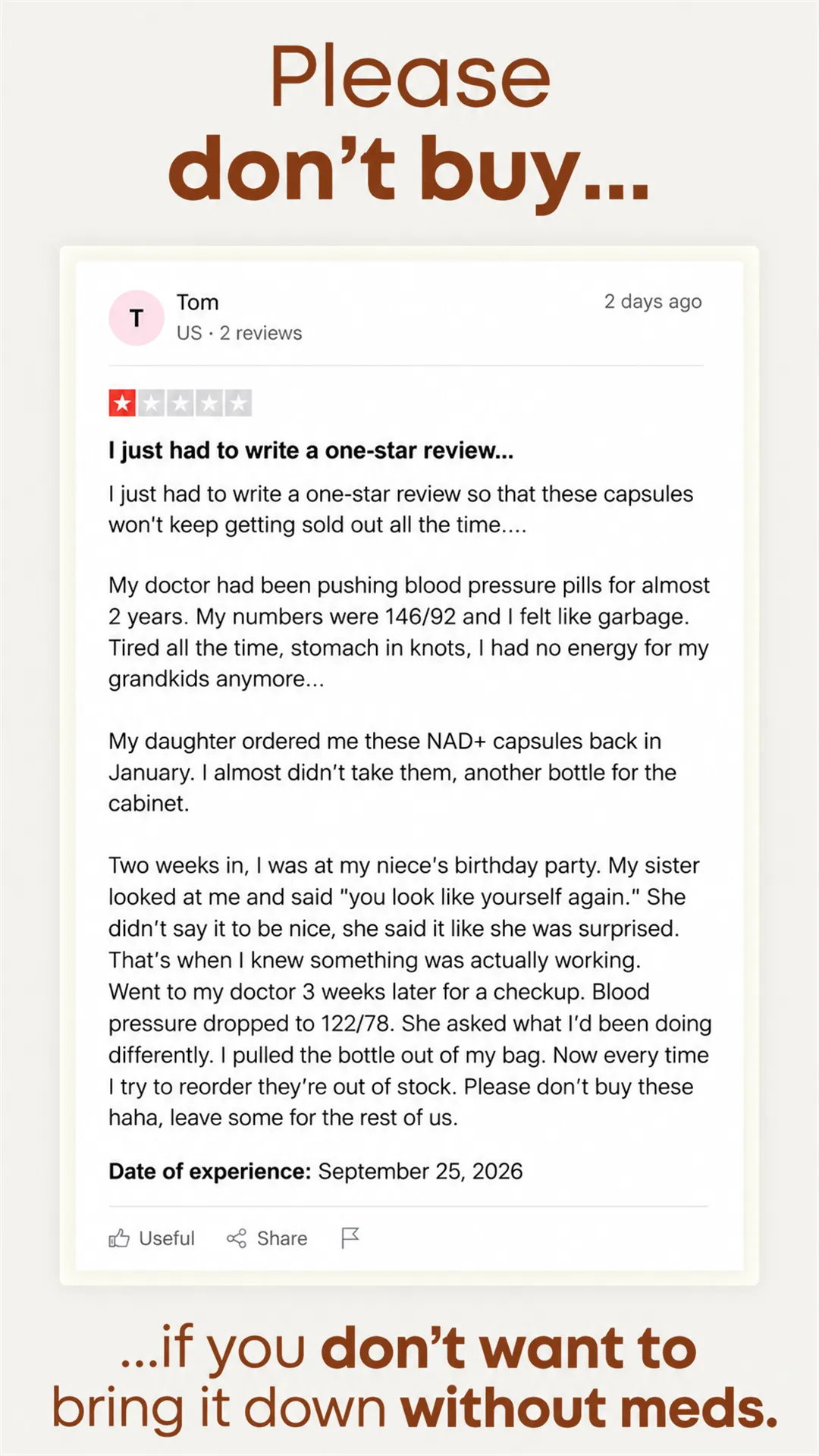
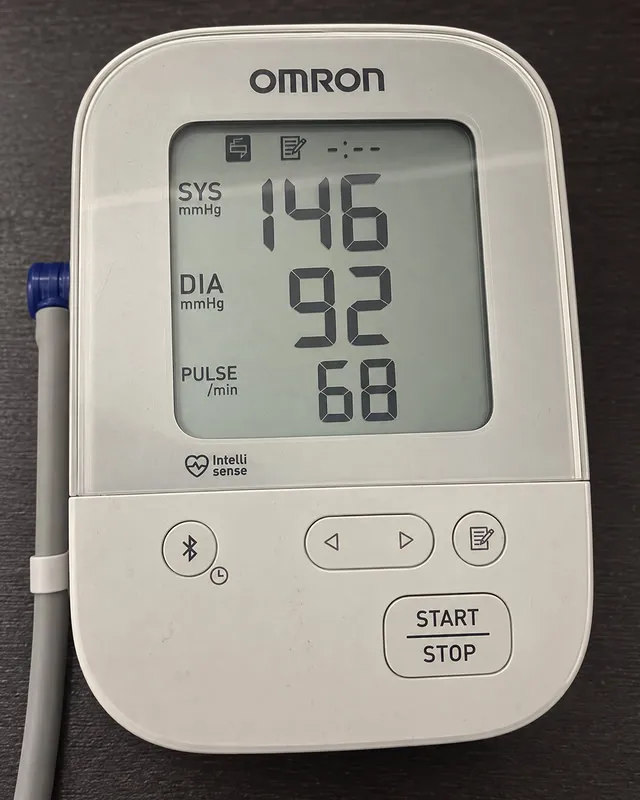
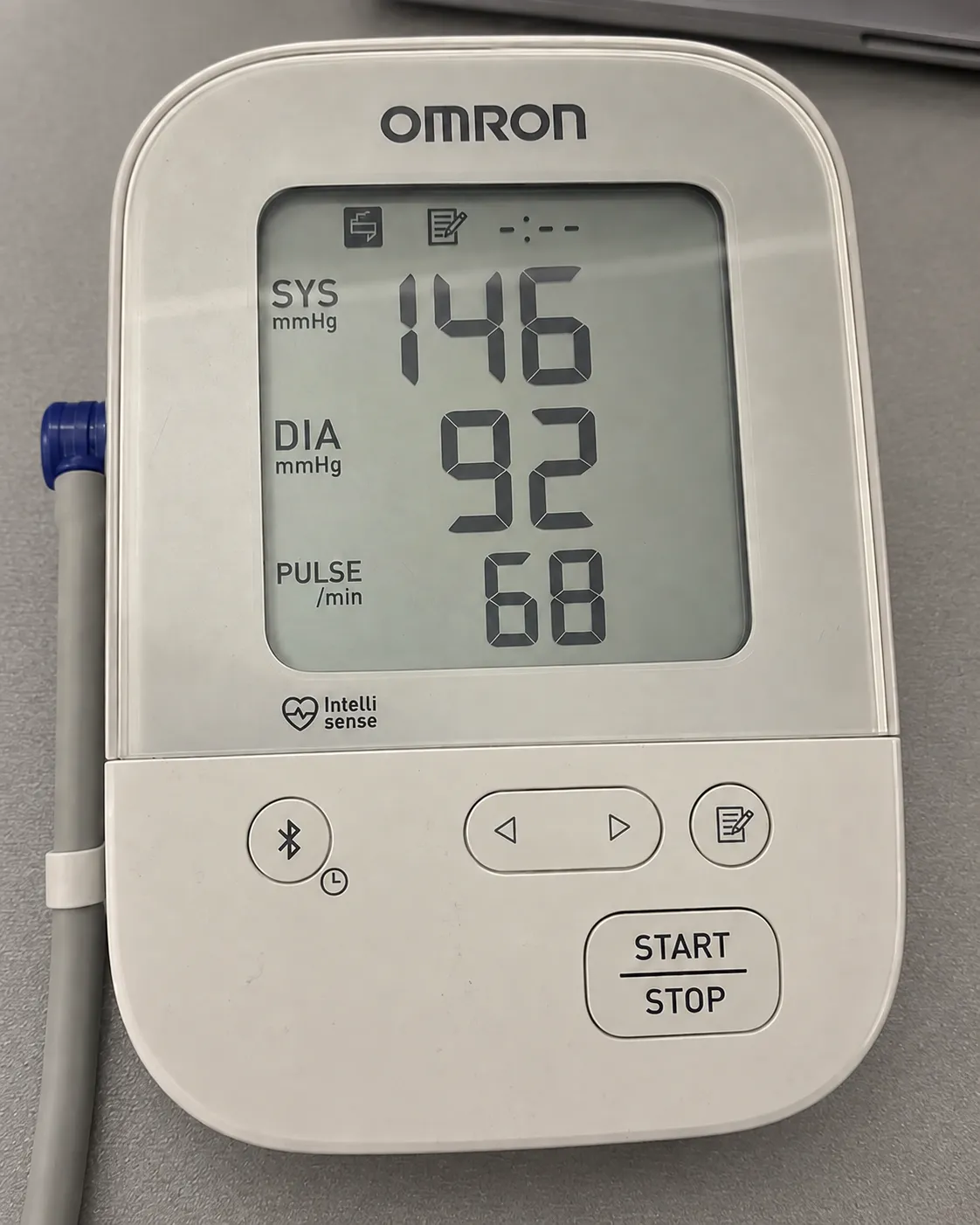
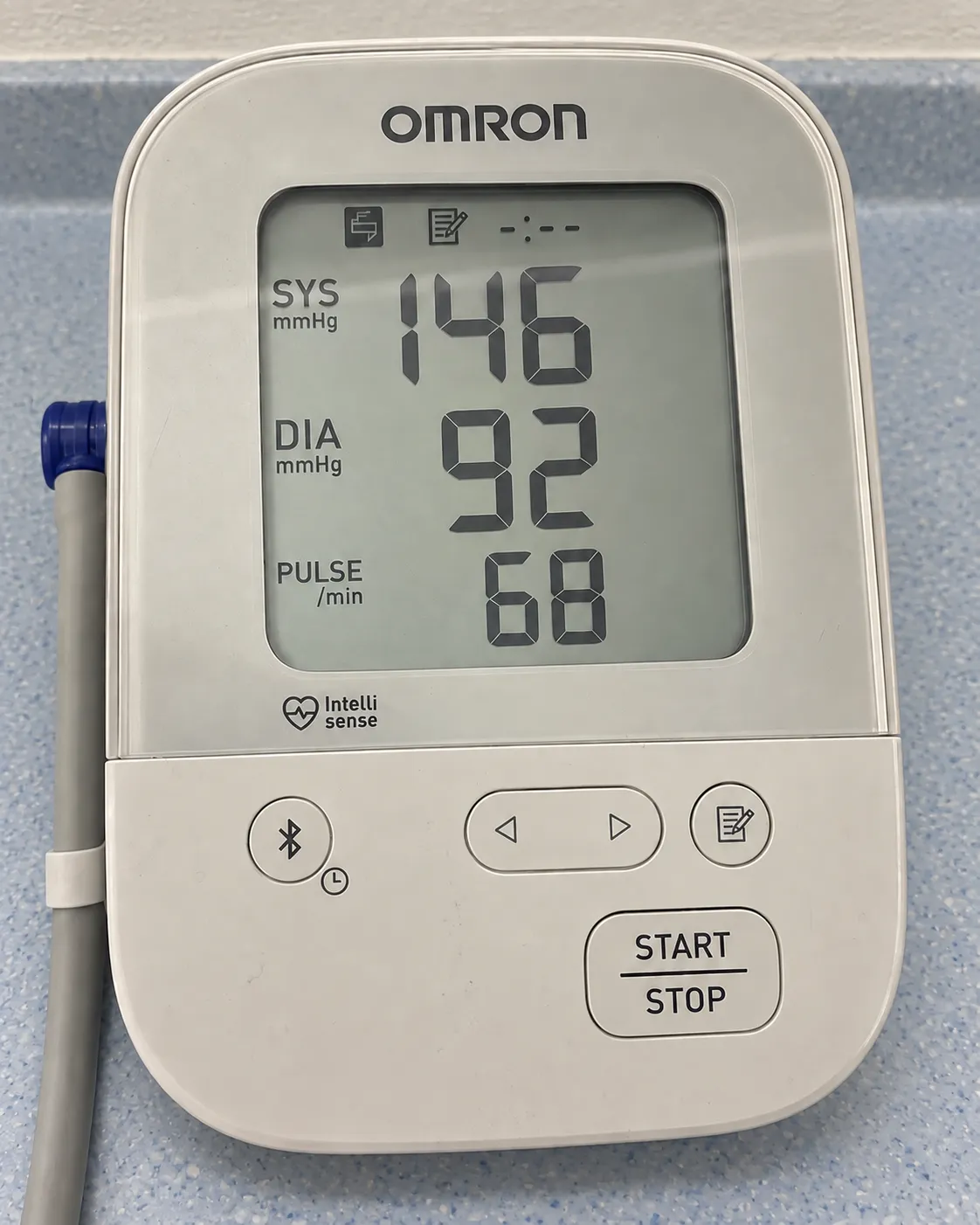
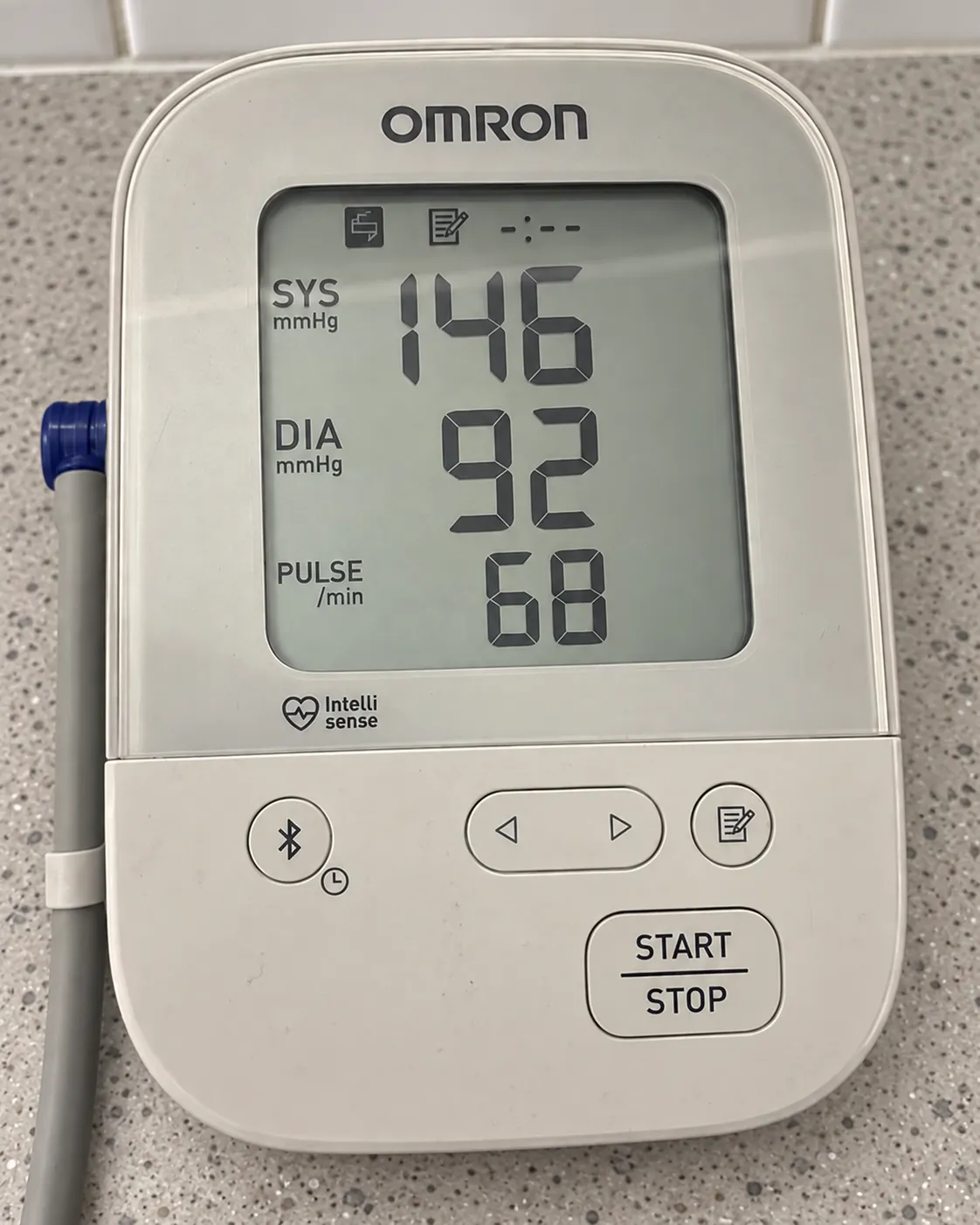
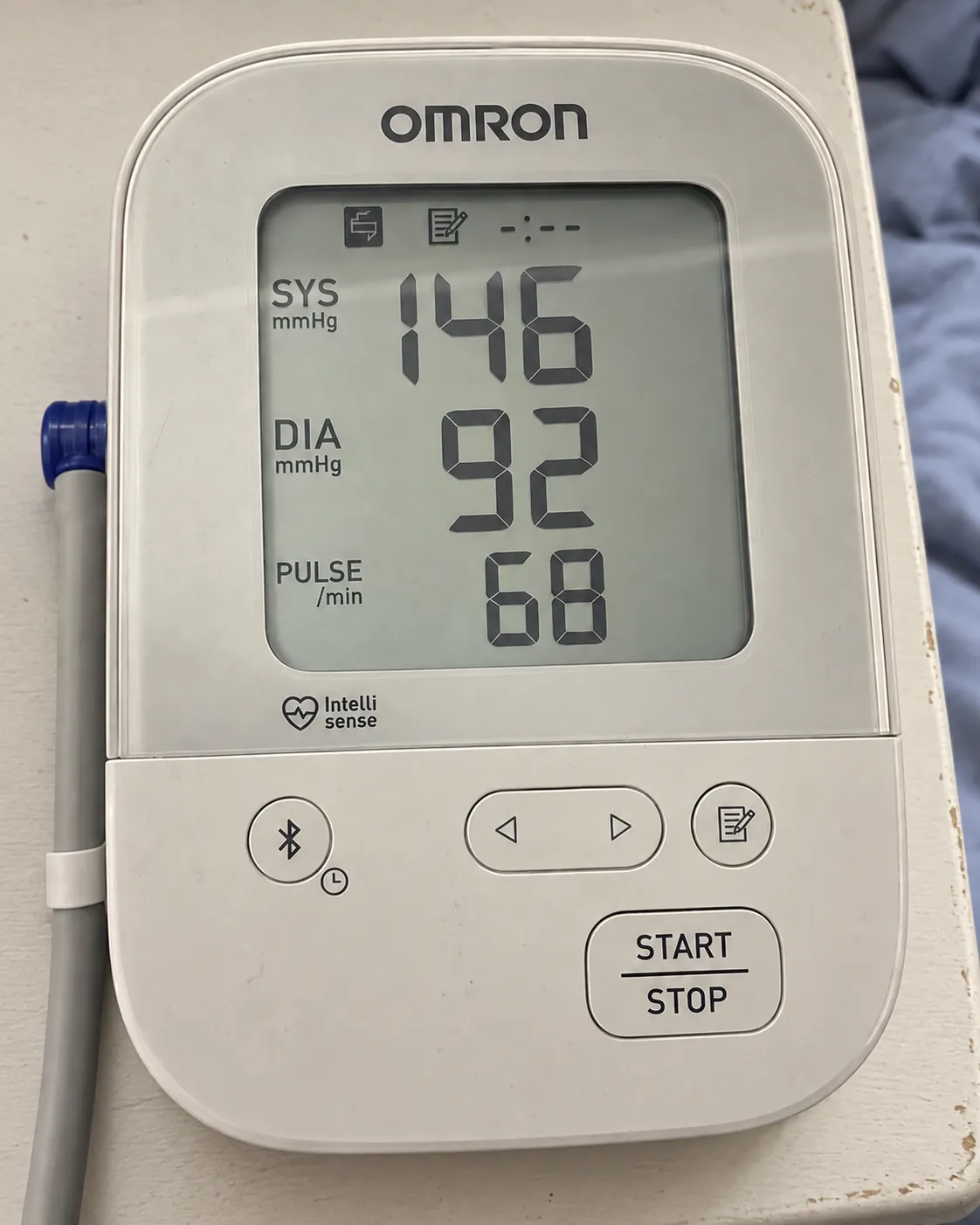
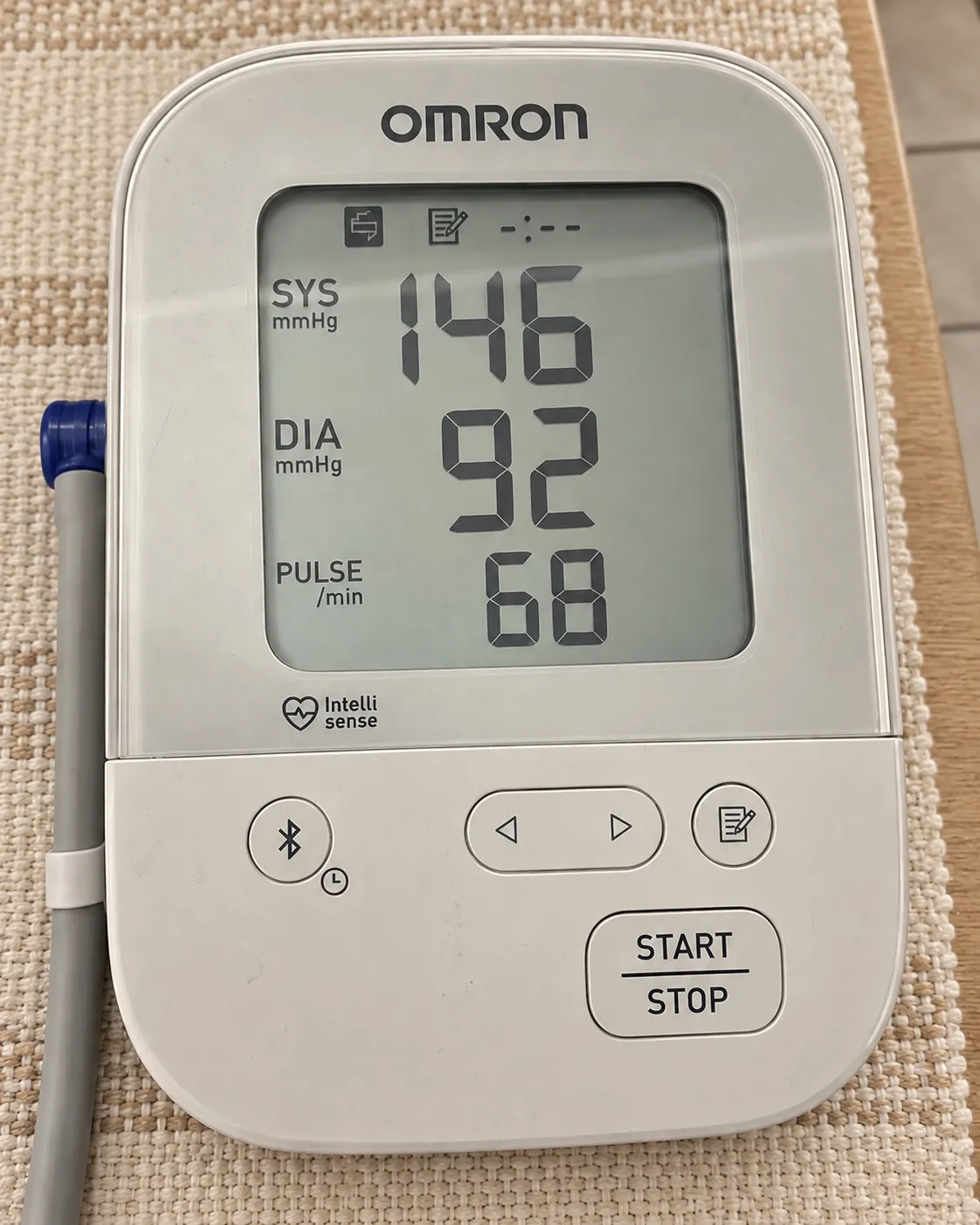
I'm on the maximum dose of beetroot, plus garlic, magnesium and fish oil. My morning reading has been stuck at 146/92 for over a year. My doctor said the next step is pills. Then I found out a man in my group was holding 118/76 on a QUARTER of my beetroot. Now I know why. There's a moment I want to tell you about, because if you're anywhere near the top of the natural ladder, you're headed toward it. It's the moment your doctor runs out of ladder. I'm 61. Three years on beetroot. And at my last check-in, my doctor looked at my chart, looked at me, and said the sentence I'd been dreading since year one. "You've taken the natural route as far as it goes. There isn't much left on that side. I think we should talk about lisinopril." And then, because she's not cruel, she softened it. "It's not a failure. High blood pressure is progressive. A lot of people end up here." End up here. Like it was a place, and I'd arrived. Let me back up, because I know the ladder. I climbed every rung of it. I started three years ago on one scoop. My doctor did two things that week. She gave me three months to bring it down myself, and she told me to take beetroot every morning, because "it raises your nitric oxide." I've taken it every day since. I want you to remember that, because it matters later. The first scoop gave me a good year. My morning reading went from 148/94 to 138/88. I bought a home monitor, walked after dinner, and felt like I'd caught it in time. Then it slowed, and I went up. Two scoops bought me back into the 130s for a while. Then it slowed. I went up. The clinical-strength kind, 1300mg. Then garlic, then magnesium, then fish oil, the top. And last year, "let's add something," and a premium blend with a price tag that made me sit down in the store. And that became the shape of the last three years. Every increase bought me a few points and a few weeks of fish burps and a stomach that wouldn't settle. Then the number would creep, then stall, and I'd climb again. Each rung bought a little less than the one before. I'm not against the pills. I know what my father's numbers did to him without them. But I'm stuck at 146/92 every morning, and my heart is counting on me not staying there. And at the top of the ladder, the pattern I'd been outrunning for three years finally caught me. Over a year. The top of the ladder. Nothing. And here's what the top of the ladder actually felt like, since nobody talks about it. My morning reading wasn't even steady. That's the part that made me feel crazy. On the MAXIMUM dose of the beetroot everybody swears by, plus three other bottles, a calm week was 142/90. A stressful week, my wife's surgery, my daughter's divorce, and the cuff ran straight over all four supplements and parked at 156/98. I could skip the salt all day and wake up to that. Like stress had a manual override on everything I was taking. My doctor ran labs. Kidneys, thyroid, electrolytes, the works. Everything came back fine. So I posted in my group. Top of the ladder, over a year stalled, doctor says pills are next. And I got forty answers, I'm sure you can imagine. "Just take the lisinopril. It's a walk in the park. My numbers dropped in a week." And some guys do great. But some guys in my group started, dropped for a few months, then stalled and started climbing THAT ladder. Nobody talks about them. "Ask about a water pill instead." My doctor said no. "Natural only goes so far. You got everything it has to give. Pills aren't failure." "You're not watching your salt." Three years of reading labels. "Try hibiscus." "Try hawthorn." "Celery juice." My cabinet is a museum of things that were going to fix this. And then the one I still think about. "Honestly, if the maximum dose isn't working, that's not the beetroot anymore. That's you." I read that at my kitchen table and just sat there. Because that's the thing about the top of the ladder. On every other rung, there was somewhere to put the blame. The dose was too low. Now there was nowhere left. If the maximum doesn't work on you, you're not underdosed anymore. You're broken. That's what "we should talk about lisinopril" means when you take it home. It doesn't mean the beetroot ran out. It means you did. And here's the part nobody could explain. My sleep got worse every time I went up a rung. By the top, it was the worst it's ever been. Wired at 3am, heart pounding hard enough to feel, wide awake over nothing. I'd get up and check, because that's what you do, and the cuff would say 152/96. At 3am. Lying flat since eleven. My body was squeezing every vessel I had in the dark while every blood test said I was fine. And the afternoons. Every day around three I'd hit a wall like someone pulled my plug. Then my hands and feet started going cold. "That's the blood pressure. That's your age. Drink more water." On four supplements. Sleeping the worst. Nobody found that strange but me. Meanwhile my group was a highlight reel. "118/76, doctor says no meds." "Two years, no pills." Guys diagnosed AFTER me, passing me on the way down. And the ones who'd maxed out, quietly starting lisinopril, disappearing from the thread for a while and coming back with a pill organizer on the counter and the same story. One night at 1am I googled "tried everything natural blood pressure medication inevitable." Stiff arteries. Progressive disease. Long articles about how blood vessels harden with age and most people need medication eventually. I read it all with my heart pounding and thought, that's me. That's my future. My arteries decided. I drafted the message agreeing to start the lisinopril. It sat in my phone. Unsent. Because something about it felt like admitting the problem was never going to be found. Just covered. Then I asked a stranger the question that changed everything. There was a man in my group, I'll call him Hank, who'd mentioned his routine once in a comment. One scoop of beetroot. The starter rung. A QUARTER of mine. He'd been diagnosed two years ago, a year after me, and he was still on it, still holding 118/76, never climbed once. I'd noticed him months ago and been quietly furious at him ever since, if I'm honest. I messaged him privately. "Can I ask you something? How are you still on one scoop? I'm on four times that, plus three other bottles, and my doctor's talking about pills." He replied an hour later. "You're going to be mad." "Why would I be mad?" "Because it's something my doctor made me start the same week as the beetroot. It costs about $40. And I assumed every doctor did the same thing, until I'd been in this group long enough to realize nobody's does." Before Hank's first scoop, his doctor told him something he'd written down in his phone. He sent me the screenshot. "I put every high blood pressure patient on two things, not one. Beetroot, because it raises nitric oxide. And NAD+, because the lining of the blood vessels runs on it, and it's the one the nitric oxide needs to work. The longer the pressure runs high, the faster it goes." I read it twice. Two things, not one. My doctor had told me the first half. Three years ago. She'd handed me the beetroot and said the words "nitric oxide" and I'd taken it every morning since like a good patient. She just stopped at one. Then I typed back. NAD+? I TRIED NAD+. Last year, for the tiredness. The drugstore kind. It went straight through me and I felt nothing. I lasted a month. "What kind?" The drugstore kind. I had no idea. "That's the problem. Wrong form. Let me explain it the way he explained it to me. Because it explains your whole ladder." So here it is, the way Hank gave it to me, in a private message from a man on a quarter of my beetroot. Nitric oxide is a key. Its job is to open your blood vessels so blood can get through without your heart forcing it. Beetroot's job is to give your body more of that key. But nitric oxide doesn't turn the lock by itself. The lining of the vessel does, and the lining runs on NAD+. Without enough of it, the key is in the door and the door stays shut, and your beetroot is shouting at a lock that can't turn. "So the beetroot needs it. That's the first half. Here's the half nobody told you." When your pressure runs high, it strains that lining with every single beat, and every repair burns NAD+. That's the high pressure draining it. Then, over years, your body makes less of it. Not overnight. Slowly. The older you get and the longer the pressure runs high, the less you have. "The beetroot that needs NAD+ to work is going into a body that's been slowly running out of it. And your doctor already told you about nitric oxide. She just stopped at one." "Now look at your situation. Every year, you make a little less. Every high reading, you burn a little more. And every time you go up a rung, you add more key to a lock with less left to turn it. So the rung that's supposed to be the strongest is the one where you've got the least of what the beetroot needs to work. Your top rung isn't where the beetroot is most powerful. It's where the tank is emptiest." "That's why each rung bought you less than the one before. The beetroot got stronger and your buffer got thinner, at the same time. And that's why I'm still holding down here on one scoop. My dose is smaller. But my beetroot isn't fighting on empty." "The ladder was never measuring the beetroot. It was measuring the hole." I sat with that for a long time. Three years of climbing rearranged themselves in my head. Every rung: a few points, then the stall, then up. It was never my arteries finding their limit. It was the hole catching up, a little faster each time. "And the 3pm wall. The cold hands. His words, not mine: that's your body telling you it's empty. Most people get told it's their age." I pushed back. Obviously. I've earned my skepticism at retail price. "My labs were normal. She ran everything." "No routine test measures NAD+. It lives inside your cells, and no standard panel looks there. You can be running on empty at the cellular level and pass every test. Nobody checked mine either. Nobody checks anyone's." Everything they tested was fine. The thing that wouldn't have been fine, nobody tested. They had a word for me instead. Progressive. And a word is where the investigating stops. I said what you're probably thinking right now. "Supplements don't lower blood pressure. Every time somebody says one does, somebody has something to sell." "I said the exact same thing to him," Hank wrote. "And he said, I'm not selling you a blood pressure supplement. Your beetroot gives you the nitric oxide. I'm telling you what your nitric oxide needs, and that your body's been quietly using it up. That's not a trend. That's the same reason your doctor told you about nitric oxide. She just stopped halfway." "But I tried NAD+," I wrote. "It did nothing." "Wrong form. The drugstore kinds mostly get broken down in your gut before they get anywhere. That's the problem with NAD+ in a plain capsule. Of course you felt nothing. Most of it never made it to where it matters." He sent a photo. A black bottle with a blue stripe. Boostiva. NAD+ Men's Complex. "This is the kind my doctor specifically told me to take. Liposomal. Not just whatever bottle says NAD+ on the front. It absorbs about 13.6 times better than a plain capsule, and it's gentle. It doesn't just pass through you like the drugstore kind does." And liposomal is the other half. The NAD+ is wrapped in a tiny layer of fat, so it survives your stomach and your body treats it like food, unlike a plain capsule. After three years of supplements going straight through me, that mattered more than it sounds. Two capsules in the morning. With the beetroot. That was the whole protocol. That was the thing I'd be mad about. Three years. Every rung of the ladder. Four supplements. A doctor telling me the next step was pills for life. And a man on a quarter of my beetroot had been given the answer the same week as his first scoop. I still half didn't believe him, so here's what I did next. I went home and researched for three hours. The studies on NAD+ and blood vessels. The research on NAD+ dropping with age, and faster when the pressure runs high. The number that stopped me cold: by your 60s, your body may make about half the NAD+ it did at 20. It all checked out. I'd scrolled past this stuff for years assuming it was the celery juice people again. Some of it is. The plumbing isn't. I ordered that night. 60 day money back guarantee. I'd just been handed pills for life as my best option. $40 was not the risk in my life. Day one, nothing. I want to be honest about that. End of week one, two things. I fell asleep faster, the forty minutes of ceiling staring shrank to ten. And on Thursday I realized I hadn't hit the 3pm wall all week. Week two is when it happened. I slept through the night. Straight through, no 3am, first time in over a year. And that Friday I sat on the edge of the bed and checked, the way I've checked every morning for three years. 128/80. I checked again on the other arm. 126/80. First time under 130 in fourteen months. Then 124/78. Then 128/82. Then 122/78. And here's the part I need to be precise about, because it matters more at my numbers than anyone's. Nothing else about my routine changed. Same beetroot. Same scoop. Same walk after dinner. The exact routine my doctor had looked at and said there's not much left. I'm not a doctor and I'm not telling you to do what I did. I didn't stop, skip or change a single thing, and I told my doctor before I started. If you're already on blood pressure medication, that matters even more. Keep checking your numbers. If they move, that's a conversation with your doctor, not a reason to touch your prescription. There was never anything wrong with the beetroot. The ladder had been the ladder all along. My beetroot finally had what it needed to stop fighting on empty. Weeks three and four, steady. 120s over 70s, most mornings. The way the first scoop had felt, three years ago, except this time it didn't creep. A brutal week hit, my wife's follow-up, and for the first time in three years, the morning number held through it. That's when I actually believed it. Week six, I found the blood pressure medication brochure in the kitchen drawer and threw it out. Three months later, at my checkup, it was 122/78. Down from 146/92. My doctor looked at the chart, looked at me, and said, "Whatever you're doing, keep doing it." She never asked what it was. The pills came off the table. "For now," she said. I'll take for now. For over a year I thought I'd gotten everything natural had to give. That the ladder had measured me and found the limit, and the limit was mine. The ladder never measured me. Every year meant making less, and every year my pressure ran high meant burning more, and by the top of the ladder I was running the most beetroot on the emptiest tank. The beetroot didn't run out at the top. The fuel did. And not one person in a white coat thought to look for it. My own doctor had been one sentence away. She said "nitric oxide." She just stopped at one. I still take my beetroot every day. Same scoop, nothing changed, and no, I never started the lisinopril. Whether medication is right for anyone is between them and their doctor. It just turned out the question I needed answered was never "what's next." I still have stress. The surgery, the divorce, all of it. I just stopped running on empty. Every morning, I take two capsules with my beetroot. Five seconds and a glass of water. My NAD+ fills back up, my vessels come off high alert, and the beetroot I'd already climbed to finally gets to act like it. Honestly, that should be standard care for every person the day they hear the words high blood pressure. Two things, not one. Hank's doctor treats it that way. Mine handed me a brochure. If you're at or near the top of the natural ladder and the number stopped anyway. If every new bottle bought you less than the one before, and a worse stomach to show for it. If your doctor said "we should talk about lisinopril" and you heard your father's name. If your morning reading runs over everything you take on the hard weeks. If you take beetroot every morning because someone once told you it raises nitric oxide, and nobody ever mentioned the second thing. If you tried NAD+ once, the drugstore kind, and felt nothing so you quit. If you hit a wall every afternoon at three and were told that's your age. If your sleep has gotten worse with every rung, and you're wide awake at 3am on the top one, wondering if your body simply refuses... I'm not saying you definitely have an NAD+ problem. But I spent over a year and four supplements being told the ladder was finished, when nobody had ever once checked the tank. Boostiva is a small company. They make their capsules in limited batches in a GMP-certified facility in the USA, using liposomal NAD+, the specific form Hank's doctor put him on from the beginning. Right now they're running a sale. I checked the site this morning and ordered a second bottle for a guy from my group whose doctor just gave him the same speech I got. I told him, before you start pills, spend $40 finding out if it was ever the ladder. To be honest, I panicked a little when I saw the sale banner, because every time they run one of these, they sell out fast. They have a 60 day money back guarantee too. Two full months. That's longer than it took me to feel the difference. If nothing changes, you get every penny back, no questions asked. But if it works? If by the end of week one you're getting through the afternoon without hitting the wall? If by week two the 3am wake-ups stop and your morning reading comes back under 130 for the first time in a year, on the routine they told you was done? You'll wish you'd started it the same day as your first scoop. The same day you first heard "nitric oxide." I know I do. 👇 https://boostiva.com/products/boostiva-nad-mens-complex-bp?variant=49285551095991
More from The Blood Pressure Journal
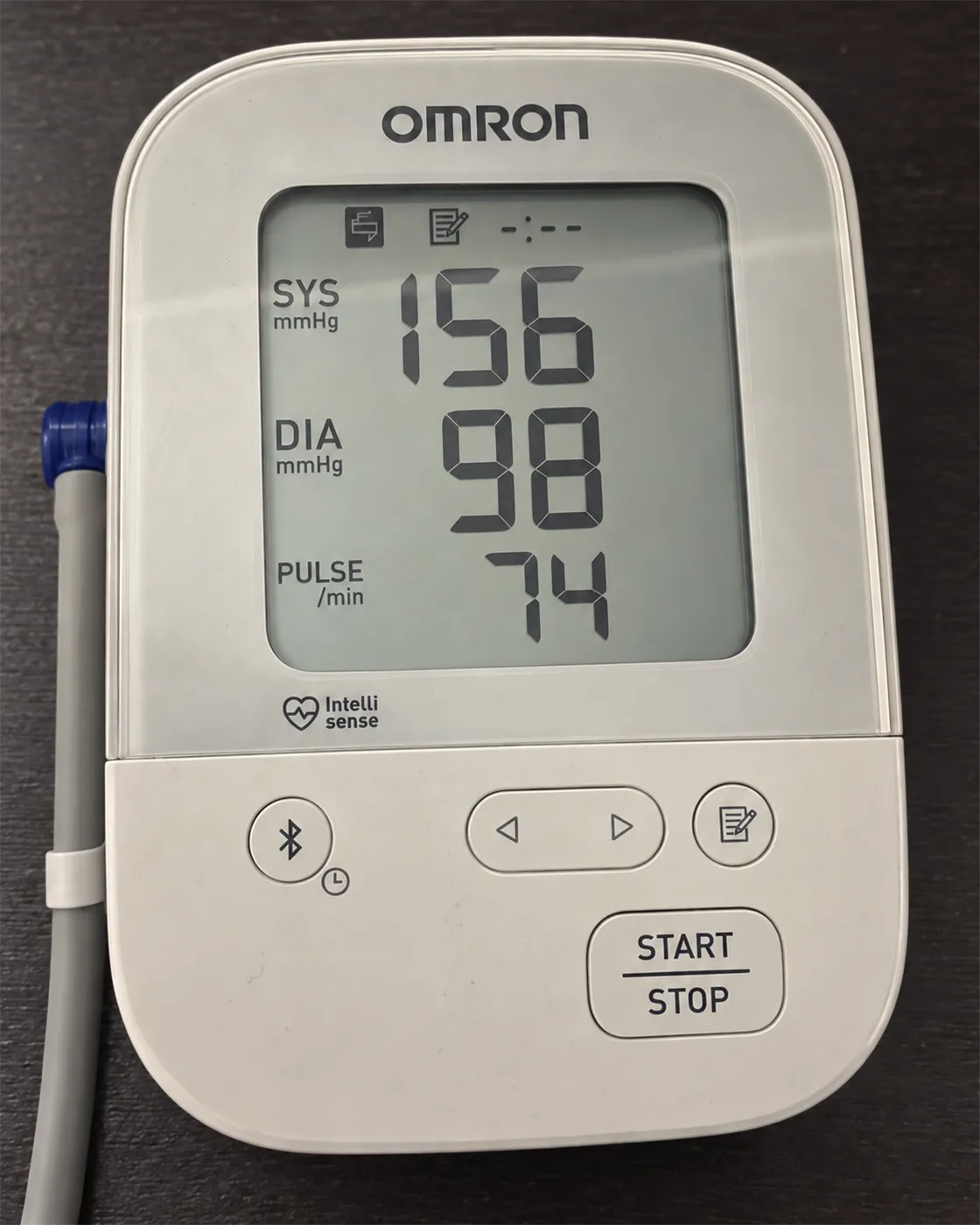
Lower Blood Pressure Naturally
The Blood Pressure Journal (159443863928803)
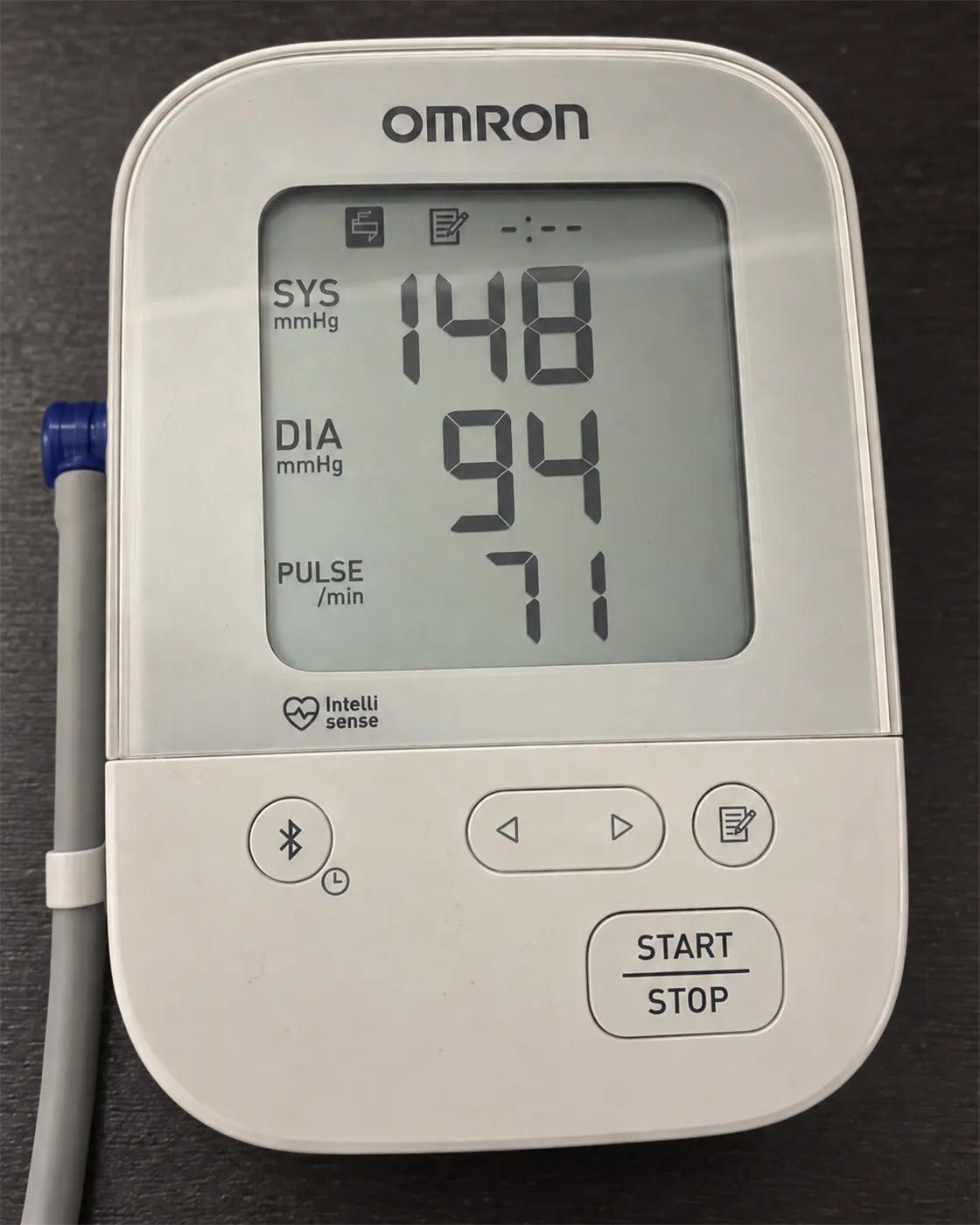
Lower Blood Pressure Naturally
The Blood Pressure Journal (159443863928803)
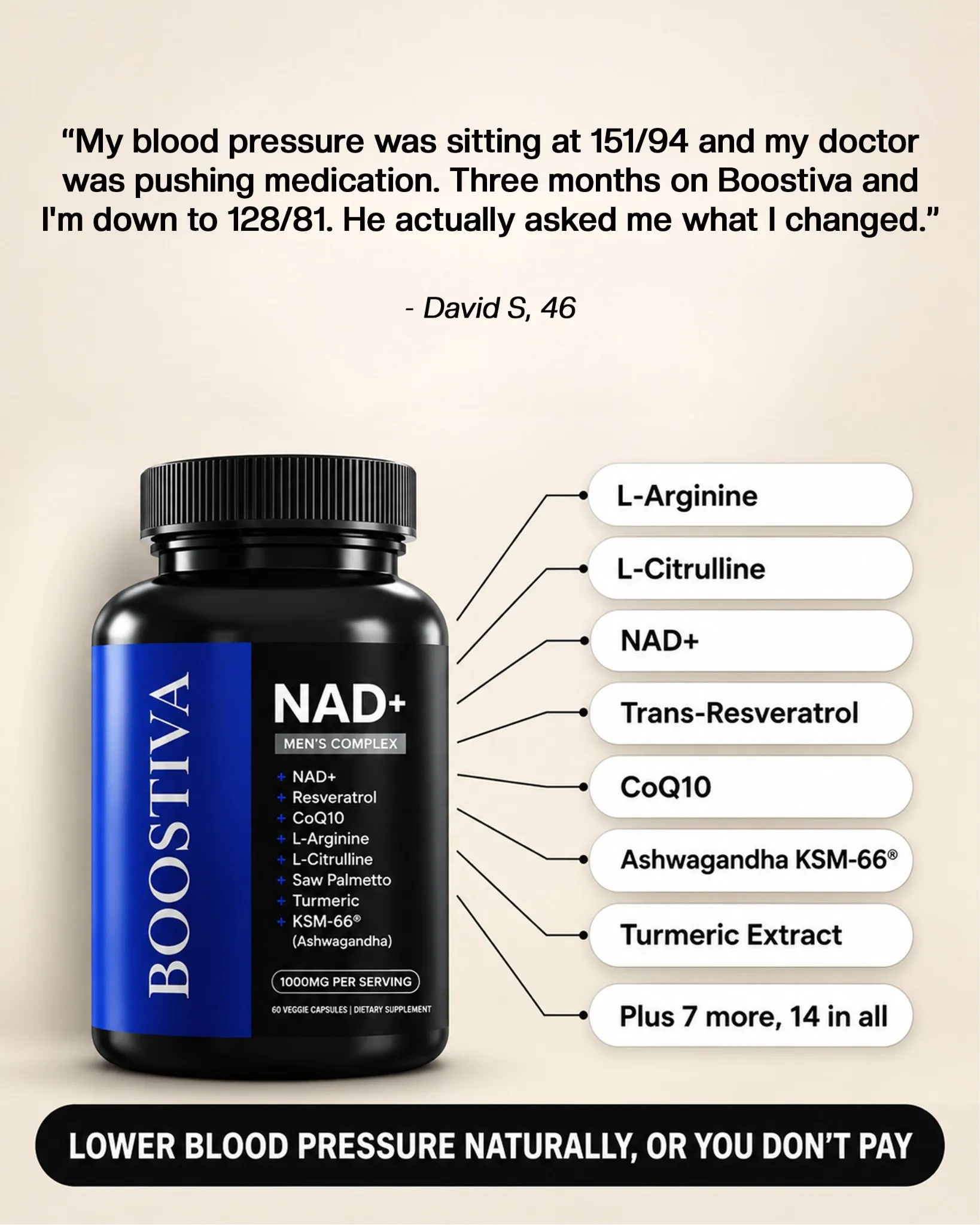
The Men’s NAD+ Formula Everyone Is Talking About
The Blood Pressure Journal (159443863928803)
The Men’s NAD+ Formula Everyone Is Talking About
The Blood Pressure Journal (159443863928803)
The Men’s NAD+ Formula Everyone Is Talking About
The Blood Pressure Journal (159443863928803)
The Men’s NAD+ Formula Everyone Is Talking About
The Blood Pressure Journal (159443863928803)
Why two years of beetroot never moved my 146/92
The Blood Pressure Journal (159443863928803)
What thousands of men watching their blood pressure swear by
The Blood Pressure Journal (159443863928803)
What thousands of men watching their blood pressure swear by
The Blood Pressure Journal (159443863928803)
What thousands of men watching their blood pressure swear by
The Blood Pressure Journal (159443863928803)
What thousands of men watching their blood pressure swear by
The Blood Pressure Journal (159443863928803)
What thousands of men watching their blood pressure swear by
The Blood Pressure Journal (159443863928803)

 Add to Chrome