Ceylon Cinnamon 7200mg Equivalent with MCT Oil
Ad Copy
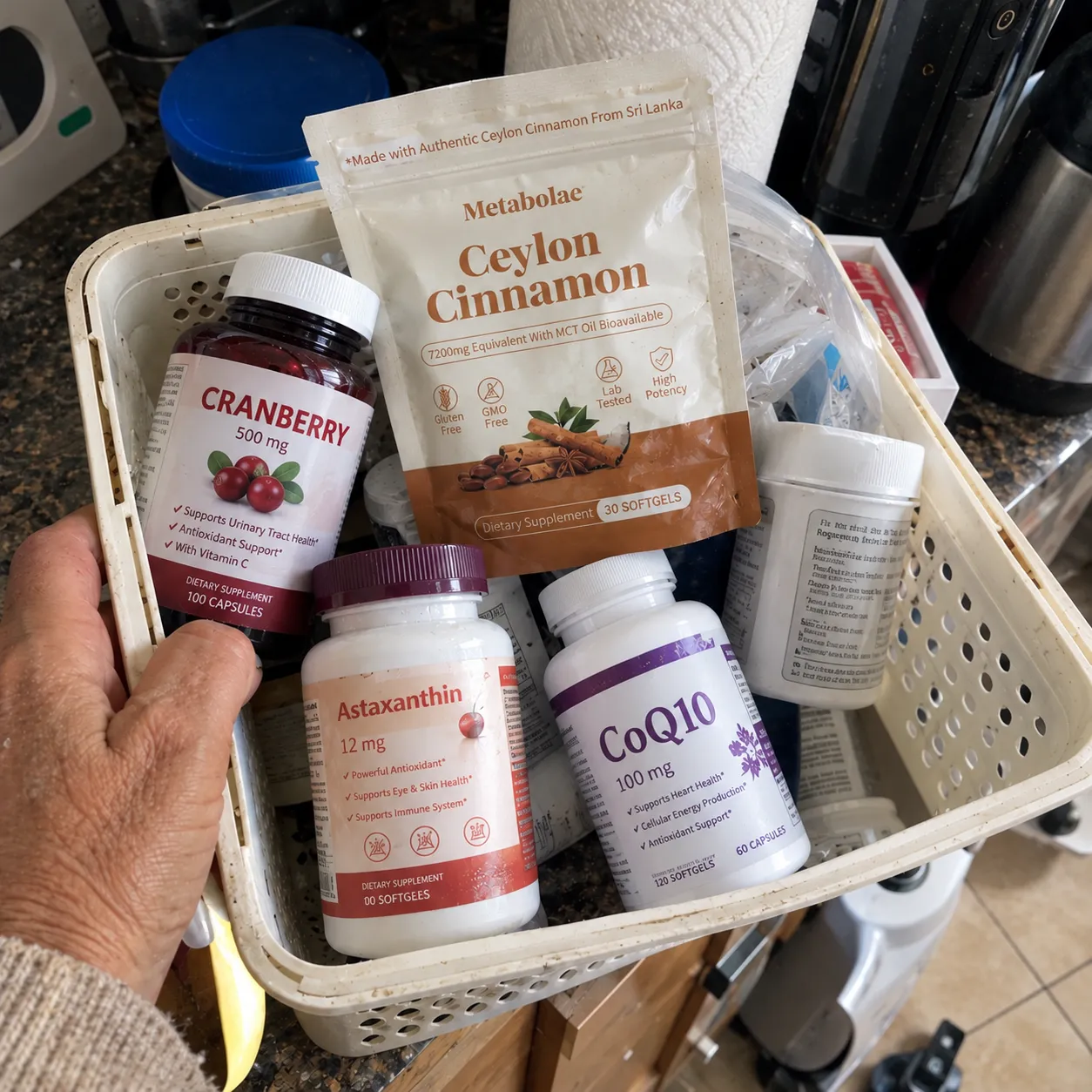
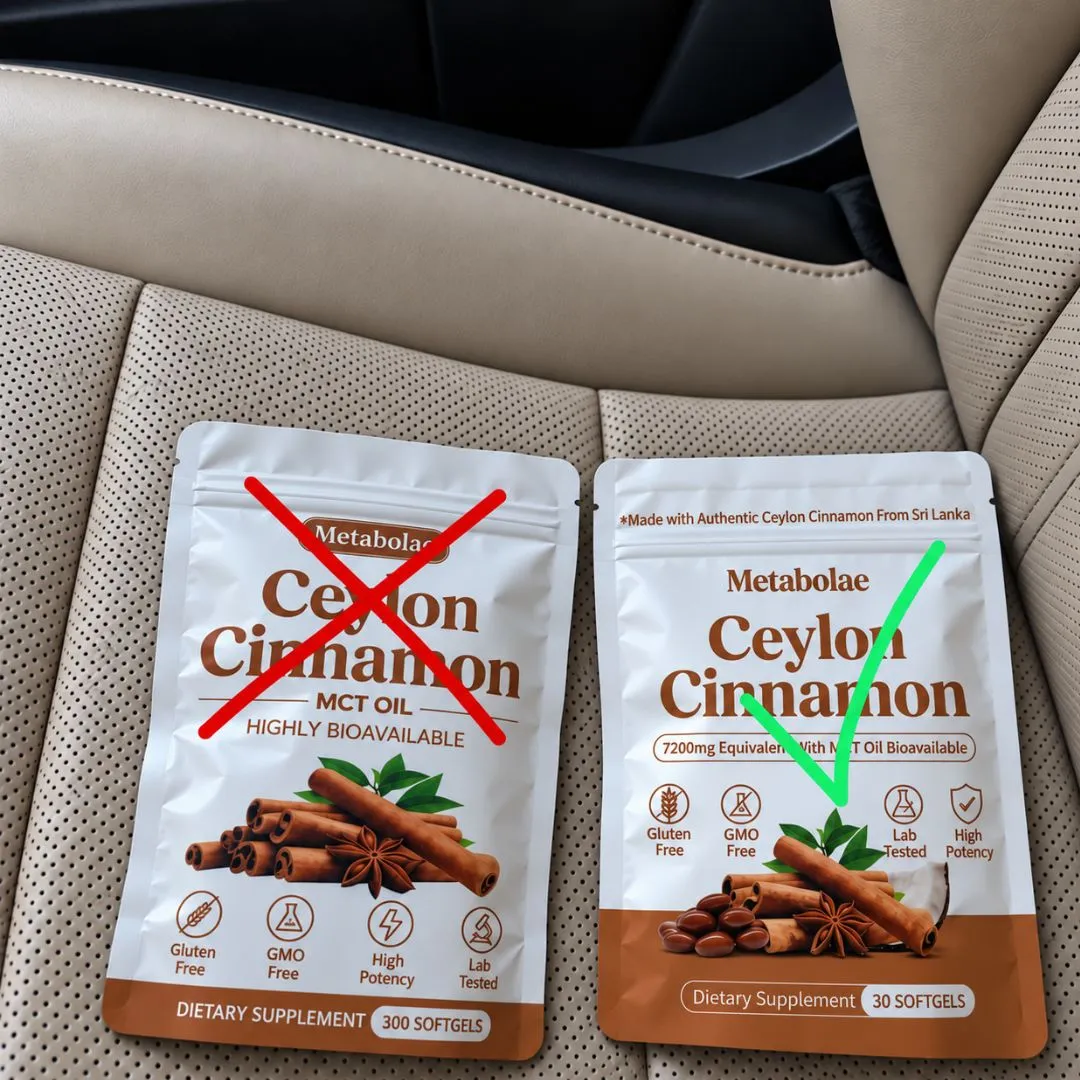
I'm so damn tired of people in these groups posting that cranberry, CoQ10, astaxanthin, and cinnamon are going to protect your kidneys. They won't. Not really. I've tried all of them. So has the man I sit next to at my kidney support group who has been taking omega-3 for two years and just got told his GFR dropped another three points. So has my neighbor, who was diagnosed the same year I was and still orders four different supplements every month because someone in her diabetes group swore by them. So has the woman I met in the waiting room at my nephrologist's office who'd been taking berberine faithfully for eight months and whose protein numbers were worse at her last appointment than at her first. Let me tell you what eighteen months of natural kidney support protocols actually got me. Cranberry capsules. $24 a bottle. Four bottles. Six months. Every kidney group I found said cranberry was the first thing you reach for. I took them twice a day without missing once. My nephrologist pulled up my labs at the next visit. GFR unchanged. Protein in my urine, unchanged. She told me cranberry was good for preventing UTIs. She said it in the specific flat voice doctors use when they have already said something too many times to too many people who were hoping for a different answer. CoQ10. $38 a bottle. Three bottles. Every diabetes and kidney forum I found talked about CoQ10. Mitochondrial support. Antioxidant protection. Reduces oxidative stress on kidney tissue. Two hundred and fifty milligrams every morning. Nine months later my GFR had gone from 46 to 44. Astaxanthin. $42 a bag. The kind from the health food store, the one the woman at the counter said was the most powerful antioxidant you could take for your kidneys. Two bags. Six months. Nothing moved in my labs that I could point to and say, that's the astaxanthin doing something. Omega-3. $29 a bottle. Then the premium version when the first didn't seem to help. Wild-caught. Molecularly distilled. Then the higher-dose capsules. I upgraded three times. My fasting glucose kept running high every morning. My kidneys kept bearing the weight of it every single day. Berberine at $34 a bottle. Someone in a CKD group said it was basically natural metformin. Then generic cinnamon capsules at $18 a bottle when another woman in the group said cinnamon had brought her A1C down. Brown powder in a hard capsule, straight off the pharmacy shelf. And here is what I didn't know. What nobody in that group knew. What the woman at the health food store counter had never once heard. The cinnamon on that pharmacy shelf was the wrong plant entirely. But I'll get to that. Add it all up. I sat down one night and actually ran the numbers. Eighteen months of natural kidney protocols. Over $900 in supplements. And my GFR had dropped two points. You know what all of those supplements have in common. They all kind of work. For something. On some mechanism. And then your labs come back the same as last time, and you're sitting in a waiting room watching your nephrologist pull up the same numbers again and tell you the decline is within normal range, and you're quietly doing the math in the back of your head about how many more rounds of normal range you have left before the conversation shifts into the one you've been dreading. That was me eighteen months in. I had completely overhauled my diet. I had changed how I cooked for my whole family. I had lost weight I hadn't managed to lose in eight years. My husband had been out walking with me every morning before the day got started, keeping me company through all of it. GFR of 44. That was the number on the page that morning. After all of it. I sat at the kitchen table and I almost cried. Not from sadness. From the kind of hollow, bone-tired fury you feel when you have done everything right and the number just doesn't care. Because I had read more about kidney disease in eighteen months than I had read about anything in my entire life. I had tried every supplement anyone in any group had ever mentioned. And the number had moved two points in the wrong direction anyway. Slowly enough that every doctor I saw called it expected progression, like a slow decline only becomes a problem once it turns into a fast one. I kept thinking about my father. The last four years of his life, three days a week, four hours each time. The chair. The machine. The drive home. The exhaustion that never fully lifted. The thing he used to say about how dialysis gives you your life back and takes it away at the same time. I was sitting at a kitchen table at 6am, and I could see where this road went. And I was not ready to walk it. I'm writing this from the other side of that table. My GFR came back at 51 at my last appointment. My morning fasting glucose has been tracking lower for fourteen weeks. My nephrologist looked at the results, then looked at me, and asked what I had changed. What changed wasn't another supplement off a shelf. It wasn't a higher-dose CoQ10 or a better astaxanthin or a fancier omega-3. It was an entirely different understanding of what was actually driving the damage inside my body. Something none of those bags and bottles had ever come close to touching. Something my nephrologist had never once brought up in two years of quarterly appointments. I'm going to tell you exactly how I found it. Because if you're anywhere on the same road I was on, you need to hear this before you spend another year and another few hundred dollars on the next thing that promises to protect what's left of your kidney function. Back to that morning. That night I couldn't sleep. I was on my phone in the dark, scrolling through a kidney disease support group I had joined a few months earlier. The kind where people post their lab results and their questions and what has actually been working for them. A woman had posted one simple question. She had been on medication for years. Her GFR had dropped to 38 and she was scared. She wanted to know if anyone in the group had actually moved their numbers in a positive direction. Not just slowed the decline. Actually reversed it. Sixty-seven replies. Most of them were supplements I had already tried. But one reply near the top had forty-four comments underneath it. A man said he had spent over a year taking everything the internet recommended. Said he had watched his labs go the wrong way regardless. And then he found a private metabolic specialist who had spent nearly two hours with him on the first visit and walked him out with a completely different picture of what was actually happening inside his body. Comment after comment underneath that reply, all saying the same things. He listened. He explained things nobody else had ever taken the time to explain. He never once looked at the clock. I screenshotted the name and put my phone face-down. Private practice. About an hour from where I live. Not covered by my insurance for this type of visit. $300 for the first appointment. I almost didn't go. Three hundred dollars on top of the $900 I had already burned on supplements felt like throwing good money after bad. But I kept going back to those forty-four comments. From real people who weren't selling a thing. So three weeks later I drove an hour and sat across a desk from a specialist who had a wall of credentials and a way of listening that made it clear he had heard every version of what you were about to say, and still had something to tell you that you hadn't heard yet. I brought the bag. All of it. Cranberry. CoQ10. Astaxanthin. Omega-3. Berberine. The cinnamon capsules. Set it on the edge of his desk the way you set down evidence. He went through each one. Held each bottle. Nodded at each label. Set each one aside. Then he looked at me. You've been trying to protect your kidneys, he said. But nobody fixed what's actually damaging them. I waited. Your kidneys aren't failing on their own. They're being damaged. Every day. By the same mechanism that's been damaging them for years. Everything in that bag has been targeting the effects. Not the cause. So the damage kept piling up. And it will keep piling up until someone addresses the actual problem. He pulled a notepad across the desk. Here's what's actually going on. Your cells have doors. They're called GLUT4 transporters. Their job is to open and pull glucose out of your blood and into your cells, where it gets burned for energy. When they work the way they're supposed to, blood sugar clears after a meal. The whole system stays in balance. That's how it worked when you were younger. In type 2 diabetes, something goes wrong with those doors. They stop responding. They stay closed, or they open too slowly, or they don't open wide enough. And when those doors stay shut, glucose has nowhere to go. So it stays in your blood. He set the pen down for a moment. And here's where your kidneys come in. Blood moves through your kidneys constantly. Through tiny filter structures called glomeruli. When blood glucose is chronically high, those filters take a beating. Not occasionally. Every hour of every day. For years. The first sign is protein leaking into your urine. Your filters are wearing out. Then GFR starts to fall. And the longer glucose stays elevated, the harder those filters work, and the faster the damage builds. Now look at what you brought me. He pointed at the bag. Cranberry. Not for this. For UTI prevention. The mechanism doesn't come anywhere near the GLUT4 transporters. CoQ10. Antioxidant support. Real effect on oxidative stress. But downstream of the actual problem. The glucose is still in your blood. The glomeruli are still getting hit every hour. Astaxanthin. Same story. Antioxidant. Downstream. Helpful for what it does. Not touching the cause. Omega-3. Anti-inflammatory. Also downstream. Also real. Also not the cause. Berberine. Better than most on this list. Activates some of the same glucose pathways that exercise activates. But berberine metabolites need to be processed and cleared by the body. You're adding filtration work to the exact system you're trying to protect. He looked at me steadily. You've been working the back end. Trying to reduce the oxidative damage after it shows up. Nobody worked the front end. The doors that should be pulling glucose out of your blood are still closed. So the glucose is still grinding away at your glomeruli. Every single day. While you took your supplements and cleaned up your diet and did everything you were supposed to do. So what actually opens those doors? I asked. He nodded like that was exactly the question he'd been waiting for. He told me about cinnamon. Not the kind sitting in the bag on his desk. Not the brown powder I had been taking for four months. Something different. True Ceylon cinnamon. Cinnamomum verum. From Sri Lanka. Not cassia, which is what almost everyone buys without ever realizing it. Not the same plant. Not even close to the same plant. Cassia contains up to 250 times more coumarin than true Ceylon. At doses high enough to actually move blood sugar, coumarin quietly burdens the liver. You're shifting filtration load from one struggling system to another. Most people take cassia for six months, he said. Nothing happens and they write off cinnamon entirely. They're right about the product they tried. They're wrong about the compound. True Ceylon contains cinnamaldehyde. Cinnamaldehyde activates GLUT4 transporters. It gets those doors opening again. The glucose clears. The mechanism is documented. The research is solid. But it has to be the right plant. Then why didn't my cinnamon work? I asked. I had been taking it for months. He picked up the bottle I'd brought. Turned it over. Read the label. Two reasons. First, this is cassia. Not Ceylon. Second, even if it were Ceylon, the form would still be wrong. Cinnamaldehyde is fat-soluble. Your cell walls are made of fat. This hard capsule hits a water-based environment in your gut. Most of the cinnamaldehyde breaks down before it crosses a single cell wall. You had the right instinct. The delivery killed it before it could do anything. He turned his laptop toward me. A clinical study. Researchers using a standardized Ceylon cinnamon extract, concentrated, not raw powder, suspended in MCT oil. MCT oil is a fat. It keeps cinnamaldehyde intact through the entire journey. From the moment the softgel dissolves, through the gut wall, into circulation, all the way to the GLUT4 transporters inside your cells. Arriving in the form that can actually do the job. The results in that study were the kind I had been hoping to see for eighteen months. Fasting glucose coming down. Markers of kidney stress easing right along with it. What dosage? I asked. The equivalent of 7,200 milligrams of whole cinnamon, he said. Not 500 milligrams like what lines the pharmacy shelf. A 12-to-1 concentrated extract. DNA-verified as Ceylon only, sourced from Sri Lanka. Delivered in MCT oil. That is the form the research actually used. He leaned back. When those doors start opening again, glucose clears from your blood. The concentration hammering your glomeruli every hour drops. The daily grinding pressure on those filters eases up. Protein leakage drops. GFR can stabilize. In some patients it moves in a direction they haven't seen in years. He looked at me. You didn't need more antioxidants. You needed something that actually gets the glucose out of your blood. That's what everything in that bag never did. Eighteen months. Over $900. And not one article, not one person in any support group, not one doctor in two years of quarterly appointments, had ever explained the GLUT4 transporters to me. Or why cinnamaldehyde was different from anything else I had tried. Or why dry powder couldn't deliver it no matter what plant it came from. I asked the question I had been sitting on the whole drive over. Whether I could take it alongside everything I was already on. He said yes. He said it isn't a drug. It doesn't replace anything my own doctors had prescribed. It's a food-derived extract. He had patients take it alongside their existing protocols and just track what happened to their numbers. He told me to keep taking what I was already taking, bring the bag to my nephrologist at the next visit, and watch the labs together. This doesn't override your current treatment, he said. It addresses what your current treatment never addressed. Those are two very different things. He walked me through the timeline too, because most people bail before the biology has time to do anything. The first two to three weeks, cinnamaldehyde starts reaching the GLUT4 transporters consistently. The doors begin responding. You probably won't see fasting glucose shift much yet. But a lot of people notice their energy is more even through the day. The afternoon crash starts to ease up. Weeks three through five, with the doors opening more reliably, glucose starts clearing more consistently. Morning readings begin to shift. Some of that heavy, sluggish feeling after meals starts to lift. Weeks six through ten, fasting glucose is trending lower. The blood moving through your kidneys is carrying less of it. The daily filtration load on your glomeruli starts to ease. Some people begin to see protein spillage drop during this window. Weeks ten through fourteen and beyond, with consistent daily use, the GLUT4 response holds steady. Labs, when they come back, start reflecting what's been happening at the cellular level for weeks. GFR stabilizing. Or moving in a direction you haven't seen in a long time. He said the people who come up empty with this are the ones who quit at week three because the monitor hasn't budged. The biology takes time. Fourteen weeks minimum to see what it can genuinely do. I drove home with three pages of handwritten notes folded into my purse. That night I started looking. Almost everything I found online failed immediately. Cassia labeled as just cinnamon. Dry powder stuffed into a hard capsule. Five hundred milligrams. Blends with five other things thrown in. No MCT oil. No extract concentration listed. No DNA verification. No third-party testing. And something else I hadn't expected. A large portion of the cinnamon products on Amazon and other marketplace sites list no country of origin at all, or quietly source from China. Not Sri Lanka. Cassia from China is not Ceylon from Sri Lanka. They are not the same plant, not the same compound, not the same anything. But on a marketplace listing, you often cannot tell the difference unless you dig deeper than most people ever think to look. That is the problem with buying something like this off Amazon or Walmart or any third-party marketplace. The seller controls the listing. Nobody controls what is actually in the bag. A product can say Ceylon on the front and contain something else entirely. There is no reliable way to verify the species, the source, the concentration, or whether the batch was ever independently tested. I looked at what felt like thirty different options over two nights. The one that matched everything on that list was Metabolae. True Ceylon cinnamon from Sri Lanka. DNA-verified. 12-to-1 concentrated extract. Suspended in MCT oil. 7,200 milligram equivalent. Third-party tested, every batch. In a bag with nothing else in it. And Metabolae is not on Amazon. Not on Walmart. Not on any third-party marketplace. The only way to get it is directly from Metabolae. When I first saw that I paused. Then I understood why. When a company sells through a marketplace, they lose control of storage, handling, and whether what reaches you matches what was actually made and tested. When you order directly, the product goes from their facility straight to your door. The certificate of analysis on file matches the bag in your hands. You know exactly what you are getting and exactly where it came from. Every single thing he had told me to look for. I ordered that night. One softgel every morning with breakfast. Weeks one and two, exactly like he said. Nothing dramatic on the glucose monitor. But the energy crash I used to hit every afternoon around three started to ease up. I was sleeping more solidly than I had in months. My husband noticed before I even brought it up. Week three my morning readings started coming in lower. Not by a dramatic number. But consistently lower than the week before. By week four I had four mornings in a row under a reading I hadn't seen in over a year. Weeks six through ten the trend held. Steadier energy through the whole day. Morning readings kept dropping. Post-meal spikes that used to drag on for hours started coming back down faster. At fourteen weeks I went back for labs. My nephrologist pulled up the results. She looked at the GFR. Then she looked at the protein number. Then she set the screen down and looked at me. GFR 51. Up from 44. Protein spillage nearly cut in half. She asked what I had been doing differently. I pulled out the bag and set it on her desk. She read the label. Turned it over. Read the back. Wrote something in her notes. Keep doing what you're doing, she said. Come back in three months. That was fourteen weeks ago. My mornings are different now. The number I see on the monitor when I wake up is one I can live with. The dread I used to carry into every lab appointment, that quiet calculation running in the background about how many more declines I had left before the conversation got harder, has gone quiet. My husband and I had a real dinner with the family last weekend and we sat at that table for two hours and nobody once asked about my labs. Here's what I want you to understand. Because I think you're somewhere on the same road I was on. Maybe you've stared at lab results that didn't budge despite everything you tried. Maybe you've already started running the numbers in the back of your mind about what dialysis would mean for your life. Your routine. Your family. Dialysis costs $90,000 a year in the United States. That's before transportation to three appointments every single week. Before the four or five hours each session pulls from your day and from everyone around you. Before lost income. Before everything it costs that never shows up on a bill. A kidney transplant runs $150,000 or more. And you wait years just to have that conversation. The supplements that never reached the GLUT4 transporters cost me over $900 and eighteen months of my life. The consultation with someone who actually understood the mechanism cost me $300. And what Metabolae costs is a fraction of either of those numbers. But more than that, this is not a supplement decision. It is a decision about whether to give your body what it needs to slow the damage at the source, before your labs make that decision for you. Before the conversation in the waiting room turns into the one you have been afraid of. If you have been taking cranberry, CoQ10, astaxanthin, berberine, omega-3, generic cinnamon, and your GFR is still trending the wrong direction, you were not failing. You were handed the wrong tools. Every one of them works on something downstream of where the damage actually starts. None of them open the doors. None of them get the glucose out of your blood. Cinnamaldehyde from true Ceylon opens the doors. That is the difference. And it works alongside everything you're already doing. If you're on medication, you keep taking it. You bring the bag to your doctor and watch the numbers together. This was never about replacing anything. It's about giving the GLUT4 transporters the one compound they have been missing. But only the right form. And only from the right source. True Ceylon from Sri Lanka, not cassia. Not cinnamon quietly sourced from China and relabeled. A concentrated extract, not ground bark powder. MCT oil delivery, not a dry hard capsule. DNA-verified. Third-party tested, every single batch. Sold directly, not through Amazon or Walmart or any marketplace where the supply chain becomes impossible to verify. If any one of those things is missing, the cinnamaldehyde breaks down before it ever reaches the lock. Or you're not even getting cinnamaldehyde at all. You'll decide that cinnamon doesn't work. You'll be right about that product. You'll be wrong about the compound. Metabolae is the only thing I found that hit every single one of those criteria. And the only place to get the genuine formula, with the right species confirmed, the dose verified, and every batch tested, is directly from Metabolae. One softgel with breakfast every morning. 90-day money-back guarantee. If your fasting glucose doesn't come down and your kidney markers don't move, you get every dollar back. No questions. Keep the bag. The first two to three weeks: cinnamaldehyde starts reaching the transporters. Weeks three through five: morning readings begin to shift. Weeks six through ten: glucose levels drop and the load on your kidneys starts to ease. Weeks ten through fourteen: your labs start reflecting what has been happening at the cellular level. Fourteen weeks to see what your body can do when the front-end problem is finally addressed. The fact that a supplement company will back that with a 90-day full refund, and the dialysis center won't, tells you something worth sitting with. I spent eighteen months and over $900 on supplements that were always working on the wrong end of the same problem. My GFR was 44 when I finally understood what was actually happening inside me. It's 51 now. I hope this finds someone who needs it. Before another year goes by on supplements that were never built to reach the actual cause. Before the next set of labs comes back heading in the direction you're afraid of. Because nobody should spend eighteen months managing the back end of a problem that was always fixable at the front. P.S. The GLUT4 transporters in your cells are where kidney damage from diabetes actually starts. Cranberry, CoQ10, astaxanthin, omega-3, berberine, generic cinnamon from the pharmacy shelf, none of them open those doors. Cinnamaldehyde from true Ceylon cinnamon is what activates those transporters. But it has to be Ceylon from Sri Lanka, not cassia, and not cinnamon quietly sourced from China and sold under a different label. Concentrated extract, not ground powder. Delivered in MCT oil, not a dry capsule. DNA-verified. Third-party tested. And purchased directly from Metabolae, not from a third-party marketplace where you cannot verify what is actually in the bag. Metabolae is the only form I found that checks every single box. P.P.S. The 90-day guarantee covers the full timeline. Two to three weeks for the cinnamaldehyde to start reaching the transporters. Three to five weeks for morning readings to begin shifting. Six to ten weeks for the glucose load on your kidneys to ease. Ten to fourteen weeks for your labs to reflect what has been happening at the cellular level. Eighteen months of supplements working downstream got me a GFR of 44. Fourteen weeks of the right compound got me to 51. That guarantee is the first time the math worked in my favor. P.P.P.S. Metabolae is not sold on Amazon, Walmart, or any third-party marketplace. That is a deliberate decision. The only way to get the authentic formula, with the correct species verified, the dose confirmed, and every batch independently tested, is directly from Metabolae. If you find it listed anywhere else, it is not the same product. The companies that cannot make that guarantee about what is actually in their bag will never offer you a 90-day full refund either. Keep both of those things in mind.
More from Dietary Supplement Analysis
Ceylon Cinnamon 7200mg Equivalent with MCT Oil
Dietary Supplement Analysis
Ceylon Cinnamon 7200mg Equivalent with MCT Oil
Dietary Supplement Analysis
Ceylon Cinnamon 7200mg Equivalent with MCT Oil
Dietary Supplement Analysis
Ceylon Cinnamon 7200mg Equivalent with MCT Oil
Dietary Supplement Analysis
Ceylon Cinnamon 7200mg Equivalent with MCT Oil
Dietary Supplement Analysis
Ceylon Cinnamon 7200mg Equivalent with MCT Oil
Dietary Supplement Analysis
Ceylon Cinnamon 7200mg Equivalent with MCT Oil
Dietary Supplement Analysis
Ceylon Cinnamon 7200mg Equivalent with MCT Oil
Dietary Supplement Analysis
Ceylon Cinnamon 7200mg Equivalent with MCT Oil
Dietary Supplement Analysis
Ceylon Cinnamon 7200mg Equivalent with MCT Oil
Dietary Supplement Analysis
Ceylon Cinnamon 7200mg Equivalent with MCT Oil
Dietary Supplement Analysis
Ceylon Cinnamon 7200mg Equivalent with MCT Oil
Dietary Supplement Analysis

 Add to Chrome