Get rid of sun spots or money back
Ad Copy
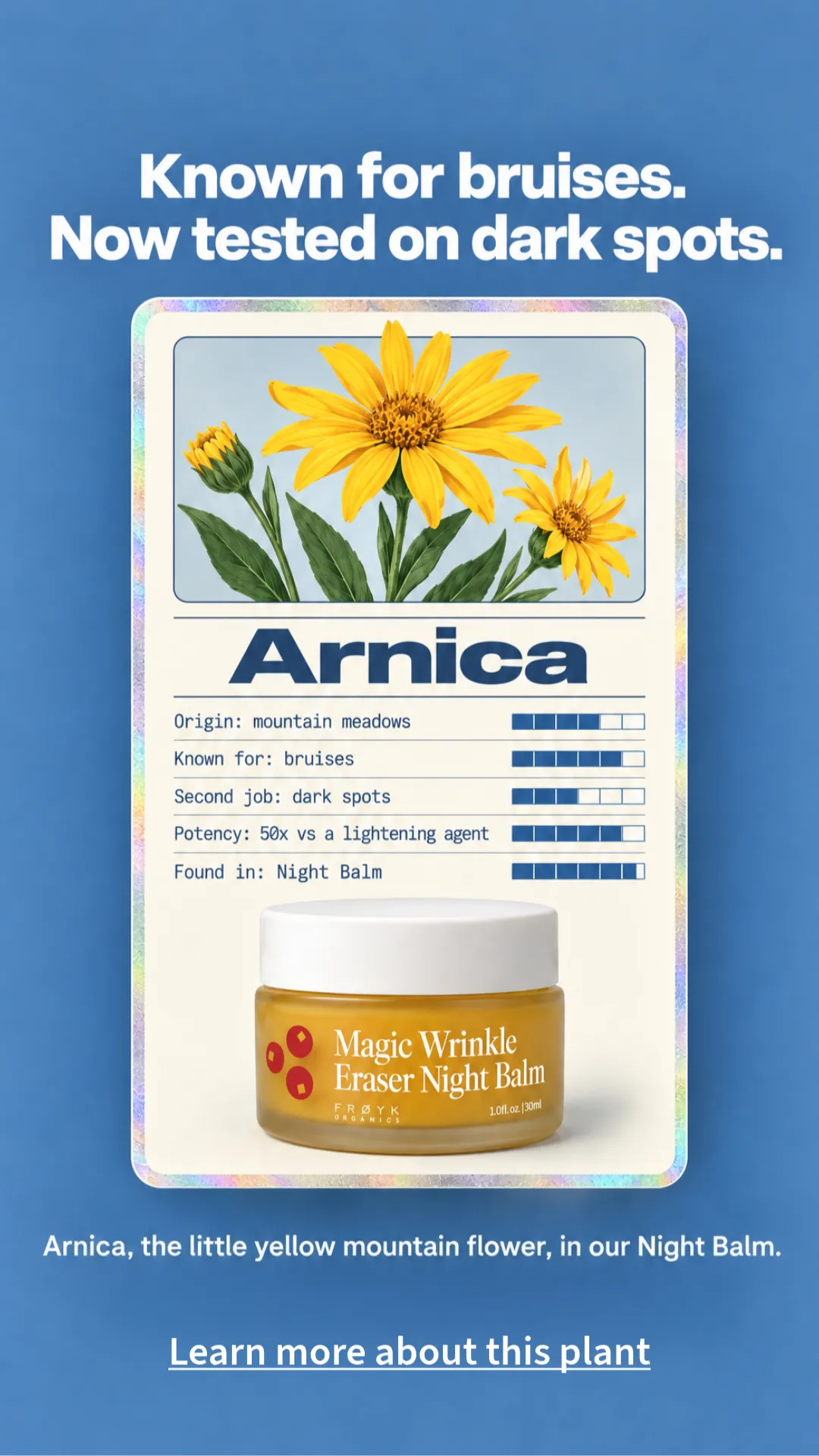
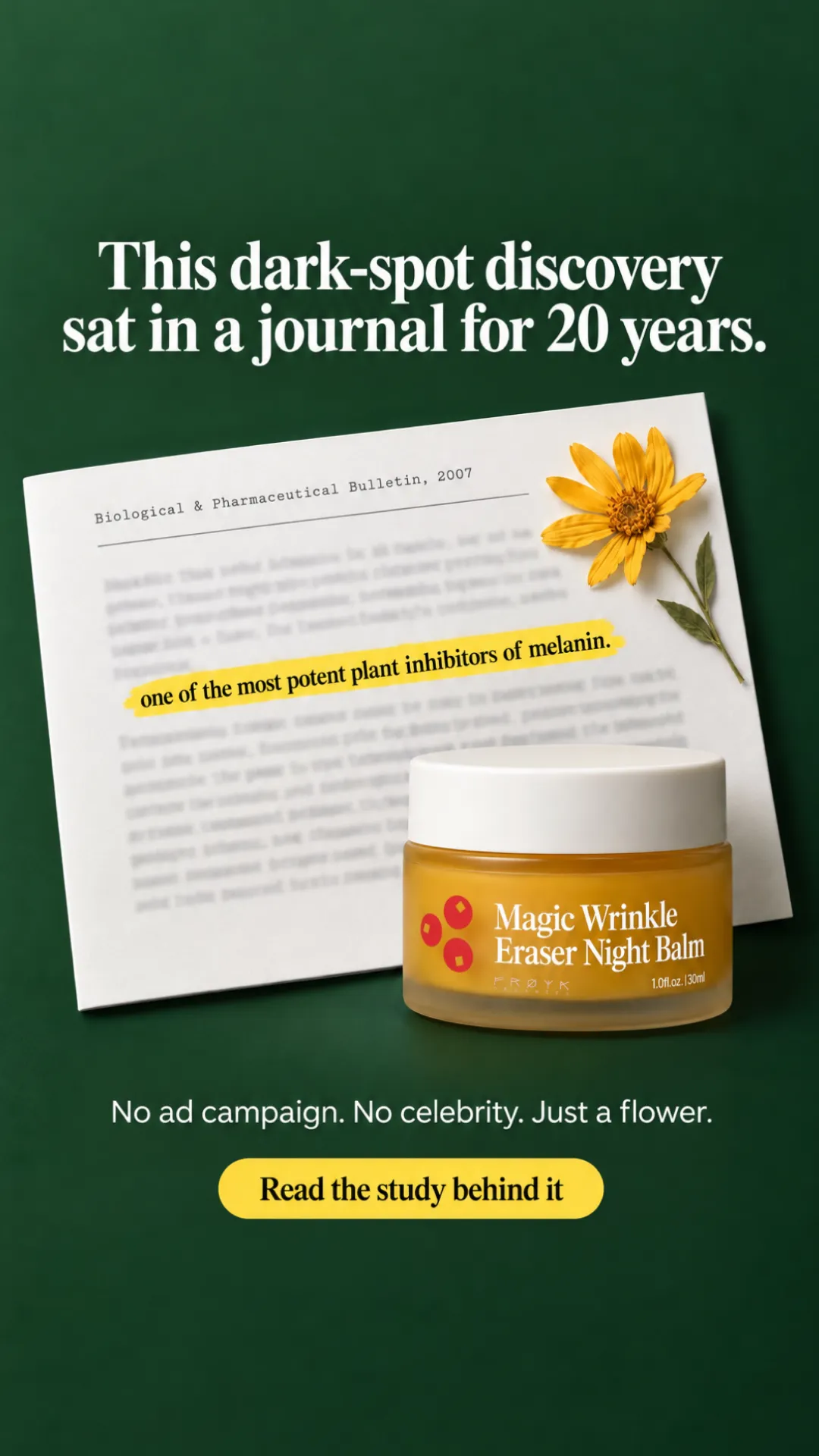
Some of the most famous dark-spot creams in the world work by killing the cells that make your pigment. Read that again. This isn't a rumor from a wellness blog. It's written in the medical journal Dermatology. Hydroquinone and its close chemical cousin, 4-methoxyphenol, get pulled inside your pigment cells and turned into highly toxic compounds. Those compounds destroy the cells. That's how the spot gets lighter. And the "gentler" routes? Dermatology reviews warn that peels and lasers can trigger new dark patches of their own. So for years, women with dark spots have been handed three choices. Poison the cells. Burn the surface. Or cover it up and hope nobody looks too closely. Now here's what made us stop everything. Scientists went looking inside a flower most people only know from the first-aid shelf. Arnica. The little yellow mountain flower people rub on bruises. Hidden in its flowers, they found a molecule nobody had described before. They put it on pigment cells in the lab, and it completely stopped pigment from building up. Then they compared it to 4-methoxyphenol, the same skin-lightening chemical from the journal above. The flower molecule was 50 times more potent! Fifty times. From a flower. And the researchers traced it to a completely different target: MITF, the master switch inside the cell that tells it to make pigment in the first place. Switch turned down. Pigment turned down. Then a second lab, screening a library of herbal extracts already approved for use in Japan, picked arnica out of the lineup. It lowered melanin again, and turned down tyrosinase, the enzyme that actually makes the color. Two labs. One flower. Same result. This is part of the reason arnica sits in Frøya's Night Balm, next to sea buckthorn, rosehip and pomegranate, the plants we lean on for a brighter, more even-looking tone. Give it 60 days. If your skin doesn't look better, you get every dollar back. Read more about it here and claim 40% off 👇 https://froyaorganics.com/pages/you-only-need-a-dash-of-arnica Sources: Kasraee B et al. (2003). Dermatology, 206(4):289-91. DOI: 10.1159/000069938 Callender VD et al. (2011). American Journal of Clinical Dermatology, 12(2):87-99. DOI: 10.2165/11536930-000000000-00000 Maeda K et al. (2007). Biological & Pharmaceutical Bulletin, 30(5):873-9. DOI: 10.1248/bpb.30.873 Usui K et al. (2015). Journal of Dermatological Science, 78(1):67-75. DOI: 10.1016/j.jdermsci.2015.01.014
More from Nordic Wellness Secrets

Hormonal Acne, Finally Calm
Nordic Wellness Secrets
Get rid of sun spots or money back
Nordic Wellness Secrets
Protect your collagen daily
Nordic Wellness Secrets

Protect your collagen daily
Nordic Wellness Secrets

Protect your barrier now.
Nordic Wellness Secrets

Support for faces that move.
Nordic Wellness Secrets

Firmer-looking jawline, naturally
Nordic Wellness Secrets
Firmer-looking jawline, naturally
Nordic Wellness Secrets
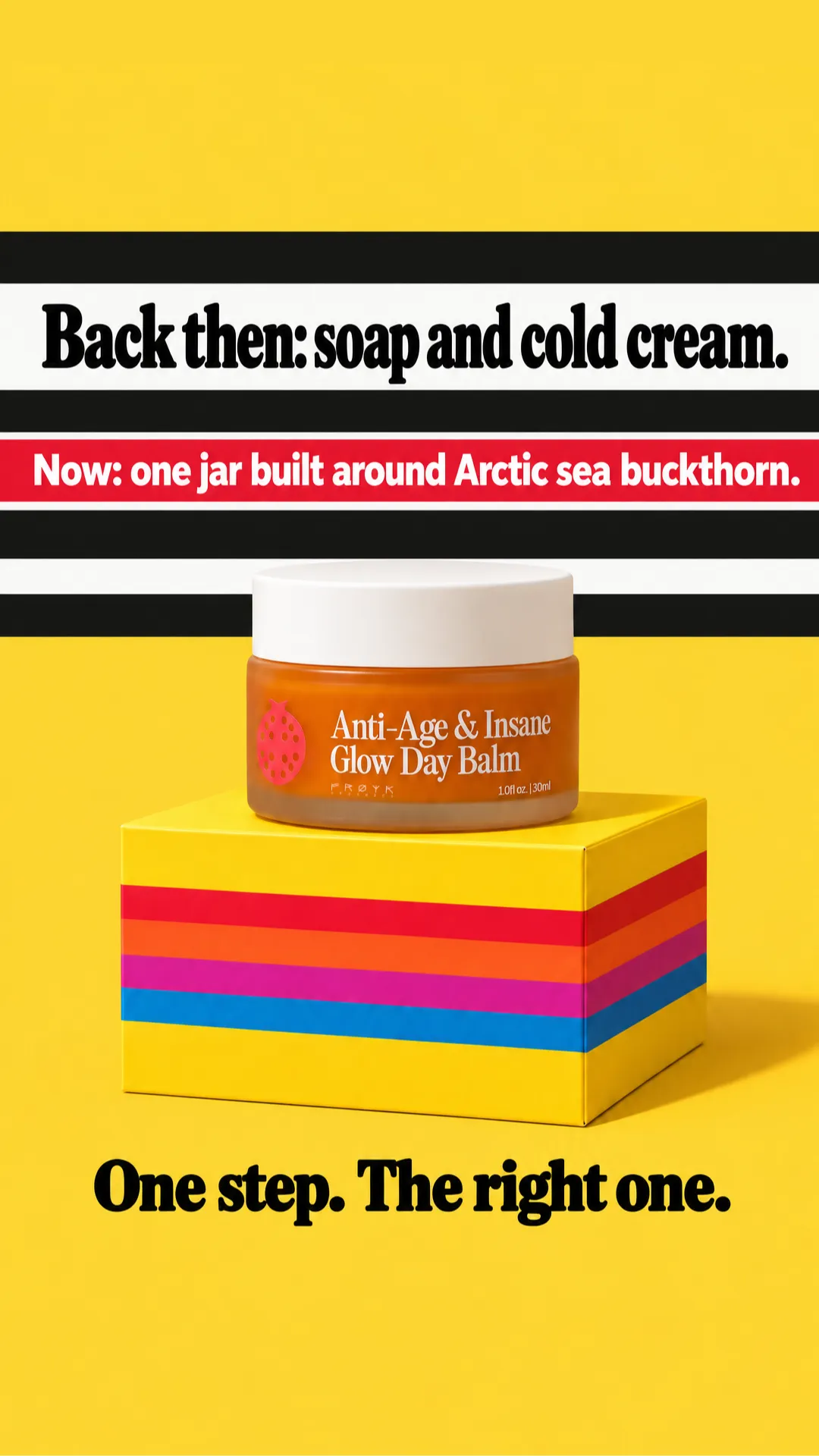
Firmer-looking jawline, naturally
Nordic Wellness Secrets
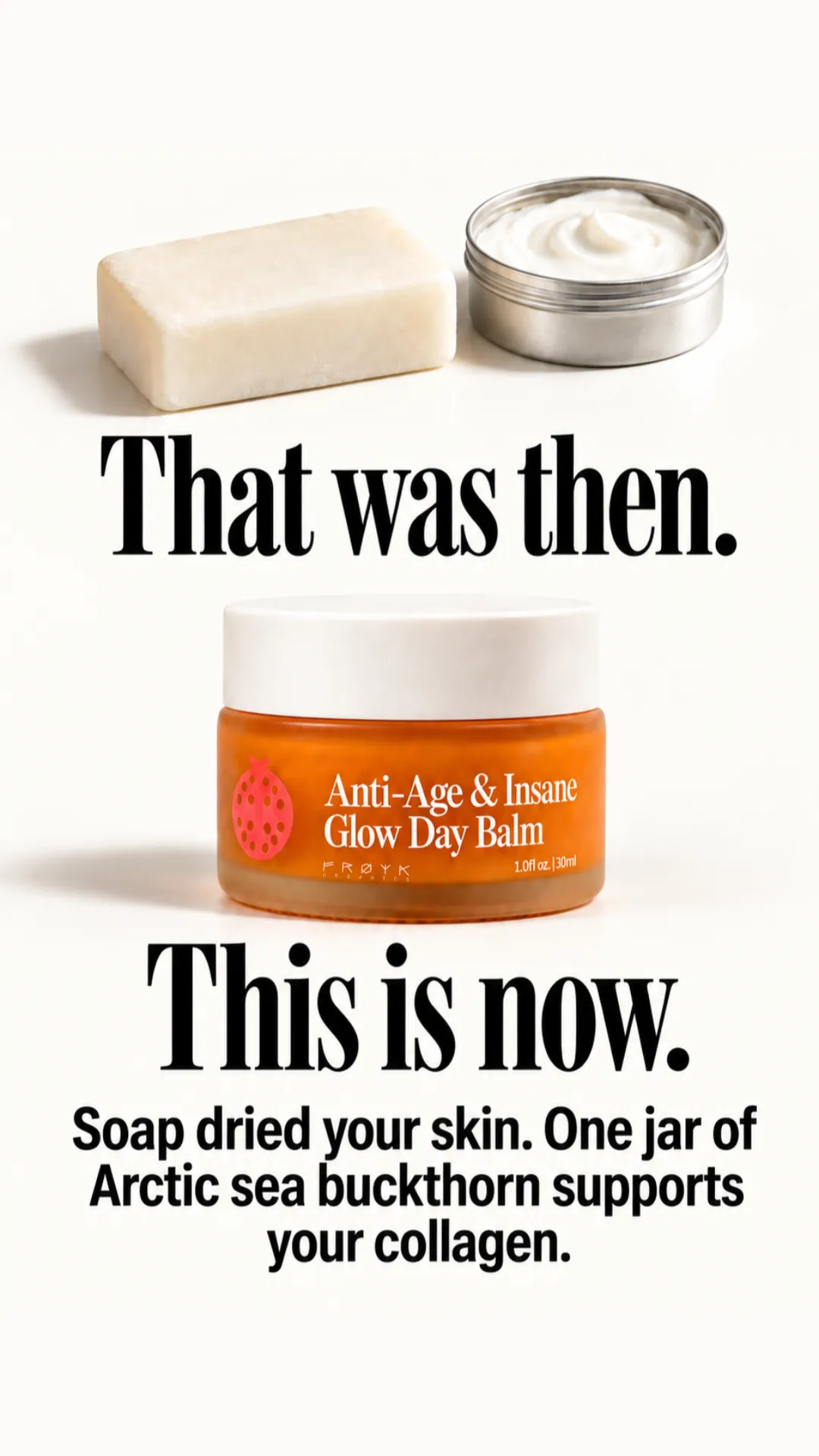
Firmer-looking jawline, naturally
Nordic Wellness Secrets

Arctic botanicals, zero fillers
Nordic Wellness Secrets

Why Women Are Raiding This Scandinavian Brand
Nordic Wellness Secrets

 Add to Chrome