The Korean Dermatologist Who Fixed My "Rosacea" In 20 Minutes
Ad Copy
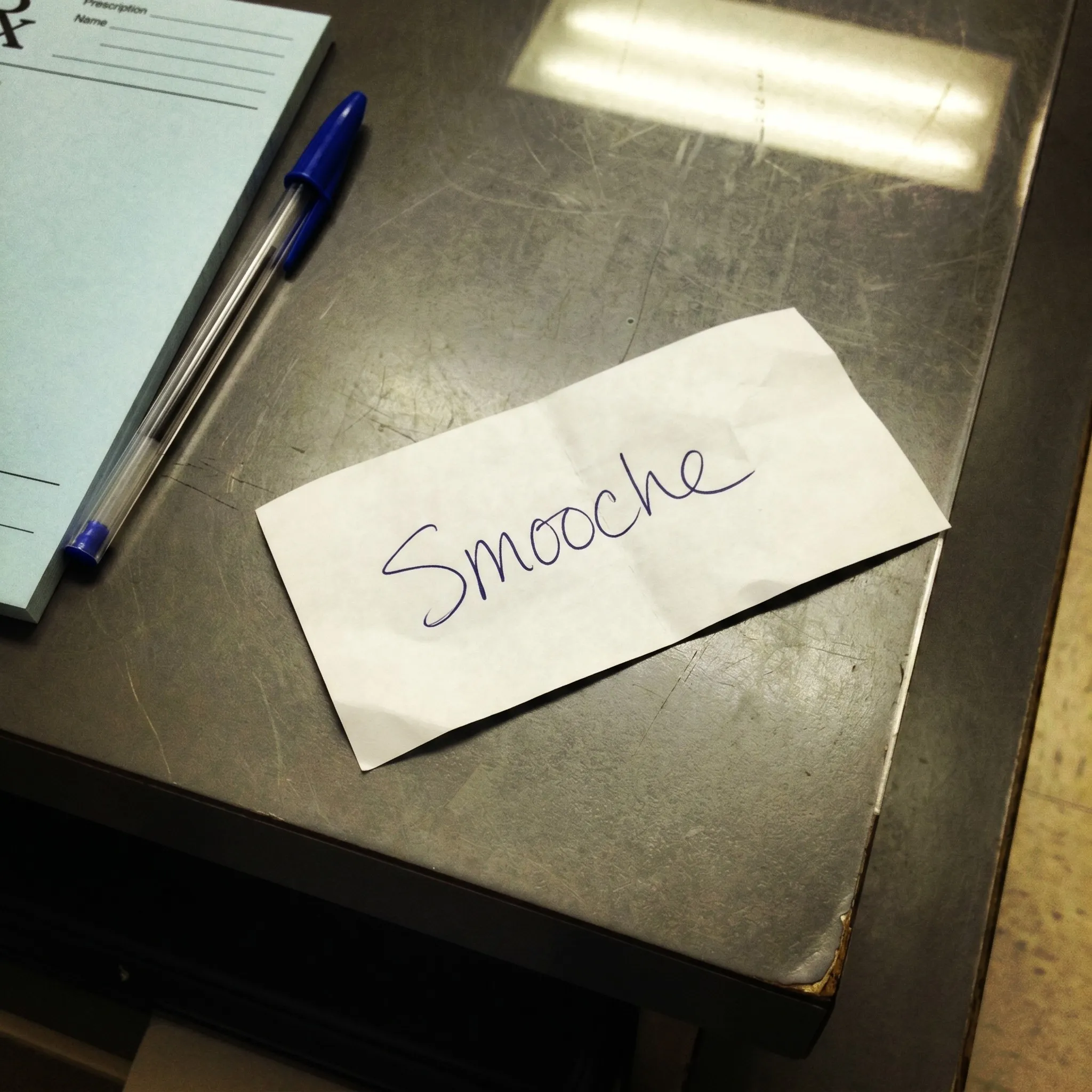
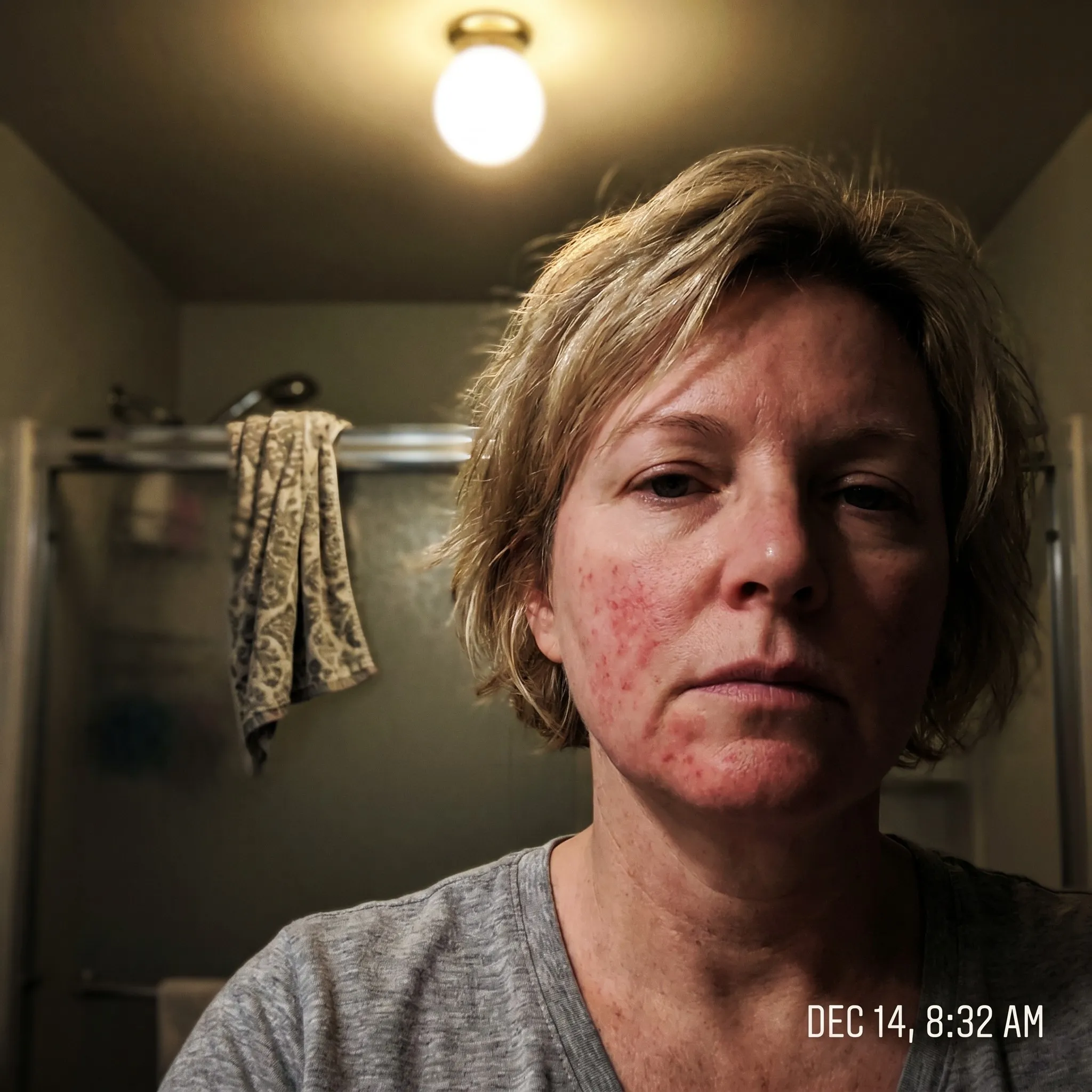
A dermatologist in Gangnam told me I had "foundation dermatitis." I had to write it down because I'd never heard of it. Her name was Dr. Park. She had a clinic on the fourth floor of a skincare building in a neighborhood called Apgujeong that my friend had taken me to on our fourth day in Seoul. I was 57, covered in a red rash I had been fighting for two years, and by the end of this you are going to be angry. Not at me. At what I'm about to tell you. I've been wearing foundation for forty years. Same routine. Same brands. Bobbi Brown for work. Estée Lauder Double Wear for weddings. Clinique for summer. I probably have $700 worth of foundation in my bathroom drawer right now. Two years ago, my face started burning. Not a rash you see. A rash you feel. A heat underneath my cheekbones. A tightness around my mouth. By the end of every workday my face looked like I had been slapped. My husband asked me twice if I was crying. I wasn't. My face was just doing that on its own. I went to my dermatologist in Chicago. He told me it was rosacea. Prescribed Soolantra. $180 a tube. "You'll be on this the rest of your life." Six months of Soolantra. No change. He prescribed Finacea. $140 a tube. "Give it another six months." Another six months. No change. Worse, actually. My jaw started getting it too. He prescribed oral antibiotics. Doxycycline. For six months. He warned me it would make me sun-sensitive. He didn't warn me it would destroy my stomach. Nothing worked. I spent $1,800 on prescription creams in eighteen months. I was still buying $60 foundation on top of that, using it every morning, watching my face get redder every night. I stopped going to my book club. I stopped wearing anything off the shoulder. I had a dinner party on my calendar for our anniversary and I canceled it two days before. My friend Hana was born in Seoul. We've known each other since our kids were in preschool together. She moved back to Korea four years ago after her mother got sick. Last year she called me and said, "Come visit. Come. Bring a book and your husband and just come." I went. That's how I ended up on the fourth floor in Apgujeong. Hana had made the appointment without telling me. She said, "You're going to Dr. Park. She does my mother's face. She does mine. You're going." Dr. Park was maybe 45. Glasses. A very direct way of looking at you. She examined my face under a magnifying lamp for a long time. She had me bring every product I used and lay them out on her desk. Five foundations. Two primers. A setting spray. A sunscreen. Three different moisturizers. She pointed at the foundations. "This is your problem." I said, "My dermatologist said it's rosacea." She said, very politely, "Your dermatologist is wrong." I want to be careful here. I'm not saying all American dermatologists are wrong. I'm saying she said something to me in her office that I have not been able to stop thinking about, and I want to tell you exactly what she said, because if I am sitting here with this story, you probably need to hear it. She said: the foundations I was using contained pigments that were bonded to my skin's oil and pH with chemistry designed to hold a shade. Hold a shade means the shade stays the same no matter what your skin does. But skin is not a canvas. Skin is alive. It sweats. It changes pH across the day. It gets hotter and cooler. And the foundation's fixed pigments fight all of that. The fight is what makes foundations "oxidize" — turn orange, turn gray, separate by lunch. And on some skin, especially older skin or sensitive skin, the fight doesn't just show on the surface. It goes under. It becomes a low-grade inflammation. It becomes a rash. It becomes what Dr. Park called, translating from Korean to English with a careful pause: "foundation dermatitis." She said the Korean skincare industry started taking this seriously about fifteen years ago. American companies still don't. Why would they? There's no money in a foundation that doesn't oxidize. There's no recurring revenue in a foundation that doesn't fight your skin. There IS recurring revenue in selling you a new bottle every six weeks because yours turned orange, and there IS recurring revenue in prescribing you Soolantra for life for a rash your foundation is causing. She was not angry about it. She said this the way you describe weather. Flat. Matter-of-fact. A problem she had explained a thousand times. I said, "So what do I do." She wrote something on a slip of paper and handed it to me. Smooche. She said, "Color-changing foundation. The pigments are wrapped in a shell until they touch your skin. Your skin's own warmth and pH release them only where they're needed. The foundation becomes the shade you are, instead of forcing your skin to be the shade it is. No fight. No inflammation. No rash." I stared at the slip of paper. I want to tell you what I said next, because I think it matters. I said, "I have been paying my dermatologist $180 a tube for a cream that cannot work because my foundation is causing the rash. Is that what you are telling me." She tilted her head slightly. She said, "Yes. That is what I am telling you." I said, "Why does my doctor not know this." She said, "In America, foundation is not medicine. In Korea, foundation is almost medicine. It is closer to a cream than to paint. Your system and ours are different." I sat in her office for another five minutes. I didn't say anything. Hana was in the waiting room reading a Korean magazine and I could hear her turning the pages through the wall. Dr. Park said, very gently: "I can prescribe you another cream, but the cream will not work because your foundation is the problem. You will go home and in two weeks your face will burn again. I am telling you to change the foundation." I bought it that night on my phone in our hotel room. $39. When I said the price out loud, Hana laughed. She said, "Every Korean woman over forty knows this. I assumed you knew." I didn't know. My first bottle arrived in Chicago four days after I got home. I didn't use any foundation for the week I was waiting. I just used gentle moisturizer. The rash was still there. Red. Burning. Familiar. I opened the bottle. It came out white. Like cream. I dotted it on my forehead and my cheeks and I blended. I watched it turn into my own skin color. I mean that exactly. I watched it, in real time, in my own bathroom mirror, become the same color as the parts of my face I hadn't covered yet. I wore it for a full workday. Nine hours. I came home and looked in the mirror. My face wasn't burning. I checked again before bed. Not burning. Two weeks in, the rash was visibly lighter. Four weeks in, it was gone. Not "managed." Gone. Eight weeks in, I stopped using the Soolantra. I stopped using the Finacea. I stopped the doxycycline I'd been on off-and-on for a year. I did it the careful way — weaned off, checked my face every morning, waited for the rash to come back. It didn't come back. I went back to my dermatologist for my six-month follow-up. He looked at my face and got quiet. He said, "What are you doing." I told him. I showed him the bottle. He wrote it down on my chart. He said, "Interesting." I don't go back to him anymore. I am telling you this because I spent $1,800 on prescription creams. I spent probably another $1,500 on foundation over those two years. I spent time away from my book club and my friends and one dinner with my husband on our anniversary. I spent two years believing a doctor who was, in good faith, wrong. My rash was not rosacea. My rash was chemistry. The Korean dermatologist, in twenty minutes, in a building I couldn't have found on my own, told me the truth that every American dermatologist I had seen could not or would not tell me. The fix was $39. I am not angry at my dermatologist. He was doing what he was trained to do. I am angry at the industry that trained him to never look at the foundation bottle on my counter, because there is no billing code for "your makeup is making you sick," and there is no recurring revenue in a chemistry problem that a $39 bottle solves. Hana didn't tell me because she assumed I knew. The women in Korea know. The dermatologists in Korea know. Nobody told me. I'm telling you.
More from Michelle Mason
My biggest secret revealed
Michelle Mason
My biggest secret revealed
Michelle Mason
My biggest secret revealed
Michelle Mason
My biggest secret revealed
Michelle Mason
My biggest secret revealed
Michelle Mason
My biggest secret revealed
Michelle Mason
My biggest secret revealed
Michelle Mason

The Korean Dermatologist Who Fixed My "Rosacea" In 20 Minutes
Michelle Mason

The Korean Dermatologist Who Fixed My "Rosacea" In 20 Minutes
Michelle Mason
The Korean Dermatologist Who Fixed My "Rosacea" In 20 Minutes
Michelle Mason
I Thought My Brows Were Gone for Good
Michelle Mason
Read this if you are considering lip fillers 👆
Michelle Mason

 Add to Chrome