A Dermatologist's Confession: It Was Never Your Skin
Ad Copy
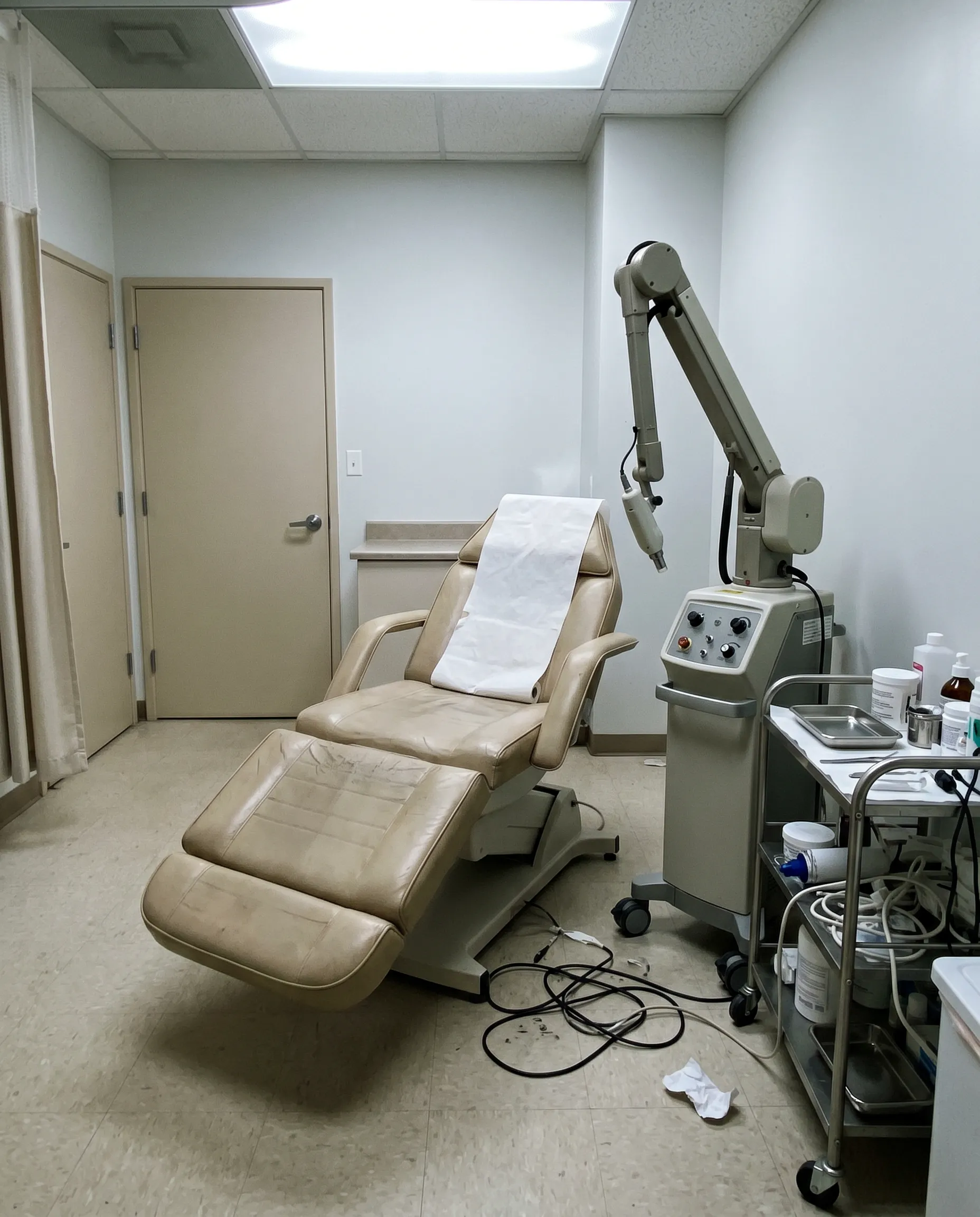
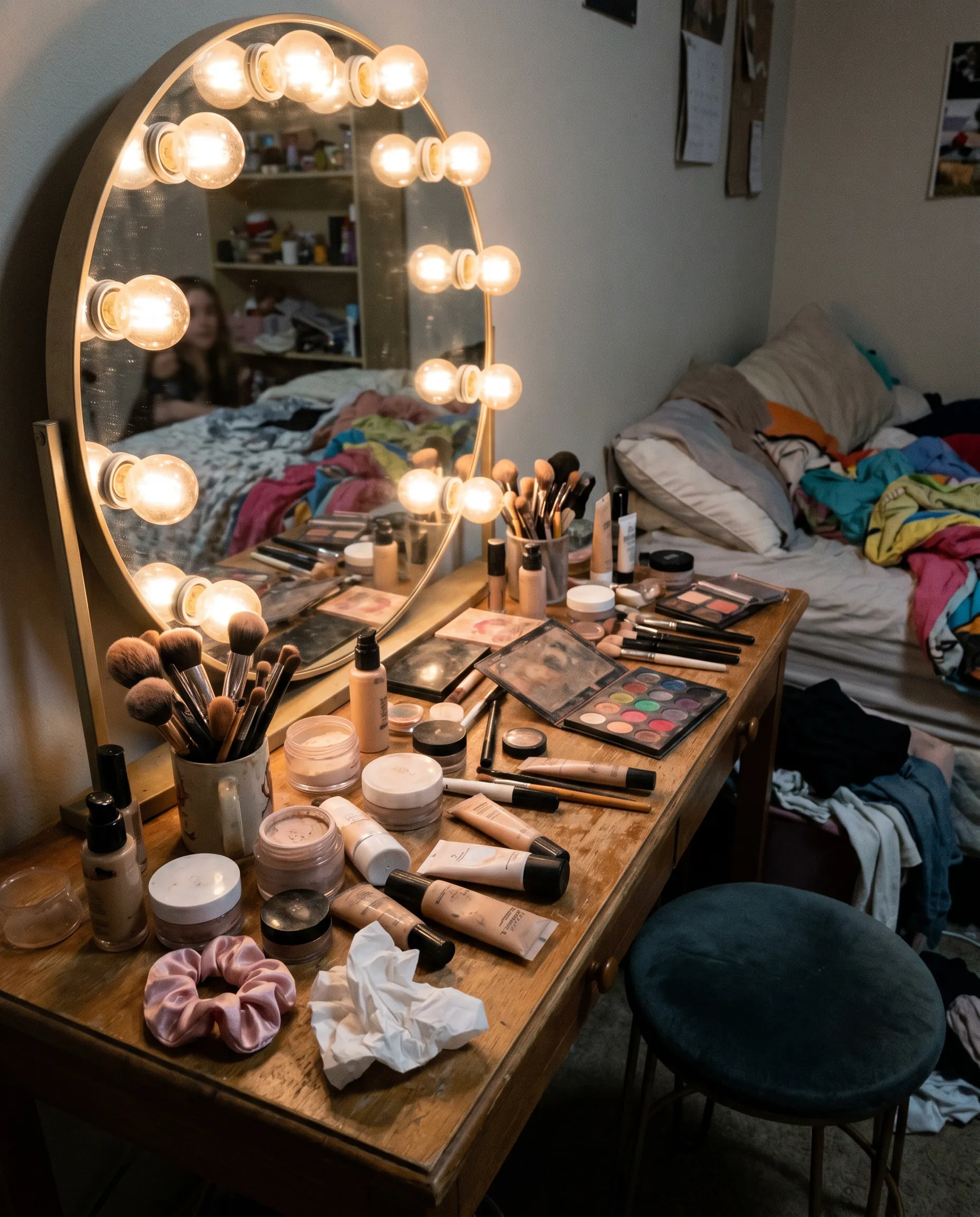
I'm a dermatologist, and by the end of this you're going to be a little angry. Good. So am I. For fifteen years women sat across from me and asked the same question in different words. Why do I look so tired. And I had a whole drawer of answers that cost money. A prescription retinoid. A series of laser sessions, five hundred dollars each, three to six of them. A "barrier" cream at two hundred and twenty a jar. Microneedling. Eventually, for some, a needle and a conversation about doing "just a little" around the mouth. Some of it helped. I want to be honest about that. I'm not telling you skincare is a scam. I'm telling you that in fifteen years of that woman sitting in my chair asking why she looked tired, not once did I say the simplest true thing. Because there was no money in the simplest true thing. Here is how the business actually works, and I was part of it, so I get to say it. There is a billing code for a laser. There is a markup on a cream. There is a recurring appointment in an injectable, because it wears off, by design, and she comes back in four months, by design. There is no billing code for "your foundation is aging your face." There is no recurring revenue in a thirty-nine-dollar fix you buy once and forget about. Nobody builds a quarterly business on that. Nobody sends a rep to my office with lunch for the whole staff to tell me about that. So the entire apparatus, mine included, points the woman's attention at her skin. Her collagen. Her sun damage. Her age. Things she should feel a little bad about and spend a lot of money on. And it points her attention away from the cheapest, most fixable thing on her whole face. Let me tell you what I was watching the entire time and not naming. A woman would come in convinced her skin had "fallen" over the last two years. Drier. More lined. Older around the mouth. Half the time, I'd look closely, and her skin was fine. What had changed was what was sitting on it. Most foundations are built to be one color in the bottle and a slightly different color on your face, because they oxidize. They react with the oils and the air on your skin and they shift, usually warmer, usually toward orange, over a few hours. On younger skin you barely notice. On skin over fifty, with finer texture and a few real lines, that orange cast and that settling reads as exactly one thing. Old. Then it sinks. Foundation is mostly pigment suspended in something, and that something is heavier than your skin. Over a morning it migrates into every crease you have and pools there. So the lines you were trying to soften become the lines the makeup outlines in high-definition. The woman sees that at 11 a.m. in her car mirror and concludes her face is failing. It isn't. Her foundation is. And there is no appointment to book for that, so I never sent her to book one. There's a second layer to this I should say out loud, because it's the part that made me angriest once I saw it. Think about how foundation is even sold to her. She stands at a counter under lighting designed to flatter, and a stranger picks one of forty shades and swears it's "her." She takes it home. In her own bathroom, in honest light, it's wrong. Too pink. Too yellow. Too dark by an hour. So she blames herself for choosing badly, and she buys another. And another. There are women who have spent three hundred dollars in a year just returning foundations that betrayed them in their own mirror. The whole system is built so that the failure always feels like her fault. Her skin. Her choice. Her age. Never the product. Never the people selling it. I sat inside that system for fifteen years and pointed at her collagen. And I want to be clear that the women weren't doing anything wrong. They were doing exactly what they'd been trained to do. See a flaw, buy a fix, see it again, buy a better fix. The flaw never resolves, because the thing creating half of it every morning is still sitting in the makeup bag, reapplied daily, oxidizing on schedule. It is a closed loop, and the loop is the product. Not a bug. The business. I changed my mind because of my own face, which is the only face I'm allowed to be vain about in public. I'd accepted the orange jaw. The 11 a.m. check. The dimmer lights in my office. A colleague handed me something at a conference, almost as a joke, and told me to put it on the back of my hand and wait. It went on nearly colorless. Then, over about thirty seconds, against the warmth of my own skin, it changed. It found my undertone, the pink I have never once matched at a counter, and it simply became my skin. Even. Quiet. No orange, then or four hours later. I rubbed at it with a thumb to see if it would streak. It didn't. I checked it again in the awful light of the conference bathroom an hour later, the kind of light that exposes everything. It was still exactly my skin. The brand is called Smooche. I'd never heard of it, which tells you something, given what I do for a living and how the good stuff usually finds me first. I read the formula before I read a single review, because that is the one professional habit I'll never apologize for. Micro-encapsulated mineral pigments that stay neutral until they meet the warmth and undertone of your skin, then adjust within seconds to match you. That's the color change. It's why there's no shade to get wrong and no orange to oxidize into. SPF 15 in it. Non-comedogenic. Built in Korea, formulated for skin over fifty, the demographic my entire industry quietly gives up on. Then I read the reviews. Four point eight stars across more than three hundred fifty thousand of them. Three hundred ten dermatologists had reviewed the formula. In an independent panel, ninety-seven percent said it matched their tone in seconds and ninety-five percent said it didn't feel heavy or mask-like. It costs thirty-nine dollars. I have written treatment plans that cost a woman three thousand dollars a year for a result this foundation delivered on her face in thirty seconds for the price of two lattes a month. That is the sentence I couldn't stop hearing in my own head. So I'll hand it to you instead of swallowing it. I started keeping it in the office. Not for sale. I don't sell product, and I'm not about to start. I keep it the way my colleague kept it, to put in a skeptical woman's hand and say wait thirty seconds. A patient I'd been treating for two years, the one most convinced her face had "gone," tried it at my counter. She watched it match her. She went quiet, then she got a little angry, the same way you might be getting now. "How long has this existed," she said. "Long enough," I said. "Why didn't anyone tell me." I didn't have a clean answer. The honest one is the whole point of this. She came back the next month. Two of her friends had asked if she'd had work done. Her husband asked if she'd been sleeping better. She told all of them it was a foundation and not one of them believed her, which is the most predictable thing in this entire story. There was another woman, seventy-one, who'd been saving for a procedure she didn't need, for a problem that was mostly the foundation she'd worn since the nineties. She tried it at my counter and got quiet and then asked me why a doctor had never just said this to her. I didn't have a good answer. I had fifteen years of not saying it. That's the whole machine in one sentence. The cheapest fix on her face was the one nobody in the building had any reason to mention. So here is what I want you to do, because I can't undo fifteen years of pointing women at the expensive thing. Try the cheap thing first. It comes with a thirty-day money-back guarantee and a shade-match promise, so you risk nothing but the time it takes to put it on the back of your hand and wait. Shipping is free. It does sell out; last I checked the page it was at eighty-nine percent gone, which, for a thirty-nine-dollar product nobody profits from prescribing, tells you the women who find it tend to tell other women. I wrote down all seven things I tested before this one, with prices and exactly how each one failed me. That breakdown is the link below. Nobody told that woman in my chair. For fifteen years, I didn't tell her either. I'm telling you now.
More from Dr. Michelle Mason MD
A Dermatologist's Confession: It Was Never Your Skin
Dr. Michelle Mason MD

A Dermatologist's Confession: It Was Never Your Skin
Dr. Michelle Mason MD

"Mom, Just Try It Once." I Should Have Listened Years Ago.
Dr. Michelle Mason MD
A Dermatologist's Confession: It Was Never Your Skin
Dr. Michelle Mason MD

"Mom, Just Try It Once." I Should Have Listened Years Ago.
Dr. Michelle Mason MD
"Mom, Just Try It Once." I Should Have Listened Years Ago.
Dr. Michelle Mason MD
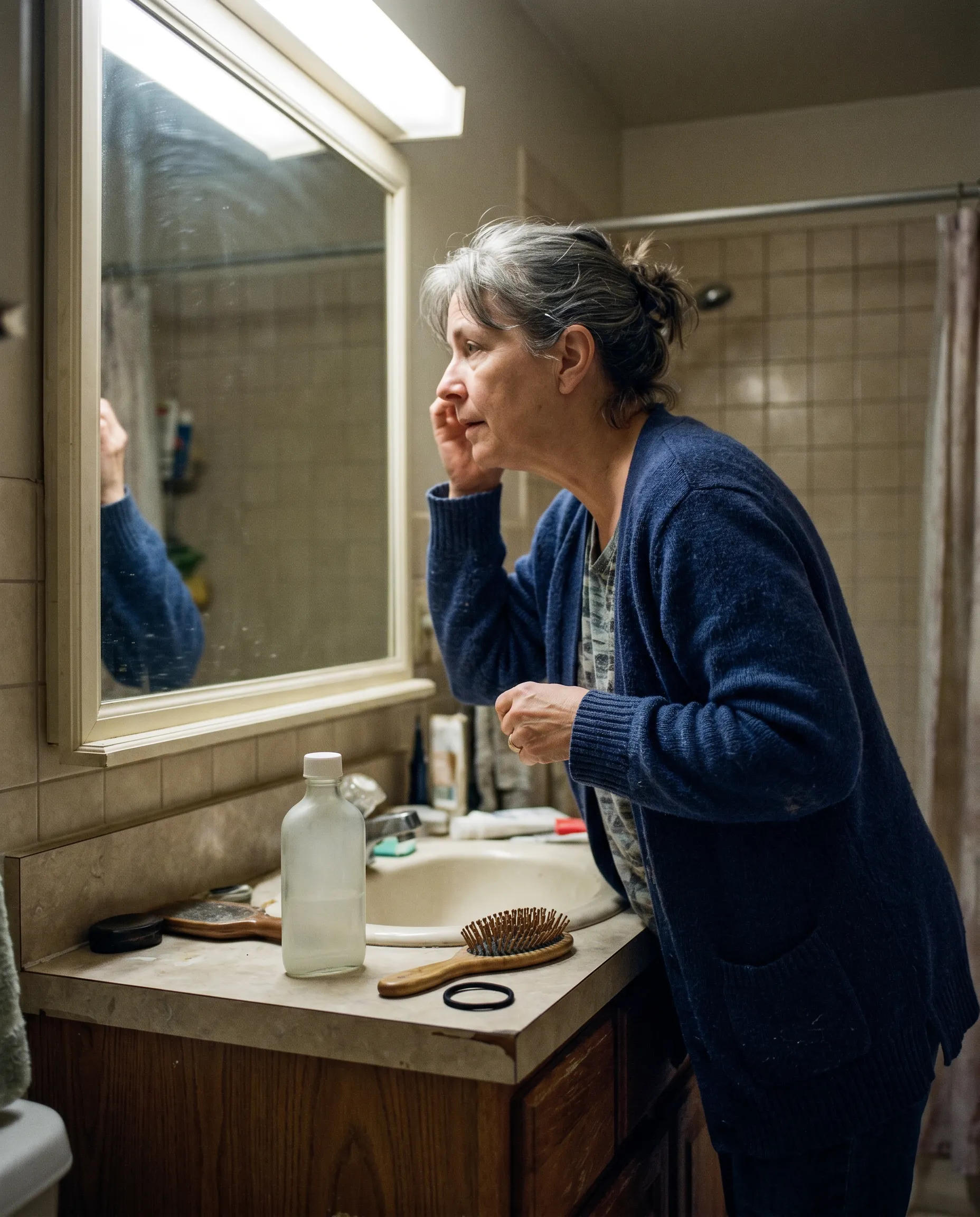
"Mom, Just Try It Once." I Should Have Listened Years Ago.
Dr. Michelle Mason MD
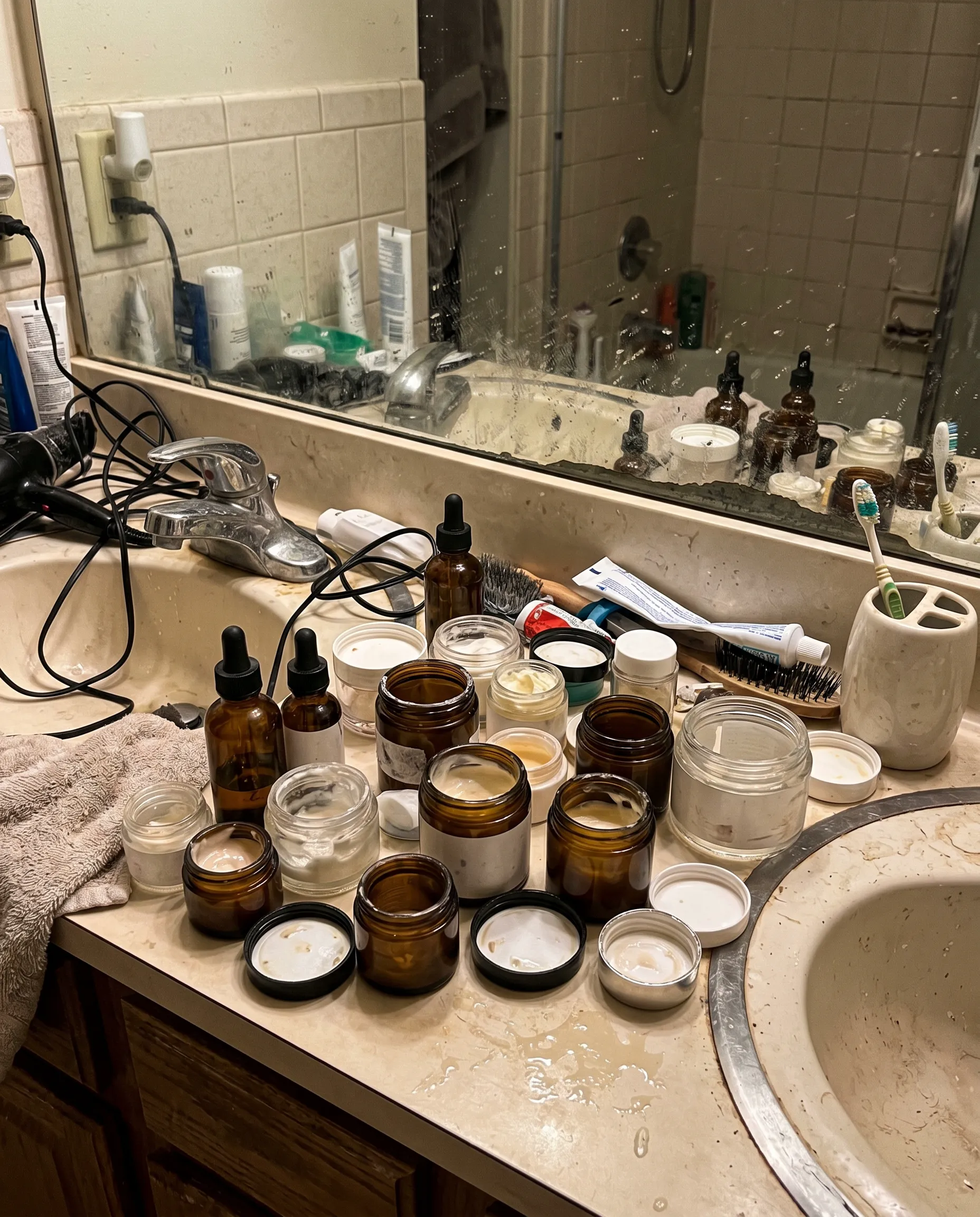
A Dermatologist's Confession: It Was Never Your Skin
Dr. Michelle Mason MD

"Mom, Just Try It Once." I Should Have Listened Years Ago.
Dr. Michelle Mason MD

One Bag Travel
Ministry of Supply

Réponds à un questionnaire & obtiens ton plan personnel
Dr. Kegel: For Men’s Health & Wellness

The dance routine we didn't know we all needed 🔥
Just Eat UK

 Add to Chrome