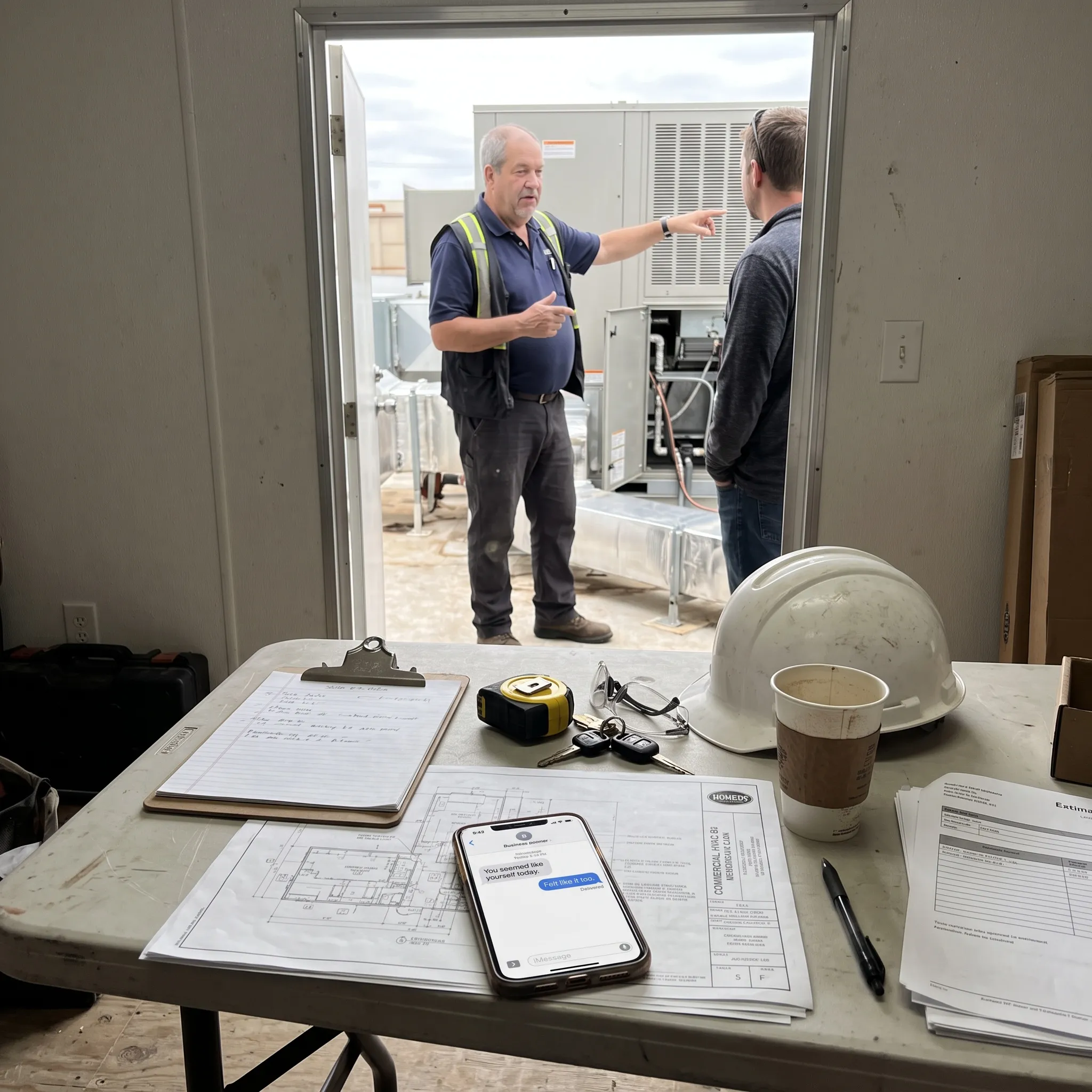
I ALMOST TOOK THE CLIENT MEETINGS AWAY FROM THE MAN WHO BUILT THE COMPANY.
Ad Copy
Mark hired me when I was twenty-four. I am thirty-two now, and I own part of the company. But when I started, it was still very much his business. Commercial HVAC. Fourteen employees now. Six trucks. Schools, restaurants, office buildings, and the kind of emergency calls that arrive five minutes before everybody is supposed to go home. Mark built it from nothing. He could walk into a mechanical room, listen for half a minute, and tell you which unit was failing. He remembered every client. Every building. Every technician’s strengths. Every mistake the company had made and how to keep us from making it again. That was the man I learned from. Then, over about eighteen months, small things started changing. He would stand in the middle of a walkthrough and lose the next word. Not often. Just enough that I started finishing sentences for him. He began asking me questions he already knew the answer to. “Was that a five-ton unit or seven and a half?” “Did we already quote the electrical?” “Which building was this again?” At first, I thought he was testing me. Then I realized he genuinely could not remember. He also started sitting in the truck longer before coming inside. I would see him through the office window, parked ten feet from the door, staring at his phone without moving. By two in the afternoon, he looked finished. Not normal tired. Emptied out. The weight around his middle had been climbing too. He joked about it, but less often than before. His work shirts pulled tight when he reached overhead. He stopped joining us when the crew went out for lunch because he said he had emails to catch up on. Most days, I think he was sleeping in his truck. I did not know how to bring it up. How do you tell the man who built the company that he no longer looks comfortable representing it? I said it the soft way. I told him I could take more client walkthroughs. Said it would free him up to focus on operations and the crews. Said he had earned the right to step back from some of the sales work. He knew exactly what I meant. “So you think I’m slipping.” I told him that was not what I said. It was what I meant. He agreed. For the next month, I handled nearly every new client meeting. Mark stayed in the office more. The company continued to operate. But it felt wrong. He was still the person every difficult decision eventually came back to, yet we were quietly moving him away from the part of the business he had always been best at. A few weeks later, he went for a physical. His standard labs did not show anything alarming. He was told that most of what he was describing could come with age, stress, work, sleep, and weight. That was probably true. But it did not answer the question he actually cared about: Why was the same man, doing roughly the same work, suddenly responding so differently? He started reading about how healthy testosterone relates to normal male energy, muscle maintenance, recovery, and body composition. He did not conclude that testosterone explained everything. He did realize he had been treating every part of the decline as a separate inconvenience. Caffeine for the afternoon crash. More cardio for the belly. Pre-workout for the gym. More sleep on the weekend for recovery. Nothing connected. Nothing lasted. He decided to build one routine he could follow for ninety days. Keep the walking. Keep the reasonable meals. Keep two weekly strength sessions. Add something simple that was designed to support healthy natural testosterone and metabolism instead of promising to replace everything else. That was when he started T-STRIVE. Three capsules a day. He did not tell me at first. The first difference I noticed was not his weight. It was that he started getting out of the truck immediately again. Around week three, he walked into the office at two-thirty and asked whether I wanted to review a difficult estimate. Normally, that time of day, I would have waited until morning. We worked through the whole proposal. He caught a mistake I had missed. Around week six, he stayed through a late crew meeting and led most of it himself. No wandering sentence. No losing the thread. No rubbing his eyes and looking at the clock. Around week eight, one of the technicians asked me privately whether Mark had started training again. I said I did not know. At week nine, a major client called. Three buildings. Old equipment. No accurate drawings. Competitive bid. I started putting the appointment on my calendar. Mark said, “I’ve got it.” I hesitated long enough that he noticed. He looked at me. “I said I’ve got it.” So I let him go. The walkthrough took almost three hours. When he came back, he had handwritten notes on every system, photos organized by building, and a complete scope in his head. He presented the recommendation to the client without looking at the paperwork once. We won the job. Afterward, I texted him: **“You seemed like yourself today.”** He did not answer for almost an hour. Then he wrote: **“Felt like it too.”** That was when he told me about T-STRIVE and the ninety-day routine he had been following. At day ninety, he was thirty-four pounds down. That was his individual result, not a guaranteed one. But from my side of the company, the meaningful result was simpler: I stopped quietly preparing to replace him. Mark is not trying to be thirty-two. He does not need to be. He has judgment I do not have yet. Relationships I did not build. Experience that cannot be recreated by putting a younger man in the room. The problem was not that he had become too old to lead. The problem was that he had accepted feeling progressively worse as the unavoidable price of getting older. T-STRIVE did not run the company for him. It did not replace food, movement, sleep, or the conversations he needed to have with his doctor. It became one repeatable part of the routine that helped him begin moving in the right direction again. If people at work have started saying things such as: “You’ve earned the right to slow down.” “Let somebody younger handle that.” “Maybe focus on the office side.” Listen carefully. Sometimes they are recognizing genuine limits. Sometimes they are reacting to changes you have felt too but have not wanted to examine. The T-STRIVE quiz takes about sixty seconds. It explains the daily routine, the ninety-day plan, and the current three-month option. Read it. Then decide whether it belongs inside the routine you are already working to improve. 👉 https://tstrive.com/product-long
More from High Performance Mode

Up to 60% OFF! 💪💪💪💪
High Performance Mode

Up to 60% OFF! 💪💪💪💪
High Performance Mode

Up to 60% OFF! 💪💪💪💪
High Performance Mode
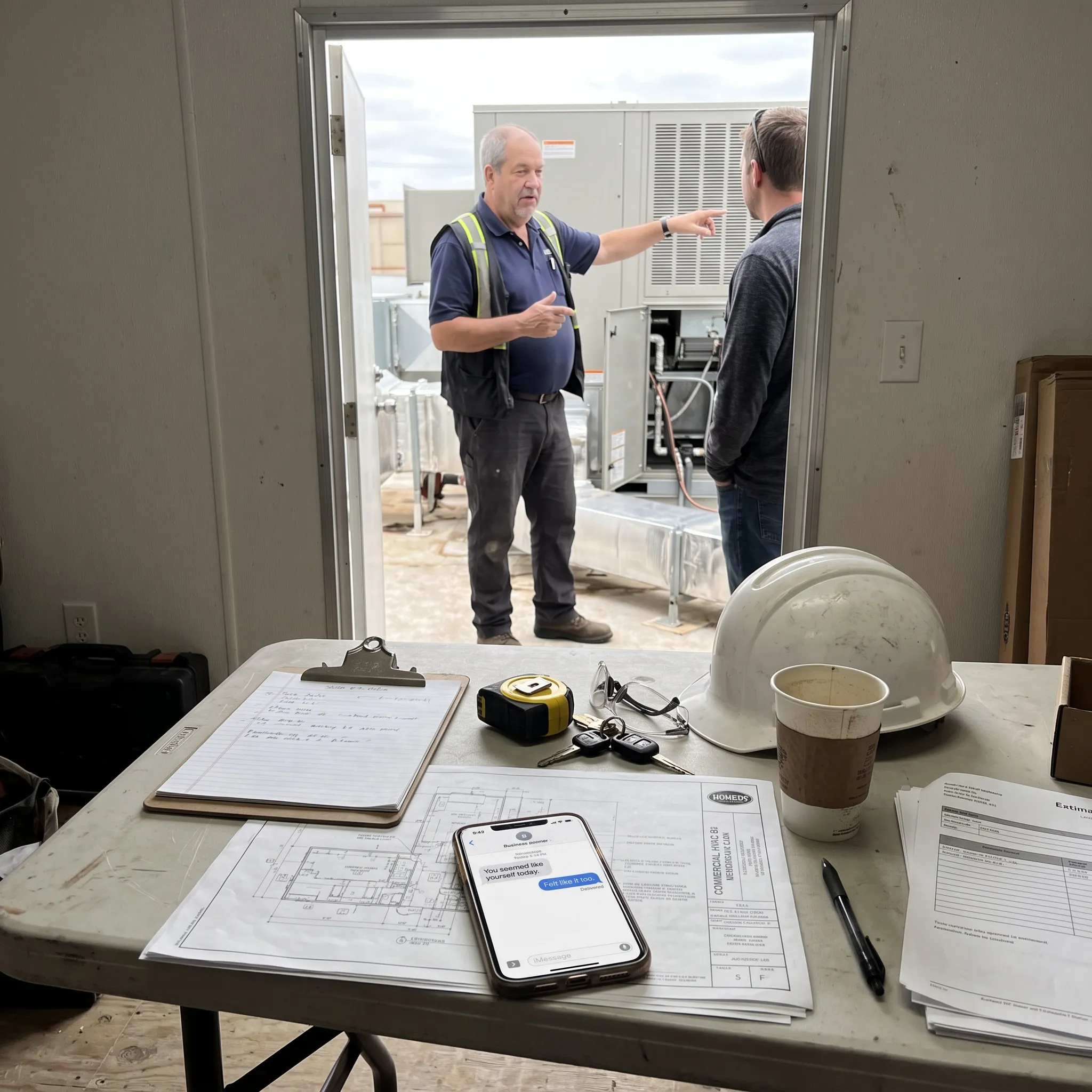
I ALMOST TOOK THE CLIENT MEETINGS AWAY FROM THE MAN WHO BUILT THE COMPANY.
High Performance Mode
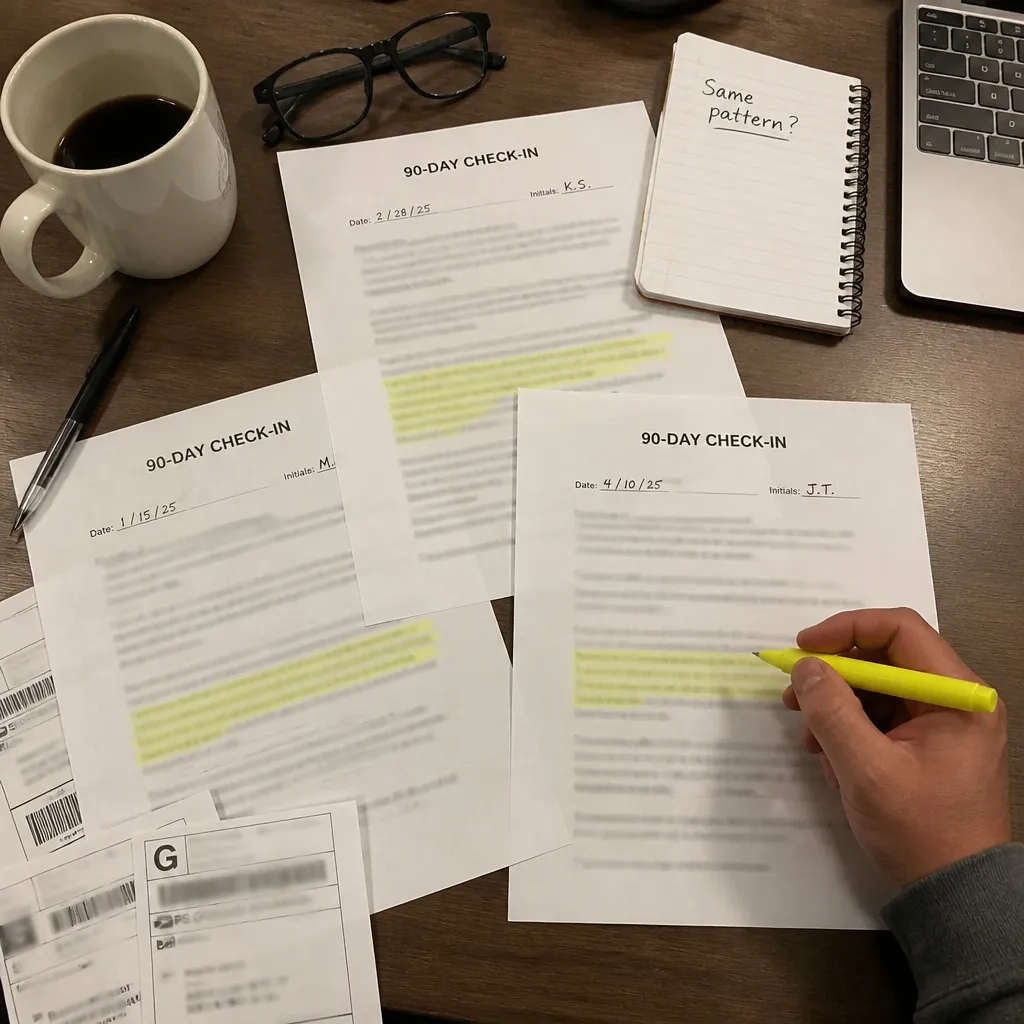
THE FIRST PERSON TO NOTICE WASN’T ALWAYS THE MAN TAKING IT.
High Performance Mode

Is this the best way to relieve dry eye?
The Eye Relief Co.

Exclusive deals on hair straighteners
CLOUD NINE

Stepstone ist deine helfende Hand, wenn es um den richtigen Job und dein Gehalt geht!
Stepstone.de

🧬 Boost Circulation Naturally – Free Trial! Say goodbye to cold feet, numbness, and poor blood flow. VascuFlow supports healthy circulation and vascular health – starting from the inside. 🌿 Herbal-based & fast-acting 🦶 Relieves leg & foot discomfort 💧 Helps improve blood flow & energy 🎁 Try it FREE – Just Cover Shipping Claim it: https://oranicextract.com/products/luvost-cayenne-pepper-drops 👉 https://oranicextract.com/products/luvost-cayenne-pepper-drops
Oranic Extract

Metal Posters
Displate

Calm & Relaxed Dry Food
Pooch & Mutt

👉 Take a Quiz
Calorie Counter & Food Tracker

 Add to Chrome