Support stamina and heart health every day
Ad Copy
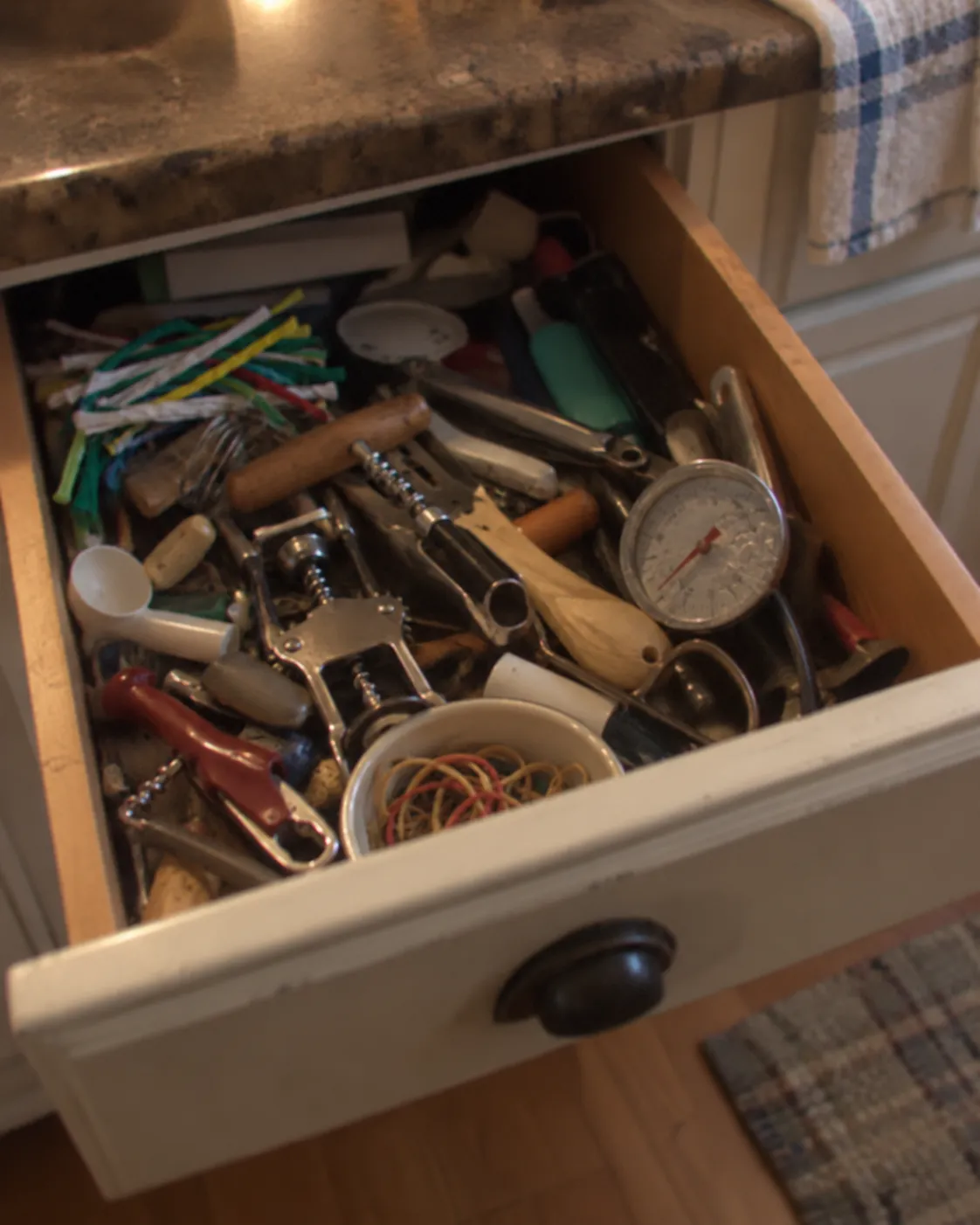
Every kitchen has a drawer with one tool in it nobody can name, and everybody knows how to use. You know the drawer. Second from the top, or the bottom one that sticks. It’s the one that holds whatever didn’t fit anywhere else. Twist ties. A meat thermometer with a cracked face. Three corkscrews, which is two more than any household has ever needed. And somewhere toward the back, the tool. Maybe it’s a wooden thing with a notch cut in one end. Maybe it’s a wire loop on a handle, or a small flat blade with a hook on the side, or something that looks like a spoon that changed its mind halfway. You don’t know what it’s called. Nobody in the house does. If you’ve ever tried to look it up, you didn’t get far, because you didn’t know what to type. But you know what it does. You know you grab it when the jar lid won’t come up, or when the pastry needs crimping, or when the thing in the pan needs turning and the spatula’s too wide. Your hand goes straight to it without your head being asked. Here’s how it got there, as near as anyone can tell. It came from somebody. A mother’s kitchen, an aunt’s, a house that got cleared out one summer. Nobody remembers who packed it. It was in a box marked “kitchen,” and when the box was unpacked, it went in the drawer. And then somebody used it. That’s the whole history. No instructions came with it. Nobody sat you down and explained. You watched someone use it once, or you figured it out on a Saturday, and after that it was just what you reached for. That’s worth noticing, because it’s the opposite of how most things get kept. Most things get kept because someone tells you to keep them. The good china, the photo albums, the letters in a shoebox. They come with a story, and the story is the reason they survive. The tool in the drawer doesn’t have a story. Nobody would keep it for sentimental reasons; nobody’s sure who it belonged to. It survives for a plainer reason. It gets used. Every week or so, the drawer opens, and the hand finds it, and it does its one small job, and it goes back. That’s the only thing keeping it in the house. If it stopped being useful, it would be gone in the next clear-out, and nobody would mourn it. Some heritage is like that. Not the kind with a plaque, or a founding date, or a family tree. The kind that lasts because each generation of hands found it handy and put it back in the drawer. It doesn’t need anyone to defend it. It doesn’t need a story told about it. It just needs to keep being reached for. So here’s the thought, and it comes from kitchen drawers, not from anywhere more reliable: The things that last longest in a kitchen may not be the ones with the best story. They may be the ones that kept being useful, quietly, long enough that nobody remembers a time before them. It may be worth opening your own drawer and finding the thing you reach for without thinking. Not to find out what it’s called. Just to notice how long it’s been there. Now the seam, stated the way we always state it. Nothing above is about a supplement, and the observation doesn’t change when the subject is one. None of the tools in that drawer is for beets, as far as anyone knows. The drawer is a drawer. But there’s one line of history we can give you, and we’ll give it plainly. Beetroot has been eaten as a food for thousands of years. That history is a fact about kitchens, not about bodies. Longevity isn’t proof of a health effect, and we’re not offering it as one. That history belongs to the vegetable. What follows is simply what’s on our label. Rosabella Beetroot is organic beetroot powder in capsules — two capsules, once a day. What it is, from the label: 1,300mg of organic beetroot powder per serving — a serving being those two capsules. One active ingredient, with the amount printed plainly on the label — nothing to decode. The other ingredients, also from the label: hypromellose, which is the vegetable capsule; microcrystalline cellulose; and magnesium stearate. Non-GMO, third-party lab tested, produced under Good Manufacturing Practices, made in the USA from globally sourced ingredients. It contains no caffeine. Sixty capsules in a bottle; thirty days. If it joins a kitchen at all, the labeled serving direction is two capsules, once a day. Where that sits — in a drawer, on a shelf, or nowhere in particular — is up to you. Follow the directions on the label. One thing before anything goes in a cart: talk to your doctor or pharmacist before adding any supplement, especially if you take any medication. This goes alongside the rest of a routine — the meals, the walks, the sleep — not in place of any of it. 4.4/5 from 17,672 Amazon ratings (as of October 14, 2026) And the last part, plainly. Nobody here is going to promise you a transformation. We’re not going to tell you what you’ll feel or when. Bodies are different, and yours doesn’t owe an advertisement anything. The drawer still sticks. The tool is still at the back, behind the corkscrews. Somebody will reach for it this week without thinking, the way somebody did last week, and the week before that. What we provide is a format, stated as a fact. The format is capsules. The labeled serving is two capsules, once a day. P.S. If you’d like the essay’s test for your own kitchen, it’s one question: what’s the thing in your drawer that nobody can name, and everybody knows how to use? There’s no answer to send anywhere. It may just be worth knowing how long it’s been there. P.P.S. What it is, plainly: organic beetroot powder in capsules — 1,300mg per two-capsule serving, one active ingredient, amount printed on the label, no caffeine, non-GMO, third-party lab tested. Thirty days a bottle. Those are the basics. P.P.P.S. Not satisfied for any reason? Return the product within 90 days of delivery for a full refund. Individual experiences vary. https://track.tryrosabella.com/cdc16426-3e48-40a7-9fad-21098084f6cf These statements have not been evaluated by the Food and Drug Administration. This product is not intended to diagnose, treat, cure, or prevent any disease.
More from Rosabella

Support stamina and heart health everyday
Rosabella
Support stamina and heart health every day
Rosabella

Support stamina and heart health every day
Rosabella

Support stamina and heart health every day
Rosabella

Restore Your Body's Natural Defense
Rosabella

Restore Your Body's Natural Defense
Rosabella

Support stamina and heart health every day
Rosabella

Restore Your Body's Natural Defense
Rosabella

Restore Your Body's Natural Defense
Rosabella

Restore Your Body's Natural Defense
Rosabella

Restore Your Body's Natural Defense
Rosabella

Restore Your Body's Natural Defense
Rosabella

 Add to Chrome