
The 28-year secret under her collar
Ad Copy
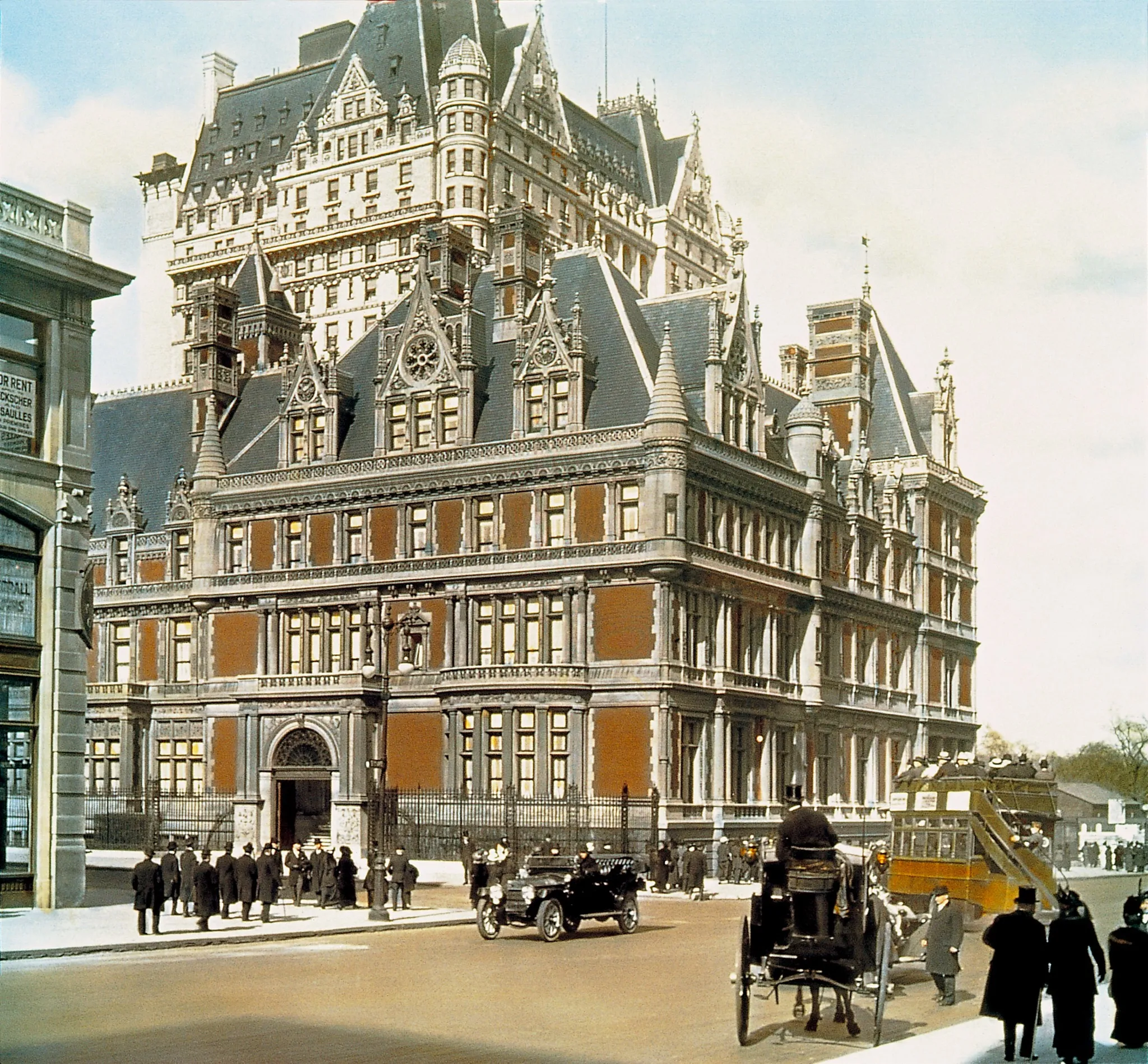
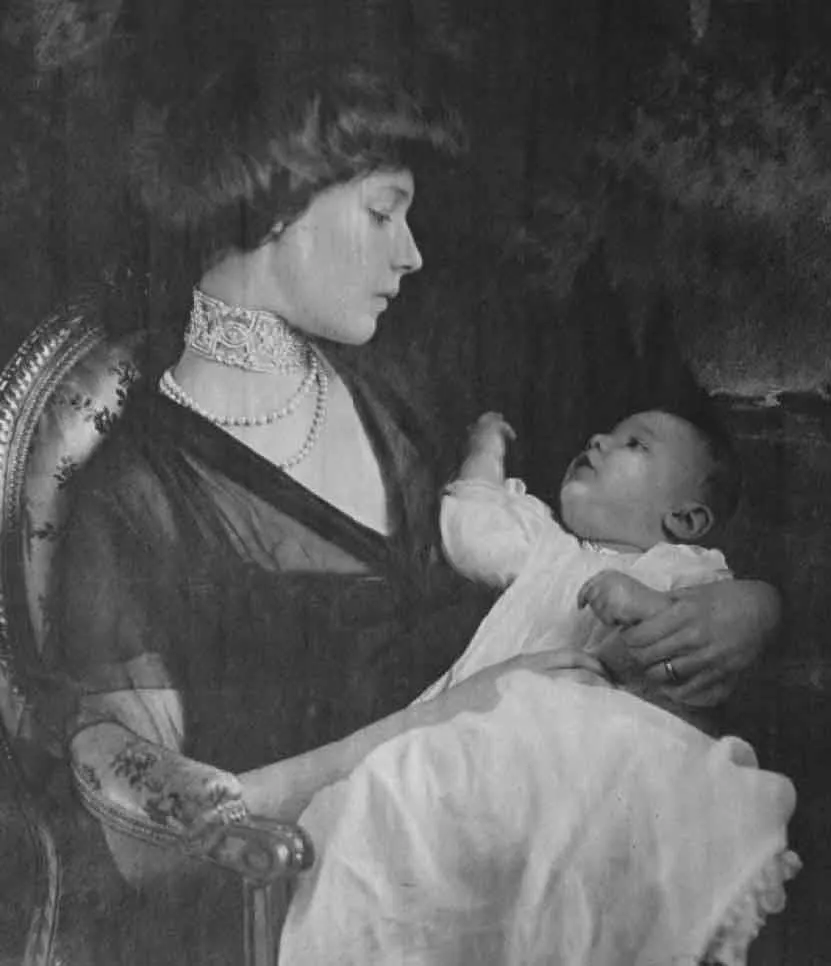
You won't believe what Madeleine Astor, the 18-year-old widow of the richest man on the Titanic, kept hidden under her collar for 28 years straight. I give tours of Beechwood for a living. If you've never been to Newport, Rhode Island, Beechwood is the legendary oceanfront summer palace built on Bellevue Avenue for the Astor family. 125 rooms. Imported Italian marble fireplaces. A private ballroom designed for Caroline Astor's famous "400" of New York high society. In the 1890s, the Astors didn't just have money; they practically decided who was allowed to exist in American society. I walk groups through that estate seven times a day. And after five years of doing it, I can tell you the thing that stops every single group dead in their tracks is not the ballroom crystal, not the gold leaf moldings, and not the private ocean terrace. It's a small velvet-lined case tucked in the second-floor gallery. And inside it is one fine gold chain with a pattern of tiny beads. That chain belonged to Madeleine Astor. Here is the story, and I promise you it goes somewhere you do not expect. In September of 1911, 18-year-old Madeleine Force married Colonel John Jacob Astor IV. He was 47, recently divorced, and one of the wealthiest men in the world. The marriage caused a massive national scandal. To escape the press, they traveled to Egypt and Europe for their honeymoon. In April of 1912, they boarded the Titanic to return home to New York. Madeleine was five months pregnant. When the ship struck the iceberg, Colonel Astor escorted his 18-year-old wife up to the freezing boat deck and helped her into Lifeboat 4. He asked the officer if he could step in to protect her because of her condition. The officer said no: women and children only. Astor kissed her forehead, stepped back into the crowd, and went down with the ship. Madeleine watched the ship slip into the black water from two hundred yards away. In less than two hours, she went from having the entire world at her feet to being a widowed teenager carrying a fatherless child. The press mobbed her. They staked out her home. Newspapers across the country called her "The Sorrowing Child Widow." John Jacob Astor's will left her a five-million-dollar trust fund and the use of the Fifth Avenue mansion and Beechwood, but with one condition: she would lose everything if she ever remarried. She became a prisoner of her own tragedy. Every single time she stepped into public, society women rushed up to her with wet eyes, grabbing her wrists, whispering condolences, asking her how she was surviving. She wrote in her private diary that leaving the house felt like being torn apart in public. People treated her grief like public entertainment. So she retreated behind the high wrought-iron gates of Beechwood and went quiet. And around her neck for every single one of those 28 years - through the birth of their son four months after the sinking, through the grueling hearings with maritime lawyers, through the long isolation behind the gates of Beechwood, through two later marriages that never lasted and never once made her take the chain off - was a fine gold chain with a pattern of tiny gold beads and thin lines running along it. For years, visitors on my tours have asked me what the pattern of beads meant. And for years, I repeated the same standard museum script: that it was a decorative Gilded Age piece made in Paris. I was wrong. Completely wrong. I learned the truth last summer. An elderly woman in her late seventies stayed behind after the afternoon tour ended. She was quiet, beautifully dressed, and had spent nearly twenty minutes staring at that small velvet case. She walked up to me and introduced herself. She told me her name and I recognized it: she is one of Madeleine Astor's granddaughters. She pointed at the glass case and said, "You know what those beads spell, don't you?" I told her I only knew what the tour guide handbook said. She smiled a faint, knowing smile, reached up to her own neckline, and pulled out a delicate gold chain from beneath her silk collar. "Morse code," she said. "The chain in the case spells 'Jack 1911'. That was her private nickname for Colonel Astor and the year they married. Madeleine had it made in secret three months after the Titanic sank. She had another one made for my grandmother." She looked at me and said words I will never forget. She said, "Madeleine told her sister that after Jack died, being a widow in public was like carrying an open wound into a crowded room. Complete strangers felt entitled to touch it. That necklace was the only thing she ever found that let her keep him touching her skin all day long without having to pay the toll every time somebody looked at her." That phrase hit me right in the center of my chest. *Without paying the toll.* I asked her if anyone still made anything like that today. She smiled and told me her daughter had ordered hers from a brand called Tulas. She said they hand-code any name, any date, or any private message up to 22 characters into Morse code on a fine gold chain. To anyone walking past on the street, it looks like an ordinary, elegant gold piece. Nobody in the world can read it except the woman wearing it. She said, "It is the exact same thing Madeleine wore. We just call it by a different name now." That sentence sat in my stomach the rest of the day. It is the exact same thing Madeleine wore. I went home that night and looked up Tulas. Given the heirloom quality, I fully expected the piece to cost $3,000 or $4,000. I was shocked to find it cost less than what I spend on a single tank of gas. And the craftsmanship is serious: 14k gold-filled, so it doesn't tarnish or turn your skin green. The beads are welded directly to the chain so nothing slips off. The clasp is reinforced. You can sleep in it, shower in it, swim in it, and wear it every single day for decades without ever taking it off. I immediately ordered one for my mother. My father passed away four years ago. My mother has never worn a single memorial piece for him. When I asked her why she never wore an engraved pendant or his wedding band on a chain, she gave me the same answer every single time: "I don't want to be that widow at Kroger." I put my dad's first name and the year they met on the necklace. Thomas 1974. Exactly 11 characters. It arrived six days later in a small, understated box. I brought it to her house on a Tuesday morning and put it on her kitchen counter. She opened the box and looked at the delicate chain, clearly confused about what she was holding. So I explained it to her. I told her the tiny beads and lines were Morse code. I told her that spelling along that chain was Dad's name and the year they first met at college. I told her nobody in the world would ever know what it meant. Not the cashier at the grocery store. Not her neighbors. Not the women at her bridge club. She could wear it to church, to family dinners, and to the grocery store, and nobody would ever rush up to grab her hands with sad, pitying eyes. She pulled the chain out, held it against her chest with both hands, and broke down crying. My mother is an old-school, stoic woman. She hadn't cried in front of me since the funeral. She cried in that kitchen for fifteen minutes. She put it on that afternoon. She has not taken it off once in seven months. She showers in it. She sleeps in it. She told me last week that she catches herself touching it forty or fifty times a day without even realizing it. Her thumb just drifts to the hollow of her throat, finds his name under the metal, and she says something tight in her chest unclenches for a moment before she goes back to her morning. When my aunt saw it at Thanksgiving, she started crying at the same kitchen table. She ordered one for herself for my late uncle, and one for her best friend who lost her partner last spring. Every single one of them said the exact same sentence: "Why didn't someone tell me about this sooner?" Here is what I think about now every time I guide a group past that velvet case on the second floor of Beechwood. I tell them Madeleine Astor wore this chain every single day for 28 years straight. And I used to say that number the way I talked about the 125 rooms - like it was an interesting piece of Gilded Age trivia. 28 years is not trivia. 28 years is the number of years she needed him touching her skin, in a code only she could read, 24 hours a day. She was not being morbid. She was not being dramatic. She was solving a problem every widow still faces today. Beechwood was built for the summer society. That necklace was made for the quiet nights. You do not need a 125-room palace on Bellevue Avenue. You do not need an Astor trust fund. You just need what Madeleine kept tucked safely under her collar. The brand is Tulas. They hand-code every single piece to whatever private message you want up to 22 characters: his full name, your wedding anniversary, a nickname only the two of you used, or the last thing he ever said to you. It only ever means what it means to the person whose skin it touches. Right now for Black Friday, they are doing Buy 2, Get 1 Free, with free shipping worldwide. But because every single piece is hand-coded to order, their studio caps daily production once the holiday queue fills up. The sooner you order, the sooner he is back with you. If you are the woman who has been searching for a way to carry your husband close every hour of the day without having to explain your grief to the world every time you leave the house, this is the one. Or if you know a woman who is facing her first holidays without him - this is what you put in her hands. It will mean more than any flowers or sympathy card ever could. Madeleine Astor wore hers for 28 years straight. My mother will wear hers for the rest of her life. Tap the link below to get the Buy 2, Get 1 Free Black Friday special before workshop production caps for the holidays: tulas.co/products/morse-code-necklace
More from Irma Osborne
Skinny Jade Ring Made From Genuine Jade
Irma Osborne
Skinny Jade Ring Made From Genuine Jade
Irma Osborne
Morse Code Necklace
Irma Osborne
Morse Code Necklace
Irma Osborne
Morse Code Necklace
Irma Osborne
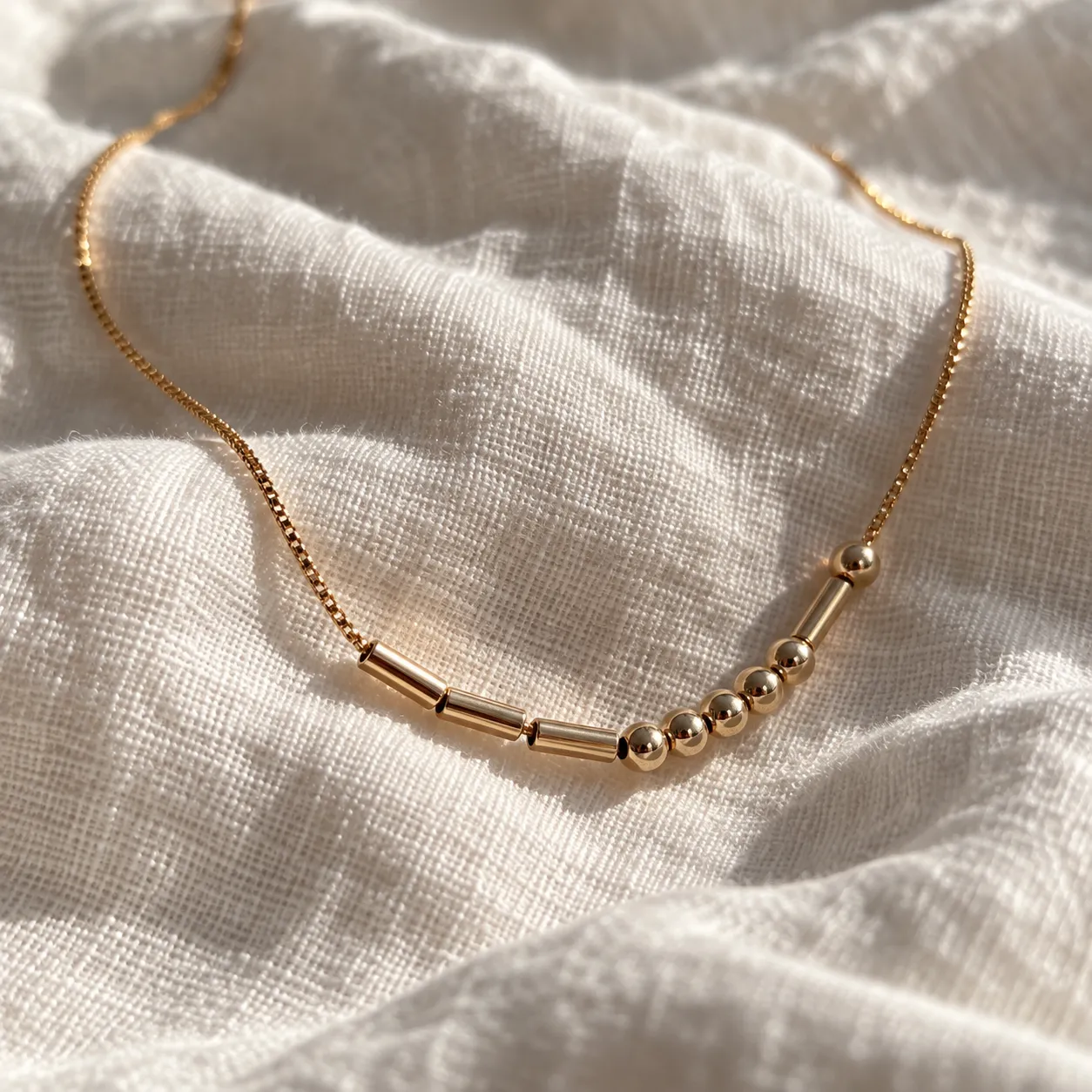
My Thoughts on Tulas 👆
Irma Osborne
What America's Richest Woman Wore 40+ Years 👆
Irma Osborne

Morse Code Necklace
Irma Osborne
What America's Richest Woman Wore 40+ Years 👆
Irma Osborne

Morse Code Necklace
Irma Osborne

Morse Code Necklace
Irma Osborne
Morse Code Necklace
Irma Osborne

 Add to Chrome