
Limited Stock Left
Ad Copy
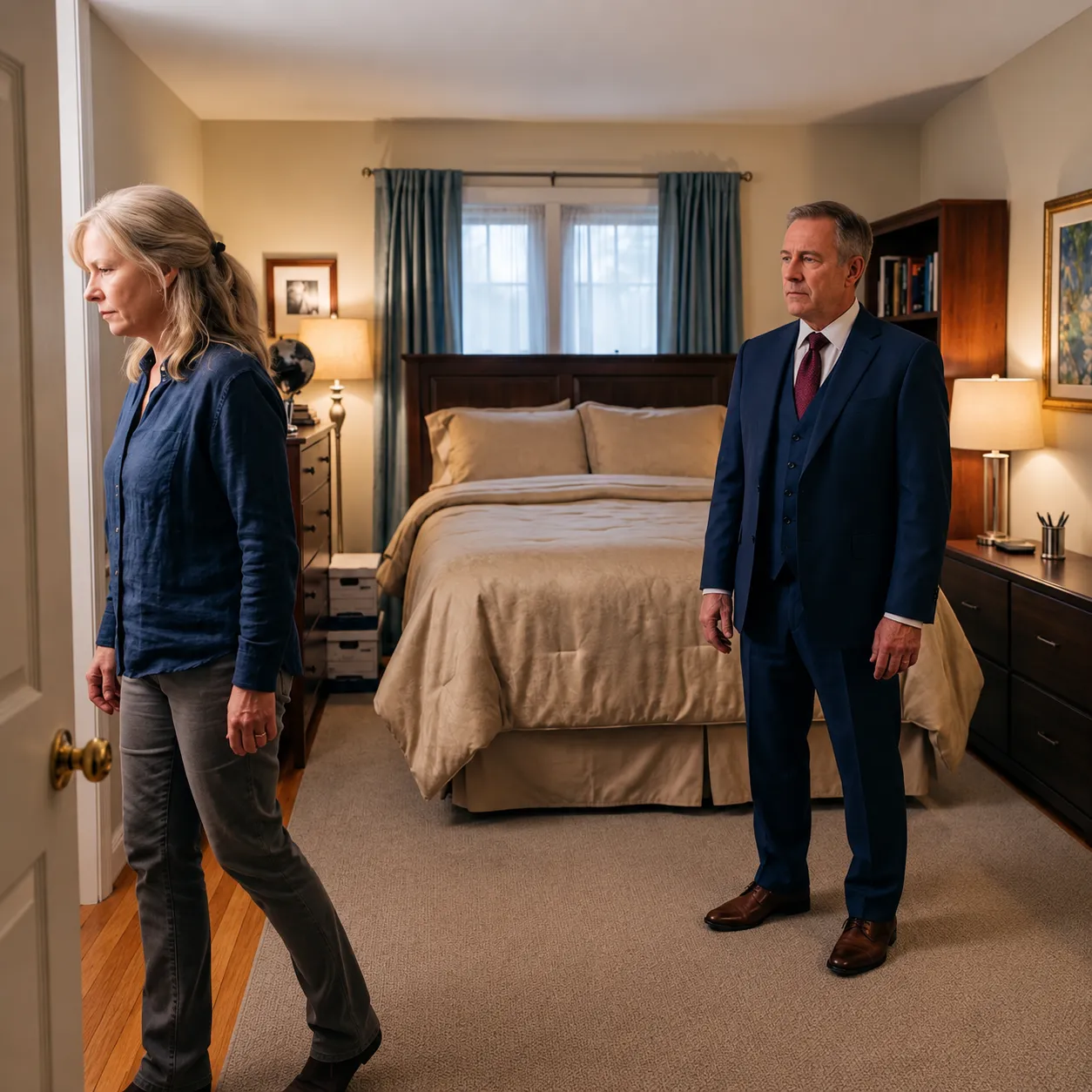
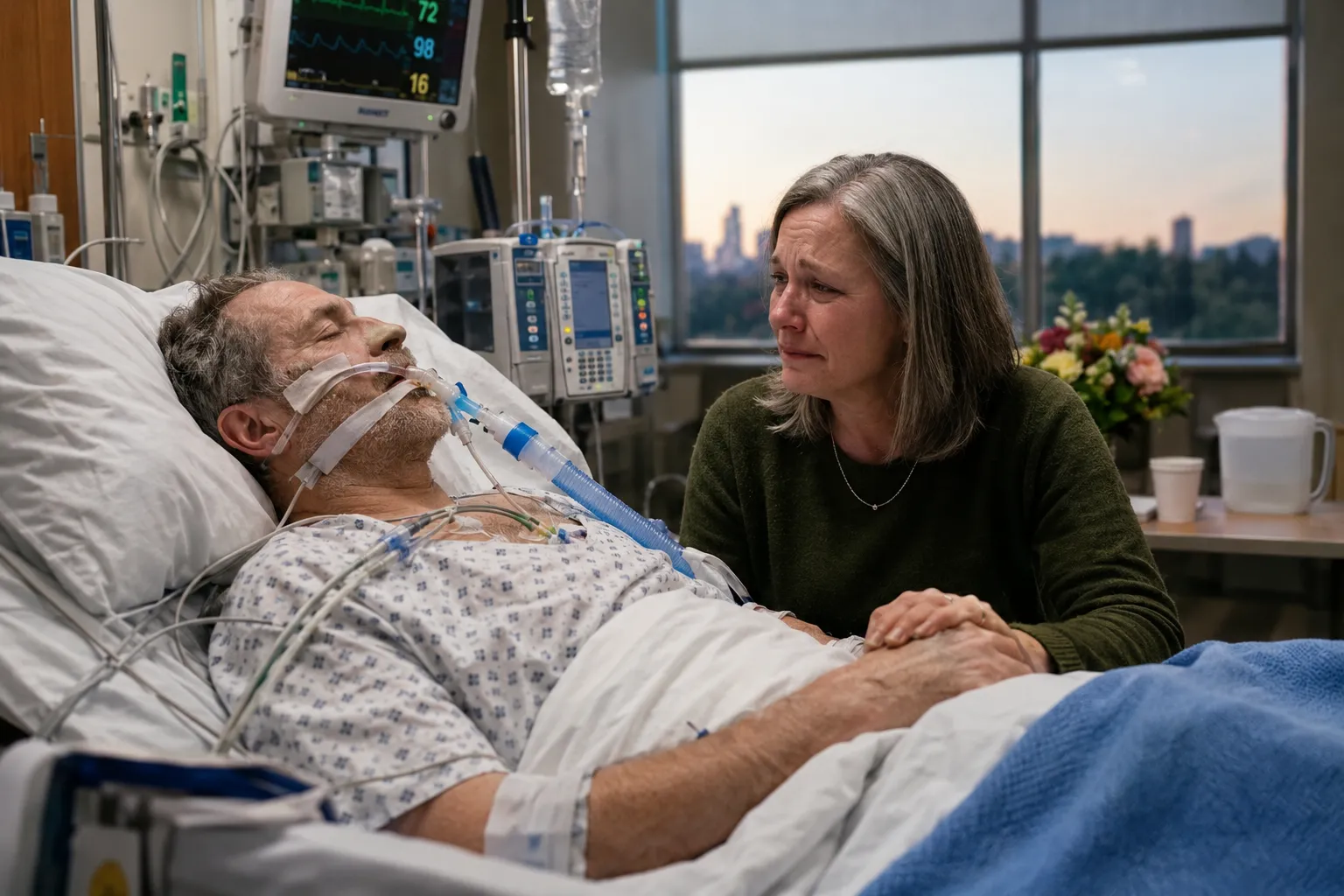
My father-in-law, a pastor, confessed something to me two years before he died. I never told anyone what he said. Not even my husband. “I'm a really bad man." I remember the coffee between us going cold. I remember the way he said it, too. Like a man confessing some terrible secret. Almost casually. As if he were telling me something I should have known. Pops Thomas had always been strict and serious, the kind of man who could make an entire room go quiet without raising his voice or even saying a word. He was difficult to understand. He had five children, including my husband, and for most of the years I'd known him, I could never quite tell what he was thinking. He could sit through an entire family dinner and say almost nothing. Then Nana would walk into the room. And there he was. Smiling. Not the polite smile he gave his congregation. A different one. Softer. Almost boyish. Nana was his wife, but sometimes I thought that word didn't quite explain what she was to him. She was the person he looked for in a crowded room. The person he sat beside when there were ten other empty chairs. If someone asked Pops Thomas where he was going, the answer was usually some version of, "Wherever Nana is." They had been together so long that they seemed to have developed their own language. A glance across the dinner table. A hand on the shoulder. A little smile when nobody else understood the joke. I used to wonder how Nana could be so comfortable around him, because Pops Thomas intimidated me. He wasn't cruel. He never shouted at me or said anything deliberately hurtful. He just had a way of looking at you that made you wonder if he'd noticed something you'd missed. The first few years I was married to his son, I was terrified of saying the wrong thing around him. I'd rehearse what I wanted to say before family dinners. If he asked me a question, I'd suddenly forget the answer. And whenever he went quiet, I assumed I'd done something wrong. Then Nana would walk into the room, touch his arm, and somehow the entire man would change. His shoulders would relax. His face would soften. Sometimes she'd say something so quietly that none of us could hear it, and he'd smile. That's when I began to understand that there was a version of Pops Thomas that almost nobody else got to see. They weren't one of those couples who needed to prove they were in love. They simply moved through life as though being together was the most natural thing in the world. And then Nana died. I have never seen a man become so quiet. At first, everyone came around him. The children. The grandchildren. Friends from church. People who had known him for decades. They brought food. They called. They sat with him. But eventually, people stopped coming. The flowers disappeared. The casseroles stopped arriving. The house became quiet. And Pops Thomas seemed to become smaller inside it. People started saying the same thing whenever his name came up. "He won't be far behind her." They were right. Several months later, he died too. So on the day of his funeral, I stood beside his open casket and watched people say goodbye. A pastor. A father. A grandfather. A husband. The man this whole family simply called Pops. And all I could think about was that afternoon two years earlier when he'd looked at me over a cup of coffee and said, "I'm a bad man. I'm a really bad man." I still didn't fully understand what he meant. But standing there, looking at his hands folded across his chest, hands that used to reach for Nana's without even looking, I found myself wondering if it had something to do with her. If somewhere in those quiet years, he felt like he hadn't done enough. Like he'd failed to take care of her the way a husband is supposed to. After the funeral, the family gathered for the reading of his will. It was a strange thing, sitting around a table dividing up a man's life after you'd just watched them close the lid on his coffin. Pops Thomas wasn't wealthy. There was no fortune. The lawyer went through the house, the savings, the property, the books, the photographs, the things that had accumulated over a lifetime. Each of his five children received something. Some things were practical. Some were sentimental. Some made us laugh because we knew exactly why Dad had chosen them. Then the lawyer turned a page. He paused. "There is one more thing." We all looked up. He explained that Pops Thomas had arranged for something to be delivered to each of his daughters, and to each of his daughters-in-law. Not from the house. Not something we'd find among his belongings. Something he'd ordered specifically for us. I remember looking at my husband. "What did he order?" The lawyer smiled. "I think he wanted you to find out when it arrived." That was the end of the conversation. We went home.Life went on. And eventually, I forgot about it. Until a month later, someone knocked on my door. There was a package sitting on the step. My name was on it. I looked at the sender. Pop Pop. For a moment, I just stood there. Even though he was gone, somehow he'd managed to send me one last gift. I carried the box inside and placed it on the kitchen table. There was an envelope sitting right on top. My name was written across it And for some reason, I didn't open the box. I opened the letter first. It began: My dear daughter, if you are reading this, then I have gone to join Nana. There is something I want you to know about the gift I have left for you. I bought the first one for Nana. I stopped. I read that sentence again. I bought the first one for Nana. I had no idea what he was talking about. He continued: As Nana got older, her nights became difficult. She would go to bed around 10:30. At 1:20 in the morning, she'd wake up feeling hot. She'd push the covers down to her waist and lie there, waiting for the heat to pass. Eventually, she'd pull them back over herself. Then, around 4:30, she'd wake again. This time she'd be cold. She'd reach for the covers, pull them all the way up to her chin, and try to settle back down. Some nights, she'd get up and stand by the bedroom window for a few minutes before climbing back into bed. By the time morning came, she'd been in bed for eight hours, but she'd hardly had eight uninterrupted hours of sleep. And watching it happen broke something in me. I could handle seeing Nana have a difficult day. I could make her tea. I could sit beside her. I could make her laugh. But at night, there was nothing I could do. I'd lie awake beside her, listening to her turn the covers over and over, and feel completely helpless. It felt like my world was falling apart one restless night at a time. At first, I thought it was simply part of getting older. Then I began to understand that the changes happening in her body were affecting the way she handled her temperature at night. But I also realized something else. Her bedding wasn't helping. When she was hot, the heavy covers held the warmth around her. When she pushed them away, she'd eventually become cold. Night after night, she was caught between the two. So I started looking for something that would let her feel covered without making her feel trapped beneath the covers. I felt something tighten in my chest. Because I'd known Nana for years. I'd seen her laugh. I'd sat beside her at Christmas dinners. I'd watched her spoil her grandchildren. But I'd never known this. I'd never known what happened after everyone went home. Pops Thomas had. I kept reading. When I found it, Nana loved it. It made her nights easier. And when Nana slept comfortably, I noticed the difference everywhere else. She had more patience. More energy. She wanted to sit outside again. She'd stay downstairs a little longer after dinner. She laughed more. It became one of those little things that made her happy. And when you love someone, you learn that small things aren't small. I had to stop reading. That sentence got me. When you love someone, you learn that small things aren't small. I looked around my kitchen. Suddenly, the unopened box didn't feel like a strange gift anymore. It felt like I was holding something that belonged to a story I'd never been told. I picked the letter back up. After Nana was gone, I kept thinking about how many women I loved would eventually go through their own changes. My daughters. My daughters-in-law. I know I can't make those changes easier for you. But I can give you something that made Nana more comfortable. So I ordered one for each of you. When it arrives, I hope you use it. And if one night you find yourself lying there, trying to decide whether you're too hot or too cold, remember Nana. She spent too many nights doing the same thing. I wish I'd found this for her sooner. Love, Dad. I sat there staring at the letter. Then I looked at the unopened box. For the first time, I was almost afraid to see what was inside. I slid my finger underneath the tape. Opened the box. And pulled out the thing he'd spent so much time talking about. It was a beautiful sage-green comforter. I ran my hand across it. The first thing I noticed was the texture. Tiny raised tufts ran across the fabric, giving it a softness you could actually feel beneath your palm rather than simply see. It had that rare kind of weight that makes you feel tucked in without feeling pinned down. It looked warm, but not suffocating. Gentle, but substantial. The kind of thing that makes you want to climb underneath it before you've even made the bed. And then I noticed how much fabric there actually was. The oversized king was long enough to stay tucked around the bed instead of constantly sliding off during the night. You don't see that kind of extra fabric in many modern comforters anymore. Everything seems designed to use just enough material and no more. This felt like the opposite. There was actually enough of it to wrap around you and stay put. I understood immediately why Nana had loved it. I was in my late forties, and by then I had already started noticing little changes myself. Some nights I'd wake up too warm. Other nights I'd throw the covers aside and find myself reaching for them again later. I'd never thought much about it. I certainly never imagined that the comforter sitting in front of me had been chosen because of something my mother-in-law had struggled with years before. That night, I put it on my bed. I went to bed around 10:40. At some point during the night, I remember waking up. I was warm, but I wasn't uncomfortable. I didn't throw the covers onto the floor. I didn't get out of bed. I simply turned over and went back to sleep. When I finally reached for my phone in the morning, it was 6:41. I hadn't spent the night checking the clock. I hadn't rearranged the bed. I hadn't negotiated with the temperature every hour. It was just a night. A normal night. And somehow, that felt extraordinary. I ran my hand across the fabric again. It was soft in a way that was difficult to describe, those little raised tufts giving it a gentle texture beneath my fingertips, while the comforter settled around me without pressing me down. It carried a piece of Nana's story. A small piece of comfort that Pops Thomas had discovered for the woman he loved, held onto for years, and eventually found a way to give to all of us. That's the part that gets me. I spent years thinking of Pops Thomas as the difficult, complicated man who was impossible to read. The same man who once looked me in the eyes and told me, "I'm a bad man. I'm a really bad man." But after reading that letter, I finally understood what he meant. He wasn't confessing to something terrible. He was confessing to years of lying beside the woman he loved and not being able to fix it. Watching her turn the covers over and over, night after night, and having nothing to offer her but his presence. That was the badness he carried. Not cruelty. Just the guilt of loving someone and being powerless to help them sleep. I sat at my kitchen table and cried harder than I had at his funeral. Because now I understood. The quiet man who scared me for years wasn't cold. He was carrying something the rest of us never saw, for decades, until the only way he could finally say it out loud was through a box left on a doorstep. Then, when she was gone, he took the thing that had brought her comfort and gave it to the women he loved. Including me. And every night I sleep under it, I think of Nana, and of him, and of how long he carried that quietly, just so he could hand us something better. After everything, I looked for a tag. Found one. Small company I'd never heard of and started doing some research just to understand why it had taken Pops so long to find the right one for Nana in the first place. Turns out, that's also why it took so long for mine to arrive at my doorstep after the will was read. They only make these in small batches. I used to think that was frustrating. Now I understand it differently. Something that took a grieving man years to find, and takes a company a long time to make, was never going to be something you grab off a shelf without thinking twice. Maybe that's exactly why it worked for Nana when nothing else did. If you've read this far, there's a good chance you know exactly what those restless nights feel like. The waking up too hot. Pulling the covers off, then back on. Mornings where eight hours in bed still didn't feel like rest. I didn't understand how much that had been stealing from Nana until I read Pops' letter, and I don't want that for anyone else living it right now. I've linked it below, its called the Willow Tuft Comforter. It isn't always in stock, and when it is, it tends to go fast, so getting one might mean joining a list and waiting your turn. But if this is you, if you've been fighting your covers longer than you'd like to admit, I think it's worth doing for yourself what Pops did for Nana.
More from Patricia Watkins

Limited Stock Left
Patricia Watkins

Limited Stock Left
Patricia Watkins
Limited Stock Left
Patricia Watkins
Limited Stock Left
Patricia Watkins
Limited Stock Left
Patricia Watkins

Limited Stock Left
Patricia Watkins
Limited Stock Left
Patricia Watkins
Limited Stock Left
Patricia Watkins
Limited Stock Left
Patricia Watkins

Limited Stock Left
Patricia Watkins

Limited Stock Left
Patricia Watkins

Limited Stock Left
Patricia Watkins

 Add to Chrome